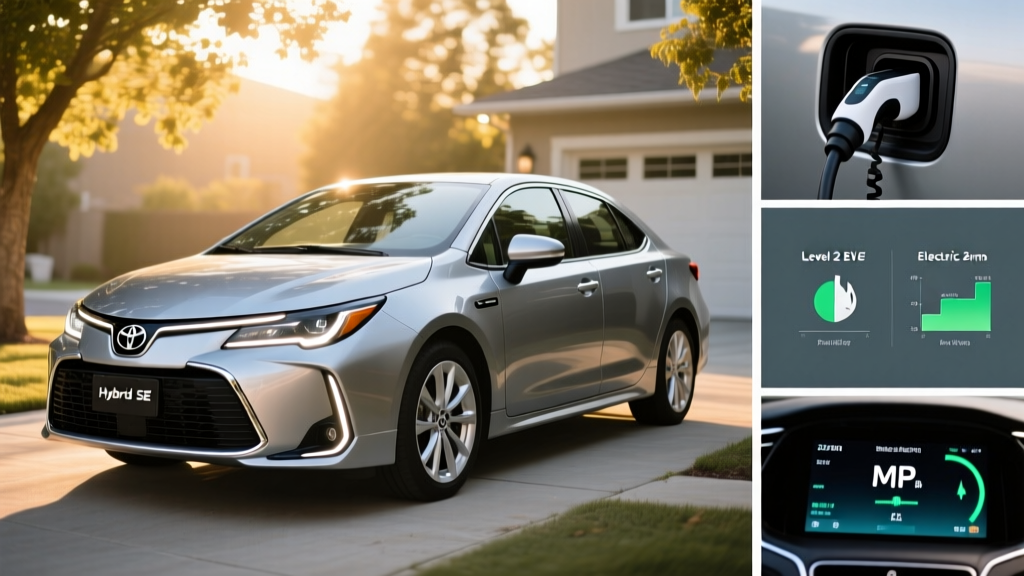
If you've been searching for the 2025 Toyota Corolla Hybrid EPA MPG combined figure, you've likely seen the headline number: 50 MPG combined for front-wheel-drive trims. That's not a typo — it's one of the highest fuel-economy ratings of any non-plug-in vehicle sold in the United States. But sticker MPG only tells part of the story.
As someone who has tracked real-world hybrid efficiency across multiple model years and climate zones, I can tell you that the Corolla Hybrid's real-world behavior is more nuanced — and in some scenarios, even better — than the EPA label suggests. This guide breaks down every trim's fuel economy, the HEV vs. PHEV distinction that still trips up buyers, powertrain specs, battery longevity data, and whether this compact hybrid still makes sense as we move deeper into the electrified era.
2025 Toyota Corolla Hybrid EPA MPG: The Official Numbers
Toyota offers the 2025 Corolla Hybrid in three trims — LE, SE, and XLE — with both front-wheel drive (FWD) and available electronic all-wheel drive (AWD). The powertrain is identical across trims: a 1.8-liter four-cylinder engine paired with Toyota's fifth-generation hybrid system. The difference in fuel economy comes down to drivetrain and wheel size.
| Trim / Drivetrain | City MPG | Highway MPG | Combined MPG |
|---|---|---|---|
| LE FWD | 53 | 46 | 50 |
| LE AWD | 51 | 44 | 48 |
| SE FWD | 50 | 43 | 47 |
| SE AWD | 47 | 41 | 44 |
| XLE FWD | 50 | 43 | 47 |
Source: fueleconomy.gov
The LE FWD's 53 MPG city figure is particularly notable. Toyota's hybrid system excels in stop-and-go traffic because the electric motor handles low-speed propulsion and regenerative braking recaptures energy that a conventional car wastes as heat. If your commute is predominantly urban, expect to see numbers at or even slightly above the EPA city rating.
Real-World MPG vs. EPA Estimates: What Owners Actually See
EPA testing follows a standardized laboratory cycle, but real-world driving introduces variables: ambient temperature, terrain, tire pressure, driving style, and HVAC load. Here's what the data and owner reports consistently show for the Corolla Hybrid:
- City-dominant driving: Many owners report 50–55 MPG in warm-weather urban commuting, meeting or exceeding the EPA city estimate. The hybrid system's ability to shut off the engine at stops and creep on electric power makes city driving its best-case scenario.
- Highway-dominant driving: Expect 42–46 MPG at sustained 70–75 mph speeds. Aerodynamic drag rises with the square of velocity, and the 1.8L engine must work harder without the stop-start regen advantage of city driving.
- Cold weather (below 35°F): Plan for a 5–10% reduction. The engine runs longer to heat the cabin and bring the catalytic converter to operating temperature. Short-trip winter driving can drop observed MPG into the low-to-mid 40s.
- Mixed driving (annual average): Most owners land between 46–51 MPG combined, closely tracking the EPA combined estimate for their trim.
HEV vs. PHEV vs. EV: Which Powertrain Fits Your Life?
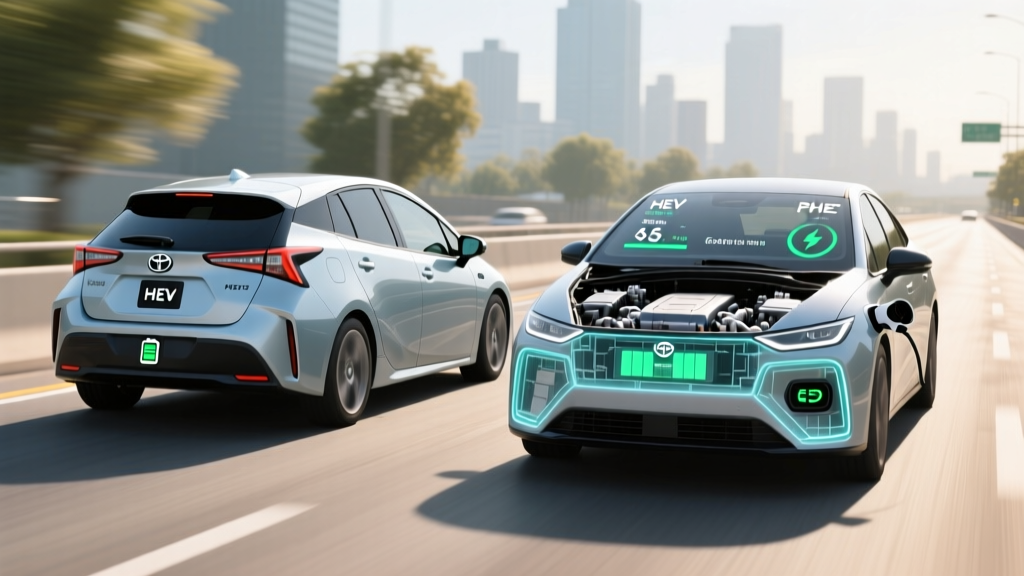
The Corolla Hybrid is a conventional hybrid electric vehicle (HEV). It does not plug in. It has no meaningful electric-only range. Its small battery (approximately 1.0 kWh, nickel-metal hydride) charges exclusively through regenerative braking and the gasoline engine. If you're looking for plug-in capability, Toyota does not offer a Corolla PHEV in the US market.
| Feature | HEV (Corolla Hybrid) | PHEV (e.g., Prius Prime) | BEV (e.g., Tesla Model 3) |
|---|---|---|---|
| Plugs in? | No | Yes | Yes |
| Electric-only range | ~1 mile (low speed) | 35–44 miles (typical) | 250–360+ miles |
| Battery capacity | ~1.0 kWh | 13.6 kWh | 50–82 kWh |
| Home charging needed? | No | Recommended (Level 2) | Essential (Level 2) |
| Fuel/energy cost per mile | ~$0.08–0.10 | ~$0.04–0.08 (electric mode) | ~$0.03–0.06 |
| §30D Federal tax credit | No | Up to $3,750* | Up to $7,500* |
| Base MSRP range | $23,500–$28,000 | $33,000–$40,000 | $38,000–$55,000+ |
*Tax credit eligibility depends on MSRP caps, buyer income limits, battery sourcing requirements, and point-of-sale transfer rules per IRS §30D. Consult a tax professional.
Choose the Corolla Hybrid (HEV) if:
- You cannot install a Level 2 home charger (apartment, street parking, no garage)
- Your budget is under $30,000 and you want maximum MPG without plug-in complexity
- You drive 12,000–18,000 miles/year and want fuel costs under $1,500 annually
- You want Toyota's proven hybrid reliability with minimal new-technology risk
Choose a PHEV (like the Prius Prime) if:
- You have home charging and a commute under 40 miles round-trip (most driving on electricity)
- You want to reduce gas consumption by 70–90% on daily trips but need gas-engine range for road trips
Choose a full BEV if:
- You have reliable home or workplace Level 2 charging
- You want the lowest per-mile energy cost and zero tailpipe emissions
- You qualify for the full $7,500 federal credit, narrowing the price gap
Powertrain Specs: What Moves the Corolla Hybrid
| Specification | Detail |
|---|---|
| Engine | 1.8L DOHC 4-cylinder (2ZR-FXE) |
| Engine output | 96 hp / 105 lb-ft torque |
| Electric motor (front) | 94 hp / 139 lb-ft torque |
| AWD rear motor | 40 hp / 63 lb-ft torque (AWD trims only) |
| Net combined system horsepower | 138 hp |
| Transmission | Continuously Variable (eCVT) |
| Hybrid battery | ~1.0 kWh NiMH (sealed, no plug) |
| 0–60 mph | ~9.0 seconds (FWD) |
| Fuel tank | 11.4 gallons |
| Curb weight | ~3,085 lbs (LE FWD) |
The 138 net horsepower figure may seem modest, but hybrid powertrains deliver torque differently than conventional engines. The electric motor provides maximum torque from 0 RPM, giving the Corolla Hybrid responsive off-the-line acceleration in city driving — the scenario where you notice it most. The eCVT keeps the engine in its most efficient RPM band, which is the core mechanism behind the 50 MPG combined rating.
The available electronic AWD adds a separate rear-mounted electric motor that engages automatically when front-wheel slip is detected. It doesn't provide a mechanical driveshaft connection — it's purely electric, activating at low speeds and in slippery conditions. The trade-off is a 2 MPG combined penalty versus FWD.
Pricing, Trims, and Tax Credit Eligibility
| Trim | Drivetrain | MSRP (incl. destination) |
|---|---|---|
| LE | FWD | $23,500 |
| LE | AWD | $24,900 |
| SE | FWD | $26,000 |
| SE | AWD | $27,400 |
| XLE | FWD | $27,950 |
Does the Corolla Hybrid Qualify for a Federal Tax Credit?
No. The Corolla Hybrid is a conventional HEV — it does not plug in and does not have a battery large enough to qualify for the IRS §30D New Clean Vehicle Credit. That credit requires a minimum battery capacity of 7 kWh and external charge capability, which only PHEVs and BEVs meet.
Some states offer their own incentives for high-efficiency vehicles, but these vary widely and change frequently. Check your state's energy office or department of revenue for current programs. The Corolla Hybrid's value proposition is straightforward: a low entry price (under $24,000 for the LE FWD) combined with exceptional fuel economy that pays for itself through reduced gas spending — not through tax incentives.
Battery Reliability, Warranty, and Replacement Costs
Battery longevity is consistently the top concern among hybrid shoppers, and it's where Toyota's track record is strongest. The Corolla Hybrid uses a nickel-metal hydride (NiMH) battery pack — a mature chemistry that Toyota has refined over 25+ years since the original Prius.
What Does Real-World Degradation Look Like?
Unlike EV batteries where degradation directly reduces range, the Corolla Hybrid's ~1.0 kWh battery operates in a narrow state-of-charge window (roughly 40–80%) managed by the hybrid control system. This shallow cycling dramatically extends cell life. Real-world data from high-mileage Prius and Corolla Hybrid owners shows:
- 100,000 miles: Negligible capacity loss; fuel economy unchanged
- 150,000–200,000 miles: Some units may show 5–10% capacity reduction, translating to marginally more frequent engine engagement — typically unnoticeable in daily driving
- Beyond 200,000 miles: A small percentage of batteries require replacement, but many original packs exceed 250,000 miles
Hybrid Battery Replacement Cost
If your hybrid battery does fail outside of warranty, replacement costs for the Corolla Hybrid are:
- New OEM battery (dealer): $2,500–$3,500 including labor
- Remanufactured battery: $1,500–$2,200 including labor
- Individual module replacement (specialty hybrid shops): $500–$1,000 — Toyota's NiMH pack uses individual modules, and often only one or two degraded modules cause the entire pack to underperform
For context, the Corolla Hybrid's 1.0 kWh NiMH pack is far less expensive to replace than a BEV's 60–80 kWh lithium-ion pack ($8,000–$18,000). This is a meaningful long-term ownership advantage that rarely appears in spec sheets.
Who Should Buy the 2025 Corolla Hybrid — and Who Shouldn't
Pros
- 50 MPG combined (LE FWD) — among the highest of any non-plug-in vehicle
- Under $24,000 starting MSRP — genuine affordability
- 10-year/150,000-mile hybrid battery warranty
- No charging infrastructure needed — works with existing gas stations
- 500+ mile range per tank eliminates range/fuel anxiety
- Standard Toyota Safety Sense 3.0 (adaptive cruise, lane-keep, auto emergency braking)
- Available AWD for snow-belt buyers
Cons
- 138 hp — adequate, not quick (9.0 sec 0–60)
- AWD trims lose 2–6 MPG vs. FWD depending on trim
- No federal tax credit eligibility
- Rear seat and cargo space are compact-class tight (13.1 cu ft trunk)
- NiMH battery (not lithium-ion) — proven but older chemistry
- No plug-in or electric-only driving mode
- Infotainment is functional but not class-leading
Frequently Asked Questions
How many MPG does the 2025 Toyota Corolla Hybrid get?
The EPA rates the Corolla Hybrid LE FWD at 53 city / 46 highway / 50 combined MPG. AWD trims range from 44–48 MPG combined depending on trim and wheel size. Real-world city driving often matches or slightly exceeds EPA estimates due to the hybrid system's regenerative braking advantage in stop-and-go traffic.
Does the Corolla Hybrid need to be plugged in?
No. The Corolla Hybrid is a conventional HEV. Its battery charges exclusively through regenerative braking and the gasoline engine. You fuel it like any other car at a gas station. There is no plug, no charging cable, and no electric-only driving range beyond brief low-speed creep.
Is the Corolla Hybrid reliable?
Toyota's hybrid powertrain is among the most proven in the automotive industry, with over 25 years of continuous refinement since the 1997 Prius. The 10-year/150,000-mile hybrid battery warranty reflects Toyota's confidence. Independent reliability surveys consistently rank Toyota hybrids at or near the top of their segments. The eCVT transmission has no traditional gears or bands to wear — it's a planetary gearset with minimal failure points.
Does the Corolla Hybrid qualify for any tax credit?
No. The federal §30D New Clean Vehicle Credit requires a minimum 7 kWh battery and plug-in charging capability. The Corolla Hybrid's ~1.0 kWh NiMH battery and HEV powertrain do not meet these requirements. Check your state's energy office for any local high-efficiency vehicle incentives, which vary by jurisdiction.
How does the Corolla Hybrid compare to the Prius?
The 2025 Prius (redesigned for 2023) offers 57 MPG combined on the LE FWD trim, a more powerful 194 hp powertrain, and a more modern interior — but starts at approximately $28,550, roughly $5,000 more than the Corolla Hybrid LE. The Corolla Hybrid trades a few MPG and some performance for a significantly lower entry price. If budget is the primary driver, the Corolla Hybrid is the value pick; if you want the latest Toyota hybrid tech and more power, the Prius is the upgrade.
Hybrid vs. PHEV vs. EV — which is right for me?
If you lack home charging access, drive long distances regularly, or want the lowest purchase price with strong fuel economy, the Corolla Hybrid (HEV) is the pragmatic choice. If you have home charging and a short commute, a PHEV like the Prius Prime lets you drive most days on electricity while keeping gas-engine flexibility. If you have reliable charging and want the lowest operating cost and zero tailpipe emissions, a BEV is the long-term play — but at a higher upfront price.
Sources: fueleconomy.gov (EPA fuel economy data), Toyota Motor Corporation (manufacturer specifications), IRS.gov (§30D tax credit rules). Specifications and pricing reflect the 2025 model year and are subject to change. Verify current figures with your local dealer and the IRS before purchasing.