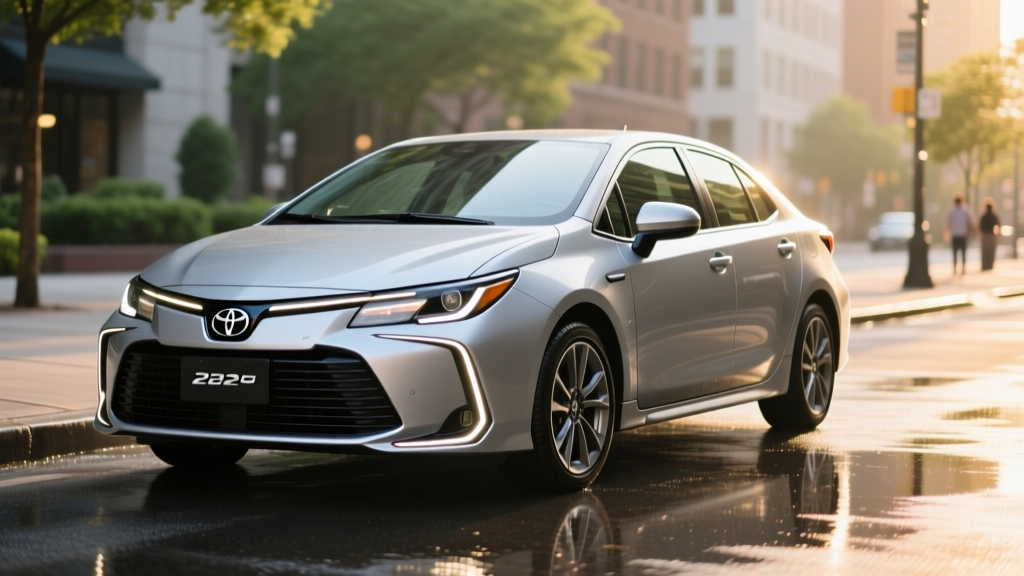
The 2025 Toyota Corolla Hybrid All-Wheel Drive occupies a specific niche that full EVs and conventional gas compacts can't easily fill: it delivers near-50 MPG fuel economy with all-weather traction, requires zero lifestyle changes (no plug, no charging apps), and starts under $24,000. For buyers in snow-belt states or anyone who wants maximum efficiency without range anxiety, this powertrain is worth a close look.
But before you sign the paperwork, you need the exact numbers — EPA ratings versus real-world results, what the AWD system actually does to your fuel economy, and how Toyota's hybrid battery warranty holds up. This guide covers everything.
2025 Toyota Corolla Hybrid AWD: Quick Spec Sheet
| Specification | 2025 Corolla Hybrid AWD (LE) |
|---|---|
| Powertrain Type | Conventional Hybrid (HEV) — no plug |
| Engine | 1.8L 4-cylinder Atkinson-cycle |
| Combined System Horsepower | 138 hp |
| Drivetrain | Electronic On-Demand AWD (rear electric motor) |
| Transmission | Continuously Variable (eCVT) |
| EPA Fuel Economy (City / Hwy / Combined) | 53 / 46 / 50 MPG |
| Fuel Tank Capacity | 11.4 gallons |
| Total Driving Range | ~570 miles (EPA est.) |
| Hybrid Battery | ~1.3 kWh lithium-ion (self-charging) |
| 0–60 mph | ~9.0 seconds (est.) |
| Starting MSRP (LE AWD) | $23,500 |
| Hybrid Battery Warranty | 10 years / 150,000 miles |
HEV vs. PHEV: The Corolla Hybrid Is a Self-Charging Hybrid
Conventional Hybrid (HEV) — Corolla Hybrid: The gasoline engine and regenerative braking charge a small (~1.3 kWh) battery. You never plug it in. The electric motor assists during acceleration and enables brief electric-only driving at low speeds. Net result: dramatically better fuel economy with zero behavior change.
Plug-In Hybrid (PHEV) — Toyota does not offer a Corolla PHEV in the US. A PHEV has a larger battery (typically 12–18 kWh), can travel 25–45 miles on electricity alone, and requires plugging in to realize its efficiency advantage. If you want a Toyota PHEV, look at the RAV4 Prime or Prius Prime — not the Corolla.
This distinction matters because some shoppers confuse "hybrid" with "plug-in." The 2025 Corolla Hybrid AWD has no charge port, no electric-only commute range, and no eligibility for the federal §30D new clean vehicle tax credit, which requires plug-in capability with at least 7 kWh of battery capacity per IRS guidelines. It's a hybrid in the original sense: a gas engine supplemented by electric assist.
Fuel Economy: EPA Ratings and Real-World MPG
| Driving Scenario | EPA Estimate | Real-World Expectation |
|---|---|---|
| City | 53 MPG | 50–58 MPG (hybrids excel in stop-and-go) |
| Highway (70 mph) | 46 MPG | 42–47 MPG (less regen benefit at steady speed) |
| Combined | 50 MPG | 46–52 MPG |
| Cold Weather (below 30°F) | N/A | 40–45 MPG (engine runs more for cabin heat) |
The Corolla Hybrid AWD's 50 MPG combined EPA rating is among the best in the compact segment. The front-wheel-drive version rates slightly higher at 53 MPG combined, meaning the AWD system costs you about 3 MPG — a small price for year-round traction.
In real-world driving, Toyota hybrids tend to exceed their EPA city ratings because regenerative braking recovers more energy in heavy traffic. On a mixed suburban commute with frequent stops, owners regularly report 52–56 MPG. Highway efficiency is the weak point — at sustained 75–80 mph, expect the low-to-mid 40s, as the gasoline engine does most of the work and aerodynamic drag increases.
Cold-weather reality check: Below freezing, the engine must run continuously to provide cabin heat (there's no heat pump in a conventional hybrid). Winter MPG drops of 10–15% are typical, putting you in the 40–45 MPG range. This still beats most gas-only compacts by a wide margin.
Source: fueleconomy.gov
How the Electronic AWD System Works
Toyota's Electronic On-Demand AWD isn't a traditional mechanical system with a driveshaft and center differential. Instead, a separate 41-hp electric motor mounted on the rear axle powers the rear wheels when the system detects front-wheel slip — during hard acceleration from a stop, on wet pavement, or in snow.
Under normal cruising conditions, the Corolla Hybrid AWD operates as a front-wheel-drive car. The rear motor engages automatically and transparently, then disengages when traction is restored. This approach minimizes the fuel economy penalty compared to always-on mechanical AWD systems, which is why the AWD model only loses about 3 MPG versus the FWD variant.
For buyers in regions with mild winters or no snow, the FWD Corolla Hybrid saves fuel and money. For those dealing with lake-effect snow, mountain passes, or icy morning commutes, the AWD system provides meaningful traction insurance for roughly $1,000 more at purchase and a negligible fuel cost increase over the vehicle's lifetime.
Powertrain and Performance: Adequate, Not Thrilling
The 2025 Corolla Hybrid pairs a 1.8-liter Atkinson-cycle four-cylinder engine with two front-mounted motor-generators and the rear AWD motor. Combined system output is 138 horsepower — sufficient for confident highway merging but not quick by modern standards. The 0–60 mph run takes approximately 9.0 seconds.
The eCVT (planetary gearset, not a belt-driven CVT) provides seamless power delivery without the rubber-band feeling that plagues some competitors. Toyota's Hybrid Synergy Drive is now in its fifth generation, and the refinement shows — transitions between electric and gas power are nearly imperceptible from the driver's seat.
What this powertrain does exceptionally well is urban efficiency. In stop-and-go traffic, the electric motor handles low-speed propulsion while regenerative braking recaptures energy that a gas car would waste as heat. The result is a car that gets better fuel economy in the city than on the highway — the opposite of every gas-only vehicle you've ever driven.
Pricing, Trims, and Tax Credit Eligibility
The 2025 Toyota Corolla Hybrid is available in the LE trim with AWD. Key pricing:
- Corolla Hybrid LE AWD: ~$23,500 MSRP (before destination)
- Corolla Hybrid LE FWD: ~$22,500 MSRP
Pros
- 50 MPG combined EPA — among the best non-PHEV compacts
- AWD available — rare in the hybrid compact segment
- 10-year / 150,000-mile hybrid battery warranty
- No plug-in required — zero lifestyle change
- Proven Toyota Hybrid Synergy Drive reliability
- Under $24,000 starting MSRP
Cons
- Only available in LE trim (no sport/luxury hybrid option)
- ~9-second 0–60 — slower than some turbocharged gas rivals
- Smallish 11.4-gallon fuel tank
- No federal tax credit (HEV, not PHEV/BEV)
- Highway MPG drops noticeably above 75 mph
- Rear seat and cargo space are average for the class
Does the Corolla Hybrid Qualify for a Tax Credit?
No. The 2025 Corolla Hybrid is a conventional HEV, not a plug-in vehicle. The federal §30D New Clean Vehicle Credit requires a plug-in electric vehicle with a battery capacity of at least 7 kWh. The Corolla Hybrid's ~1.3 kWh battery is charged exclusively by the engine and regenerative braking — it has no charge port.
If you're seeking a Toyota that qualifies for up to $7,500 in federal credits (subject to MSRP caps, income limits, and battery sourcing requirements), you'd need to look at the Prius Prime or bZ4X. Always verify current eligibility on the IRS clean vehicle credit page, as sourcing rules continue to tighten.
Some states offer rebates or reduced registration fees for conventional hybrids, but these vary widely. Check your state's energy or environmental agency for current programs.
Hybrid Battery Warranty, Lifespan, and Replacement Cost
Toyota Hybrid Battery Warranty: 10 years or 150,000 miles, whichever comes first. This covers the hybrid battery pack against defects and capacity loss below a functional threshold.
Real-World Lifespan: Toyota's hybrid batteries have demonstrated exceptional longevity. Many first-generation Prius taxis exceeded 300,000 miles on the original battery. The lithium-ion pack in the 2025 Corolla Hybrid is smaller and less stressed than a full EV battery — it operates in a narrow state-of-charge window (roughly 40–80%), which dramatically reduces degradation.
Replacement Cost (Out of Warranty): If the hybrid battery fails outside the warranty window, a replacement from Toyota typically costs between $2,000 and $4,000 installed. Refurbished or aftermarket options can reduce this to $1,000–$2,000. For context, this is far less than an EV traction battery replacement ($10,000–$20,000+).
The Corolla Hybrid's battery is air-cooled and managed by Toyota's Hybrid Synergy Drive controller, which prevents the extreme charge/discharge cycles that accelerate degradation in poorly managed systems. Combined with the 10-year warranty, battery longevity should not be a primary concern for this vehicle.
Corolla Hybrid AWD vs. EV vs. PHEV: Which Is Right for You?
The decision between a conventional hybrid, plug-in hybrid, and full electric vehicle depends on your driving patterns, home charging access, and budget.
Choose the Corolla Hybrid AWD if:
- You don't have access to home or workplace charging (apartment, street parking, no garage)
- You want maximum fuel efficiency with zero behavioral changes
- You need AWD for snow/ice but don't want the cost of an AWD EV
- Your budget is under $25,000
- You regularly take long road trips where charging infrastructure is sparse
Choose a PHEV (e.g., Prius Prime) if:
- You can charge at home and have a commute under 40 miles round-trip
- You want electric-only daily driving with gas-engine backup for road trips
- You want to qualify for the federal tax credit (check current IRS eligibility)
Choose a full EV (e.g., Tesla Model 3, Hyundai Ioniq 6) if:
- You have reliable Level 2 home charging
- Your daily driving is under 250 miles and you can plan road-trip charging
- You want zero tailpipe emissions and the lowest per-mile "fuel" cost
- You qualify for federal/state EV incentives that offset the higher purchase price
Ownership Costs: 5-Year Fuel Savings vs. Gas-Only Corolla
At 50 MPG combined and $3.40/gallon regular unleaded (national average estimate), the Corolla Hybrid AWD costs approximately $680 per year in fuel for a driver covering 10,000 miles annually. A gas-only Corolla AWD (rated ~34 MPG combined) would cost roughly $1,000 per year — a difference of about $320 annually, or $1,600 over five years.
The hybrid's purchase premium over the gas Corolla LE AWD is modest (roughly $1,000–$1,500 depending on trim availability), meaning the fuel savings pay back the upcharge within 3–5 years. Beyond fuel, the hybrid benefits from reduced brake wear (regenerative braking handles much of the deceleration) and the same Toyota maintenance schedule as the gas model.
Frequently Asked Questions
How many MPG does the 2025 Toyota Corolla Hybrid AWD get?
The EPA rates it at 53 city / 46 highway / 50 combined MPG. In real-world driving, city MPG often exceeds the EPA estimate thanks to regenerative braking, while sustained highway driving above 75 mph may return the low 40s.
Does the Corolla Hybrid need to be plugged in?
No. The 2025 Corolla Hybrid is a conventional HEV with no charge port. The battery charges through the gasoline engine and regenerative braking. You fuel it like any other gas car — just less often.
Is the Corolla Hybrid AWD system good in snow?
The electronic on-demand AWD provides meaningful traction improvement over FWD in light-to-moderate snow and icy conditions. It's not a substitute for winter tires on severe ice, and it doesn't offer the ground clearance of a crossover, but for typical winter commuting it performs well.
How long will the hybrid battery last?
Toyota covers the hybrid battery for 10 years / 150,000 miles. Real-world data from millions of Toyota hybrids on the road suggests many last 200,000+ miles without replacement. The battery operates in a narrow charge window that minimizes stress and degradation.
What does a Corolla Hybrid battery replacement cost?
Out of warranty, expect $2,000–$4,000 for a new OEM replacement including labor. Refurbished options are available for $1,000–$2,000. This is significantly less than EV battery replacement costs.
Does the 2025 Corolla Hybrid qualify for a federal tax credit?
No. The federal §30D credit requires a plug-in vehicle with at least 7 kWh of battery capacity. The Corolla Hybrid is a self-charging HEV with a ~1.3 kWh battery and no plug. Check IRS.gov for vehicles that do qualify.
Is the Corolla Hybrid AWD slower than the gas Corolla?
Acceleration is similar — the hybrid's 138 combined hp and the gas model's 169 hp translate to comparable 0–60 times in the 8.5–9.5 second range. The hybrid feels responsive in city driving due to instant electric motor torque but doesn't have the top-end passing power of the gas engine on the highway.
Can I get the Corolla Hybrid in trims other than LE?
For the 2025 model year, the Corolla Hybrid is primarily available in the LE trim. Toyota has not offered SE or XLE hybrid variants in recent years. If you want a more feature-rich Toyota hybrid, consider the Prius or Camry Hybrid lineups.
Sources: fueleconomy.gov (EPA ratings), Toyota.com (manufacturer specifications), IRS.gov (tax credit eligibility).