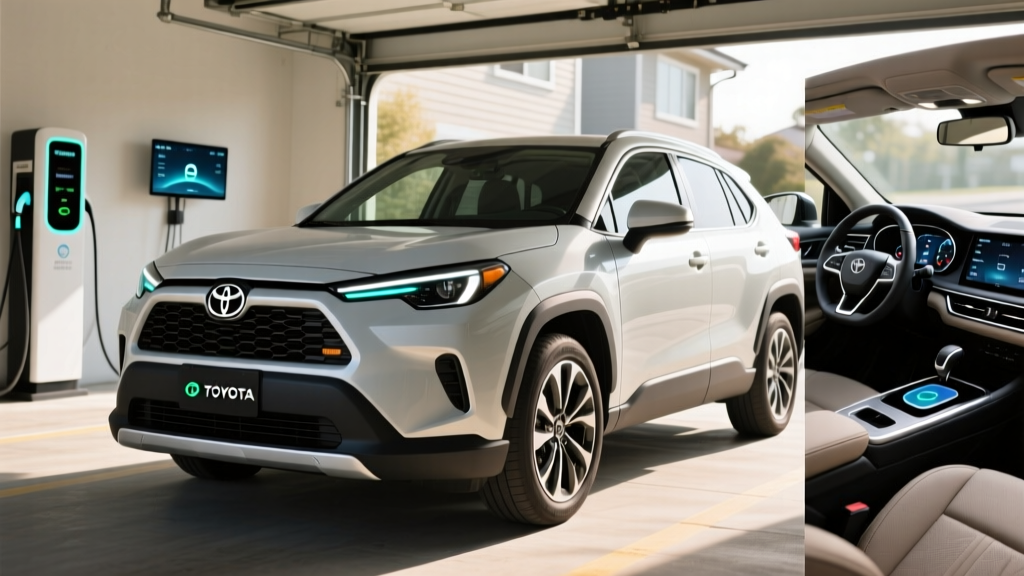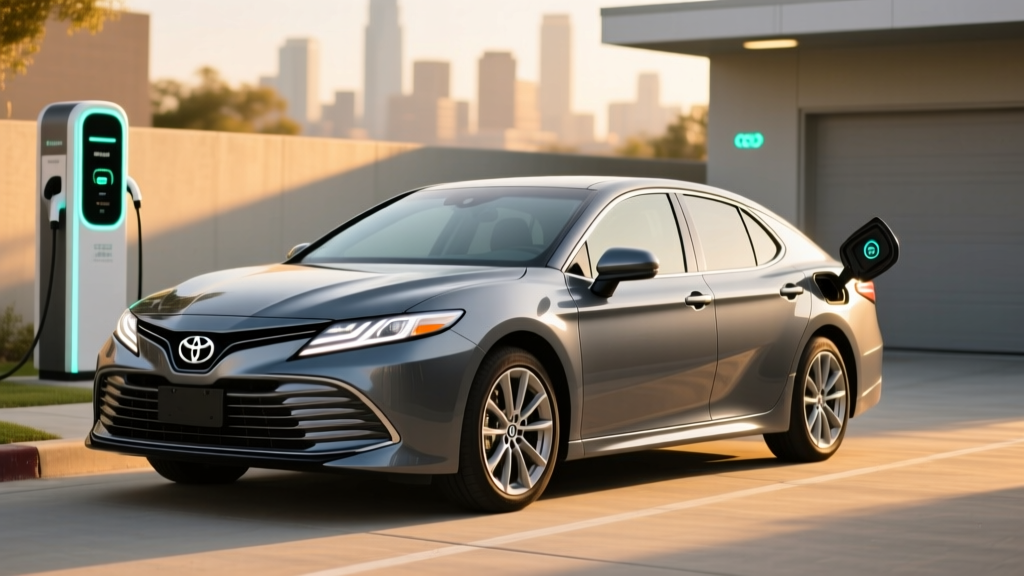
The 2025 Toyota Camry arrived with a seismic powertrain shift: every model is now a hybrid. Toyota dropped the V6 and the base four-cylinder entirely, betting that the fifth-generation Toyota Hybrid System (THS 5) delivers the best combination of performance, efficiency, and value in the midsize sedan segment. For shoppers evaluating a 2025 Toyota Camry Hybrid lease, the proposition is compelling — EPA ratings as high as 51 MPG city, a starting MSRP under $29,000, and Toyota's long-standing hybrid reliability record. But before you sign, you need to understand exactly what you're getting, how the numbers play out in real driving, and whether a hybrid, plug-in hybrid, or full EV better fits your routine.
2025 Camry Hybrid Powertrain: What Changed and Why It Matters
The 2025 Camry is built on Toyota's GA-K platform and pairs a 2.5-liter inline-four engine with electric motors. Front-wheel-drive (FWD) models use a single front electric motor producing a combined system output of 225 horsepower. All-wheel-drive (AWD) trims add a second electric motor on the rear axle, bumping total output to 232 horsepower. Unlike the previous generation's optional AWD, the system is now more seamlessly integrated, providing torque to the rear wheels during acceleration and low-traction conditions without a mechanical driveshaft.
The transmission is Toyota's eCVT — a planetary gearset that blends engine and motor power without the rubber-band feel of belt-driven CVTs. The result is linear, predictable acceleration. The 0-60 mph time sits in the low 7-second range for AWD models, which is brisk enough for confident highway merging without being sporty. Toyota tuned this generation for a more connected driving feel, with firmer steering and reduced body roll compared to the outgoing Camry.
| Specification | FWD Models | AWD Models |
|---|---|---|
| Engine | 2.5L inline-4 + 1 electric motor | 2.5L inline-4 + 2 electric motors |
| Combined Horsepower | 225 hp | 232 hp |
| Transmission | eCVT (planetary gearset) | eCVT (planetary gearset) |
| 0-60 mph (est.) | ~7.6 sec | ~7.2 sec |
| Drivetrain | Front-wheel drive | Electronic on-demand AWD |
| Fuel Type | Regular unleaded (87 octane) | Regular unleaded (87 octane) |
EPA Fuel Economy Breakdown and Real-World MPG
The 2025 Camry Hybrid's efficiency varies by trim and drivetrain. The LE trim on FWD achieves the highest ratings, while AWD and higher trims (which add weight and wider tires) see modest reductions. Below are the official EPA fuel economy figures from fueleconomy.gov:
| Trim / Drivetrain | City MPG | Highway MPG | Combined MPG |
|---|---|---|---|
| LE (FWD) | 51 | 49 | 50 |
| SE / XLE (FWD) | 48 | 47 | 47 |
| LE (AWD) | 49 | 46 | 48 |
| SE / XLE (AWD) | 46 | 44 | 45 |
Real-World MPG: What Owners Actually See
Toyota hybrids have a well-documented tendency to exceed their EPA city ratings in stop-and-go driving, where regenerative braking and electric-motor propulsion do the heavy lifting. On suburban commutes with frequent stops, many Camry Hybrid owners report 50-54 MPG in the LE FWD configuration. Highway driving at sustained 70-80 mph speeds typically yields 42-46 MPG — slightly below the EPA highway sticker, since the gasoline engine carries the full load at constant speed with less regen benefit.
Cold weather reduces efficiency by roughly 8-12% due to increased engine idling for cabin heat and reduced battery charge acceptance. In freezing conditions, expect combined figures closer to 42-44 MPG in an LE FWD — still exceptional for a midsize sedan. Over a 14.5-gallon tank, that translates to roughly 580-725 miles of real-world range depending on driving style and conditions.
Lease Pricing, Monthly Costs, and Trim-Level Breakdown
The 2025 Camry Hybrid starts at an MSRP of $28,700 for the LE FWD, including destination charge. Here is the current trim-level pricing:
| Trim | Drivetrain | MSRP (incl. destination) |
|---|---|---|
| LE | FWD | $28,700 |
| LE | AWD | $30,200 |
| SE | FWD | $30,990 |
| SE | AWD | $32,490 |
| XLE | FWD | $33,400 |
| XLE | AWD | $34,900 |
What to Expect From a 2025 Camry Hybrid Lease
Lease terms for the Camry Hybrid typically run 36 months with 10,000-12,000 miles per year. National lease offers from Toyota Financial Services have appeared in the $299-$379/month range depending on trim, region, and available incentives, with $2,500-$3,500 due at signing. These figures fluctuate monthly and vary significantly by dealer and local market.
Key lease considerations for the Camry Hybrid:
- Residual value: Toyota sedans historically hold value well, and hybrid demand strengthens residuals. Expect 55-60% residual at 36 months.
- Money factor: Toyota Financial typically offers competitive lease rates, but compare against bank financing to verify the equivalent APR.
- Mileage penalties: Standard excess mileage charges run $0.15-$0.25/mile. If you commute heavily, consider a higher annual allowance upfront.
- Disposition fee: Toyota charges approximately $350 at lease-end if you don't purchase or lease another Toyota.
Hybrid (HEV) vs. Plug-In Hybrid (PHEV) vs. Full EV: Which Fits You?
A common question from shoppers cross-referencing the Camry Hybrid is whether they should consider a plug-in hybrid like the Toyota Prius Prime or a battery-electric vehicle instead. The Camry is a conventional hybrid (HEV) — it has no plug, no electric-only driving mode, and a small battery (approximately 1.0 kWh usable) that charges solely through regenerative braking and the gasoline engine. Here is how the three powertrain types compare:
HEV vs. PHEV vs. BEV — Quick Comparison
| Factor | HEV (Camry Hybrid) | PHEV (e.g., Prius Prime) | BEV (e.g., Tesla Model 3) |
|---|---|---|---|
| Plug-in required? | No | Yes (Level 1 or 2) | Yes (Level 2 or DC fast) |
| Electric-only range | None (motor assists engine) | ~40-44 miles | 250-360+ miles (full battery) |
| Battery size | ~1.0 kWh | 13.6 kWh usable | 60-82 kWh |
| Home charging needed? | No | Recommended (Level 2) | Essential (Level 2) |
| Combined MPG / MPGe | 45-50 MPG | 48 MPG + 127 MPGe (electric) | 130+ MPGe |
| Federal tax credit | None | Up to $7,500 (§30D) | Up to $7,500 (§30D) |
| Best for | No home charging; long trips | Short commute + home charging | Home charging; low running cost |
The Camry Hybrid is the right choice if: you lack access to home or workplace charging, you regularly drive long distances where charging infrastructure is sparse, or you want maximum simplicity with zero behavioral change from a gas car. You refuel at any gas station and never think about plugs.
Consider a PHEV instead if: your daily commute is under 40 miles round-trip and you can install a Level 2 charger at home. You'd drive mostly on electricity during the week and use the gas engine only for longer weekend trips.
Consider a full EV if: you have reliable home charging, your daily driving is under 250 miles, and you want to eliminate gasoline costs entirely. The total cost of ownership often favors EVs over 5+ years despite higher purchase prices.
Hybrid Battery Warranty, Reliability, and Replacement Cost
Hybrid battery longevity remains the top concern for first-time hybrid buyers. Toyota addresses this with one of the strongest warranty packages in the industry:
2025 Camry Hybrid Battery & Powertrain Warranty
- Hybrid Battery: 10 years / 150,000 miles (whichever comes first)
- Hybrid System Components (inverter, converter, ECU): 8 years / 100,000 miles
- Powertrain (engine, transmission, drivetrain): 5 years / 60,000 miles
- Basic (bumper-to-bumper): 3 years / 36,000 miles
Toyota's nickel-metal hydride (NiMH) and lithium-ion hybrid batteries have an exceptional field record. The Prius, now in its fifth generation, has demonstrated that Toyota hybrid batteries routinely last 150,000-200,000+ miles with gradual capacity loss rather than sudden failure. Real-world data from fleet operators and owner surveys show less than 5% of Toyota hybrid batteries requiring replacement within the warranty period.
If replacement is needed out of warranty, a new OEM hybrid battery for the Camry runs approximately $2,500-$4,000 installed. Refurbished and aftermarket options exist for $1,500-$2,500. Individual battery modules can sometimes be replaced for $500-$1,000 by specialized hybrid repair shops, though Toyota dealerships typically replace the full pack.
For lessees, battery replacement is essentially a non-issue — the 10-year/150,000-mile hybrid battery warranty far exceeds any standard lease term of 2-4 years. You will return the vehicle long before the battery approaches end-of-life.
Tax Credits and Incentives: What the Camry Hybrid Qualifies For
This is where conventional hybrids differ sharply from PHEVs and EVs. Under current IRS §30D rules, the 2025 Camry Hybrid does NOT qualify for the federal clean vehicle tax credit of up to $7,500. That credit requires a minimum battery capacity of 7 kWh and plug-in capability — criteria the Camry's ~1.0 kWh self-charging battery cannot meet.
However, there are financial considerations that still favor the Camry Hybrid in a lease:
- Lower MSRP means lower lease payments: Starting at $28,700, the Camry Hybrid undercuts most PHEVs and EVs by $5,000-$15,000, which translates directly into lower monthly payments.
- No charging infrastructure cost: A home Level 2 charger installation typically costs $500-$2,000. The Camry Hybrid eliminates this expense entirely.
- State incentives: A handful of states offer modest rebates or HOV-lane access for hybrids, though most incentive programs now prioritize PHEVs and BEVs. Check your state's energy office for current programs.
- Fuel savings vs. gas-only midsize sedans: At 50 MPG combined vs. a comparable gas-only sedan at 30 MPG, you save approximately $700-$900 per year in fuel costs at 12,000 miles/year and $3.40/gallon regular unleaded.
Tax Credit Checklist — Does the Camry Hybrid Qualify?
- ❌ Federal §30D new clean vehicle credit (requires plug-in + 7 kWh minimum battery)
- ❌ Federal used EV credit (§25E — requires plug-in vehicle)
- ⚠️ State hybrid incentives — varies by jurisdiction; check local programs
- ✅ Manufacturer lease incentives — Toyota Financial periodically offers $500-$1,500 lease cash
Pros and Cons of Leasing the 2025 Camry Hybrid
✅ Pros
- Best-in-class city MPG (51 EPA) for a midsize sedan
- No charging infrastructure needed — zero lifestyle change
- Strong 10-year / 150,000-mile hybrid battery warranty
- Low starting MSRP ($28,700) keeps lease payments affordable
- Standard Toyota Safety Sense 3.0 (adaptive cruise, lane keep, auto emergency braking)
- Proven Toyota hybrid reliability with 25+ years of field data
- AWD available across all trims
❌ Cons
- No federal tax credit eligibility (unlike PHEVs and EVs)
- No electric-only driving mode — always uses gasoline
- eCVT drone under hard acceleration (no stepped gear feel)
- Higher trims (XLE AWD) push MSRP past $35,000
- Rear-seat headroom slightly reduced vs. prior generation
- No DC fast charging or plug-in capability of any kind
Who Should Lease the 2025 Camry Hybrid — and Who Shouldn't
The 2025 Camry Hybrid lease makes the most sense for a specific buyer profile. Here is a practical decision framework:
Decision Framework
Lease the Camry Hybrid if:
- You live in an apartment or lack home charging access
- Your commute is 20-60 miles round-trip with mixed city/highway driving
- You take regular road trips exceeding 300 miles where charging stops would be inconvenient
- You want the lowest monthly payment in a fuel-efficient midsize sedan
- You prefer not to change any habits — just drive and refuel normally
Look at a PHEV or EV instead if:
- You can install a Level 2 charger at home and want to minimize gasoline use
- Your daily commute is under 40 miles (a PHEV covers this on electricity alone)
- You want to claim the $7,500 federal tax credit (point-of-sale transfer available for qualifying PHEVs/EVs)
- You're interested in the lowest possible per-mile fuel cost over 5+ years of ownership
Frequently Asked Questions
How many MPG does the 2025 Toyota Camry Hybrid actually get?
The EPA rates the Camry Hybrid LE FWD at 51 city / 49 highway / 50 combined. Real-world results vary: expect 50-54 MPG in city and suburban driving, and 42-46 MPG on sustained highway trips at 70-80 mph. AWD and higher trims reduce ratings by 2-5 MPG across the board. Over a full 14.5-gallon tank, range falls between 580 and 725 miles depending on conditions.
Does the Camry Hybrid need to be plugged in?
No. The 2025 Camry Hybrid is a conventional hybrid (HEV). Its small battery charges entirely through regenerative braking and the gasoline engine. There is no plug, no charging port, and no electric-only driving mode. You refuel it exactly like a traditional gas car at any station.
How does the Camry Hybrid compare to the Prius Prime PHEV?
The Prius Prime offers approximately 44 miles of electric-only range, a 13.6 kWh battery, and eligibility for up to $7,500 in federal tax credits. It requires home charging to realize its efficiency benefits. The Camry Hybrid sacrifices electric-only capability for a lower price, larger interior, more trunk space, and zero charging requirements. If your commute is short and you can charge at home, the Prius Prime will use far less gasoline. If you need a larger sedan and lack charging access, the Camry Hybrid is the better fit.
Is the hybrid battery reliable, and what does replacement cost?
Toyota's hybrid batteries have an outstanding reliability record spanning 25+ years of production. The 2025 Camry Hybrid battery is covered for 10 years / 150,000 miles. Field data shows most Toyota hybrid batteries last well beyond 150,000 miles with gradual degradation. Out-of-warranty replacement costs $2,500-$4,000 for a new OEM pack. For lessees on a 2-4 year term, battery replacement is not a practical concern.
Does the 2025 Camry Hybrid qualify for any tax credit?
No. Under current IRS §30D rules, the federal clean vehicle credit requires a plug-in vehicle with a minimum 7 kWh battery. The Camry Hybrid's self-charging ~1.0 kWh battery does not meet these criteria. Some states may offer modest hybrid incentives, but the substantial $7,500 federal credit is reserved for PHEVs and BEVs. Consult a tax professional for your specific situation.
What's included in Toyota Safety Sense 3.0 on the 2025 Camry?
Every 2025 Camry Hybrid comes standard with Toyota Safety Sense 3.0, which includes a pre-collision system with pedestrian detection, lane departure alert with steering assist, lane tracing assist, automatic high beams, and full-speed-range dynamic radar cruise control. This is a SAE Level 2 driver-assistance system — it supports the driver but does not replace active attention and hands-on-wheel engagement.
Is leasing or buying the Camry Hybrid more cost-effective?
Leasing offers lower monthly payments and the ability to upgrade every 3 years, but you build no equity and face mileage restrictions. Buying (or financing) makes more sense if you plan to keep the car 6+ years — the Camry Hybrid's low fuel costs and strong reliability mean it can be one of the cheapest vehicles to own long-term in its class. A 5-year total cost of ownership analysis typically shows the Camry Hybrid costing $0.08-$0.12 per mile in fuel, compared to $0.15-$0.20 for a gas-only midsize sedan.