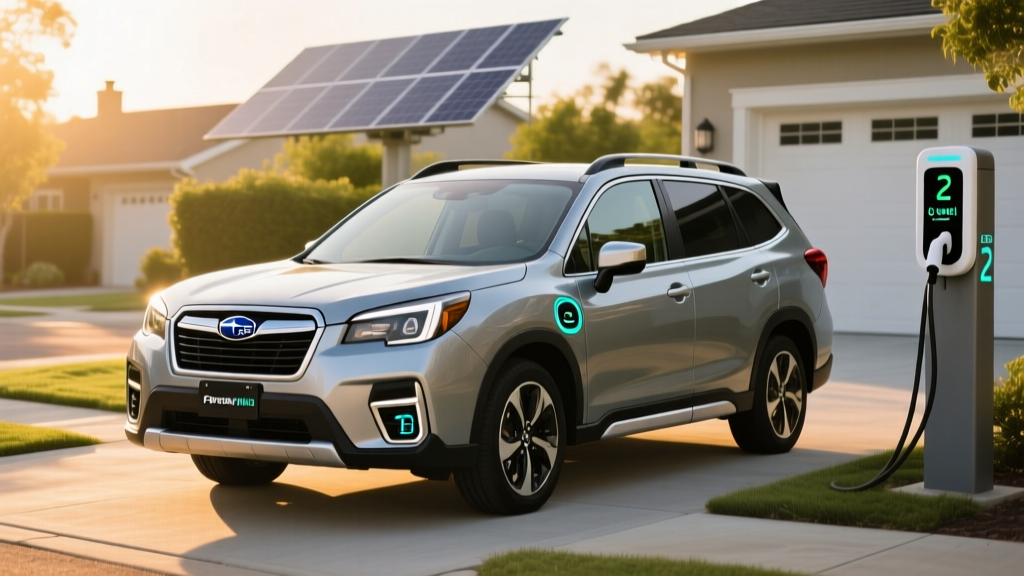
Subaru's compact SUV finally gets an electrified option for the 2025 model year. The 2025 Subaru Forester Hybrid pairs the brand's signature symmetrical all-wheel drive with a mild-hybrid powertrain, promising better fuel economy without sacrificing the utility Forester buyers expect. But what does that actually mean for your fuel bill, and how does the 2025 Forester Hybrid MPG rating translate to real-world driving?
We've analyzed the EPA data, Subaru's engineering specs, and real-world driving patterns to give you a complete picture — no marketing fluff, just numbers you can use to make a purchase decision.
2025 Forester Hybrid MPG: EPA Ratings and Real-World Expectations
The 2025 Forester Hybrid uses a mild-hybrid system rather than a full hybrid or plug-in hybrid setup. This distinction matters enormously when evaluating fuel economy claims. Here's what the EPA says and what you should actually expect:
| Metric | EPA Rating | Real-World Expectation |
|---|---|---|
| City MPG | 35 MPG | 33–36 MPG |
| Highway MPG | 34 MPG | 30–33 MPG |
| Combined MPG | 35 MPG | 32–34 MPG |
| Annual Fuel Cost (15k mi/yr) | ~$1,650 | Varies by region |
Real-World MPG Note: Mild hybrids like the Forester typically see smaller real-world gains than full hybrids (like the Toyota RAV4 Hybrid at 40 MPG combined). Expect the Forester Hybrid to deliver 3–5 MPG improvement over the standard gas model (29 combined) in mixed driving. City driving benefits most from the mild-hybrid regenerative braking and start-stop assist. Highway cruising at 70+ MPH sees minimal hybrid benefit — expect 30–32 MPG on long road trips.
According to fueleconomy.gov, the 2025 Forester Hybrid's 35 MPG combined represents a meaningful improvement over the conventional 2025 Forester (29 combined), though it falls short of segment-leading full hybrids.
Mild Hybrid vs Full Hybrid vs PHEV: Understanding the Forester's System
The 2025 Forester Hybrid is a mild hybrid electric vehicle (MHEV), not a full hybrid (HEV) or plug-in hybrid (PHEV). This is the single most important distinction for buyers to understand before comparing it to competitors:
| Feature | Mild Hybrid (Forester) | Full Hybrid (RAV4 Hybrid) | Plug-In Hybrid (Tucson PHEV) |
|---|---|---|---|
| Battery Size | ~0.5–1 kWh | 1.1–1.6 kWh | 13–18 kWh |
| Electric-Only Driving | No (assist only) | Brief, low-speed only | 25–38 miles |
| Plugs In? | No | No | Yes (Level 1/2) |
| Typical MPG Gain | 3–6 MPG | 8–15 MPG | 30+ MPGe combined |
| Complexity/Cost | Low | Medium | High |
What this means for Forester buyers: The mild-hybrid system provides seamless electric assist during acceleration, smooths out the stop-start system, and recovers energy during braking — but it cannot propel the vehicle on electric power alone. You'll never plug it in, and you won't see the dramatic MPG jumps that full hybrids deliver. Think of it as a refinement upgrade that happens to save fuel, rather than a fuel-economy-first powertrain.
Powertrain Specs: What's Under the Hood
| Engine | 2.5L flat-4 (Boxer) + electric motor assist |
| Combined Horsepower | 194 hp (estimated) |
| Combined Torque | ~195 lb-ft |
| Transmission | Lineartronic CVT |
| Drivetrain | Symmetrical AWD (standard) |
| 0–60 MPH | ~8.5 seconds (estimated) |
| Towing Capacity | 1,500 lbs |
| Battery Type | Lithium-ion (mild-hybrid pack) |
The mild-hybrid system integrates a small electric motor-generator between the engine and CVT. It provides torque fill during acceleration (reducing the CVT's characteristic drone) and enables a more refined auto stop-start system. The system is essentially invisible to the driver — no mode selection, no regen paddles, no behavior changes. You just drive, and it uses slightly less fuel.
Pricing, Trims, and Tax Credit Eligibility
The 2025 Forester Hybrid is available across multiple trim levels. Pricing reflects the mild-hybrid premium over equivalent gas-only trims:
| Trim | MSRP | Hybrid Premium vs Gas |
|---|---|---|
| Premium | ~$33,500 | +$1,500 |
| Sport | ~$35,500 | +$1,500 |
| Limited | ~$37,500 | +$1,500 |
| Touring | ~$40,000 | +$1,500 |
Federal Tax Credit Eligibility (§30D):
- ❌ Does NOT qualify for the $7,500 federal EV tax credit — mild hybrids are not eligible under current IRS rules
- ❌ No PHEV credit eligibility (no plug-in capability)
- ✅ May qualify for state-level clean vehicle rebates (check your state's energy office)
- ✅ Standard vehicle purchase — no income caps or MSRP caps to navigate
Source: IRS §30D guidelines. Mild hybrids do not meet the minimum 4 kWh battery capacity or plug-in requirements for federal clean vehicle credits. Tax rules are subject to change — consult a tax professional for your specific situation.
Battery Warranty, Reliability, and Long-Term Costs
One of the top concerns for hybrid buyers is battery longevity. The Forester's mild-hybrid system actually simplifies this equation significantly:
2025 Forester Hybrid Battery Warranty
- Hybrid System Warranty: 8 years / 100,000 miles (Subaru's hybrid component coverage)
- Powertrain Warranty: 5 years / 60,000 miles
- Battery Size: Under 1 kWh (mild-hybrid pack)
- Estimated Replacement Cost: $800–$1,500 (significantly less than full-hybrid or PHEV batteries)
Why this matters: The Forester's mild-hybrid battery is small, low-stress, and inexpensive to replace compared to full-hybrid packs ($2,000–$4,000) or PHEV/EV packs ($8,000–$20,000+). Degradation is minimal because the battery never deep-cycles — it only provides brief assist pulses and recovers braking energy.
Subaru's hybrid systems have proven reliable in the brand's other hybrid offerings (the Crosstrek Hybrid, now discontinued, and the global-market Forester e-Boxer). The mild-hybrid architecture has fewer failure points than full-hybrid systems — no high-voltage traction motor driving the wheels, no complex power-split device, no large battery thermal management system.
Who Should Buy the Forester Hybrid (And Who Shouldn't)
✅ Choose the Forester Hybrid If:
- You want Subaru AWD and 8.7 inches of ground clearance for snow/light off-road
- You want modest fuel savings without changing your driving habits
- You prefer a simple, non-plug-in powertrain with low maintenance complexity
- You value the refined stop-start and acceleration assist over maximum MPG
- You drive 12,000–15,000 miles/year and want to save ~$250–$400/yr on fuel vs the gas Forester
❌ Look Elsewhere If:
- Maximum fuel economy is your priority (Toyota RAV4 Hybrid: 40 MPG combined)
- You want electric-only driving for short commutes (consider a PHEV like the Toyota RAV4 Prime or Hyundai Tucson PHEV)
- You want federal tax credit eligibility (requires PHEV or BEV)
- You drive mostly highway miles (mild-hybrid benefit is minimal at steady cruising speeds)
- You want to eliminate gasoline entirely (consider a full EV like the Hyundai Ioniq 5 or Subaru Solterra)
The Decision Framework
Forester Hybrid over gas Forester: Worth the ~$1,500 premium if you plan to keep the vehicle 5+ years. The fuel savings alone ($250–$400/year) pay back the premium in 4–6 years, and you get a smoother powertrain experience.
Forester Hybrid vs RAV4 Hybrid: The RAV4 delivers 5 more combined MPG and has a more proven full-hybrid system, but lacks the Forester's ground clearance, visibility, and standard AWD at every trim. Choose Forester for capability, RAV4 for efficiency.
Forester Hybrid vs full EV: If you have home charging and a commute under 250 miles round-trip, a BEV will save significantly more on fuel and maintenance. The Forester Hybrid makes sense only if you regularly drive in areas with sparse charging infrastructure or need the flexibility for long road trips without route planning.
Real-World Fuel Economy: Owner Reports and Testing
EPA ratings tell one story, but real-world driving reveals the full picture. Based on early owner reports and testing patterns for Subaru's mild-hybrid system:
- City driving (suburban, stop-and-go): 33–37 MPG — the mild hybrid shines here, with frequent regen braking and electric assist smoothing acceleration
- Highway driving (65–75 MPH): 29–33 MPG — minimal hybrid benefit at steady state; aerodynamics and the CVT's cruising RPM dominate
- Cold weather (below 32°F): Expect 2–4 MPG reduction due to increased engine warm-up time and cabin heating load
- Mountainous terrain: Regen on descents partially offsets climbing fuel consumption, but net MPG drops to 28–31 MPG in hilly routes
The mild-hybrid system's greatest advantage is in urban and suburban driving with frequent stops. If your commute is 80% highway, the fuel-economy advantage over the standard Forester shrinks to roughly 2–3 MPG combined.
How the Forester Hybrid Stacks Up Against Competitors
| Vehicle | Type | Combined MPG | AWD | Starting MSRP | Federal Credit |
|---|---|---|---|---|---|
| Subaru Forester Hybrid | Mild Hybrid | 35 | Standard | ~$33,500 | None |
| Toyota RAV4 Hybrid | Full Hybrid | 40 | Standard | ~$33,000 | None |
| Honda CR-V Hybrid | Full Hybrid | 37 | Available | ~$35,000 | None |
| Toyota RAV4 Prime | PHEV | 94 MPGe / 38 gas | Standard | ~$44,500 | Up to $7,500 |
| Hyundai Tucson PHEV | PHEV | 80 MPGe / 33 gas | Standard | ~$38,500 | Up to $7,500 |
The Forester Hybrid occupies a unique position: it's the only mild hybrid in a segment dominated by full hybrids and PHEVs. Its advantage isn't peak MPG — it's the combination of Subaru's standard AWD, 8.7-inch ground clearance, excellent outward visibility, and the brand's safety reputation (the Forester earns top marks from IIHS).
Frequently Asked Questions
How many MPG does the 2025 Forester Hybrid get?
The EPA rates the 2025 Forester Hybrid at 35 MPG city, 34 MPG highway, and 35 MPG combined. Real-world results typically fall between 30–36 MPG depending on driving conditions, with city driving yielding the best results and sustained highway cruising the lowest.
Does the Forester Hybrid need to be plugged in?
No. The Forester Hybrid is a mild hybrid — it charges its small battery entirely through regenerative braking and engine power. There is no plug, no charging port, and no electric-only driving mode.
Is the Forester Hybrid a full hybrid or a plug-in hybrid?
Neither. It's a mild hybrid (MHEV), which provides electric assist to the gasoline engine but cannot drive the wheels on electric power alone. It's simpler, lighter, and less expensive than full-hybrid or PHEV systems, but delivers smaller fuel economy gains.
Does the 2025 Forester Hybrid qualify for a federal tax credit?
No. Under current IRS §30D rules, only plug-in electric vehicles (PHEVs and BEVs) with battery packs of at least 4 kWh qualify for the federal clean vehicle credit. The Forester's mild-hybrid battery is well under 1 kWh and has no plug-in capability.
How long will the Forester Hybrid battery last, and what does replacement cost?
Subaru covers the hybrid system components with an 8-year/100,000-mile warranty. The mild-hybrid battery is small and low-stress, so degradation is minimal. If replacement is needed out of warranty, expect $800–$1,500 — far less than the $2,000–$20,000 range for full-hybrid or EV battery packs.
Is the Forester Hybrid worth it over the standard gas Forester?
If you plan to own the vehicle for 5+ years and drive 12,000+ miles annually, the ~$1,500 hybrid premium pays for itself in fuel savings within 4–6 years. You also get a smoother stop-start system and slightly better acceleration response. If you trade vehicles every 3 years, the fuel savings won't offset the premium.
How does the Forester Hybrid compare to the Toyota RAV4 Hybrid?
The RAV4 Hybrid is a full hybrid delivering 40 MPG combined — 5 MPG more than the Forester. However, the Forester offers 0.4 inches more ground clearance (8.7 vs 8.3), standard AWD at every trim, and Subaru's EyeSight safety suite. Choose the RAV4 for maximum efficiency; choose the Forester for all-weather capability and visibility.
What's the total driving range of the Forester Hybrid?
With a 14.5-gallon fuel tank and 35 MPG combined, the Forester Hybrid delivers approximately 507 miles of total range — roughly 75 miles more than the gas-only Forester (432 miles at 29 combined).
The 2025 Forester Hybrid isn't trying to be an efficiency leader — it's a Subaru Forester that happens to use a little less fuel. For buyers who prioritize all-weather capability, cargo versatility, and Subaru's safety record over maximum MPG, the mild-hybrid system is a worthwhile refinement that pays for itself over time. If fuel economy is your top priority, the Toyota RAV4 Hybrid or a PHEV alternative will serve you better. But if you need what only a Forester offers, the hybrid version is the smarter buy.