The Toyota RAV4 Hybrid has held the best-selling hybrid SUV crown for years, and the 2025 model year keeps the formula intact: standard all-wheel drive, a spacious cabin, and fuel economy that embarrasses vehicles costing twice as much. But buyers researching the 2025 RAV4 Hybrid interior and powertrain face a key decision — the conventional hybrid (HEV) or the plug-in RAV4 Prime (PHEV). This guide breaks down every number you need to decide.
HEV vs PHEV: Which RAV4 Are We Talking About?
Toyota sells two electrified RAV4 variants. They share a body shell and similar interior layouts, but the powertrains serve very different ownership patterns.
| Attribute | RAV4 Hybrid (HEV) | RAV4 Prime (PHEV) |
|---|---|---|
| Plug-in required? | No — self-charging via regenerative braking and engine | Yes — plug in for electric-only driving |
| Battery size | ~1.6 kWh (NiMH, small buffer) | 18.1 kWh (lithium-ion) |
| Electric-only range | None (EV mode limited to ~1 mile at low speed) | 42 miles (EPA) |
| Combined horsepower | 219 hp | 302 hp |
| DC fast charging | No | No (Level 2 AC only) |
| Federal tax credit | None | None for 2025 (credit exhausted) |
The HEV suits drivers who want better fuel economy with zero behavior change. The Prime suits drivers with home charging access who want EV-like daily commutes with gas-engine backup for road trips.
2025 RAV4 Hybrid Interior: Materials, Tech, and Cargo
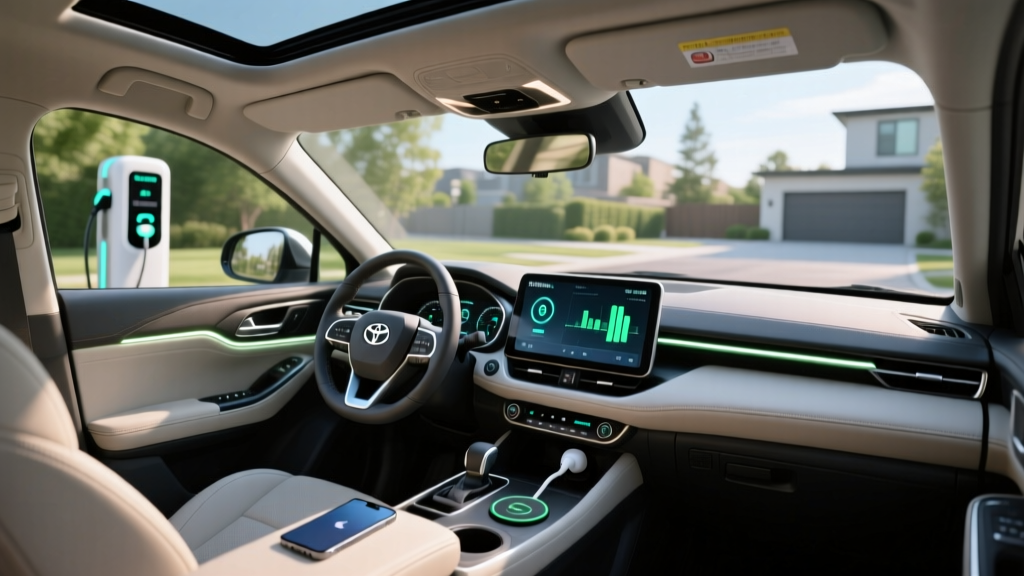
Step inside any 2025 RAV4 Hybrid and you'll find Toyota's latest 8-inch or available 12.3-inch touchscreen running the Toyota Audio Multimedia system with wireless Apple CarPlay and Android Auto. The dashboard uses a mix of soft-touch materials on upper surfaces and durable plastics lower down — nothing luxury-grade, but well-assembled and rattle-free based on long-term ownership reports.
Key interior dimensions and features:
- Front headroom: 40.1 inches
- Rear legroom: 38.0 inches — competitive with mid-size SUVs
- Cargo behind rear seats: 37.6 cubic feet (HEV); Prime loses ~1 cu ft due to larger battery pack
- Cargo with seats folded: 69.8 cubic feet
- Standard: 6 airbags, Toyota Safety Sense 2.5+ (pre-collision, lane tracing, adaptive cruise, road sign assist)
- Available: Panoramic moonroof, heated/ventilated front seats, JBL 11-speaker audio, digital rearview mirror
The Prime's larger battery sits beneath the floor, which raises the cargo floor slightly and eliminates the spare tire (a tire repair kit is included instead). The HEV retains a compact spare.
Fuel Economy: EPA MPG and Real-World Results
The RAV4 Hybrid's efficiency is its core selling point. Here's how the numbers break down according to EPA data on fueleconomy.gov:
| Model | City MPG | Highway MPG | Combined MPG | Annual Fuel Cost* |
|---|---|---|---|---|
| RAV4 Hybrid AWD | 41 | 38 | 39 | ~$1,550 |
| RAV4 Prime AWD (hybrid mode after EV depleted) | 40 | 36 | 38 | ~$1,600 |
| RAV4 Prime (charge-sustaining + EV combined) | 94 MPGe combined (with charge) | ~$900 (if charged daily) | ||
| Gas RAV4 AWD (baseline) | 27 | 35 | 30 | ~$2,000 |
*Based on 15,000 miles/year at $3.50/gallon regular unleaded. Your costs will vary with local fuel prices.
Real-World MPG: Why Hybrids Often Beat the EPA Sticker
Unlike gas cars, hybrids frequently exceed their EPA city rating in real-world stop-and-go driving because regenerative braking recovers energy that would otherwise be lost. On a mixed suburban commute with frequent stops, expect 40-43 MPG from the RAV4 Hybrid. Highway-only driving at 75+ mph typically drops to 34-36 MPG, as the electric motor contributes less at sustained high speeds. In cold weather (below 30°F), expect a 5-8 MPG reduction due to the engine running more frequently for cabin heat.
Powertrain Specs: Engine, Motors, and Performance
| Specification | RAV4 Hybrid | RAV4 Prime |
|---|---|---|
| Engine | 2.5L 4-cylinder Atkinson cycle | 2.5L 4-cylinder Atkinson cycle |
| Front motor | 134 hp / 199 lb-ft | 180 hp / 199 lb-ft |
| Rear motor (AWD) | 54 hp / 89 lb-ft | 54 hp / 89 lb-ft |
| Net system horsepower | 219 hp | 302 hp |
| 0-60 mph | 7.4 seconds | 5.7 seconds |
| Transmission | eCVT (planetary gearset) | eCVT (planetary gearset) |
| Drivetrain | Electronic AWD (AWD-i) | Electronic AWD (AWD-i) |
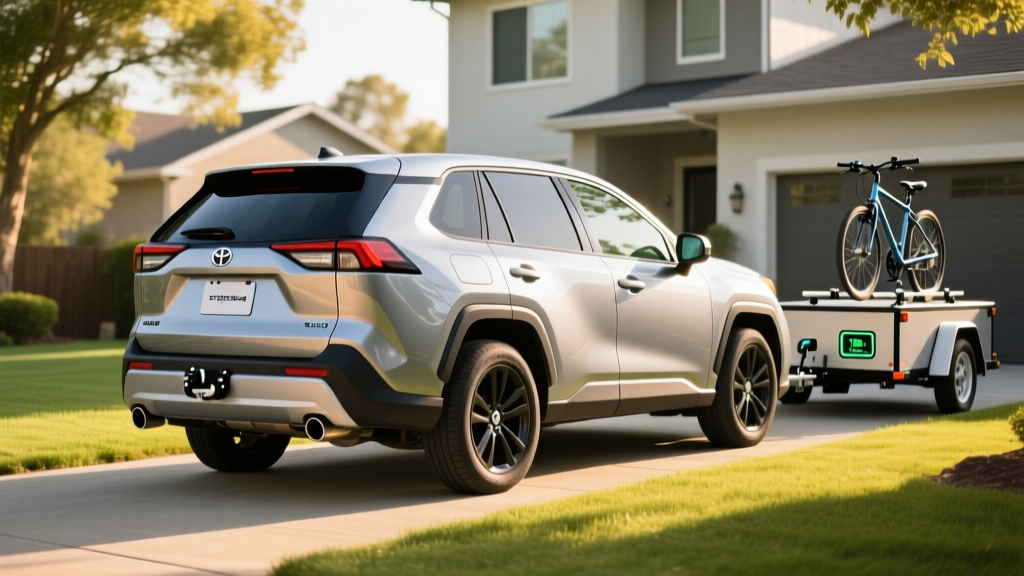
| Towing capacity | 1,750 lbs | 1,750 lbs |
The eCVT isn't a traditional belt-and-pulley CVT — it's a planetary gearset that blends engine and motor power seamlessly. There's no rubber-band effect, and acceleration feels linear. The Prime's extra 83 hp comes from its more powerful front motor and larger battery, making it one of the quickest compact SUVs on the market, electrified or not.
RAV4 Prime: Electric-Only Range and Charging Details
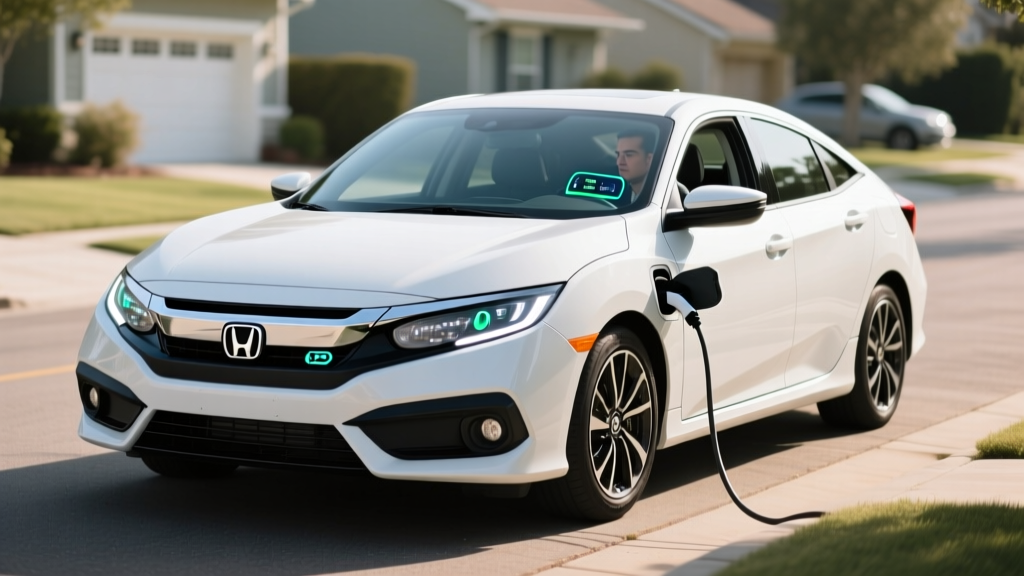
If you're considering the plug-in Prime, range and charging logistics determine whether it fits your lifestyle:
- EPA electric-only range: 42 miles (SE trim with 18-inch wheels); 39 miles (XSE with 19-inch wheels)
- Total range (EV + gas): ~600 miles combined
- Battery: 18.1 kWh lithium-ion, mounted under the rear floor
- Level 1 charging (120V standard outlet): ~12 hours for a full charge — feasible for overnight top-ups if you drive less than the EV range daily
- Level 2 charging (240V): ~2.5 hours with the Prime's onboard 6.6 kW charger (up from the previous-generation 3.3 kW)
- DC fast charging: Not available — the Prime uses a J1772 AC inlet only
The lack of DC fast charging is the Prime's most-cited limitation. On road trips, you'll charge on gas, not electricity. But for daily commutes under 40 miles with overnight Level 2 home charging, many Prime owners report using gasoline only a handful of times per year.
Pricing, Trims, and Tax Credit Eligibility
The 2025 RAV4 Hybrid lineup starts at a reasonable entry point and climbs with trim:
| Trim (HEV) | MSRP | Key Additions |
|---|---|---|
| LE | $33,575 | TSS 2.5+, 8-inch display, 17-inch alloy wheels |
| XLE | $35,075 | Blind spot monitor, dual-zone climate, smart key |
| XLE Premium | $37,975 | SofTex seats, moonroof, 12.3-inch display |
| Woodland Edition | $38,575 | All-terrain tires, TRD-tuned suspension, roof rack |
| Limited | $40,475 | Heated/ventilated seats, JBL audio, digital mirror |
The RAV4 Prime starts at $44,775 (SE) and $48,775 (XSE), reflecting its larger battery and more powerful powertrain.
Federal Tax Credit Status
Under current IRS §30D rules, the RAV4 Prime does not qualify for the $7,500 federal tax credit for 2025. Toyota's clean vehicle credits were exhausted when the manufacturer hit the 200,000-unit cap under prior law, and the Prime does not meet the current critical-mineral and battery-component sourcing requirements under the Inflation Reduction Act. The standard RAV4 Hybrid (HEV) has never qualified for the §30D credit, as that credit applies only to plug-in vehicles with at least 7 kWh of battery capacity.
Some states offer their own hybrid or PHEV rebates — check your state energy office or utility provider for local incentive programs that may apply.
Reliability, Battery Warranty, and Replacement Costs
Toyota's hybrid system is among the most proven in the industry, with over 25 years of production data since the original Prius. The RAV4 Hybrid carries:
- Hybrid battery warranty: 10 years / 150,000 miles (whichever comes first) — transferable to subsequent owners
- Hybrid system components warranty: 8 years / 100,000 miles (inverter, converter, control module)
- Basic vehicle warranty: 3 years / 36,000 miles
- Powertrain warranty: 5 years / 60,000 miles
What if the battery fails out of warranty? Based on current parts pricing, a RAV4 Hybrid traction battery replacement runs approximately $3,000-$4,500 at a Toyota dealer (including labor). The RAV4 Prime's larger 18.1 kWh lithium-ion pack is more expensive — expect $8,000-$12,000 if replacement is needed. However, Toyota hybrid batteries rarely fail catastrophically; individual cell modules can sometimes be replaced for far less. Independent hybrid repair shops have also emerged in most metro areas, offering refurbished batteries at 40-60% of dealer pricing.
Real-world longevity data is encouraging: fleets and high-mileage owners regularly report 200,000+ miles on the original hybrid battery with minimal capacity loss, particularly the HEV's smaller NiMH pack which operates in a narrow state-of-charge window that reduces stress.
Pros
- 39 MPG combined with AWD standard — rare efficiency for the class
- Spacious 37.6 cu ft cargo area with excellent rear-seat room
- Toyota Safety Sense 2.5+ standard on every trim
- 10-year / 150,000-mile hybrid battery warranty
- Strong resale value; RAV4 Hybrid holds value better than most compact SUVs
- Prime offers 42-mile EV range for gas-free commuting
Cons
- No DC fast charging on Prime — limits road-trip EV utility
- Interior materials are functional, not premium at higher trims
- No federal tax credit for either model in 2025
- 1,750-lb towing capacity trails turbocharged competitors
- Prime's $44,775+ starting price narrows the gap to full EVs
- eCVT drone under hard acceleration (common to all Toyota hybrids)
Who Should Choose the RAV4 Hybrid vs a Full EV or Gas SUV?
| Your Situation | Best Choice | Why |
|---|---|---|
| No home charging; want lower fuel bills | RAV4 Hybrid (HEV) | No plug needed; 39 MPG on regular gas; lowest upfront cost |
| Home charging available; commute under 40 miles | RAV4 Prime (PHEV) | Daily EV driving with gas backup; 94 MPGe when charged |
| Home charging + mostly city/suburban driving | Full EV (e.g., Tesla Model Y, Hyundai Ioniq 5) | Lower per-mile energy cost; less maintenance; available tax credit |
| Frequent long road trips in rural areas | RAV4 Hybrid (HEV) | No charging dependency; 450+ mile range; sparse charging infrastructure |
| Want maximum performance + efficiency | RAV4 Prime | 302 hp and 5.7-sec 0-60 with 42-mile EV range |
The RAV4 Hybrid occupies a practical sweet spot: it requires zero lifestyle adjustment from a gas car while cutting fuel costs by roughly 25-30%. The Prime makes sense if you can charge at home and your daily driving stays under 42 miles — but if that's your situation and you rarely take long trips, a full battery-electric vehicle may offer lower operating costs and access to the $7,500 federal credit that the Prime no longer qualifies for.
Frequently Asked Questions
How many MPG does the 2025 RAV4 Hybrid actually get?
The EPA rates it at 41 city / 38 highway / 39 combined MPG. In real-world mixed driving, most owners report 38-43 MPG. City-heavy routes with frequent stops tend to push MPG above the EPA estimate thanks to regenerative braking. Sustained highway driving at 75+ mph and cold-weather operation can drop it to the low-to-mid 30s.
How far can the RAV4 Prime go on electric only?
The EPA rates the 2025 RAV4 Prime at 42 miles of electric-only range on the SE trim (18-inch wheels) and 39 miles on the XSE (19-inch wheels). Real-world EV range varies with temperature and driving style — expect 35-38 miles in moderate weather and as low as 28-30 miles in freezing temperatures when cabin heating draws additional power.
Does the RAV4 Hybrid or Prime qualify for any tax credit?
Neither qualifies for the federal §30D clean vehicle credit in 2025. The standard hybrid was never eligible (it lacks the required battery capacity and plug), and the Prime lost eligibility due to battery-sourcing requirements under the Inflation Reduction Act. Check with your state energy office or utility for possible local rebates — some states and electric cooperatives offer $500-$2,000 incentives for PHEV purchases.
Is the RAV4 Hybrid reliable and what does battery replacement cost?
Toyota's hybrid powertrain has an exceptional reliability record spanning decades. The hybrid battery is warranted for 10 years / 150,000 miles. Out-of-warranty replacement costs approximately $3,000-$4,500 for the HEV and $8,000-$12,000 for the Prime's larger pack. In practice, catastrophic hybrid battery failure is rare — most units last well beyond 200,000 miles with proper maintenance.
Do I need to plug in the RAV4 Hybrid?
No. The standard RAV4 Hybrid (HEV) charges its small battery through regenerative braking and the gasoline engine. You never plug it in — just fill it with regular unleaded at any gas station. Only the RAV4 Prime (PHEV) requires plug-in charging to access its electric-only range.
How does the RAV4 Hybrid compare to the gas-only RAV4?
The gas RAV4 AWD returns 30 MPG combined versus the Hybrid's 39 MPG — a 30% improvement. The Hybrid also delivers smoother acceleration (the electric motor fills in torque at low RPM where the gas engine is weakest) and quieter operation in stop-and-go traffic. The Hybrid's ~$3,000-$4,000 price premium over a comparable gas trim typically pays back in fuel savings within 3-5 years depending on your annual mileage and local gas prices.