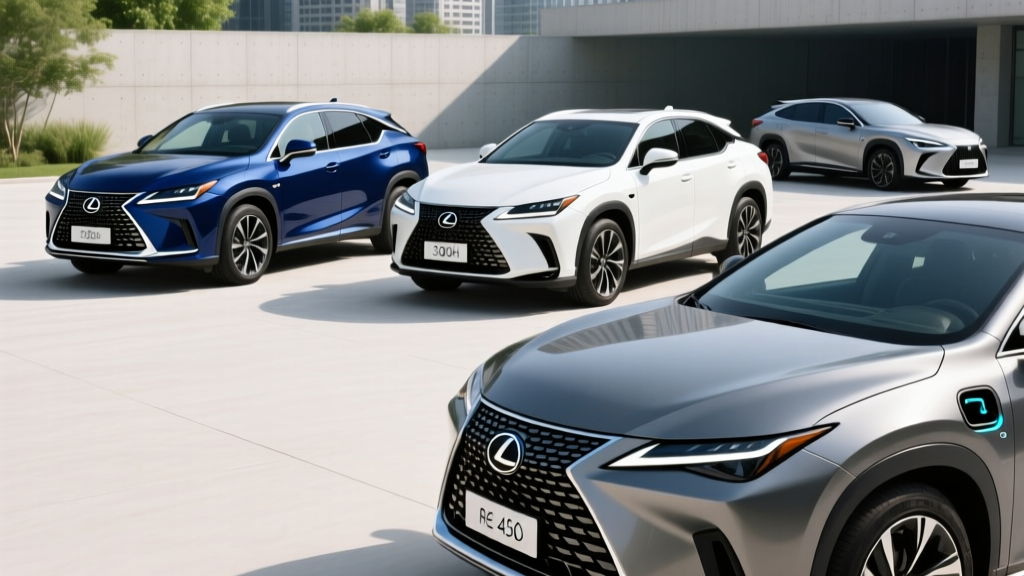
Lexus has spent over two decades refining hybrid powertrains since the original RX 400h debuted, and the 2025 lineup represents the most comprehensive electrified portfolio in the luxury segment. Every core model — from the subcompact UX to the three-row TX — offers a hybrid variant, and two models add plug-in hybrid (PHEV) capability. But with six distinct hybrid nameplates and varying degrees of electrification, choosing the right one requires understanding exactly what each powertrain delivers in real-world efficiency, performance, and ownership cost.
This guide breaks down every 2025 Lexus hybrid and PHEV with EPA figures, real-world expectations, battery warranty specifics, and tax credit eligibility so you can match a model to your driving pattern.
HEV vs PHEV: How Lexus Hybrid Technology Differs
Before comparing models, it is essential to distinguish between the two hybrid architectures Lexus uses in 2025.
Conventional Hybrid (HEV)
A conventional Lexus hybrid pairs a gasoline engine with one or more electric motors and a small battery (typically 1–2 kWh). The battery charges through regenerative braking and the engine — you never plug it in. The system automatically switches between electric and gas power to maximize efficiency, especially in city driving. Examples: UX 300h, NX 350h, RX 350h, TX 500h, LC 500h, ES 300h.
Plug-In Hybrid (PHEV)
A Lexus PHEV uses a larger battery (18+ kWh) that you can charge from a wall outlet or public charger, providing a meaningful electric-only driving range before the gasoline engine engages. Once the battery depletes, it operates as a conventional hybrid. Examples: NX 450h+, RX 500h+.
The practical difference: HEVs deliver consistent fuel savings with zero lifestyle change. PHEVs reward owners who can charge at home or work regularly, potentially eliminating gasoline use on short commutes while retaining long-distance capability.
2025 Lexus Hybrid Lineup: MPG and Performance Specs
| Model | Type | Engine + Motors | Net HP | EPA City | EPA Hwy | EPA Combined | 0-60 mph | Base MSRP |
|---|---|---|---|---|---|---|---|---|
| UX 300h | HEV | 2.0L I4 + 2 motors (AWD) | 196 | 43 | 41 | 42 | 7.9s | $38,450 |
| NX 350h | HEV | 2.5L I4 + 2 motors (AWD) | 244 | 41 | 37 | 39 | 7.2s | $42,565 |
| NX 450h+ | PHEV | 2.5L I4 + 2 motors (AWD) | 304 | 38 (hybrid) | 37 (hybrid) | 37 (hybrid) | 6.0s | $49,915 |
| RX 350h | HEV | 2.5L I4 + 2 motors (AWD) | 246 | 37 | 34 | 36 | 7.4s | $52,710 |
| RX 450h+ | PHEV | 2.5L I4 + 2 motors (AWD) | 302 | 35 (hybrid) | 34 (hybrid) | 35 (hybrid) | 6.2s | $61,800 |
| TX 500h | HEV | 2.4L Turbo I4 + 2 motors (AWD) | 366 | 27 | 28 | 27 | 5.9s | $63,950 |
| ES 300h | HEV | 2.5L I4 + 1 motor (FWD) | 215 | 43 | 44 | 44 | 7.7s | $44,590 |
| LC 500h | HEV | 3.5L V6 + 2 motors (RWD) | 354 | 26 | 33 | 29 | 4.8s | $103,250 |
Source: fueleconomy.gov EPA estimates for 2025 model year. Actual mileage will vary.
Real-World MPG: What Owners Actually See
Lexus hybrids, like all Toyota-group hybrid systems, tend to exceed their EPA estimates in city driving because the electric motor handles low-speed propulsion where gasoline engines are least efficient. On highway-heavy commutes at 75+ mph, expect results closer to or slightly below the highway EPA figure.
Real-World MPG Expectations
- UX 300h: EPA 42 combined. City-heavy drivers regularly report 44–47 MPG. Highway cruising at 75 mph drops to ~38–40 MPG.
- NX 350h: EPA 39 combined. Expect 41–44 MPG in mixed city driving, 35–37 MPG on sustained highway trips.
- RX 350h: EPA 36 combined. Real-world mixed driving averages 35–38 MPG; highway-only drops to 32–34 MPG.
- ES 300h: EPA 44 combined. One of the best real-world performers — 45–48 MPG in city driving is common, with highway around 40–42 MPG.
- TX 500h: EPA 27 combined. As a 4,800+ lb three-row SUV with a turbo, expect 25–28 MPG in mixed use. This powertrain prioritizes performance over efficiency.
Cold weather (below 30°F) reduces hybrid efficiency by roughly 5–10% across the lineup because the engine runs more frequently to provide cabin heat and warm the catalytic converter. This penalty is smaller than what full EVs experience in winter but still noticeable on short trips.
PHEV Deep Dive: NX 450h+ and RX 450h+ Electric Range
| Spec | NX 450h+ | RX 450h+ |
|---|---|---|
| Battery Capacity | 18.1 kWh (lithium-ion) | 18.1 kWh (lithium-ion) |
| EPA Electric-Only Range | 37 miles | 35 miles |
| Total Range (EV + Gas) | ~520 miles | ~490 miles |
| Level 1 Charging (120V) | ~12 hours (0–100%) | ~12 hours (0–100%) |
| Level 2 Charging (240V, 3.3 kW) | ~5.5 hours (0–100%) | ~5.5 hours (0–100%) |
| DC Fast Charging | Not supported | Not supported |
| MPGe (electric mode) | 84 MPGe | 78 MPGe |
Neither Lexus PHEV supports DC fast charging — a notable limitation compared to competitors like the Jeep Grand Cherokee 4xe or BMW X5 xDrive50e. Charging is limited to Level 2 (3.3 kW onboard charger), meaning a full charge takes roughly 5.5 hours from a 240V home outlet. For daily commuters who plug in overnight, this is adequate; for road-trip charging, it means the system reverts to hybrid mode once the battery depletes.
The 37-mile electric range in the NX 450h+ covers the average American one-way commute of ~16 miles (FHWA data) with margin to spare, meaning many owners can complete daily driving without using gasoline — provided they charge nightly.
Battery Warranty, Longevity, and Replacement Cost
Lexus Hybrid Battery Warranty (2025 Models)
- Hybrid Battery: 10 years / 150,000 miles (whichever comes first), transferable to subsequent owners
- Hybrid System Components: 8 years / 100,000 miles (inverter, transaxle, control module)
- Capacity Retention Threshold: Warranty covers battery if it drops below a functional threshold that impairs vehicle operation — Lexus does not publish a specific percentage, but real-world failures before 150k miles are rare
Lexus (and parent company Toyota) has the longest track record in hybrid battery durability. The nickel-metal hydride and lithium-ion packs used across the lineup have demonstrated 200,000+ mile lifespans in fleet and taxi service with minimal degradation. Individual cell replacement is possible on some models, avoiding a full pack swap.
Replacement cost if out of warranty: A full hybrid battery replacement for a Lexus NX or RX typically runs $3,500–$5,500 at a dealership, including labor. Independent hybrid specialists can often perform the same service for $2,500–$4,000. The smaller UX 300h and ES 300h packs trend toward $3,000–$4,500. These costs have declined as third-party refurbishment options have expanded.
For PHEVs (NX 450h+, RX 450h+), the larger 18.1 kWh lithium-ion pack replacement would be more expensive — estimated at $6,000–$9,000 if needed out of warranty, though failure rates remain very low within the warranty period.
Tax Credits and Incentives for 2025 Lexus Hybrids
Under current IRS §30D rules, the federal tax credit landscape for Lexus electrified vehicles is limited:
- Conventional hybrids (UX 300h, NX 350h, RX 350h, TX 500h, ES 300h, LC 500h): Do NOT qualify for the federal §30D clean vehicle credit. This credit applies only to plug-in vehicles with at least 7 kWh of battery capacity.
- NX 450h+ and RX 450h+ (PHEVs): These have 18.1 kWh batteries and meet the battery-capacity threshold. However, eligibility for the full $7,500 credit depends on critical-mineral sourcing, battery-component manufacturing origin, buyer income caps ($150k single / $300k joint), and the MSRP cap of $80,000 for SUVs. As of 2025, the NX 450h+ and RX 450h+ base trims fall under the MSRP cap, but critical-mineral and battery-component sourcing requirements may reduce or eliminate the credit. Check the latest qualified vehicle list at fueleconomy.gov and verify with a tax professional.
- Point-of-sale transfer: If eligible, the credit can be transferred to the dealer at purchase, reducing your out-of-pocket cost immediately rather than waiting for a tax refund.
- State incentives: Several states offer additional rebates for PHEVs (e.g., California, Colorado, New York). Amounts vary by jurisdiction and income — check your state energy office or AFDC incentive database.
Do not assume a flat $7,500 credit applies. Battery sourcing requirements under the Inflation Reduction Act have disqualified many PHEVs from the full amount, and rules continue to evolve. Consult IRS.gov clean vehicle credits for current guidance.
Hybrid vs PHEV vs EV: Which 2025 Lexus Fits Your Life?
Choose a Lexus HEV (UX 300h, NX 350h, RX 350h, ES 300h) if:
- You cannot charge at home (apartment, street parking, no garage outlet)
- You want maximum simplicity — no plug, no behavior change
- Your driving is a mix of city and highway with no predictable short-commute pattern
- You want the lowest upfront price in the Lexus lineup
Choose a Lexus PHEV (NX 450h+, RX 450h+) if:
- You have reliable Level 2 home charging (garage or dedicated outlet)
- Your daily round-trip commute is under 35 miles
- You want to minimize gasoline use on weekdays but take road trips on weekends without range anxiety
- You may qualify for federal or state PHEV incentives
Choose a full EV (e.g., Lexus RZ 450e) instead if:
- You have home charging and rarely drive more than 200 miles in a day
- You want zero tailpipe emissions and the lowest per-mile energy cost
- You are willing to plan around DC fast charging on road trips
Reliability and Ownership Verdict
Lexus consistently tops J.D. Power Vehicle Dependability Studies and Consumer Reports reliability rankings, and the hybrid powertrain is a core reason. The e-CVT transaxle used in most Lexus hybrids has no traditional gears or friction clutches to wear, and the electric motor-generators have demonstrated exceptional longevity. The 2.5L four-cylinder engines in the NX, RX, and ES hybrids are naturally aspirated and run the Atkinson cycle, which reduces thermal stress and extends engine life.
Insurance costs for Lexus hybrids run 5–15% higher than their gasoline-only counterparts due to higher repair costs for hybrid-specific components, though this gap has narrowed as hybrid repair training has become widespread.
Strengths
- Class-leading fuel economy in the luxury segment (ES 300h at 44 MPG combined)
- 10-year / 150,000-mile hybrid battery warranty — best in class
- No charging infrastructure required for HEV models
- Strong resale value; Lexus hybrids hold value better than most luxury competitors
- Refined powertrain with seamless gas-electric transitions
- AWD standard on all SUV hybrids
Limitations
- PHEV models lack DC fast charging — a significant gap vs. European competitors
- PHEV electric range (35–37 miles) trails rivals like the BMW X5 xDrive50e (~40 mi)
- TX 500h prioritizes power over efficiency at 27 MPG combined
- Conventional hybrids receive no federal tax credit
- LC 500h hybrid premium is difficult to justify on fuel savings alone
Frequently Asked Questions
How many MPG does the 2025 Lexus RX 350h get in real-world driving?
The EPA rates the RX 350h at 37 city / 34 highway / 36 combined MPG. In real-world mixed driving, owners typically see 35–38 MPG. City-heavy routes push it toward 38–40 MPG, while sustained highway driving at 75+ mph returns 32–34 MPG. Cold weather adds a 5–10% penalty on short trips.
How far can the Lexus NX 450h+ go on electric power only?
The EPA rates the NX 450h+ at 37 miles of electric-only range. In mild weather with gentle acceleration, some drivers report 38–40 miles. Cold weather and aggressive driving reduce this to 30–33 miles. Once the battery depletes, the vehicle operates as a conventional hybrid at 37 MPG combined.
Does any 2025 Lexus hybrid qualify for a federal tax credit?
Only the PHEV models — NX 450h+ and RX 450h+ — are potentially eligible for the federal §30D clean vehicle credit. Conventional hybrids do not qualify. However, PHEV eligibility depends on battery-sourcing requirements, buyer income limits, and MSRP caps that change periodically. Verify current eligibility at fueleconomy.gov and irs.gov before purchasing.
What is the battery replacement cost for a Lexus hybrid?
Out-of-warranty hybrid battery replacement typically costs $3,500–$5,500 at a Lexus dealer for HEV models (NX, RX, ES), and $2,500–$4,000 at independent hybrid specialists. PHEV battery replacement is estimated at $6,000–$9,000. However, Lexus hybrid batteries regularly last 200,000+ miles, and the 10-year / 150,000-mile warranty covers most ownership periods.
Do I need to plug in a Lexus hybrid to charge it?
No — only the PHEV models (NX 450h+ and RX 450h+) require plug-in charging to use their electric-only range. Conventional Lexus hybrids (UX 300h, NX 350h, RX 350h, TX 500h, ES 300h, LC 500h) charge their batteries entirely through regenerative braking and the gasoline engine. You simply drive and refuel as you would any other car.
Is the Lexus TX 500h worth it for a three-row family SUV?
The TX 500h delivers 366 HP and 27 MPG combined in a vehicle that seats six or seven — a combination no non-hybrid competitor matches. If you need three rows and want better fuel economy than a BMW X7 or Mercedes GLS, it is the only option. However, if efficiency is your primary goal and you can forgo the third row, the RX 350h at 36 MPG combined is substantially more efficient.