Quick Verdict: Two Hybrids Under One Nameplate
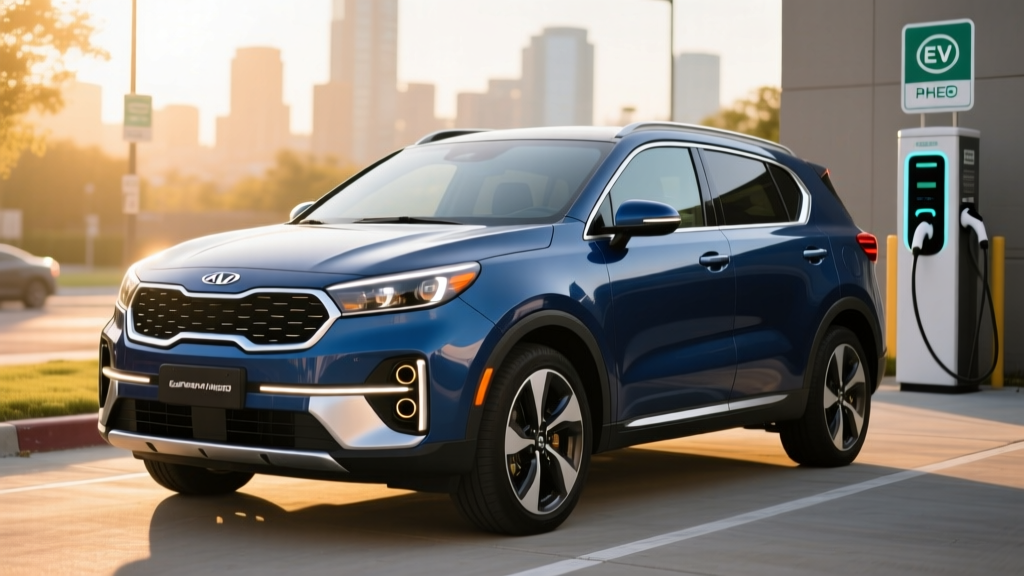
The 2025 Kia Sportage Hybrid is actually two very different vehicles sharing a badge. The conventional Sportage Hybrid (HEV) is a self-charging crossover delivering up to 43 MPG combined with no plug required. The Sportage Plug-in Hybrid (PHEV) trades some fuel efficiency for 34 miles of electric-only driving and 268 combined horsepower — but requires regular plug-in charging to unlock its value. Both are strong contenders in the compact hybrid SUV segment, but they serve distinctly different buyers.
Below, we break down every number that matters — EPA MPG, real-world efficiency, battery specs, charging times, warranty coverage, and whether either version qualifies for a federal tax credit in 2025.
HEV vs PHEV: Which Sportage Hybrid Is Which?
This is the most common point of confusion, so let's establish it clearly before diving into specs:
| Feature | Sportage Hybrid (HEV) | Sportage Plug-in Hybrid (PHEV) |
|---|---|---|
| Plug-in required? | No — self-charging via regenerative braking and engine | Yes — plug in to access electric-only range |
| Electric-only driving | Very limited (low-speed assist only) | 34 miles EPA (EV mode) |
| Combined horsepower | 226 hp | 268 hp |
| Battery capacity | 1.49 kWh (lithium-ion) | 13.7 kWh (lithium-ion) |
| Drivetrain | AWD (standard) | AWD (standard) |
| Starting MSRP (2025) | $29,690 (LX) | $39,890 (X-Line) |
Key distinction: The HEV never needs a charging cable — its small battery is replenished by the gasoline engine and regenerative braking. The PHEV has a much larger battery that you charge via a standard wall outlet or Level 2 charger to access its 34-mile electric range. If you never plug in the PHEV, it still functions as a hybrid, but you're carrying 400+ pounds of battery you're not using efficiently.
Fuel Economy: EPA MPG and Real-World Numbers
Sportage Hybrid (HEV)
| Trim | City | Highway | Combined |
|---|---|---|---|
| LX / EX | 42 MPG | 44 MPG | 43 MPG |
| SX-Prestige | 38 MPG | 38 MPG | 38 MPG |
The LX and EX trims ride on 18-inch wheels and lighter equipment, yielding the 43 MPG combined figure per fueleconomy.gov. The SX-Prestige adds larger 19-inch wheels, a panoramic sunroof, and more sound deadening — all of which add weight and aerodynamic drag, dropping the rating to 38 MPG combined.
Real-world expectation: Like most hybrids, the Sportage HEV tends to exceed its EPA city rating in stop-and-go traffic where regenerative braking recaptures energy aggressively. Owners commonly report 44-47 MPG in urban driving. Highway cruising at 75+ MPH, however, often yields 36-40 MPG because the electric motor provides less benefit at sustained high speeds. In cold weather (below 30°F), expect a 5-10% drop due to cabin heating demands and reduced battery efficiency.
Sportage Plug-in Hybrid (PHEV)
| Mode | City | Highway | Combined |
|---|---|---|---|
| Charge-depleting (EV + hybrid) | 84 MPGe | 79 MPGe | 84 MPGe |
| Charge-sustaining (hybrid only, battery depleted) | 36 MPG | 35 MPG | 35 MPG |
The PHEV's 84 MPGe combined rating reflects blended electric and gasoline operation while the battery has charge. Once the 13.7 kWh battery is depleted, it reverts to conventional hybrid mode at 35 MPG combined — slightly lower than the HEV due to the heavier battery pack. Total combined range (electric + gasoline) is approximately 430 miles.
Real-world expectation: If your daily commute is under 30 miles and you charge nightly, you may use almost no gasoline for weeks. On a long road trip where the battery depletes in the first 34 miles, expect 33-36 MPG for the remainder — essentially driving a slightly less efficient HEV.
Powertrain and Performance Specs
| Specification | Sportage HEV | Sportage PHEV |
|---|---|---|
| Engine | 1.6L turbocharged 4-cylinder | 1.6L turbocharged 4-cylinder |
| Engine output | 178 hp / 195 lb-ft | 178 hp / 195 lb-ft |
| Electric motor output | 47.7 kW (64 hp) | 72 kW (97 hp) |
| Combined system output | 226 hp / 258 lb-ft | 268 hp / 258 lb-ft |
| Transmission | 6-speed automatic | 6-speed automatic |
| 0-60 MPH (est.) | ~7.5 sec | ~7.0 sec |
| Drivetrain | AWD | AWD |
| Towing capacity | 2,000 lbs | 2,000 lbs |
| Cargo volume (behind rear seats) | 39.5 cu ft | 34.5 cu ft |
Both use Kia's 1.6-liter turbocharged Smartstream engine paired with a 6-speed automatic transmission (not a CVT, which is a plus for drivers who dislike the rubber-band feel of continuously variable gearboxes). The PHEV's more powerful electric motor and larger battery give it a meaningful 42-horsepower advantage, making it the quicker and more responsive choice for highway merging and passing.
Note the cargo volume trade-off: the PHEV's larger battery pack sits beneath the cargo floor, reducing space by 5 cubic feet compared to the HEV. If you regularly haul gear, the HEV's 39.5 cu ft is meaningfully more practical.
PHEV Charging: Battery, Times, and Connector Details
The Sportage PHEV's 13.7 kWh lithium-ion battery pack can be charged two ways:
| Charging Level | Power | Time (0-100%) | Connector |
|---|---|---|---|
| Level 1 (120V household outlet) | ~1.4 kW | ~10 hours | J1772 |
| Level 2 (240V home/public charger) | ~7.2 kW (onboard charger max) | ~1 hour 45 min | J1772 |
| DC Fast Charging | Not supported | N/A | N/A |
No DC fast charging: The Sportage PHEV does not support DC fast charging (CCS or otherwise). This is typical for plug-in hybrids in this segment — the battery is small enough that Level 2 charging fills it quickly. A standard Level 2 home charger (like a ChargePoint Home Flex or Emporia Vue) will replenish the battery in under two hours, which is ideal for overnight top-ups or charging during the workday.
On a standard 120V outlet (Level 1), expect roughly 4 miles of range per hour of charging — adequate if you drive 15-20 miles daily and can plug in overnight, but slow for higher-mileage commuters.
Pricing, Trims, and Tax Credit Eligibility
Sportage Hybrid (HEV) Pricing
| Trim | MSRP (incl. destination) |
|---|---|
| LX | $29,690 |
| EX | $31,790 |
| SX-Prestige | $36,490 |
Sportage Plug-in Hybrid (PHEV) Pricing
| Trim | MSRP (incl. destination) |
|---|---|
| X-Line | $39,890 |
| X-Line Prestige | $43,090 |
Federal Tax Credit (§30D)
The Sportage PHEV may qualify for up to $7,500 under the IRS §30D Clean Vehicle Credit, but eligibility depends on several factors that change periodically:
- MSRP cap: SUVs must be priced at or below $80,000 (both PHEV trims clear this easily)
- Buyer income cap: AGI must not exceed $150,000 (single), $225,000 (head of household), or $300,000 (joint filing)
- Battery component sourcing: A percentage of battery components must be manufactured or assembled in North America, and critical minerals must meet sourcing thresholds — these percentages increase annually
- Point-of-sale transfer: As of 2024, eligible buyers can transfer the credit to the dealer for an immediate price reduction at purchase
Important: Kia's PHEV battery sourcing compliance with §30D critical-mineral and component requirements has varied by model year and production batch. Before purchasing, verify the specific VIN's eligibility on the IRS's qualified vehicle list at irs.gov. The HEV (non-plug-in) does not qualify for the §30D credit — it is not a plug-in vehicle.
Some states offer additional rebates or HOV lane access for PHEVs. Check your state's energy office or the Alternative Fuels Data Center for local incentives.
Battery Warranty, Reliability, and Replacement Cost
Kia Hybrid/PHEV Battery Warranty:
- Hybrid battery: 10 years / 100,000 miles (whichever comes first)
- Hybrid system components: 10 years / 100,000 miles
- Basic vehicle warranty: 5 years / 60,000 miles
- Powertrain warranty: 10 years / 100,000 miles
Kia warrants the hybrid battery to retain at least 70% of its original capacity during the warranty period. If capacity drops below this threshold under normal use, Kia will repair or replace the battery at no cost.
Reliability: Kia's 1.6L turbo hybrid powertrain has been in service across the Hyundai/Kia lineup (Tucson Hybrid, Sorento Hybrid) since the 2022 model year with generally positive results. The conventional 6-speed automatic avoids the CVT reliability concerns some competitors face. The Sportage earned a 2024 IIHS Top Safety Pick designation in prior model years; updated ratings for the 2025 model can be verified at iihs.org.
Battery replacement cost: Outside of warranty, a hybrid battery replacement for the Sportage HEV typically costs between $2,000-$3,500 (parts and labor). The PHEV's larger 13.7 kWh pack is more expensive — estimated at $4,000-$6,000. However, modern lithium-ion hybrid batteries routinely last 150,000-200,000+ miles before significant degradation, and many outlast the vehicle itself. The 10-year/100,000-mile warranty provides substantial protection for the ownership period most buyers will experience.
Who Should Choose the Sportage HEV, PHEV, or a Full EV?
Sportage Hybrid (HEV) Pros & Cons
Pros:
- 43 MPG combined with zero behavior change — no plugging in
- Lowest starting price ($29,690)
- More cargo space (39.5 cu ft) than PHEV
- AWD standard on all trims
- Strong city MPG from regenerative braking
Cons:
- No electric-only driving capability
- No federal tax credit eligibility
- SX-Prestige drops to 38 MPG combined
Sportage Plug-in Hybrid (PHEV) Pros & Cons
Pros:
- 34 miles electric-only covers most commutes gas-free
- 268 hp — quickest Sportage variant
- Potential $7,500 federal tax credit (verify VIN eligibility)
- 430+ mile total range eliminates range anxiety
Cons:
- $10,200 more expensive than base HEV
- 5 cu ft less cargo space
- Only 35 MPG hybrid-only after battery depletes
- Requires home/work charging access to justify the premium
- No DC fast charging
Choose the Sportage HEV if: You want maximum fuel efficiency without plugging in, you don't have reliable access to a charging outlet at home or work, you want the most cargo space, or you're budget-conscious and don't want to rely on tax credit eligibility to make the math work.
Choose the Sportage PHEV if: Your daily commute is under 34 miles round-trip, you can install a Level 2 charger at home (or charge at work), you qualify for the §30D tax credit (which narrows the price gap to ~$2,700 vs. an EX HEV), and you want extra horsepower and the option to drive on electricity alone for most daily trips while keeping a gas engine for road trips.
Choose a full EV (like the Kia EV6 or Hyundai Ioniq 5) if: You drive more than 34 miles daily and want zero gasoline use, you have reliable home charging, you want lower per-mile fuel costs (electricity is typically $0.04-$0.06/mile vs. $0.12-$0.15/mile for the HEV), and you're ready to plan around DC fast charging on road trips.
Frequently Asked Questions
How many MPG does the 2025 Kia Sportage Hybrid get?
The Sportage HEV (LX/EX trims) achieves an EPA-estimated 42 city / 44 highway / 43 combined MPG. The SX-Prestige trim rates at 38/38/38 MPG. The Sportage PHEV achieves 84 MPGe combined when operating with a charged battery, and 35 MPG combined in hybrid-only mode after the battery depletes.
How far can the Sportage PHEV go on electric only?
The EPA rates the Sportage PHEV at 34 miles of electric-only range. In real-world driving with moderate temperatures and speeds under 50 MPH, some owners report 36-38 miles. Cold weather (below freezing) and highway speeds reduce this to approximately 26-30 miles.
Does the 2025 Kia Sportage Hybrid qualify for a tax credit?
The Sportage PHEV may qualify for up to $7,500 under the federal §30D Clean Vehicle Credit, subject to buyer income limits, battery component sourcing requirements, and MSRP caps. Verify your specific VIN on the IRS qualified vehicle list before purchasing. The conventional Sportage HEV does not qualify for any federal tax credit because it is not a plug-in vehicle.
Is the Kia Sportage Hybrid reliable?
Kia's 1.6L turbo hybrid powertrain has been in widespread use since 2022 across multiple models with generally favorable reliability reports. The 6-speed automatic transmission avoids CVT-related issues. Kia backs the hybrid battery and system components with a 10-year/100,000-mile warranty, which is among the longest in the segment.
How much does it cost to replace the hybrid battery?
Out of warranty, Sportage HEV battery replacement typically costs $2,000-$3,500. The PHEV's larger 13.7 kWh battery is estimated at $4,000-$6,000. However, modern hybrid batteries routinely last 150,000+ miles, and the 10-year/100,000-mile warranty covers premature degradation below 70% capacity.
Do I need to plug in the Sportage Hybrid (HEV)?
No. The conventional Sportage HEV charges its own 1.49 kWh battery through regenerative braking and the gasoline engine. You simply fuel it with gasoline like any other car. Only the PHEV version requires plugging in to access its electric-only range.
Can the Sportage PHEV use DC fast chargers?
No. The Sportage PHEV supports Level 1 (120V) and Level 2 (240V) charging via a J1772 connector only. DC fast charging (CCS, CHAdeMO, or NACS) is not available. A full Level 2 charge takes approximately 1 hour 45 minutes.