2025 Kia Sportage Hybrid: Powertrain Overview and Interior First Look
The 2025 Kia Sportage Hybrid occupies a practical middle ground between the gas-only Sportage and full electric SUVs like the EV6. Available as both a conventional hybrid (HEV) and a plug-in hybrid (PHEV), the Sportage Hybrid pairs a 1.6-liter turbocharged four-cylinder engine with an electric motor for a combined output of 226 horsepower (HEV) or 261 horsepower (PHEV). The result is a compact crossover that delivers meaningful fuel savings without requiring lifestyle changes around charging infrastructure.
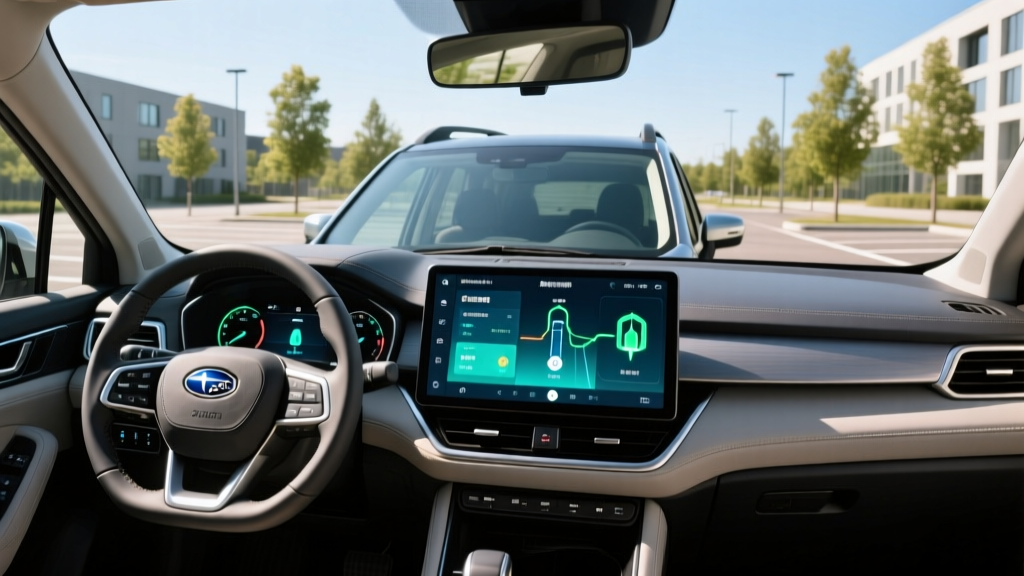
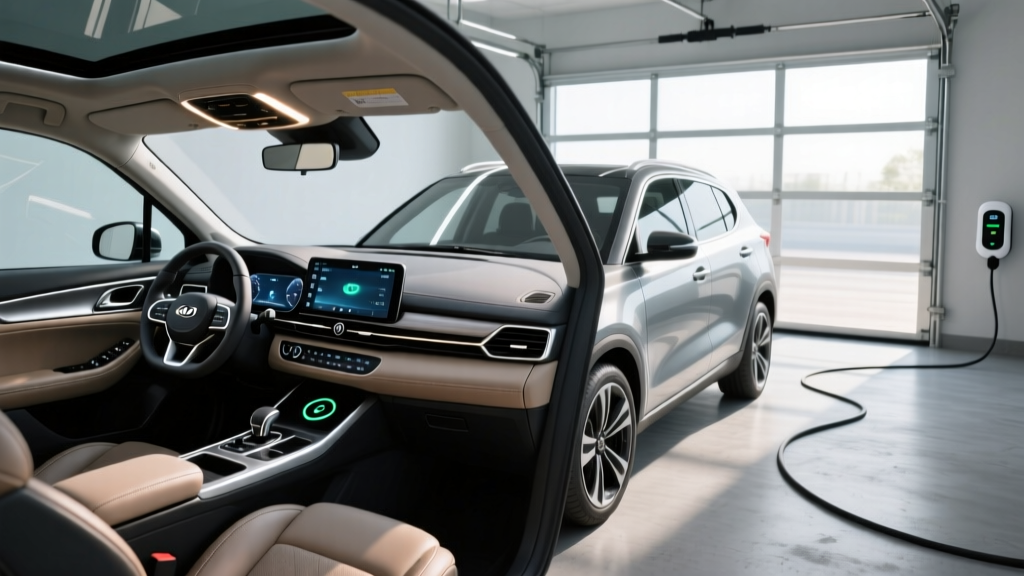
The interior represents one of the Sportage Hybrid's strongest selling points for 2025. Kia equips the cabin with a curved panoramic display that merges a 12.3-inch digital instrument cluster with a 12.3-inch touchscreen infotainment system on higher trims (EX and above). Lower LX trims use a more conventional 12.3-inch cluster paired with a 4.2-inch LCD info display and a separate 8-inch touchscreen. Physical climate controls and a rotary shifter (HEV) or dial-style gear selector (PHEV) keep operation intuitive, while available features like a heated steering wheel, ventilated front seats, and a panoramic sunroof elevate the experience beyond what most competitors offer at this price point.
2025 Kia Sportage Hybrid Quick Specs
| Specification | Sportage HEV | Sportage PHEV |
|---|---|---|
| Combined Horsepower | 226 hp | 261 hp |
| Engine | 1.6L Turbo I4 + 44 kW motor | 1.6L Turbo I4 + 72 kW motor |
| Transmission | 6-speed automatic | 6-speed automatic |
| Drivetrain | FWD or AWD | AWD standard |
| Battery Capacity | 1.49 kWh (lithium-ion) | 13.8 kWh (lithium-ion polymer) |
| EPA Combined MPG | 38-43 MPG | 84 MPGe combined / 35 MPG gas-only |
| Electric-Only Range (PHEV) | N/A | 34 miles |
| Starting MSRP | $29,790 | $39,890 |
Fuel Economy: EPA Ratings and Real-World MPG
The 2025 Sportage Hybrid delivers EPA-estimated fuel economy that varies by drivetrain and trim. Front-wheel-drive HEV models achieve the highest ratings at 42 city / 44 highway / 43 combined MPG, while adding all-wheel drive reduces those figures to 38 city / 38 highway / 38 combined MPG. The PHEV variant earns an EPA-estimated 84 MPGe in combined electric-gas operation and 35 MPG combined when the battery depletes and the gas engine takes over.
EPA Fuel Economy Breakdown
| Model | City MPG | Highway MPG | Combined MPG |
|---|---|---|---|
| Sportage HEV FWD | 42 | 44 | 43 |
| Sportage HEV AWD | 38 | 38 | 38 |
| Sportage PHEV AWD (gas-only) | 33 | 37 | 35 |
Source: fueleconomy.gov
In real-world driving, hybrids like the Sportage HEV frequently exceed EPA city estimates due to regenerative braking capturing energy during stop-and-go traffic. Owners reporting on fuel-tracking platforms commonly see 44-46 MPG in urban commutes with the FWD model. Highway efficiency tends to track closer to or slightly below EPA estimates, especially at sustained speeds above 70 mph where aerodynamic drag increases and the electric motor provides less assistance. Expect highway numbers in the 39-42 MPG range for FWD models under typical conditions.
The PHEV's 34-mile electric range covers most daily commutes without using gasoline. A 2025 Sportage PHEV owner with a 25-mile round-trip commute and nightly Level 2 charging could go weeks between fill-ups. Once the battery depletes, the 35 MPG combined gas-only rating means you're still driving an efficient hybrid rather than a gas-guzzler.
HEV vs PHEV: Which Sportage Hybrid Fits Your Lifestyle?
Kia offers the Sportage Hybrid in two distinct flavors, and choosing between them hinges on your driving patterns, charging access, and budget.
Key Differences at a Glance
| Factor | Conventional HEV | Plug-In Hybrid PHEV |
|---|---|---|
| Requires Plugging In | No | Yes, for full benefit |
| Electric-Only Range | Minimal (low-speed assist) | 34 miles |
| Battery Size | 1.49 kWh | 13.8 kWh |
| Charging Time (Level 2) | N/A | ~3.5 hours (0-100%) |
| DC Fast Charging | N/A | Not available |
| Starting Price | $29,790 | $39,890 |
| Best For | No home charging access, highway-heavy driving | Home charging available, short daily commutes |
The conventional HEV makes sense if you lack access to home or workplace charging, drive predominantly highway miles where electric-only operation provides minimal benefit, or want lower upfront cost. You'll never need to think about charging—regenerative braking and the engine keep the small 1.49 kWh battery topped up automatically.
The PHEV rewards drivers who can charge at home (even a standard 120V Level 1 outlet adds roughly 4-5 miles of range per hour, sufficient for overnight replenishment of the 34-mile battery). If your daily driving falls under 35 miles and you charge nightly, you'll operate almost exclusively on electricity, with the gas engine serving as backup for longer trips. The PHEV also delivers stronger acceleration thanks to its 72 kW motor versus the HEV's 44 kW unit.
Interior Technology and Cargo Practicality
The 2025 Sportage Hybrid interior prioritizes usability alongside technology. The dual-screen setup (on EX and SX-Prestige trims) runs Kia's latest UVO infotainment system with wireless Apple CarPlay and Android Auto, integrated navigation, and over-the-air updates. A new multi-mode touch bar below the main screen toggles between climate controls and media functions, reducing menu diving. Available features include a Harman Kardon premium audio system, wireless phone charging, and a digital key that lets you unlock and start the vehicle with your smartphone.
Cargo space remains competitive for the segment. Behind the second row, the HEV offers 39.6 cubic feet of cargo volume, expanding to 74.1 cubic feet with rear seats folded. The PHEV sacrifices minimal space despite its larger battery, retaining approximately 38.8 cubic feet behind the second row. Rear legroom measures a generous 41.3 inches, accommodating adult passengers comfortably on longer trips.
Interior materials vary significantly by trim. The base LX uses cloth upholstery with hard plastics on lower door panels and the dash. Moving to EX adds synthetic leather (Sofino) with heated front seats, while the top SX-Prestige includes genuine leather, ventilated front seats, a heated steering wheel, and suede-like headliner accents. Build quality is solid across the lineup, with tight panel gaps and minimal road noise at highway speeds.
Pricing, Trims, and Tax Credit Eligibility
The 2025 Kia Sportage Hybrid lineup spans four trims for the HEV and three for the PHEV:
- Sportage HEV LX: $29,790 (FWD) / $31,290 (AWD)
- Sportage HEV EX: $32,090 (FWD) / $33,590 (AWD)
- Sportage HEV SX-Prestige: $36,490 (AWD only)
- Sportage PHEV X-Line: $39,890
- Sportage PHEV X-Line Prestige: $41,890
- Sportage PHEV X-Line Limited: $44,190
Regarding federal tax incentives, the situation requires careful attention. Under current IRS §30D rules, the Sportage PHEV may qualify for a partial or full $7,500 federal tax credit depending on battery component sourcing and critical mineral requirements, which shift annually. As of 2025, many Kia PHEVs face sourcing limitations that reduce or eliminate credit eligibility. The conventional HEV does not qualify for any federal tax credit.
Federal Tax Credit Checklist for 2025 Sportage PHEV
- MSRP must not exceed $80,000 for SUVs (all trims qualify)
- Buyer modified adjusted gross income: ≤$300,000 (joint) / ≤$150,000 (single)
- Battery components must meet North American manufacturing thresholds
- Critical minerals must meet sourcing requirements from U.S. or FTA partners
- Credit can be transferred to dealer at point of sale for immediate price reduction
- Verify current eligibility on IRS.gov before purchase—rules change annually
Several states offer additional incentives for PHEVs. California's Clean Fuel Reward provides up to $750, Colorado offers a $2,500 state credit, and New York's Drive Clean Rebate can add up to $2,000. Check your state's energy or environmental agency for current programs, as these vary widely and often have funding caps.
Battery Warranty, Reliability, and Long-Term Ownership
Kia backs the 2025 Sportage Hybrid's battery and hybrid-specific components with a comprehensive warranty: 10 years or 100,000 miles for the hybrid battery pack, and 10 years/100,000 miles for the powertrain. This coverage exceeds the industry standard of 8 years/100,000 miles that most competitors offer and provides meaningful peace of mind for buyers concerned about battery longevity.
Real-world reliability data for Kia's hybrid powertrain is encouraging. The company's turbocharged 1.6L engine paired with electric motors has been in service across multiple Kia and Hyundai models since 2020, with no widespread failure patterns reported. Hybrid batteries typically degrade gradually rather than failing catastrophically—expect capacity loss of roughly 10-15% over 8-10 years based on industry averages for lithium-ion packs of this size.
If battery replacement becomes necessary outside warranty coverage, costs for the Sportage HEV's smaller 1.49 kWh pack are estimated at $2,000-$3,000 installed. The PHEV's larger 13.8 kWh battery would cost significantly more—likely $6,000-$9,000—though this scenario is rare within the vehicle's typical ownership lifespan.
The Sportage Hybrid also benefits from Kia's standard warranty package: 5 years/60,000 miles bumper-to-bumper and 5 years/60,000 miles roadside assistance. Maintenance costs remain competitive with gas-only models, as hybrids eliminate some wear items (regenerative braking extends brake pad life) while adding minimal complexity.
Decision Framework: Hybrid, PHEV, or Full EV?
Choose the Sportage HEV If:
- You lack reliable access to home or workplace charging
- Your driving is predominantly highway miles where electric assist provides minimal benefit
- You want lower upfront cost and simplicity (no charging cables or apps)
- You frequently take long road trips and don't want to plan around charging stops
Choose the Sportage PHEV If:
- You can install a Level 2 home charger or have workplace charging access
- Your daily commute is under 35 miles, allowing electric-only operation most days
- You want stronger acceleration (261 hp vs 226 hp)
- You qualify for federal/state tax credits that narrow the price gap with the HEV
Choose a Full EV (like the Kia EV6) If:
- You have reliable home charging and your daily driving rarely exceeds 250 miles
- You want zero tailpipe emissions and minimal maintenance (no oil changes, fewer moving parts)
- You're eligible for the full $7,500 federal credit on a qualifying EV
- You're comfortable planning longer road trips around DC fast-charging infrastructure
The Sportage Hybrid makes sense for buyers transitioning away from gas vehicles who aren't ready to commit to full electric. The HEV provides immediate fuel savings with zero behavioral change, while the PHEV offers a bridge solution—electric commuting with gas-engine freedom for longer trips.
Pros and Cons: The Honest Assessment
Pros
- Strong fuel economy, especially in city driving (42-46 MPG real-world)
- Generous 10-year/100,000-mile hybrid battery warranty
- Spacious interior with 39.6 cu ft cargo room (HEV)
- PHEV's 34-mile electric range covers most commutes
- Competitive pricing starting under $30,000
- Standard AWD on PHEV; available on HEV
- Modern interior tech with dual 12.3-inch displays on higher trims
Cons
- PHEV lacks DC fast charging (Level 2 only, ~3.5 hours)
- AWD reduces HEV fuel economy by 5 MPG combined
- Base LX interior feels budget-conscious with hard plastics
- Federal tax credit eligibility for PHEV uncertain due to sourcing rules
- Not as engaging to drive as some competitors (Mazda CX-5 Hybrid)
- Real-world highway MPG can fall short of EPA estimates at high speeds
Frequently Asked Questions
How many MPG does the 2025 Kia Sportage Hybrid get?
The Sportage HEV achieves 42 city / 44 highway / 43 combined MPG with front-wheel drive, and 38 city / 38 highway / 38 combined MPG with all-wheel drive. The PHEV earns 84 MPGe in combined electric-gas operation and 35 MPG combined when running on gasoline alone.
How far can the Sportage PHEV go on electric only?
The 2025 Sportage PHEV delivers an EPA-estimated 34 miles of electric-only range. This covers most daily commutes without using gasoline, assuming you charge the battery overnight. Once the battery depletes, the vehicle operates as a conventional hybrid with 35 MPG combined.
Does the Sportage Hybrid need to be plugged in?
The conventional Sportage HEV never needs plugging in—regenerative braking and the gas engine keep its small battery charged automatically. The Sportage PHEV benefits significantly from regular plugging in to maximize its 34-mile electric range, but it will still function as a hybrid if you never charge it (you'll just miss out on the electric-only efficiency gains).
Is the 2025 Sportage Hybrid reliable?
Kia's hybrid powertrain has demonstrated solid reliability since its introduction in 2020, with no widespread failure patterns. The 10-year/100,000-mile hybrid battery warranty provides excellent coverage. Hybrid batteries typically degrade gradually (10-15% capacity loss over 8-10 years) rather than failing suddenly.
What does it cost to replace the hybrid battery?
Outside warranty coverage, the Sportage HEV's 1.49 kWh battery costs an estimated $2,000-$3,000 installed. The PHEV's larger 13.8 kWh battery would cost $6,000-$9,000. However, battery replacements within the first decade are rare, and Kia's 10-year/100,000-mile warranty covers defects and excessive capacity loss.
Does the Sportage Hybrid qualify for a tax credit?
The conventional HEV does not qualify for federal tax credits. The PHEV may qualify for a partial or full $7,500 federal credit under IRS §30D, but eligibility depends on battery sourcing requirements that change annually. Verify current eligibility before purchase. State incentives may also apply—California, Colorado, and New York offer additional rebates.
How long does it take to charge the Sportage PHEV?
Using a Level 2 (240V) home charger, the Sportage PHEV's 13.8 kWh battery charges from empty to full in approximately 3.5 hours. A standard 120V Level 1 outlet adds about 4-5 miles of range per hour, requiring 7-9 hours for a full charge. The PHEV does not support DC fast charging.
Should I buy the hybrid or wait for a full electric SUV?
Choose the hybrid if you lack reliable home charging, frequently drive more than 250 miles in a day, or want lower upfront cost. A full EV like the Kia EV6 makes sense if you have home charging, rarely exceed 250 daily miles, and want zero tailpipe emissions with minimal maintenance. The hybrid serves as a practical bridge technology for buyers not yet ready to commit to full electric.
For official EPA fuel economy data, visit fueleconomy.gov. For current federal tax credit rules, consult the IRS Clean Vehicle Credits page. Safety ratings available at NHTSA.gov and IIHS.org.