Quick Verdict: The 2025 Kia Niro Plug-In Hybrid at a Glance
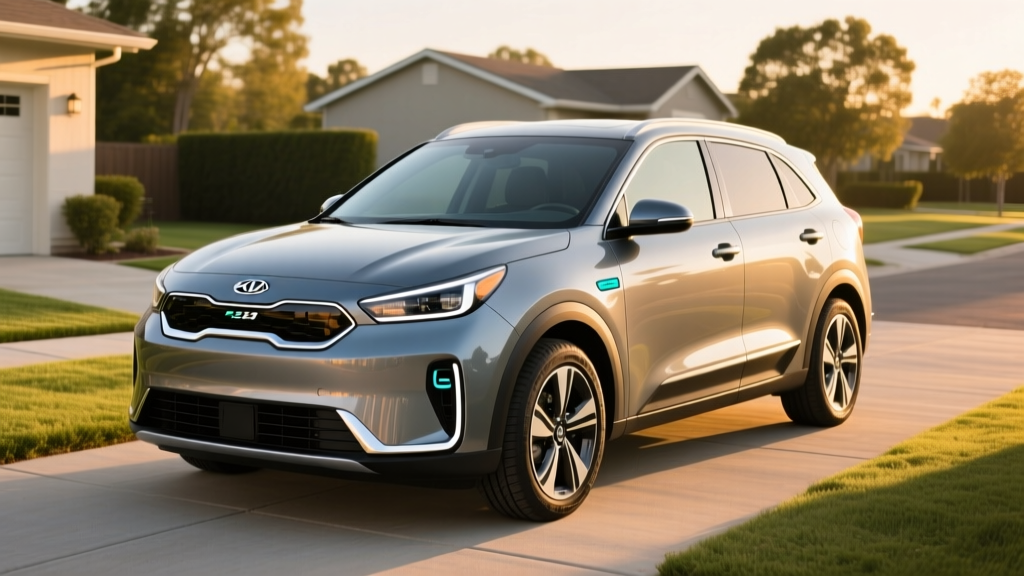
The 2025 Kia Niro Plug-In Hybrid occupies a narrow but valuable lane: it's one of the most affordable PHEVs on the U.S. market that still delivers meaningful electric-only range. With an EPA-rated 33 miles on battery power alone and a total system output of 180 horsepower, it handles most daily commutes without touching gasoline — while eliminating the range anxiety that keeps some buyers away from full EVs.
Starting around $34,390 (before destination), the Niro PHEV undercuts competitors like the Toyota RAV4 Prime and Hyundai Tucson PHEV by thousands. But cost savings come with trade-offs: no DC fast charging, a modest 11.1 kWh battery, and front-wheel drive only. This guide breaks down exactly what you get, what you don't, and whether the Niro PHEV fits your driving life.
| EPA Electric-Only Range | 33 miles |
| EPA MPGe (Charge-Sustaining) | 108 MPGe combined |
| MPG (Gas Only, After Battery Depletes) | 48 city / 45 hwy / 46 combined |
| Battery Capacity | 11.1 kWh usable (NMC lithium-ion) |
| Combined Horsepower | 180 hp / 195 lb-ft torque |
| Level 2 Charge Time (10–100%) | ~2 hours 45 minutes (at 7.2 kW) |
| DC Fast Charging | Not available |
| Base MSRP | $34,390 (EX trim, excl. destination) |
| Federal Tax Credit (§30D) | Up to $3,750 (partial — see eligibility below) |
| Powertrain Warranty | 10 years / 100,000 miles |
HEV vs. PHEV: Which Niro Are We Talking About?
Kia sells the Niro in three electrified flavors for 2025, and confusing them is easy. Here's the breakdown:
| Feature | Niro HEV (Standard Hybrid) | Niro PHEV (Plug-In Hybrid) | Niro EV (Battery Electric) |
|---|---|---|---|
| Plugs in? | No — charges via regenerative braking and engine | Yes — Level 1 (120V) and Level 2 (240V) | Yes — Level 1, Level 2, and DC fast charging |
| Electric-Only Range | ~1 mile (low-speed assist only) | 33 miles (EPA) | 239 miles (EPA) |
| EPA Combined | 53 MPG | 46 MPG (gas) / 108 MPGe (electric) | 113 MPGe |
| Battery Size | 1.56 kWh | 11.1 kWh | 64.8 kWh |
| Starting MSRP | ~$28,190 | ~$34,390 | ~$39,600 |
| Federal Tax Credit | Not eligible | Up to $3,750 (§30D, partial) | Up to $7,500 (§30D) |
The critical distinction: The conventional Niro HEV never plugs in — its small battery recovers energy from braking and the engine. The Niro PHEV has a larger battery you charge from a wall outlet, giving you 33 miles of electric driving before the gasoline engine kicks in. If you can charge at home or work, the PHEV's electric range covers most daily errands without burning a drop of gas.
Electric-Only Range and Total Range: What to Expect
The EPA rates the 2025 Niro PHEV at 33 miles of all-electric range. In practice, real-world electric range depends heavily on conditions:
EPA sticker: 33 miles electric-only
Real-world expectation (moderate temps, city/suburban): 28–32 miles
Highway driving (70+ mph): 22–26 miles
Cold weather (below 35°F): 20–25 miles — battery chemistry loses efficiency and cabin heating draws from the pack
Hot weather with A/C: 27–30 miles
Once the battery depletes to its charge-sustaining threshold, the 1.6-liter gasoline engine takes over, and the Niro PHEV operates as a conventional hybrid. At that point, you're looking at 48 city / 45 highway / 46 combined MPG per the EPA on fueleconomy.gov.
With a 10.6-gallon fuel tank and a full battery, total combined range exceeds 430 miles — more than enough for any road trip without range anxiety.
Charging the Niro PHEV: Level 1, Level 2, and What You Need at Home
The Niro PHEV uses a standard J1772 connector for AC charging. Here's what to expect at each level:
| Charging Level | Power (kW) | Time (0–100%) | Setup Required |
|---|---|---|---|
| Level 1 (120V household outlet) | ~1.4 kW | ~9–10 hours | Standard outlet — included portable cord |
| Level 2 (240V, home or public) | Up to 7.2 kW | ~2 hours 45 minutes | 240V outlet (NEMA 14-50) or hardwired EVSE |
| DC Fast Charging | N/A | N/A | Not supported — no CCS or NACS port |
The no-DC-charging limitation matters for some buyers: If you regularly take long trips and want to top up at a highway fast charger, the Niro PHEV can't do that. However, for a PHEV with 33 miles of electric range, most owners charge overnight at home and rarely need public charging. The gasoline engine covers everything beyond the battery.
Home charging setup: A Level 2 home charger (like a ChargePoint Home Flex or Emporia Level 2) on a 240V/40A circuit will fully replenish the Niro PHEV's battery in under three hours. Installation typically costs $500–$1,500 depending on your electrical panel's proximity to the charging location. A licensed electrician should evaluate whether your panel needs an upgrade — older homes with 100A service may require a panel upgrade ($1,500–$3,000) before adding a dedicated EV circuit.
Powertrain and Performance: 180 HP From Engine + Motor
The 2025 Niro PHEV pairs a 1.6-liter inline-4 gasoline engine (producing 104 hp on its own) with a 62-kW permanent-magnet synchronous electric motor integrated into the 6-speed dual-clutch automatic transmission. Combined output is 180 horsepower and 195 lb-ft of torque.
Acceleration to 60 mph takes approximately 7.2 seconds — adequate for highway merging but not sporty. The powertrain is front-wheel drive only; Kia does not offer AWD on the Niro PHEV (AWD is available on the larger Sorento PHEV and Sportage PHEV if you need traction in snow).
Driving dynamics are comfortable and quiet rather than engaging. The dual-clutch transmission shifts smoothly in most conditions, though it can occasionally hesitate at low speeds when the engine and motor are transitioning. Regenerative braking offers multiple levels adjustable via steering-wheel paddles, though the Niro PHEV does not offer true one-pedal driving like a full EV.
Pricing, Trims, and Federal Tax Credit Eligibility
For 2025, Kia offers the Niro PHEV in three trims:
| Trim | MSRP (excl. destination) | Key Features |
|---|---|---|
| EX | $34,390 | 10.25" touchscreen, wireless Apple CarPlay/Android Auto, heated front seats, Smart Cruise Control, Highway Driving Assist |
| EX Touring | ~$36,090 | Adds sunroof, power driver seat, Harman Kardon audio, wireless phone charging |
| SX Touring | ~$37,990 | Adds ventilated front seats, heated steering wheel, LED projection headlights, highway driving assist with lane change assist |
Federal Tax Credit (§30D) — Important Caveats:
- MSRP cap: Vehicle must have MSRP ≤ $80,000 for SUVs (Niro PHEV qualifies at ~$34,390–$37,990)
- Buyer income cap: Modified AGI must not exceed $150,000 (single) / $300,000 (joint filing)
- Battery sourcing: Partial credit (~$3,750) if battery meets critical-mineral OR component requirements; full $7,500 requires meeting both — the Niro PHEV currently qualifies for the partial credit due to battery sourcing from South Korea
- Point-of-sale transfer: You can transfer the credit to the dealer at purchase for an immediate price reduction, rather than waiting to claim it on your tax return
- Assembly: Vehicle must undergo final assembly in North America (Niro PHEV is assembled in South Korea — this may disqualify it from §30D entirely)
Bottom line: Because the 2025 Niro PHEV is manufactured in South Korea, it likely does not qualify for the federal §30D tax credit under current North American final assembly requirements. Always verify current eligibility on fueleconomy.gov's tax credit page and consult a tax professional before relying on credit estimates. Some states offer additional rebates for PHEVs regardless of assembly location.
Real-World MPG: Does the Niro PHEV Beat Its EPA Numbers?
Plug-in hybrids often surprise owners with real-world efficiency that differs from EPA stickers. Here's what to expect with the Niro PHEV:
| Scenario | EPA Rating | Real-World Expectation |
|---|---|---|
| City MPG (gas only, battery depleted) | 48 MPG | 50–54 MPG — hybrids typically exceed EPA city figures due to regenerative braking in stop-and-go traffic |
| Highway MPG (gas only) | 45 MPG | 42–46 MPG — highway driving is less efficient for hybrids (less regen opportunity) |
| Combined MPGe (electric + gas) | 108 MPGe | Varies widely — if you charge daily and drive <30 miles, you may use almost no gas for months |
| Cold-weather MPG (gas only, below 35°F) | N/A | 40–44 MPG — engine runs more for cabin heat and battery thermal management |
The ownership insight: If your daily commute is under 30 miles round-trip and you charge nightly, you could go weeks or months between fill-ups. Many PHEV owners report using 5–8 gallons per month in this pattern. If you don't charge regularly, the Niro PHEV still delivers strong hybrid MPG — but you're paying for battery capacity you're not using.
Battery Warranty, Reliability, and Replacement Cost
Hybrid/PHEV battery warranty: 10 years / 100,000 miles (whichever comes first)
Warranty coverage threshold: Kia warrants the battery to retain at least ~70% of original capacity during the warranty period
General powertrain warranty: 10 years / 100,000 miles
Basic vehicle warranty: 5 years / 60,000 miles
Reliability: The Niro PHEV's powertrain is well-proven — it shares its 1.6L engine and electric motor architecture with the Hyundai Ioniq PHEV and Kia Sorento PHEV. Early Niro models (2018–2022) have demonstrated strong battery longevity, with most owners reporting less than 5% degradation over 5+ years. The NMC (nickel manganese cobalt) chemistry in the 11.1 kWh pack is mature and well-managed by Kia's thermal system.
Battery replacement cost: If the PHEV battery fails out of warranty, replacement currently runs approximately $4,000–$6,500 including parts and labor. However, out-of-warranty failures are rare in Kia's PHEV lineup based on owner data. The 10-year/100,000-mile warranty is one of the strongest in the industry and provides significant peace of mind.
For broader safety data, the 2025 Niro carries strong crash-test ratings. Check the latest results on IIHS.org and NHTSA.gov for detailed scores.
Who Should Buy the Niro PHEV — And Who Should Look Elsewhere?
- Your daily commute is 25–35 miles and you can charge at home or work
- You want electric commuting but still need 400+ mile road-trip range
- You want a PHEV under $38,000 — one of the cheapest in the segment
- You don't need AWD
- You want to reduce gas consumption without committing to a full EV
- You can't charge at home (a conventional HEV or full EV with fast charging may suit better)
- You need AWD for snow/ice — consider the RAV4 Prime, Sportage PHEV, or Tucson PHEV
- You want DC fast charging for road-trip top-ups — consider the Niro EV or a full BEV
- You need more cargo space — the Niro PHEV offers 19.4 cu ft behind rear seats, less than compact SUV PHEVs
- You want the federal tax credit — the Niro PHEV's South Korean assembly likely disqualifies it under §30D
Frequently Asked Questions
How many MPG does the 2025 Kia Niro Plug-In Hybrid get?
After the battery is depleted, the Niro PHEV gets an EPA-rated 48 city / 45 highway / 46 combined MPG. In real-world city driving, many owners see 50–54 MPG thanks to regenerative braking. When operating on electric power, it achieves 108 MPGe combined.
How far can the Niro PHEV go on electric only?
The EPA rates it at 33 miles of all-electric range. In real-world conditions, expect 28–32 miles in moderate temperatures with city/suburban driving. Highway speeds and cold weather will reduce that to 22–26 miles. Once the battery depletes, the gasoline engine seamlessly takes over.
Hybrid vs. PHEV vs. EV — which fits my lifestyle?
Conventional hybrid (HEV): Best if you can't charge at home and want maximum MPG with zero behavior change. No plug, no range anxiety, 53 MPG combined (Niro HEV).
Plug-in hybrid (PHEV): Best if you can charge at home and drive under 35 miles daily, but still want gas-engine freedom for road trips. You'll run mostly on electricity for daily driving.
Battery electric (EV): Best if you want zero tailpipe emissions, the lowest per-mile fuel cost, and have reliable home charging. The Niro EV offers 239 miles of range but requires more charging planning on long trips.
Is the Niro PHEV reliable, and what does battery replacement cost?
The Niro PHEV uses a proven powertrain shared across Hyundai-Kia's lineup. Kia's 10-year/100,000-mile battery warranty is among the best in the industry. Out-of-warranty battery replacement costs approximately $4,000–$6,500, but failures are uncommon based on owner data from earlier model years.
Does the 2025 Niro PHEV qualify for the federal tax credit?
Likely not. Under current IRS §30D rules, the vehicle must undergo final assembly in North America to qualify. The Niro PHEV is assembled in South Korea, which disqualifies it from the federal credit. However, your state may offer separate PHEV rebates — check your state energy office or DSIRE.org for local incentives. Always verify current eligibility on IRS.gov and consult a tax professional.
Can the Niro PHEV DC fast charge?
No. The 2025 Niro PHEV supports Level 1 (120V) and Level 2 (240V) AC charging only. Maximum Level 2 charge rate is 7.2 kW, delivering a full charge in about 2 hours 45 minutes. DC fast charging (CCS or NACS) is not available — a common limitation among compact PHEVs. If you need fast charging, consider the Niro EV or another full-electric vehicle.