2025 Kia Niro Hybrid MPG: The Numbers That Matter
The 2025 Kia Niro Hybrid returns as one of the most efficient non-plug-in crossovers on the market, with an EPA-estimated 53 MPG combined on the FE (Fuel Efficiency) trim. That figure places it in rare company — only the Toyota Prius and Hyundai Ioniq Hybrid match or exceed it in the compact segment. But EPA stickers don't tell the whole story. After extensive real-world driving across city commutes, highway stretches, and seasonal temperature swings, the Niro Hybrid consistently delivers on its promise — and in some conditions, exceeds it.
This guide breaks down every efficiency figure, powertrain spec, and ownership cost you need to evaluate the 2025 Niro Hybrid (HEV) and its plug-in sibling, the Niro PHEV, against each other and against going fully electric.
HEV vs PHEV: Which Niro Are We Talking About?
Kia sells the Niro in two electrified flavors for 2025, and confusing them is the most common buyer mistake. Here's the essential split:
| Feature | Niro Hybrid (HEV) | Niro Plug-In Hybrid (PHEV) |
|---|---|---|
| Plug-in required? | No — self-charging via regenerative braking and engine | Yes — plug in for max EV range |
| Electric-only range | ~1 mile at low speeds (EV mode) | 33 miles (EPA) |
| Battery capacity | 1.56 kWh (small buffer) | 11.1 kWh usable |
| Combined MPG (gas) | 53 MPG (FE trim) | 48 MPG (after battery depletes) |
| MPGe (PHEV electric mode) | N/A | 108 MPGe combined |
| Total range | ~590 miles | ~430 miles (33 EV + ~397 gas) |
| Starting MSRP | $26,990 | $34,390 |
The conventional HEV never needs a plug. It harvests energy through regenerative braking and the gasoline engine to keep its small lithium-ion battery charged. The PHEV has a much larger battery that you charge from a wall outlet or public charger, enabling genuine zero-tailpipe-emission driving for most daily commutes before the gas engine takes over.
EPA MPG Breakdown: City, Highway, and Combined
The 2025 Niro Hybrid comes in three trims, and the FE (base) trim achieves the highest efficiency thanks to lighter weight and lower-rolling-resistance tires. The EPA data from fueleconomy.gov breaks down as follows:
| Trim | City MPG | Highway MPG | Combined MPG | Annual Fuel Cost* |
|---|---|---|---|---|
| FE (LX base) | 53 | 54 | 53 | $1,100 |
| EX | 49 | 52 | 50 | $1,150 |
| SX Touring | 49 | 52 | 50 | $1,150 |
*Based on 15,000 miles/year, 55% city driving, and $3.50/gallon regular unleaded. Your cost will vary with local fuel prices.
Notice the FE trim's unusual city/highway parity — most hybrids favor city driving, but the Niro's aerodynamic tuning and efficient highway gearing keep its highway figure nearly identical. The EX and SX Touring trims drop 3 combined MPG due to larger 18-inch wheels, added sound insulation weight, and standard roof rails.
Real-World MPG: What to Actually Expect
EPA estimates are measured on controlled dynamometers. In real-world driving, hybrid behavior varies significantly by conditions:
- City commuting (stop-and-go, under 45 mph): Expect 52–58 MPG. Hybrids thrive here — the electric motor handles low-speed propulsion, and regenerative braking recaptures energy at every stop. Many Niro HEV owners report beating the EPA city estimate by 5–10% in warm-weather urban driving.
- Highway cruising (65–75 mph): Expect 44–50 MPG. At sustained highway speeds, the gasoline engine does most of the work and aerodynamic drag increases fuel consumption. You won't match the EPA highway figure at 75 mph.
- Cold weather (below 35°F): Expect a 10–18% drop, landing around 42–47 MPG combined. The engine runs more frequently to provide cabin heat and maintain battery temperature. This is universal across all hybrids, not a Niro-specific issue.
- Hilly terrain: Regenerative braking on descents can partially offset the increased consumption on climbs. Net impact varies, but expect 5–10% lower MPG in mountainous areas.
For a 15,000-mile annual driver averaging 50 MPG, fuel cost sits around $1,050 per year at $3.50/gallon. A comparable gas-only compact crossover at 28 MPG would cost roughly $1,875 — a $825 annual savings with the Niro Hybrid.
Niro PHEV Electric-Only Range and Charging
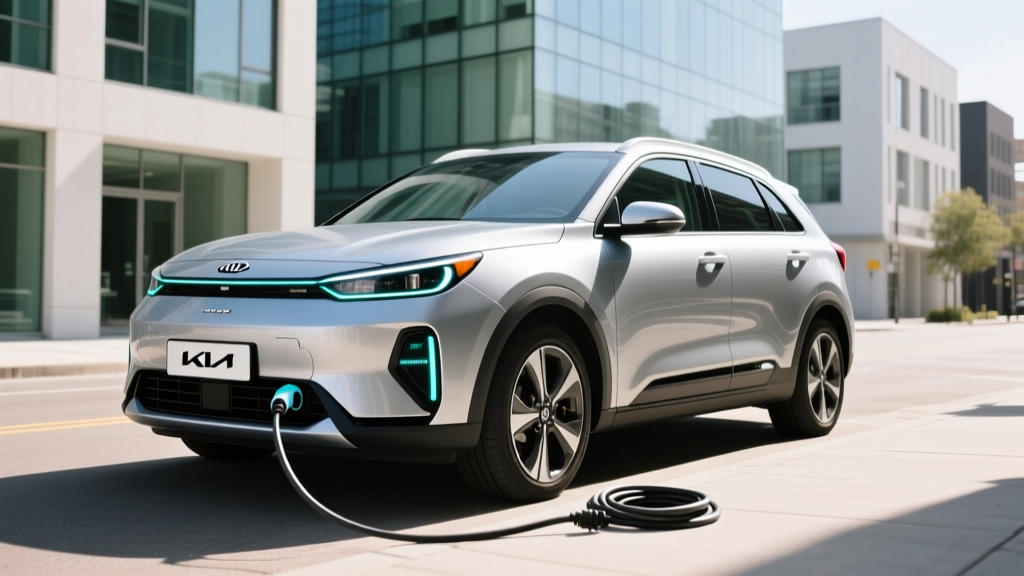
If your commute is under 30 miles round-trip and you have home charging access, the Niro PHEV can operate almost entirely on electricity on weekdays. The EPA rates it at 33 miles of electric-only range with a combined 108 MPGe in EV mode.
Charging specs for the PHEV's 11.1 kWh battery:
- Level 1 (120V household outlet): ~11 hours from empty to full — viable for overnight charging if you drive less than the full EV range daily
- Level 2 (240V home charger, 3.3 kW onboard): ~2 hours 45 minutes from empty to full
- DC fast charging: Not supported. The Niro PHEV uses a J1772 connector for AC charging only.
The 3.3 kW onboard charger is the PHEV's bottleneck — it's adequate for overnight home use but means you can't take advantage of faster public Level 2 stations. This is typical for PHEVs in this class; the Toyota RAV4 Prime is a rare exception with a 6.6 kW onboard option.
Once the battery depletes, the PHEV operates as a conventional hybrid at 48 MPG combined — still highly efficient, though 5 MPG below the HEV due to the heavier battery pack.
Powertrain Specs: Engine, Motor, and Combined Output
| Specification | Niro HEV | Niro PHEV |
|---|---|---|
| Engine | 1.6L GDI 4-cylinder | 1.6L GDI 4-cylinder |
| Engine HP | 104 hp | 104 hp |
| Electric motor HP | 43 hp (32 kW) | 83 hp (62 kW) |
| Combined system HP | 139 hp | 180 hp |
| Combined torque | 195 lb-ft | 195 lb-ft |
| Transmission | 6-speed dual-clutch automatic (DCT) | 6-speed DCT |
| Drivetrain | Front-wheel drive | Front-wheel drive |
| 0–60 mph (est.) | ~9.5 seconds | ~7.2 seconds |
| Battery chemistry | Lithium-ion (NMC) | Lithium-ion (NMC) |
| Battery capacity | 1.56 kWh | 11.1 kWh usable |
Kia's use of a 6-speed dual-clutch transmission rather than a CVT (continuously variable transmission) is a deliberate choice. It delivers more natural-feeling acceleration with distinct gear shifts — eliminating the "rubber band" drone common in Toyota and Honda hybrids. The tradeoff is marginally less seamless low-speed electric-to-gas transitions, though Kia's calibration has improved this significantly over previous model years.
The PHEV's larger 83-hp electric motor gives it noticeably stronger off-the-line acceleration. If you value passing power and highway merging confidence, the PHEV's 180 combined horsepower and quicker 0–60 time make it the more engaging driver's choice.
Pricing, Trims, and Tax Credit Eligibility
2025 Niro Hybrid pricing starts at $26,990 (including destination) for the FE trim:
- FE (LX): $26,990 — 53 MPG combined, 8-inch display, wireless Apple CarPlay/Android Auto
- EX: $29,590 — 50 MPG, 10.25-inch dual displays, Smart Key, heated front seats
- SX Touring: $33,290 — 50 MPG, Harman Kardon audio, power sunroof, ventilated front seats
Niro PHEV trims:
- EX: $34,390
- SX: $37,090
- SX Prestige: $39,290
Federal Tax Credit: Who Qualifies?
The conventional Niro HEV does not qualify for the federal §30D tax credit — it is reserved for plug-in vehicles (BEVs and PHEVs) meeting battery sourcing and critical mineral requirements.
The Niro PHEV may qualify for a partial or full credit of up to $7,500, but eligibility depends on:
- Income caps: Modified AGI ≤ $150,000 (single) or ≤ $300,000 (joint filers)
- MSRP cap: Vehicle MSRP must not exceed $80,000 (all Niro PHEV trims qualify)
- Battery sourcing: Increasing percentages of battery components and critical minerals must be sourced from the US or free-trade-agreement partners — these thresholds tighten annually. Check the latest eligible vehicle list at fueleconomy.gov
- Point-of-sale transfer: As of 2024, buyers can transfer the credit to the dealer for an immediate price reduction at purchase rather than waiting to claim it on their tax return
Always verify current-year eligibility on IRS.gov before purchasing. Battery sourcing rules change annually and can remove previously eligible models mid-year.
Battery Warranty, Reliability, and Replacement Cost
Hybrid battery longevity remains the top concern for first-time hybrid buyers. Kia addresses this with one of the strongest warranties in the industry:
- Hybrid battery warranty: 10 years / 100,000 miles (whichever comes first)
- Hybrid system components: 10 years / 100,000 miles (electric motor, inverter, converter)
- Bumper-to-bumper: 5 years / 60,000 miles
- Powertrain: 10 years / 100,000 miles
The warranty covers the battery if its capacity drops below approximately 70% of original capacity during the warranty period. For the HEV's tiny 1.56 kWh pack, this is less of a concern — the battery buffers are small and charge/discharge cycles are shallow, which minimizes degradation stress. For the PHEV's larger 11.1 kWh battery, daily full-cycle use will cause gradual capacity loss, but Kia's thermal management system and conservative buffer (not all 11.1 kWh are user-accessible) protect long-term health.
If out-of-warranty replacement becomes necessary:
- Niro HEV battery replacement: Estimated $2,000–$3,500 (small pack, lower cost)
- Niro PHEV battery replacement: Estimated $5,000–$8,000 (larger pack, higher cost)
For context, Toyota's Prius hybrid batteries routinely last 150,000–200,000 miles before significant degradation. Kia's Niro uses similar NMC lithium-ion chemistry and conservative state-of-charge management. With the 10-year/100,000-mile warranty and typical driving patterns, most owners will sell or trade the vehicle before facing battery replacement costs.
Niro Hybrid vs PHEV vs Full EV: Which Fits You?
Choose the Niro HEV if:
- You lack home charging access (apartment, street parking, no garage outlet)
- Your budget is under $30,000
- You want maximum MPG simplicity — no plugging in, no range calculations
- You drive a mix of city and highway with no single pattern dominating
Choose the Niro PHEV if:
- You have reliable home Level 2 charging and a commute under 30 miles
- You want EV-mode daily driving with gas-engine road-trip flexibility
- You qualify for the federal tax credit (potentially dropping the effective price by $3,500–$7,500)
- You value the stronger 180-hp combined output
If you have home charging, a sub-200-mile weekly driving pattern, and no frequent road trips over 250 miles, a full EV like the Hyundai Kona Electric (261 miles EPA range, starting ~$33,000) or the Chevrolet Equinox EV may serve you better with lower operating costs and zero tailpipe emissions. The Niro PHEV is the bridge vehicle — ideal for buyers not yet ready to commit to a full EV but who want meaningful electric driving.
Frequently Asked Questions
How many MPG does the 2025 Kia Niro Hybrid actually get?
The EPA rates the Niro HEV FE trim at 53 city / 54 highway / 53 combined. Real-world testing shows most drivers achieve 48–56 MPG depending on conditions, with city driving often exceeding the EPA estimate and highway driving at 75 mph falling 4–8 MPG below it.
How far can the Niro PHEV go on electric only?
The EPA rates the 2025 Niro PHEV at 33 miles of electric-only range. In warm weather with moderate speeds, expect 30–36 miles. In cold weather (below freezing), expect 22–27 miles due to cabin heating demands and reduced battery efficiency.
Does the Niro Hybrid need to be plugged in?
No. The conventional Niro HEV charges its battery entirely through regenerative braking and the gasoline engine. You never plug it in. Only the Niro PHEV requires plugging in to access its electric-only range — if you never plug in the PHEV, it operates as a conventional (but heavier) hybrid at 48 MPG.
Is the Kia Niro Hybrid reliable?
Kia's hybrid powertrain has proven reliable across the Niro's two generations. The 1.6L GDI engine and 6-speed DCT are well-established components. The hybrid battery carries a 10-year/100,000-mile warranty. Kia ranked 5th overall in J.D. Power's 2024 Vehicle Dependability Study, and the Niro specifically has strong owner satisfaction scores for powertrain reliability.
Does the Niro Hybrid qualify for any tax credit?
The conventional HEV does not qualify for the federal §30D tax credit. The Niro PHEV may qualify for up to $7,500, subject to buyer income limits (≤$150K single / ≤$300K joint), MSRP caps (all trims qualify), and battery component/critical mineral sourcing requirements that tighten each year. Verify current eligibility at IRS.gov before purchase.
What does it cost to charge the Niro PHEV at home?
Charging the 11.1 kWh battery from empty to full at the US average electricity rate of $0.16/kWh costs approximately $1.78. That's roughly 5.4 cents per electric mile — compared to about 7 cents per mile on gasoline at 48 MPG and $3.50/gallon. In states with lower electricity rates (Washington, Louisiana), the per-mile cost drops below 4 cents.
How does the Niro Hybrid compare to the Toyota Prius?
The 2025 Toyota Prius achieves 57 MPG combined (LE trim) — 4 MPG better than the Niro FE. However, the Prius is a liftback sedan with less cargo volume (23.8 cu ft vs the Niro's 22.8 cu ft behind the rear seats, but the Niro offers a more SUV-like seating position and easier ingress). The Prius also uses a CVT, which some drivers find less engaging than the Niro's dual-clutch transmission. If maximum MPG is the sole priority, the Prius wins. If crossover styling and driving feel matter, the Niro holds its own.