Quick Verdict: The Efficiency Sweet Spot in the Tucson Lineup
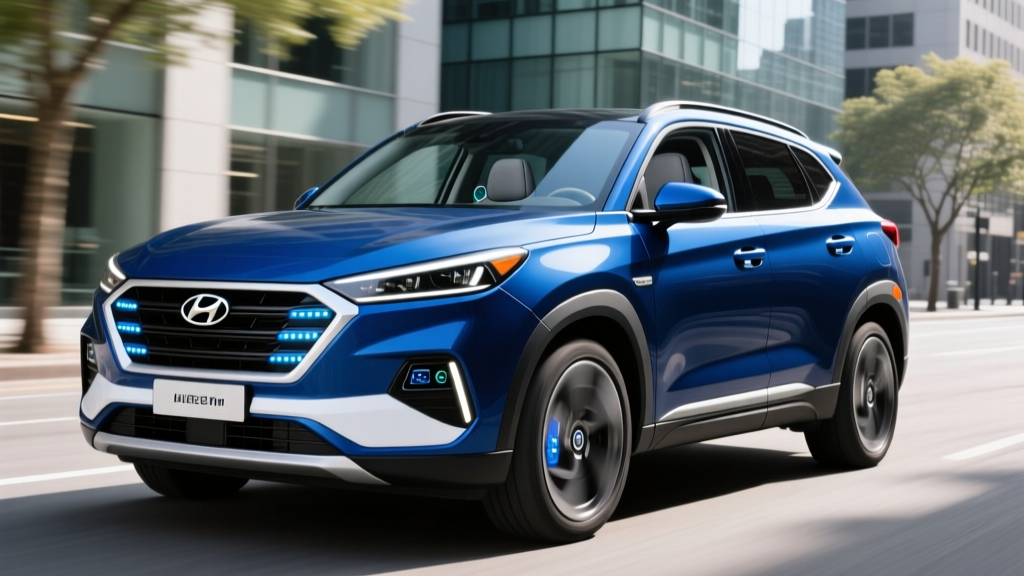
The 2025 Hyundai Tucson Hybrid Blue trim occupies a precise niche: it's the most fuel-efficient configuration Hyundai offers in the Tucson compact SUV, achieving an EPA-estimated 38 MPG combined without requiring a charging plug, a home charger installation, or any change to your daily routine. For buyers who want electrified efficiency but lack reliable access to plug-in charging — whether due to apartment living, street parking, or simply not wanting the hassle — the Tucson Hybrid Blue delivers meaningful fuel savings over the gas-only Tucson while avoiding the premium and complexity of the Tucson Plug-in Hybrid.
This guide breaks down exactly what the Blue trim offers, how its real-world fuel economy stacks up against the EPA sticker, what the hybrid battery warranty covers, and whether this HEV makes more financial sense than a PHEV or full BEV for your specific situation.
| Spec | Value |
|---|---|
| Powertrain Type | Conventional Hybrid (HEV) — no plug required |
| Engine | 1.6L turbocharged 4-cylinder + electric motor |
| Combined Horsepower | 231 HP / 258 lb-ft torque |
| Transmission | 6-speed automatic |
| EPA MPG (City / Hwy / Combined) | 38 / 38 / 38 |
| Fuel Tank Capacity | 13.7 gallons |
| Total Driving Range | ~520 miles (EPA estimate) |
| Drivetrain | HTRAC All-Wheel Drive (standard) |
| 0–60 MPH | ~7.5 seconds (est.) |
| Cargo Volume (behind rear seats) | 38.7 cu ft |
| Starting MSRP | ~$33,465 (incl. destination) |
| Hybrid Battery Warranty | 10 years / 100,000 miles |
HEV vs. PHEV: Understanding What the Tucson Blue Actually Is
Hyundai sells three distinct Tucson powertrains, and confusing them is the single most common mistake shoppers make. Here's the breakdown:
| Attribute | Gas Tucson | Tucson Hybrid (Blue) | Tucson Plug-in Hybrid |
|---|---|---|---|
| Needs a plug? | No | No | Yes — Level 1 or Level 2 |
| Electric-only range | 0 miles | 0 miles (EV assist only) | ~33 miles (EPA) |
| EPA Combined MPG / MPGe | ~28 MPG | 38 MPG | 80 MPGe (elec) / 35 MPG (gas) |
| Battery Size | 12V only | ~1.49 kWh (traction) | 13.8 kWh (traction) |
| Combined HP | 187 HP | 231 HP | 261 HP |
| Starting MSRP (2025) | ~$28,585 | ~$33,465 | ~$39,885 |
| Federal Tax Credit (§30D) | None | None | Up to $7,500 (eligibility varies) |
The Tucson Hybrid Blue is a conventional hybrid (HEV). It charges its small traction battery entirely through regenerative braking and the gasoline engine. You never plug it in. You fuel it at any gas station. The electric motor assists the engine during acceleration and enables low-speed electric-only driving in stop-and-go traffic, but it cannot sustain highway speeds on electric power alone.
The Tucson Plug-in Hybrid (PHEV) is a fundamentally different vehicle with a much larger 13.8 kWh battery, an electric-only range of roughly 33 miles, and eligibility for the federal §30D tax credit — but it also costs roughly $6,400 more upfront and requires access to a plug to realize its efficiency advantage.
Fuel Economy: EPA Numbers vs. Real-World MPG
| Driving Condition | EPA Estimate | Real-World Expectation |
|---|---|---|
| City | 38 MPG | 39–43 MPG (hybrids often exceed EPA in city) |
| Highway | 38 MPG | 34–37 MPG (turbo engine works harder at sustained speed) |
| Combined | 38 MPG | 36–40 MPG (depends on driving mix) |
The Tucson Hybrid Blue's flat 38/38/38 EPA rating is unusual — most vehicles show a city-highway split. Hyundai tuned this hybrid system to deliver consistent efficiency across conditions, and in practice, owners frequently report exceeding the EPA city estimate. This is a hallmark of conventional hybrids: regenerative braking recaptures energy during frequent stops, making city driving the hybrid's best-case scenario.
On sustained highway driving above 70 MPH, expect a 2–4 MPG drop below the sticker. The 1.6L turbo engine carries more load at high speed, and aerodynamic drag reduces the electric motor's assist advantage. In cold weather (below 30°F), plan for a 5–10% efficiency reduction as the engine runs more frequently to provide cabin heat and maintain battery temperature.
According to fueleconomy.gov, the Tucson Hybrid Blue's 38 MPG combined translates to an estimated annual fuel cost of roughly $1,550 (at 15,000 miles/year and $3.50/gallon), compared to approximately $2,100 for the gas-only Tucson — a savings of about $550 per year at the pump.
Powertrain Deep Dive: 231 HP With Hybrid Smoothness
The Tucson Hybrid pairs a 1.6-liter turbocharged GDI 4-cylinder engine (producing roughly 178 HP on its own) with a 47.7 kW electric motor integrated into the 6-speed automatic transmission. Combined system output is 231 horsepower and 258 lb-ft of torque.
The electric motor fills in the torque gap that turbo lag typically creates, delivering immediate thrust from a stop. This makes the Tucson Hybrid feel noticeably quicker and more responsive than the gas-only model's 187 HP, even though the 0–60 time of approximately 7.5 seconds isn't sporty by EV standards. HTRAC all-wheel drive is standard on every Tucson Hybrid trim, using an electrically controlled coupling to send torque rearward when slip is detected.
The 6-speed automatic is a deliberate choice over the continuously variable transmissions (CVTs) used in competitors like the Toyota RAV4 Hybrid. Some drivers prefer the natural, stepped gear shifts; others note that the 6-speed doesn't keep the engine in its optimal efficiency RPM as seamlessly as a CVT under hard acceleration. For daily commuting, the difference is negligible.
What the Blue Trim Includes (and What It Doesn't)
The Blue is the entry point to the Tucson Hybrid lineup. Hyundai positions it as the efficiency-focused trim, and it includes a substantial feature set for the price:
- 10.25-inch touchscreen with wireless Apple CarPlay and Android Auto
- Hyundai SmartSense suite (forward collision-avoidance assist, lane-keeping assist, blind-spot collision warning, rear cross-traffic collision-avoidance, driver attention warning)
- Smart cruise control with stop-and-go
- Proximity key with push-button start
- LED daytime running lights and headlights
- Dual-zone automatic climate control
- 18-inch alloy wheels (low rolling-resistance tires contribute to the 38 MPG rating)
What you give up compared to higher trims (SEL Convenience, Limited): the panoramic sunroof, leather seats, heated/ventilated front seats, the larger 12.3-inch digital cluster, the Bose premium audio system, and the highway driving assist (HDA) with navigation-based curve slowing. If those features matter, the SEL Convenience trim adds them for roughly $3,000 more — but note that higher trims with larger wheels may carry a slightly lower EPA rating due to increased rolling resistance and weight.
Pros
- 38 MPG combined without plugging in — no lifestyle change required
- 231 HP provides confident merging and passing power
- Standard AWD across all Hybrid trims
- Strong safety tech suite included at base price
- 10-year/100,000-mile hybrid battery warranty
- Competitive cargo space at 38.7 cu ft
Cons
- No federal tax credit for conventional hybrids
- Highway MPG can dip below EPA estimate at sustained 75+ MPH
- Blue trim lacks premium comfort features (leather, sunroof)
- 6-speed auto less seamless than competitor CVTs in stop-and-go
- ~$4,900 premium over gas-only Tucson base — payback takes ~9 years at current fuel prices
Hybrid Battery Warranty, Lifespan, and Replacement Cost
Hyundai Hybrid Battery Warranty: 10 years or 100,000 miles (whichever comes first) for the high-voltage traction battery. This covers defects and capacity loss below a manufacturer-specified threshold under normal use. The standard vehicle warranty is 5 years / 60,000 miles bumper-to-bumper and 10 years / 100,000 miles powertrain.
The Tucson Hybrid's traction battery is a relatively small ~1.49 kWh lithium-ion pack. Because it's small and the hybrid system never deeply cycles it (the battery management system maintains a narrow state-of-charge window, typically between 40–80% SoC), degradation is minimal compared to a full EV or even a PHEV with a larger battery that undergoes deeper daily cycles.
Based on long-term data from Hyundai-Kia hybrid platforms and comparable systems from Toyota, conventional hybrid batteries routinely last 150,000–200,000+ miles before any meaningful capacity loss is noticeable. Failures within the warranty period are uncommon but do occur — Hyundai's 10-year coverage is among the most generous in the segment and matches the original owner for the full term.
If replacement is needed out of warranty, a new OEM hybrid battery for the Tucson Hybrid typically costs between $2,000 and $4,000 (parts and labor), depending on dealership pricing and regional labor rates. Third-party refurbished or reconditioned batteries may be available for $1,200–$2,500. This is substantially less than a full EV battery replacement, precisely because the pack is small.
Tax Credits and Incentives: What the Blue Trim Qualifies For
Here's the straightforward answer: the 2025 Tucson Hybrid Blue does not qualify for the federal §30D clean vehicle tax credit. That credit — up to $7,500 — is reserved for plug-in electric vehicles (BEVs and PHEVs) that meet specific battery-sourcing, critical-mineral, MSRP, and buyer-income requirements as outlined by the IRS.
Conventional hybrids like the Tucson Blue are excluded from §30D regardless of price or efficiency. This is a common point of confusion at dealerships — some salespeople conflate "hybrid" with "electrified" and imply credit eligibility. The Tucson Plug-in Hybrid may qualify (subject to current-year sourcing rules and your personal income/MSRP caps), but the standard Hybrid does not.
What the Blue trim may qualify for:
- State-level incentives: A handful of states offer rebates or tax credits for conventional hybrids, though these are increasingly rare as programs shift focus to BEVs and PHEVs. Check your state's energy or environmental agency for current programs.
- Insurance discounts: Some insurers offer modest green-vehicle discounts for hybrids.
- HOV lane access: Available in some states for hybrids, though many have phased this out or restricted it to PHEVs/BEVs.
Tucson Hybrid vs. PHEV vs. Full EV: Which Fits Your Life?
Choose the Tucson Hybrid Blue (HEV) if:
- You cannot install a home charger (apartment, condo, street parking)
- You want lower fuel costs with zero change to your refueling routine
- Your annual mileage is moderate (10,000–15,000 miles) and the gas-vs-hybrid payback period (~9 years) is acceptable
- You want AWD and strong safety tech near $33,000
Choose the Tucson Plug-in Hybrid (PHEV) if:
- You have a garage or driveway where you can install a Level 2 (240V) charger
- Your daily commute is under 30 miles round-trip (you'd drive mostly electric)
- You qualify for the §30D federal tax credit (income and sourcing rules apply — consult a tax professional)
- You want the option of electric-only commuting with gas-engine flexibility for road trips
Choose a full BEV (e.g., Hyundai Ioniq 5, Tesla Model Y) if:
- You have reliable home or workplace charging
- You want the lowest per-mile "fuel" cost and minimal maintenance
- You're ready to plan around DC fast charging on road trips
- You want the full federal tax credit and maximum emissions reduction
The financial calculus is specific to your situation. The Tucson Hybrid Blue saves roughly $550/year in fuel over the gas Tucson at current prices. Over a 10-year ownership period, that's approximately $5,500 — enough to offset the hybrid premium. But if you can charge at home, the Tucson PHEV's electric-only commuting could cut your fuel costs by 60–70% on daily driving, and the potential $7,500 tax credit (if eligible) dramatically shortens the payback period. A full EV eliminates fuel costs almost entirely but requires the most infrastructure commitment.
Frequently Asked Questions
How many MPG does the 2025 Tucson Hybrid Blue get?
The EPA rates the Tucson Hybrid Blue at 38 MPG city, 38 MPG highway, and 38 MPG combined. In real-world driving, owners commonly see 39–43 MPG in city conditions thanks to regenerative braking, and 34–37 MPG on sustained highway driving above 70 MPH. Cold weather may reduce efficiency by 5–10%.
Does the Tucson Hybrid Blue need to be plugged in?
No. The Tucson Hybrid Blue is a conventional hybrid (HEV). Its small traction battery charges entirely through regenerative braking and the gasoline engine. You refuel it at any gas station exactly like a conventional car. If you want a Tucson that plugs in, look at the Tucson Plug-in Hybrid (PHEV), which is a separate model with a larger battery and ~33 miles of electric-only range.
How far can the Tucson Hybrid drive on electric power alone?
The conventional Tucson Hybrid Blue can operate on electric-only power at very low speeds (typically under 25 MPH) for short distances — such as creeping through a parking lot or in heavy stop-and-go traffic. It cannot sustain highway speeds on electric power. If you need meaningful electric-only range for commuting, the Tucson PHEV offers approximately 33 EPA-estimated electric miles.
Is the Tucson Hybrid reliable, and what does battery replacement cost?
Hyundai's hybrid powertrain has demonstrated solid reliability across multiple model years and platforms. The hybrid battery is covered by a 10-year/100,000-mile warranty. Conventional hybrid batteries typically last 150,000–200,000+ miles due to shallow charge cycling. Out-of-warranty replacement costs approximately $2,000–$4,000 for a new OEM pack. The IIHS has evaluated the Tucson for safety; check their site for the latest crash-test ratings.
Does the 2025 Tucson Hybrid qualify for any federal tax credit?
No. The federal §30D clean vehicle credit applies only to plug-in vehicles (BEVs and PHEVs) that meet battery-sourcing, MSRP, and buyer-income requirements. Conventional hybrids like the Tucson Hybrid Blue are not eligible. The Tucson Plug-in Hybrid may qualify — verify current-year rules on IRS.gov and consult a tax professional for your personal eligibility.
How does the Tucson Hybrid Blue compare to the Toyota RAV4 Hybrid?
The RAV4 Hybrid (LE AWD) is the segment benchmark, rated at 41 MPG combined vs. the Tucson Blue's 38 MPG. The RAV4 uses a naturally aspirated 2.5L engine with a CVT, while the Tucson uses a 1.6L turbo with a 6-speed automatic — giving the Tucson a more engaging driving feel but slightly lower efficiency. Pricing is comparable, and both carry strong hybrid battery warranties (Toyota: 10yr/150,000mi for the battery). The choice often comes down to styling preference, interior design, and dealership experience.
What's the real-world ownership cost advantage over the gas Tucson?
At 15,000 miles/year and $3.50/gallon, the Tucson Hybrid Blue saves approximately $550 annually in fuel costs compared to the gas-only Tucson (28 MPG combined). Over 10 years, that's roughly $5,500 in fuel savings. Factor in potentially lower maintenance (regenerative braking reduces brake pad wear) and the hybrid premium of ~$4,900 is recovered within the typical ownership period. Insurance costs are generally comparable between the gas and hybrid models.