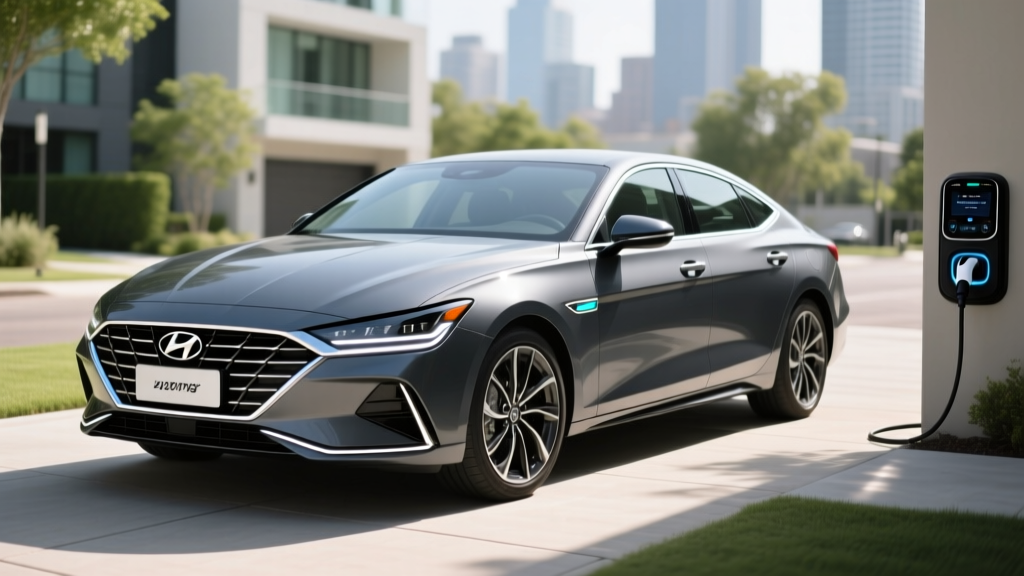
The 2025 Hyundai Sonata Hybrid Limited sits at a crossroads that more midsize-sedan buyers are navigating: do you go full electric, plug-in hybrid, or stick with a conventional hybrid that never needs a charging cable? Hyundai's answer is a well-equipped, tech-forward hybrid electric vehicle (HEV) that delivers up to 44 MPG combined without any lifestyle changes. But is it the right electrified choice for you?
In this guide, we break down the Sonata Hybrid Limited's powertrain, real-world fuel economy, battery longevity, pricing, and how it stacks up against PHEVs and full EVs — so you can make a data-driven decision.
2025 Hyundai Sonata Hybrid Limited: Quick Spec Sheet
| Specification | 2025 Sonata Hybrid Limited |
|---|---|
| Powertrain Type | Conventional Hybrid (HEV) — no plug |
| Engine | 2.0L inline-4 GDI + electric motor |
| Combined Horsepower | 192 HP |
| Transmission | 6-speed automatic |
| EPA MPG (City / Highway / Combined) | 44 / 51 / 47 |
| Fuel Tank Capacity | 13.2 gallons |
| Total Driving Range | ~620 miles (EPA est.) |
| 0–60 MPH | ~7.8 seconds (est.) |
| Drivetrain | Front-wheel drive |
| Hybrid Battery Warranty | 10 years / 100,000 miles |
| Base MSRP (Limited Trim) | $37,250 (excl. destination) |
How Many MPG Does the 2025 Sonata Hybrid Get?
The EPA rates the 2025 Hyundai Sonata Hybrid Limited at 44 city / 51 highway / 47 combined MPG. These figures come from Hyundai's 2.0-liter Smartstream GDI engine paired with a 39 kW electric motor integrated into the 6-speed automatic transmission — a setup Hyundai calls TMED (Transmission-Mounted Electric Device).
| Driving Scenario | EPA Rating | Real-World Expectation |
|---|---|---|
| City | 44 MPG | 45–50 MPG (regenerative braking favors stop-and-go) |
| Highway (70 mph cruise) | 51 MPG | 42–47 MPG (aerodynamic drag and sustained speed reduce hybrid advantage) |
| Combined | 47 MPG | 43–48 MPG |
| Cold Weather (below 32°F) | N/A | 38–43 MPG (engine runs more to heat cabin and warm battery) |
According to fueleconomy.gov, the Sonata Hybrid's combined 47 MPG places it among the most efficient midsize sedans available. In real-world driving, hybrids like the Sonata often exceed their EPA city rating because regenerative braking recaptures energy in stop-and-go traffic. Highway driving is where the gap narrows — expect closer to 42–47 MPG at sustained 70+ mph speeds.
HEV vs PHEV vs EV: Which Electrified Sedan Fits You?
The Sonata lineup includes a conventional hybrid (HEV), but Hyundai also offers PHEV options in other models, and competitors like the Toyota Prius Prime offer plug-in variants. Here's how the three electrified paths compare:
| Factor | Conventional Hybrid (HEV) | Plug-In Hybrid (PHEV) | Battery Electric (BEV) |
|---|---|---|---|
| Plug Required? | No — self-charging via regen & engine | Yes — plug in for electric-only range | Yes — plug in for all driving |
| Electric-Only Range | Minimal (low-speed creep only) | 25–44 miles typical | 250–400+ miles |
| Total Range | 570–660 miles | 400–550 miles (gas + electric) | 250–400+ miles |
| Home Charging Needed | Never | Recommended (Level 1 or 2) | Essential (Level 2 strongly recommended) |
| Federal Tax Credit (§30D) | Not eligible | Up to $7,500 (if sourcing/income rules met) | Up to $7,500 (if sourcing/income rules met) |
| Upfront Cost Premium vs Gas | ~$1,000–$2,500 | ~$4,000–$8,000 | ~$5,000–$15,000+ |
| Best For | No home charging access; want simplicity | Short commutes + occasional road trips | Home charging + daily driving under 300 mi |
- You don't have reliable access to home or workplace charging
- You want near-50 MPG without changing any habits
- You take frequent road trips and don't want to plan around chargers
- You want a lower upfront price and no charging infrastructure costs
- Your daily commute is under 40 miles and you can charge at home
- You want electric-only driving most days but gas flexibility for long trips
- You qualify for the federal tax credit on a PHEV model
- You have Level 2 home charging and a daily drive under 250 miles
- You want zero tailpipe emissions and minimal maintenance
- You're eligible for the full $7,500 federal EV tax credit
Powertrain Deep Dive: 192 HP from Engine + Motor
The 2025 Sonata Hybrid Limited uses Hyundai's proven hybrid architecture:
- Engine: 2.0-liter Smartstream GDI 4-cylinder producing 150 HP and 139 lb-ft of torque
- Electric Motor: 39 kW (52 HP) permanent-magnet synchronous motor, integrated into the transmission housing (TMED)
- Combined System Output: 192 HP and 271 lb-ft of torque
- Transmission: 6-speed automatic with the electric motor sandwiched between engine and gearbox
- Hybrid Battery: ~1.6 kWh lithium-ion polymer pack (located under the rear seat)
Unlike Toyota's planetary-gear e-CVT hybrid system, Hyundai's TMED setup uses a conventional 6-speed automatic. The result is more natural-feeling acceleration with distinct gear shifts — a trade-off that sacrifices a small amount of low-speed efficiency for a more engaging driving experience. The 192 HP combined output is competitive in the midsize hybrid segment, and the 0–60 time of approximately 7.8 seconds is adequate for confident highway merging.
The hybrid battery in the Sonata Hybrid is small — roughly 1.6 kWh — because it doesn't need to store energy for plug-in driving. It captures energy from regenerative braking and the engine, then deploys it for electric assist during acceleration and low-speed electric-only creep (typically under 15 mph for short distances). This battery is not user-chargeable via a plug.
Pricing, Trims, and Tax Credit Eligibility
The 2025 Hyundai Sonata Hybrid is available in two trims:
| Trim | MSRP (excl. destination) | Key Features |
|---|---|---|
| SEL | ~$31,550 | Heated seats, 12.3" dual displays, SmartSense ADAS, wireless CarPlay/Android Auto |
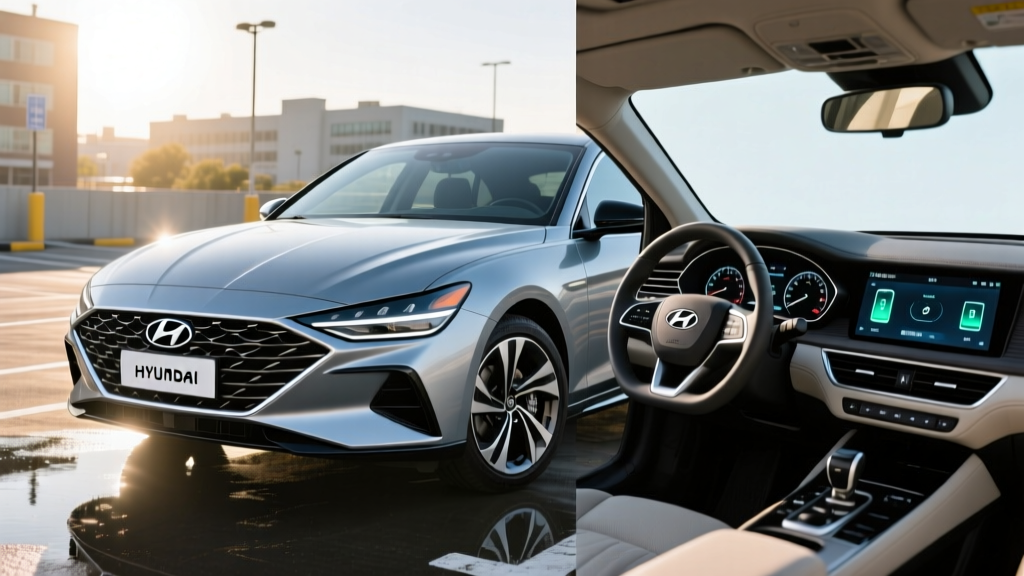
| Limited | ~$37,250 | Leather seats, panoramic sunroof, head-up display, Bose audio, ventilated front seats, surround-view monitor, Digital Key 2 |
Destination charges add approximately $1,150, bringing the Limited to a total starting price around $38,400.
Federal Tax Credit Status
Reliability, Battery Warranty, and Replacement Cost
Hybrid battery longevity is the single most common concern among first-time hybrid buyers. Here's what the data shows:
- Coverage: 10 years / 100,000 miles (whichever comes first)
- Capacity Threshold: Hyundai covers the hybrid battery if it fails or drops below normal performance specifications during the warranty period
- Powertrain Warranty: 10 years / 100,000 miles (engine, transmission, electric motor)
- Bumper-to-Bumper: 5 years / 60,000 miles
How Long Do Hyundai Hybrid Batteries Actually Last?
Hyundai's lithium-ion polymer hybrid batteries have a strong track record. Based on owner reports and industry data from sources like Consumer Reports, Hyundai hybrid batteries routinely last 150,000–200,000+ miles before significant degradation. The small 1.6 kWh pack in the Sonata Hybrid undergoes shallow charge/discharge cycles (typically operating between 40–80% state of charge), which dramatically extends cell life compared to full EV batteries that cycle through deeper ranges.
If replacement is eventually needed outside of warranty, a Hyundai hybrid battery replacement typically costs $2,000–$4,000 including labor at a dealership. Independent hybrid specialists may offer refurbished packs for $1,200–$2,500. This is far less expensive than EV battery replacements, which can exceed $10,000–$15,000 for larger packs.
Overall Reliability
The Sonata Hybrid benefits from Hyundai's mature hybrid system, now in its third generation. The 6-speed TMED transmission avoids the rubber-band feel of e-CVTs and has fewer long-term reliability concerns than early hybrid CVTs. Hyundai's SmartSense ADAS suite (forward collision-avoidance, lane-keeping, blind-spot monitoring, rear cross-traffic alert) is standard and has performed well in IIHS testing.
Pros and Cons: 2025 Sonata Hybrid Limited
Pros
- 47 MPG combined EPA — among the best in the midsize segment
- No plug-in required — zero lifestyle changes
- 620+ mile total range eliminates refueling stops on road trips
- Limited trim is loaded: HUD, Bose, panoramic roof, ventilated seats
- 10-year/100,000-mile hybrid battery and powertrain warranty
- Natural 6-speed automatic shifts vs CVT drone
- Strong real-world city MPG (often exceeds EPA)
Cons
- No federal tax credit (HEV ineligible under §30D)
- FWD only — no AWD option for snow-belt buyers
- Highway MPG drops noticeably at 75+ mph
- Limited trim at $38,400+ approaches luxury-sedan pricing
- No plug-in variant offered in the Sonata Hybrid lineup
- 192 HP is adequate but not sporty — rivals like Accord Hybrid offer similar output
- Cold-weather MPG penalty of 5–10% is unavoidable
Who Should Buy the 2025 Sonata Hybrid Limited?
The Sonata Hybrid Limited is engineered for a specific buyer profile: someone who wants the fuel-economy benefits of electrification without the infrastructure demands of a PHEV or full EV. It's ideal for:
- Apartment dwellers and street parkers who can't install a home charger
- High-mileage commuters (15,000–25,000 miles/year) who want to minimize fuel spend without range planning
- Road-trip enthusiasts who regularly drive 400+ miles and don't want to rely on DC fast-charging networks
- Buyers transitioning from gas who want a familiar ownership experience with dramatically lower fuel costs
At 47 MPG combined, the Sonata Hybrid Limited uses roughly $1,050–$1,200 in gasoline per year (based on 15,000 miles and $3.50/gallon). A comparable gas-only midsize sedan at 30 MPG combined would cost approximately $1,750 per year — a savings of $550–$700 annually. Over a 10-year ownership cycle, that's $5,500–$7,000 in fuel savings, which largely offsets the hybrid premium over the gas Sonata.
Frequently Asked Questions
How many MPG does the 2025 Hyundai Sonata Hybrid Limited get in real-world driving?
The EPA rates it at 44 city / 51 highway / 47 combined MPG. In real-world conditions, city-heavy drivers often see 48–52 MPG thanks to regenerative braking, while highway-dominated commutes at 70+ mph typically return 42–47 MPG. Cold weather (below freezing) can drop combined MPG to 38–43 due to increased engine runtime for cabin heating.
Does the 2025 Sonata Hybrid need to be plugged in?
No. The Sonata Hybrid is a conventional hybrid (HEV), not a plug-in hybrid (PHEV). It charges its small 1.6 kWh battery through regenerative braking and the gasoline engine. You simply fill up at a gas station like any other car.
Does the Sonata Hybrid qualify for any federal tax credit?
No. Under IRS §30D rules, only plug-in electric vehicles (BEVs and PHEVs) with a battery capacity of at least 7 kWh qualify for the federal Clean Vehicle Credit. The Sonata Hybrid's 1.6 kWh pack makes it ineligible. Check your state's incentive database for possible local hybrid rebates.
Is the Hyundai Sonata Hybrid reliable, and what does battery replacement cost?
Hyundai's hybrid system is in its third generation with a strong reliability record. The hybrid battery is covered by a 10-year/100,000-mile warranty. Real-world data suggests these batteries last 150,000–200,000+ miles. Out-of-warranty replacement costs approximately $2,000–$4,000 at a dealership, or $1,200–$2,500 for a refurbished pack from an independent specialist.
How does the Sonata Hybrid compare to the Toyota Camry Hybrid?
The Toyota Camry Hybrid (redesigned for 2025) offers AWD availability and slightly higher combined MPG (up to 51 combined on LE trim). However, the Sonata Hybrid Limited offers a more premium interior at its price point, with features like a head-up display, panoramic sunroof, and Digital Key 2 that the Camry Hybrid doesn't match without moving up to higher trims. Both carry excellent hybrid battery warranties (Toyota: 10yr/150,000mi).
Can the Sonata Hybrid drive on electric power alone?
Only at very low speeds (typically under 15 mph) for short distances, such as creeping through a parking lot. The 1.6 kWh battery and 39 kW motor aren't designed for sustained electric-only driving. If electric-only commuting is a priority, a PHEV with 25–44 miles of electric range or a full BEV is the appropriate choice.