Quick Verdict: The Case for the 2025 Hyundai Elantra Hybrid Limited
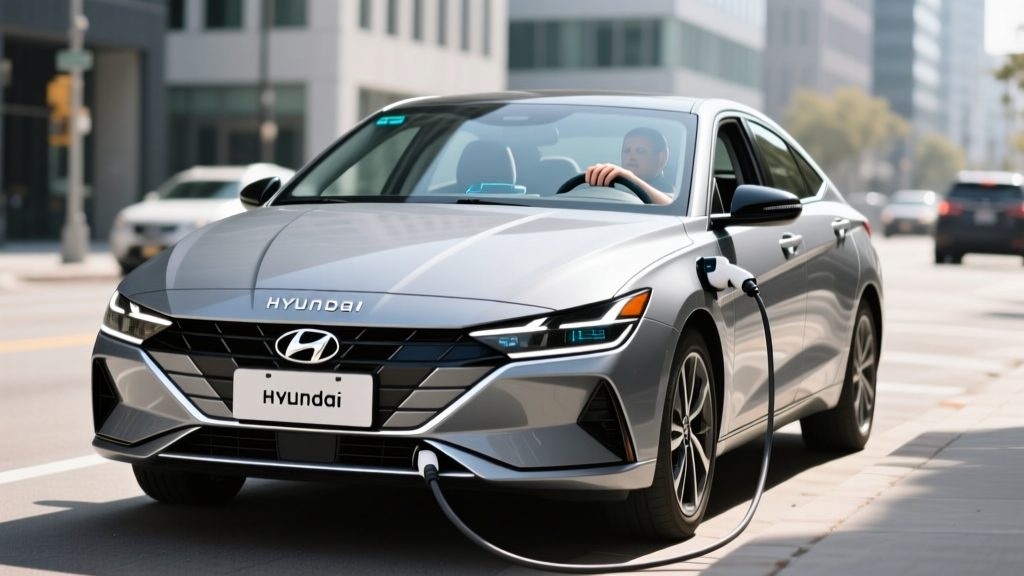
The 2025 Hyundai Elantra Hybrid Limited is one of the most fuel-efficient compact sedans you can buy without plugging in anything. With an EPA-estimated 54 MPG combined, a tech-loaded Limited trim starting at $31,425, and Hyundai's industry-leading hybrid battery warranty, it occupies a specific and compelling niche: buyers who want EV-like efficiency without EV charging logistics.
This is a conventional hybrid (HEV) — not a plug-in. You never plug it in. It generates and recovers all its own electricity through regenerative braking and the gasoline engine. That distinction matters enormously for buyers cross-shopping against the Hyundai Tucson PHEV, Toyota Prius, or a full EV like the Chevy Bolt. Let's break down exactly what you're getting, what it costs to own, and whether it's the right electrified vehicle for your situation.
HEV vs PHEV vs EV: Where the Elantra Hybrid Fits
Before examining specs, it's critical to understand what type of electrified vehicle the 2025 Elantra Hybrid is — and what it isn't.
| Feature | HEV (Elantra Hybrid) | PHEV (e.g., Tucson PHEV) | BEV (e.g., Ioniq 6) |
|---|---|---|---|
| Plugs in? | No | Yes | Yes |
| Electric-only range | ~1 mi (low-speed) | 30–33 mi typical | 250–360 mi |
| Fuel/energy | Gasoline only | Gasoline + electricity | Electricity only |
| Home charging needed? | No | Recommended (Level 2) | Essential (Level 2) |
| Tailpipe emissions | Low (not zero) | Low when charged; gas when depleted | Zero at tailpipe |
| Federal tax credit (§30D) | Not eligible | Up to $7,500 (if eligible) | Up to $7,500 (if eligible) |
| Starting price range | ~$26,000–$31,000 | ~$37,000–$45,000 | ~$38,000–$55,000 |
The Elantra Hybrid is for drivers who want maximum fuel savings with zero behavioral change. No charging apps, no route planning around chargers, no electrical panel upgrades. You fill up at any gas station and drive. The tradeoff: you still burn gasoline (just far less than a non-hybrid), and you don't qualify for the federal EV tax credit.
Fuel Economy: EPA Ratings and Real-World MPG
The headline number is why buyers look at this car. Here's what the EPA says, and what you should actually expect.
| Metric | EPA Estimate | Real-World Expectation |
|---|---|---|
| City MPG | 54 MPG | 52–58 MPG (hybrids often beat EPA in city) |
| Highway MPG | 58 MPG | 48–54 MPG (high-speed driving reduces regen benefit) |
| Combined MPG | 54 MPG | 50–55 MPG (mixed driving) |
| Fuel tank capacity | 11.1 gallons | — |
| Total range (est.) | ~600 miles | ~520–600 miles depending on conditions |
A few real-world nuances worth understanding:
- City driving favors hybrids. The Elantra Hybrid's electric motor handles low-speed acceleration, and regenerative braking recaptures energy at every stoplight. Expect to meet or exceed the 54 MPG city figure in stop-and-go traffic.
- Highway driving is the weak point. At sustained 75–80 MPH, the gasoline engine does most of the work, and aerodynamic drag dominates. Expect highway MPG to dip into the upper 40s on fast interstates.
- Cold weather costs 10–15%. In sub-freezing temperatures, the engine runs more often to provide cabin heat (no heat pump here — that's EV territory). Winter MPG typically lands in the mid-to-upper 40s.
- The 1.6L Atkinson-cycle engine is optimized for efficiency, not power. It runs at lower RPMs than a conventional engine, which is why acceleration feels adequate but not quick.
For context, a non-hybrid 2025 Elantra with the 2.0L engine gets 36 MPG combined. The hybrid's 54 MPG combined represents roughly a 50% improvement in fuel economy — translating to approximately 130 fewer gallons per year for a 15,000-mile driver, or about $450–$550 in annual fuel savings depending on local gas prices.
Powertrain and Performance Specs
| Specification | 2025 Elantra Hybrid Limited |
|---|---|
| Engine | 1.6L 4-cylinder Atkinson-cycle GDI |
| Engine horsepower | 104 HP @ 5,700 RPM |
| Electric motor | 36 kW permanent-magnet synchronous |
| Motor horsepower | 43 HP |
| Combined system output | 139 HP / 195 lb-ft torque |
| Transmission | 6-speed dual-clutch automatic (DCT) |
| Drivetrain | Front-wheel drive |
| 0–60 MPH | ~8.5 seconds (estimated) |
| Battery type | Lithium-ion polymer, ~1.56 kWh |
| Battery location | Under rear seat |
| Curb weight | ~3,050 lbs |
The 6-speed dual-clutch transmission is a differentiator. Unlike the continuously variable transmissions (CVTs) found in the Toyota Prius and Honda Accord Hybrid, the DCT delivers traditional gear shifts. This eliminates the "rubber band" sensation common to CVT hybrids — the engine doesn't drone at a fixed RPM during hard acceleration. The tradeoff is slightly less seamless low-speed behavior; you may notice occasional shift hesitation from a stop, though Hyundai's tuning has improved this significantly over prior model years.
At 139 combined horsepower, the Elantra Hybrid Limited is adequate for commuting and highway merging but not sporty. If you want more urgency, the non-hybrid Elantra N Line (201 HP turbo) is the performance option — but you'll sacrifice about 20 MPG combined to get it.
Limited Trim: What You Get for $31,425
The 2025 Elantra Hybrid comes in three trims. The Limited sits at the top:
| Trim | MSRP | Key Features |
|---|---|---|
| Blue | $26,250 | Base hybrid; 16" wheels, 8" display, wireless CarPlay/Android Auto |
| SEL | $28,650 | Smart cruise control, blind-spot monitoring, heated front seats, 17" wheels |
| Limited | $31,425 | 10.25" dual screens, leather seats, Bose audio, Highway Driving Assist, sunroof, ventilated front seats, Digital Key |
The Limited trim bundles Hyundai's most advanced driver-assistance features, including Highway Driving Assist (HDA) — a Level 2 SAE system that combines adaptive cruise control with lane-centering on divided highways. It's important to understand this is not self-driving. You must keep your hands on the wheel and eyes on the road at all times. HDA is comparable to Toyota's Driving Assist or Honda's Sensing suite, not Tesla's FSD.
Also included: Hyundai's Digital Key (use your smartphone as the key fob), a 10.25-inch digital instrument cluster, navigation with real-time traffic, and an 8-speaker Bose premium audio system. For a sub-$32,000 sedan, the feature list is extensive.
Battery Warranty, Reliability, and Replacement Cost
Hyundai Hybrid Battery Warranty
- Hybrid battery: 10 years / 100,000 miles (whichever comes first)
- Hybrid system components: 10 years / 100,000 miles (inverter, motor, etc.)
- Standard powertrain: 10 years / 100,000 miles
- Limited warranty (bumper-to-bumper): 5 years / 60,000 miles
- Capacity retention threshold: Hyundai replaces if battery falls below approximately 70% of original capacity during the warranty period
Source: Hyundai USA Warranty Information
This is the strongest hybrid battery warranty in the segment. Toyota covers the Prius hybrid battery for 10 years/150,000 miles (slightly more mileage), but Hyundai's 10-year/100,000-mile coverage on the entire hybrid system — not just the battery — provides comprehensive peace of mind.
Real-world reliability data: Hyundai's hybrid powertrains have proven durable. The 1.6L hybrid system used in the Elantra Hybrid shares architecture with the Kia Niro and Hyundai Ioniq (discontinued), which accumulated hundreds of thousands of fleet and consumer miles with low failure rates. The small 1.56 kWh lithium-ion polymer battery experiences minimal cycling stress compared to a PHEV or EV battery — it never fully depletes or fully charges, operating in a narrow state-of-charge window that dramatically extends lifespan.
Battery replacement cost: If the hybrid battery fails out of warranty (after 10 years/100,000 miles), expect a replacement cost of approximately $2,000–$3,500 including parts and labor. This is significantly less than EV battery replacement ($5,000–$20,000+) because the hybrid battery is small. Independent hybrid specialists often offer refurbished units for $1,200–$2,000. Given that hybrid batteries routinely last 150,000–200,000+ miles, out-of-warranty replacement is uncommon for original owners.
Tax Credits and Incentives: What Applies
Here's the straightforward answer: the 2025 Hyundai Elantra Hybrid does NOT qualify for the federal §30D Clean Vehicle Credit. The IRS restricts the $7,500 new-vehicle credit to plug-in electric vehicles (BEVs and PHEVs) with battery capacities of at least 7 kWh. The Elantra Hybrid's ~1.56 kWh battery is far below that threshold.
§30D Federal Tax Credit Eligibility — Elantra Hybrid
- ❌ Vehicle type: HEV (not a qualifying plug-in vehicle)
- ❌ Battery capacity: ~1.56 kWh (minimum 7 kWh required)
- ❌ Plug-in capable: No
- Result: Not eligible for $7,500 federal credit
What you may still qualify for:
- State hybrid incentives: A handful of states offer modest rebates for conventional hybrids (typically $250–$1,000). Check your state energy office or AFDC state incentive database for current programs.
- Insurance discounts: Some insurers offer 5–10% discounts for hybrid vehicles. Check with your provider.
- HOV lane access: Most states have eliminated HOV lane stickers for conventional hybrids. Only PHEVs and BEVs typically qualify now.
If the federal tax credit is a priority for your purchase, you'd need to look at a PHEV (like the Tucson PHEV, if eligible under current IRS §30D sourcing and income rules) or a full BEV.
Hybrid vs PHEV vs EV: Which Should You Choose?
Choose the Elantra Hybrid (HEV) if:
- You can't charge at home (apartment, street parking, no garage)
- You drive 10,000–20,000 miles/year and want maximum fuel savings with zero behavior change
- Your budget is under $32,000 and you want a fully loaded sedan
- You take frequent long road trips and don't want to plan around chargers
- You want the lowest total cost of ownership without upfront premium
Choose a PHEV if:
- You can install a Level 2 charger at home
- Your daily commute is under 30 miles round-trip (you'd rarely use gas)
- You want electric-only driving most days but gas flexibility for road trips
- You may qualify for the $7,500 federal tax credit (subject to income, MSRP, and battery sourcing rules)
Choose a full EV (BEV) if:
- You have reliable home Level 2 charging
- You want zero tailpipe emissions and the lowest per-mile energy cost
- You qualify for the full federal tax credit
- You're comfortable with 250+ mile range and DC fast-charging for road trips
The math is straightforward. The Elantra Hybrid Limited at $31,425 costs roughly $10,000–$15,000 less than a comparable EV after any tax credit, requires no home electrical work, and eliminates range and charging anxiety entirely. The tradeoff is that you'll still spend roughly $1,100–$1,400/year on gasoline (at 15,000 miles and $3.50/gallon) versus $500–$700/year on electricity for an efficient EV charged primarily at home.
Pros and Cons
Pros
- 54 MPG combined — among the highest of any non-plug-in sedan
- No charging infrastructure needed — fill up at any gas station
- Limited trim is feature-rich at $31,425 (ventilated seats, Bose, HDA, sunroof)
- 10-year / 100,000-mile hybrid battery and powertrain warranty
- 6-speed DCT avoids CVT drone — more natural driving feel
- ~600-mile total range between fill-ups
- Strong IIHS safety ratings (Top Safety Pick in prior years)
Cons
- Not eligible for $7,500 federal EV tax credit
- 139 HP combined — adequate, not quick (0-60 ~8.5 sec)
- Highway MPG drops at sustained 75+ MPH speeds
- Small trunk vs. non-hybrid Elantra (battery under rear seat slightly impacts cargo)
- No all-wheel-drive option (AWD available on some competitors like Prius)
- Still produces tailpipe emissions — not a zero-emission solution
Frequently Asked Questions
How many MPG does the 2025 Hyundai Elantra Hybrid Limited get?
The EPA rates the 2025 Elantra Hybrid at 54 MPG city, 58 MPG highway, and 54 MPG combined. In real-world driving, expect 52–58 MPG in city conditions (hybrids excel in stop-and-go) and 48–54 MPG on the highway. Cold weather and sustained high speeds reduce efficiency by 10–15%.
Does the Elantra Hybrid need to be plugged in?
No. The Elantra Hybrid is a conventional hybrid (HEV). It charges its small battery through regenerative braking and the gasoline engine. You never plug it in — you only refuel at gas stations, just less frequently than a non-hybrid car.
Is there a plug-in hybrid (PHEV) version of the Elantra?
Not for the 2025 model year in the US market. Hyundai previously offered an Elantra PHEV in some markets, but the current US lineup is HEV only. If you want a Hyundai PHEV, the Tucson PHEV and Santa Fe PHEV are the current options.
Does the 2025 Elantra Hybrid qualify for any tax credit?
It does not qualify for the federal §30D Clean Vehicle Credit ($7,500), which is reserved for plug-in vehicles with at least 7 kWh of battery capacity. Some states may offer small hybrid rebates — check the AFDC incentive database for your state.
How long will the hybrid battery last and what does replacement cost?
Hyundai warranties the hybrid battery for 10 years / 100,000 miles. In practice, Toyota and Hyundai hybrid batteries routinely last 150,000–200,000+ miles because they operate in a narrow charge window (never fully depleted or fully charged), reducing stress. Out-of-warranty replacement costs approximately $2,000–$3,500 if needed — far less than an EV battery.
How does the Elantra Hybrid compare to the Toyota Prius?
The 2025 Prius LE achieves 57 MPG combined (3 MPG more) and offers an available AWD variant. However, the Elantra Hybrid Limited provides more premium features (leather, Bose audio, ventilated seats, sunroof) at a lower price point than a comparably equipped Prius Limited. The Elantra's DCT also provides a more natural driving feel than the Prius's CVT. Both are excellent — the Prius wins on peak MPG and AWD availability; the Elantra wins on value and refinement in the top trim.
Is the Elantra Hybrid reliable?
Hyundai's hybrid powertrain has demonstrated strong reliability. The 1.6L GDI engine and electric motor combination has been used across multiple Hyundai/Kia models with low failure rates. Hyundai's 10-year/100,000-mile powertrain warranty is among the longest in the industry, providing substantial protection. IIHS has given the Elantra strong safety ratings in prior model years.