Quick Verdict: The Efficiency King of Compact Hybrids
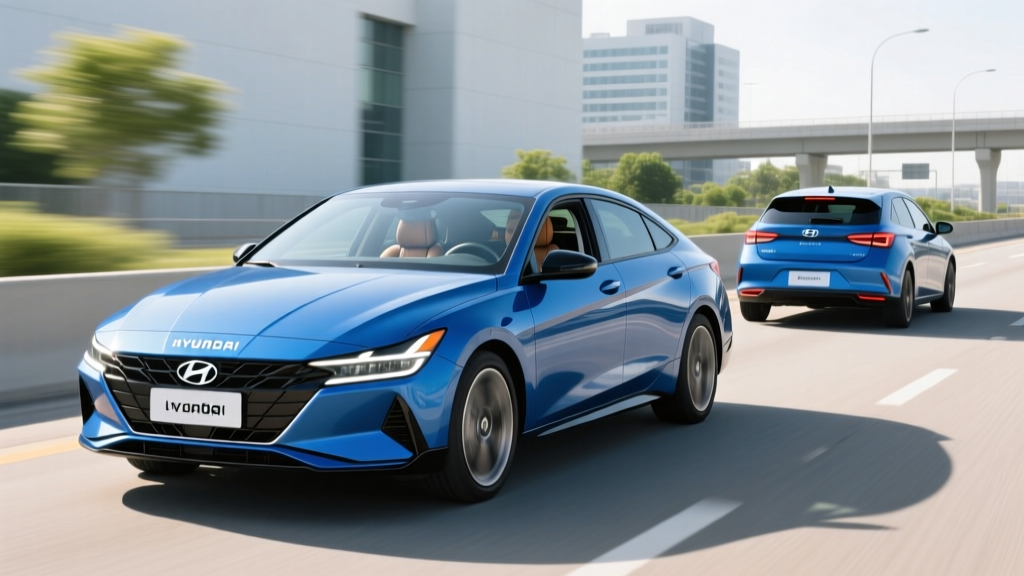
If your top priority is squeezing every last mile out of a gallon of fuel without plugging in, the 2025 Hyundai Elantra Hybrid Blue trim is one of the most compelling choices on the market. With an EPA-estimated 54 MPG combined, it outperforms nearly every non-plug-in compact sedan available in 2025, including the Toyota Corolla Hybrid (50 MPG combined) and the Honda Civic Hybrid (49 MPG combined). The Blue trim achieves this by prioritizing lightweight 16-inch wheels and low-rolling-resistance tires over the sportier aesthetics of higher trims — a trade-off that pays dividends at the pump.
Starting at approximately $26,250 MSRP (including destination), the Elantra Hybrid Blue undercuts many rivals while delivering strong standard safety tech, a comfortable ride, and Hyundai's generous warranty coverage. It's a conventional hybrid (HEV), meaning it never needs to be plugged in — the gasoline engine and regenerative braking handle all battery charging.
| Specification | Value |
|---|---|
| EPA Combined MPG | 54 MPG |
| EPA City / Highway MPG | 51 city / 58 highway |
| Combined System Horsepower | 139 hp |
| Engine | 1.6L 4-cylinder GDI + electric motor |
| Transmission | 6-speed dual-clutch automatic (DCT) |
| Hybrid Battery | 1.32 kWh lithium-ion polymer |
| 0–60 mph (est.) | ~8.6 seconds |
| Fuel Tank Capacity | 11.1 gallons |
| Total Driving Range (est.) | ~599 miles |
| Base MSRP (Blue trim) | $26,250 |
| Hybrid Battery Warranty | 10 years / 100,000 miles |
| Federal Tax Credit | Not eligible (§30D applies to PHEVs/BEVs only) |
HEV vs. PHEV vs. EV: Which Powertrain Fits You?
Before diving deeper into the Elantra Hybrid Blue, it's critical to understand what it is — and what it isn't. This is a conventional hybrid electric vehicle (HEV), not a plug-in hybrid (PHEV) and not a battery electric vehicle (BEV).
| Feature | HEV (Elantra Hybrid) | PHEV (e.g., Toyota Prius Prime) | BEV (e.g., Tesla Model 3) |
|---|---|---|---|
| Plug-in Charging | No — never plugs in | Yes — plugs in for electric range | Yes — must plug in to charge |
| Electric-Only Range | ~1 mile at low speed | 25–45 miles typical | 250–400+ miles |
| Gasoline Engine | Yes (primary power + charging) | Yes (backup + highway) | No |
| Fuel / Energy | Gasoline only | Gasoline + electricity | Electricity only |
| Federal Tax Credit (§30D) | Not eligible | Up to $7,500 (if eligible) | Up to $7,500 (if eligible) |
| Home Charger Needed | No | Recommended (Level 2) | Essential (Level 2) |
| Best For | No charging access; max simplicity | Short commutes + road trip flexibility | Home charging access; lowest running cost |
The Elantra Hybrid Blue is ideal if you lack reliable access to charging — whether at home or at work — and want a vehicle that operates exactly like a conventional gas car, just with dramatically better fuel economy. If you do have home charging and a short commute, a PHEV or BEV could save you more on fuel. But for apartment dwellers, street parkers, and high-mileage drivers who can't guarantee plug-in access, a conventional HEV remains the most practical electrified option.
Fuel Economy: EPA Numbers vs. Real-World MPG
According to fueleconomy.gov, the 2025 Hyundai Elantra Hybrid Blue achieves:
| Driving Condition | EPA MPG |
|---|---|
| City | 51 MPG |
| Highway | 58 MPG |
| Combined | 54 MPG |
These are standout numbers. The highway figure of 58 MPG is particularly impressive — many hybrids sacrifice highway efficiency because electric assist matters less at steady speeds, but Hyundai's 1.6L engine paired with the efficient 6-speed DCT keeps consumption low even at 70–75 mph.
Real-World Expectations
Hybrids often exceed their EPA city estimates in stop-and-go traffic, where regenerative braking and electric-motor assist do the heavy lifting. Many owners report 55–60 MPG in urban driving during moderate temperatures. However, expect the following reductions:
- Cold weather (below 35°F): MPG can drop 10–15% as the engine runs more frequently for cabin heat and the battery is less efficient. Expect ~45–48 MPG combined in winter.
- Aggressive driving / mountain terrain: Hard acceleration and sustained steep grades reduce the hybrid system's efficiency advantage. Expect ~42–47 MPG.
- Summer with heavy A/C: Minor impact — typically 1–3 MPG reduction versus mild-weather driving.
For a driver covering 15,000 miles per year at a national average of $3.50/gallon, the Elantra Hybrid Blue would cost roughly $972 annually in fuel — compared to approximately $1,750 for a non-hybrid compact sedan averaging 30 MPG combined. That's nearly $780 in annual fuel savings.
Powertrain: How the Hybrid System Works
The Elantra Hybrid pairs a 1.6-liter gasoline direct-injection (GDI) 4-cylinder engine producing 104 hp with a 32 kW (43 hp) permanent-magnet electric motor integrated into the transmission housing. Combined system output is 139 horsepower and 195 lb-ft of torque.
Unlike the Toyota Prius, which uses a continuously variable transmission (CVT), Hyundai employs a 6-speed dual-clutch automatic (DCT). This is a deliberate engineering choice: the DCT delivers more natural, stepped gear shifts that feel familiar to drivers accustomed to conventional automatics. The trade-off is slightly less seamless power delivery in stop-and-go traffic compared to a CVT's infinite ratios, but most drivers find the DCT's responsiveness more engaging.
The hybrid battery is a 1.32 kWh lithium-ion polymer pack located under the rear seats. This is a small battery by design — it's not meant to store large amounts of energy for electric-only driving but rather to buffer energy captured from regenerative braking and provide short bursts of electric assist during acceleration. You'll never plug this car in; the engine and regen system keep the battery charged automatically.
Pricing, Trims, and Tax Credit Eligibility
The 2025 Hyundai Elantra Hybrid is offered in three trims, with the Blue trim serving as the efficiency-focused entry point:
| Trim | MSRP (incl. destination) | Combined MPG |
|---|---|---|
| Blue | ~$26,250 | 54 MPG |
| SEL Sport | ~$28,500 | 50 MPG |
| Limited | ~$32,000 | 50 MPG |
The 2–3 MPG difference between the Blue and higher trims comes down to wheel size (16-inch on Blue vs. 17- or 18-inch on SEL Sport/Limited), tire compound, and added weight from premium features.
Does It Qualify for a Federal Tax Credit?
No. Under current IRS §30D rules, the federal Clean Vehicle Credit applies only to plug-in electric vehicles — battery electric vehicles (BEVs) and plug-in hybrids (PHEVs) with a battery capacity of at least 7 kWh. Conventional hybrids like the Elantra Hybrid Blue do not qualify for the $7,500 federal credit, nor do they qualify for the $4,000 used-EV credit.
Some states and municipalities offer separate incentives for hybrid vehicles, but these vary widely and change frequently. Check your state's energy office or department of environmental quality for current programs. A tax professional can confirm eligibility for any local credits.
Battery Longevity, Warranty, and Replacement Cost
Hyundai Hybrid Battery Warranty
Coverage: 10 years or 100,000 miles (whichever comes first)
Capacity retention threshold: Hyundai warrants the hybrid battery against defects and excessive capacity loss. If the battery fails or degrades beyond functional thresholds within the warranty period, Hyundai covers replacement at no cost.
Transferability: The 10-year/100,000-mile hybrid battery warranty is transferable to subsequent owners on Hyundai models from the 2020 model year onward, which supports resale value.
How Long Will the Battery Actually Last?
Conventional hybrid batteries like the Elantra's 1.32 kWh pack experience far less stress than EV batteries because they operate in a narrow state-of-charge window — typically between 40% and 80%. The vehicle's battery management system (BMS) prevents full charges and deep discharges, which are the primary drivers of lithium-ion degradation.
Based on long-term data from Hyundai's hybrid fleet (including the Ioniq Hybrid, which used a similar system), most hybrid batteries retain functional capacity well beyond 150,000 miles. Failures within the warranty period are uncommon. Hyundai's 10-year/100,000-mile coverage is among the best in the industry — Toyota offers the same duration, while Honda provides 8 years/100,000 miles in most states (10 years/150,000 miles in CARB states).
Out-of-Warranty Replacement Cost
If the hybrid battery requires replacement after the warranty expires, expect a cost of approximately $2,000–$3,500 for the battery pack plus labor at a dealership. Independent hybrid specialists may offer refurbished packs for $1,200–$2,000. This is significantly less than EV battery replacement ($8,000–$20,000+) because the hybrid pack is much smaller.
Who Should Choose the Elantra Hybrid Blue?
Decision Framework
Choose the Elantra Hybrid Blue if:
- You lack home or workplace charging access (apartment, street parking, no garage)
- You drive 12,000–20,000+ miles per year and want to minimize fuel costs without behavioral changes
- You want an electrified vehicle with zero plug-in complexity
- You prioritize fuel economy over acceleration performance
- You want a sub-$27,000 starting price with a strong warranty
Consider a PHEV (e.g., Toyota Prius Prime) or BEV (e.g., Hyundai Ioniq 6, Tesla Model 3) if:
- You have reliable Level 2 home charging and a commute under 40 miles
- You want to drive primarily on electricity and reduce gasoline purchases
- You qualify for the $7,500 federal tax credit (income and sourcing requirements apply)
- You want electric-only driving for short trips (PHEV) or all trips (BEV)
Stick with a gas-only car if:
- You drive fewer than 8,000 miles per year (fuel savings won't offset the hybrid premium)
- You need maximum cargo space or towing capacity (consider a hybrid SUV instead)
Pros
- Class-leading 54 MPG combined (58 highway)
- Low starting price of ~$26,250
- 10-year/100,000-mile hybrid battery warranty
- No plug-in charging required — zero lifestyle adjustment
- ~599 miles of total range per tank
- Strong standard safety suite (Hyundai SmartSense)
- DCT provides more natural shift feel than CVT
Cons
- 139 hp is adequate but not quick — ~8.6s to 60 mph
- No federal tax credit eligibility
- Blue trim lacks some premium features (heated seats, larger display) found on SEL Sport/Limited
- Rear-seat headroom is tighter than some competitors due to sedan roofline
- Small 1.32 kWh battery means minimal electric-only creep at stoplights
- Highway road noise is noticeable at 75+ mph
Reliability and Safety
Hyundai's hybrid powertrain has proven durable across multiple model lines. The 1.6L GDI engine is a well-established design, and the DCT — while more complex than a CVT — has been refined over several generations. IIHS testing for the Elantra lineup has historically yielded top marks, with the vehicle earning Top Safety Pick ratings in recent years when equipped with specific headlight configurations. The NHTSA has also awarded the Elantra 5-star overall safety ratings.
Standard Hyundai SmartSense on the 2025 Elantra Hybrid includes forward collision-avoidance assist with pedestrian detection, lane keeping assist, blind-spot collision warning, rear cross-traffic collision-avoidance assist, and driver attention warning. These are Level 1 and Level 2 driver-assistance features per SAE automation standards — the driver must remain fully engaged at all times.
Frequently Asked Questions
How many MPG does the 2025 Hyundai Elantra Hybrid Blue get?
The EPA rates it at 51 MPG city, 58 MPG highway, and 54 MPG combined. In real-world driving, many owners report matching or slightly exceeding the city figure in stop-and-go traffic during moderate weather. Cold weather and aggressive driving can reduce combined MPG to the mid-to-low 40s.
Does the Elantra Hybrid need to be plugged in?
No. The Elantra Hybrid is a conventional hybrid (HEV). It charges its own small battery through regenerative braking and the gasoline engine. You simply fill it with gas and drive — exactly like a non-hybrid car.
How far can the Elantra Hybrid drive on electric power alone?
Effectively about 1 mile at very low speeds (under 25 mph) on a fully charged hybrid battery. This is normal for conventional hybrids — the electric motor's primary role is to assist the gas engine during acceleration and enable engine-off coasting, not to provide meaningful electric-only range. For substantial electric-only driving, you'd need a PHEV or BEV.
Is the Elantra Hybrid reliable, and what does battery replacement cost?
Hyundai's hybrid system has a strong reliability track record. The hybrid battery is covered by a 10-year/100,000-mile warranty. Out-of-warranty replacement costs approximately $2,000–$3,500 at a dealer, or $1,200–$2,000 for a refurbished pack from an independent specialist. Most hybrid batteries last well beyond 150,000 miles.
Does the 2025 Elantra Hybrid qualify for any tax credit?
It does not qualify for the federal §30D Clean Vehicle Credit, which applies only to plug-in vehicles (BEVs and PHEVs). Some states may offer separate hybrid incentives — check your state energy office for current programs.
How does the Elantra Hybrid Blue compare to the Toyota Prius?
The Prius LE achieves 57 MPG combined (57 city / 56 highway), slightly edging out the Elantra Hybrid Blue's 54 MPG combined. However, the Elantra Hybrid Blue starts at a lower price (~$26,250 vs. ~$28,350 for the Prius LE) and offers a more conventional driving feel with its DCT versus the Prius's CVT. Both carry 10-year/100,000-mile hybrid battery warranties. The Prius has a slight cargo-area advantage due to its hatchback design, while the Elantra offers a traditional trunk.
What is the total driving range on a full tank?
With an 11.1-gallon fuel tank and 54 MPG combined, the Elantra Hybrid Blue can travel approximately 599 miles between fill-ups. Highway-heavy driving at the 58 MPG highway rating could push this above 640 miles. This is among the longest ranges of any compact sedan, reducing fuel-stop frequency on road trips.