Quick Verdict: The CR-V Hybrid Sweet Spot
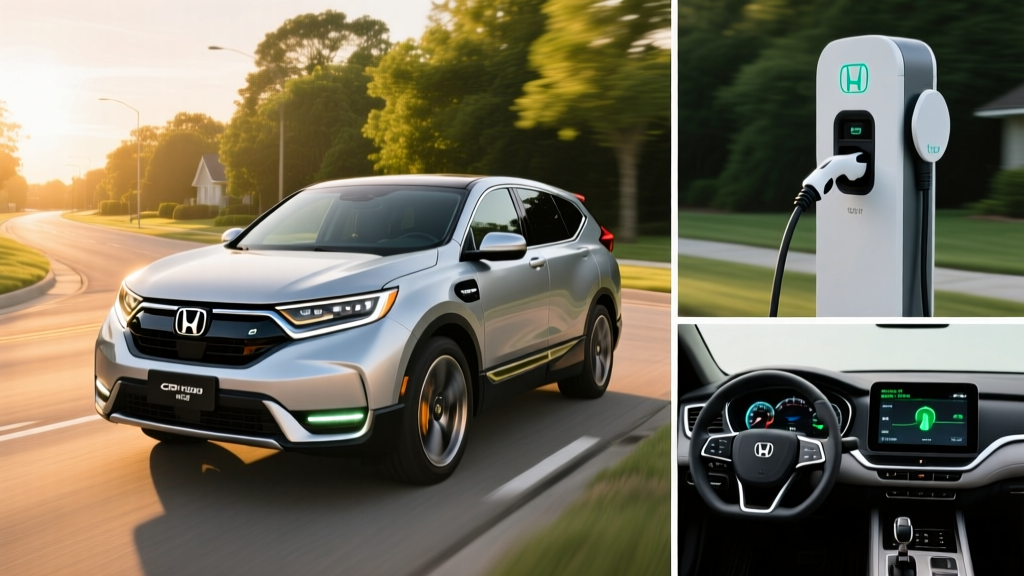
The 2025 Honda CR-V Hybrid continues to anchor Honda's electrified lineup with a two-motor hybrid system that prioritizes fuel sipping over raw performance. Available across four trims — Sport, Sport-L, Sport Touring, and the new-for-2025 Sport-L AWD — the CR-V Hybrid delivers an EPA-estimated 40 MPG combined in front-wheel-drive form, making it one of the most efficient compact SUVs you can buy without plugging in.
Unlike a plug-in hybrid (PHEV) or full battery-electric vehicle (BEV), the CR-V Hybrid is a conventional hybrid electric vehicle (HEV). It charges its own small battery through regenerative braking and the gasoline engine — you never plug it in. For buyers who want EV-like efficiency without charging infrastructure concerns, this powertrain hits a practical middle ground.
| Spec | Value |
|---|---|
| Powertrain | 2.0L Atkinson-cycle 4-cyl + two-motor hybrid system |
| Combined Horsepower | 204 hp |
| Combined Torque | 247 lb-ft (electric motor) |
| EPA MPG (FWD) | 43 city / 36 highway / 40 combined |
| EPA MPG (AWD) | 40 city / 34 highway / 37 combined |
| Hybrid Battery | ~1.06 kWh lithium-ion (not plug-in) |
| 0-60 mph | ~7.6 seconds (est.) |
| Cargo Volume | 36.3 cu ft (rear seats up) / 76.5 cu ft (folded) |
| Towing Capacity | 1,000 lbs |
| Battery Warranty | 8 years / 100,000 miles (10 yr/150k mi in CARB states) |
HEV vs PHEV vs EV: Where the CR-V Hybrid Fits
Before diving into trims, it's worth clarifying what the CR-V Hybrid is — and what it isn't. Honda does not currently offer a plug-in hybrid (PHEV) version of the CR-V in the U.S. market. If you see references to a "CR-V e:PHEV," that model is sold in Europe and China but is not available stateside.
| Factor | HEV (CR-V Hybrid) | PHEV (e.g., Toyota RAV4 Prime) | BEV (e.g., Tesla Model Y) |
|---|---|---|---|
| Plug in to charge? | No — self-charging | Yes — Level 1 or Level 2 | Yes — Level 2 or DC fast |
| Electric-only range | ~1-2 miles at low speed | 30-42 miles typical | 250-330+ miles |
| Total range | ~500+ miles | ~400-500+ miles | 250-330+ miles |
| Home charging needed? | No | Recommended for EV miles | Essential |
| Federal tax credit | Not eligible (§30D requires plug-in) | Up to $7,500 (if eligible) | Up to $7,500 (if eligible) |
| Best for | No home charging, simplicity | Short commutes + road trips | Home charging access, lowest running cost |
The CR-V Hybrid is ideal if: You don't have access to home or workplace charging, you want better fuel economy without behavioral changes, and you plan to keep the vehicle 8+ years. It's also a strong pick for apartment dwellers and street parkers who can't install a charger.
Consider a PHEV instead if: You have a garage or driveway with a 120V outlet, your daily commute is under 35 miles, and you want to drive mostly on electricity during the week while keeping gas flexibility for road trips.
Consider a full EV instead if: You can install a Level 2 home charger, your daily driving is under 250 miles, and you want the lowest cost per mile and minimal maintenance.
2025 Honda CR-V Hybrid Trim Breakdown
Honda offers the CR-V Hybrid across four trims for 2025. All share the same 204-hp two-motor hybrid powertrain paired with a 2.0-liter Atkinson-cycle four-cylinder engine. The key differentiators are drivetrain (FWD vs AWD), interior materials, and technology packages.
Sport Hybrid (FWD) — Starting at $35,395
The entry point to the hybrid lineup. Includes 18-inch alloy wheels, heated front seats, a 7-inch touchscreen with wireless Apple CarPlay and Android Auto, Honda Sensing safety suite (adaptive cruise, lane-keeping, automatic emergency braking), and dual-zone climate control. FWD-only on this base trim.
Sport Hybrid (AWD) — Starting at $36,895
Adds Honda's Real Time AWD system, which sends torque to the rear wheels when slip is detected. This drops EPA fuel economy to 40 city / 34 highway / 37 combined — a 3 MPG combined penalty that's worth it for buyers in snow-belt states. The AWD system is mechanical (not an electric rear axle like some competitors), so it adds weight and drivetrain loss.
Sport-L Hybrid (FWD & AWD) — Starting at $37,395 / $38,895 (AWD)
Upgrades to leather-trimmed seats, a leather-wrapped steering wheel, heated rear seats (AWD), a power-adjustable front passenger seat, and a wireless phone charger. This is the value sweet spot — you get premium touches without the top-trim price jump.
Sport Touring Hybrid (AWD standard) — Starting at $41,395
The fully loaded trim adds a 9-inch touchscreen with built-in navigation, a 12-speaker Bose premium audio system, a hands-free power tailgate, heated steering wheel, front foot and door handle ambient lighting, and low-speed braking control. AWD is standard and non-negotiable on this trim. The 9-inch screen also supports wireless CarPlay/Android Auto, while lower trims with the 7-inch screen still include wireless connectivity for 2025.
Pros
- Class-leading 40 MPG combined (FWD) in real-world city driving
- Smooth, quiet hybrid powertrain with seamless engine/motor transitions
- Spacious cargo area (36.3 cu ft) — no battery packaging compromise
- Honda Sensing safety suite standard on all trims
- Strong resale value and proven hybrid reliability
Cons
- No plug-in hybrid option in the U.S. — no electric-only commuting
- AWD penalty of 3 MPG combined vs FWD
- Modest 204 hp — not quick for highway merging when loaded
- 1,000-lb towing limit (lower than some turbo-gas competitors)
- No federal tax credit eligibility (HEV, not PHEV/BEV)
Real-World MPG: What to Actually Expect
The EPA rates the CR-V Hybrid FWD at 43 city / 36 highway / 40 combined. But Honda's two-motor hybrid system behaves differently than the EPA test cycle suggests — and that's mostly good news for city drivers.
| Driving Scenario | FWD Estimated | AWD Estimated |
|---|---|---|
| EPA Combined (sticker) | 40 MPG | 37 MPG |
| City / stop-and-go (real-world) | 42-46 MPG | 39-43 MPG |
| Highway 70 mph (real-world) | 33-36 MPG | 31-34 MPG |
| Cold weather (below 30°F, city) | 36-40 MPG | 34-38 MPG |
| Mixed driving (our estimate) | 38-42 MPG | 35-39 MPG |
Why city MPG often beats the sticker: Honda's hybrid system operates primarily in EV mode at low speeds, with the gasoline engine acting as a generator rather than directly driving the wheels. In stop-and-go traffic, regenerative braking recaptures energy that a gas car wastes as heat. Many owners report 44-46 MPG in warm-weather city driving, which exceeds the EPA city figure of 43.
Why highway MPG falls short: At sustained highway speeds, the engine must directly drive the wheels through a single fixed gear ratio. There's no multi-speed transmission to optimize efficiency at 75-80 mph. Expect 33-36 MPG on the highway in FWD form — noticeably lower than the city figure. This is the opposite of a conventional gas car, which typically gets better highway mileage.
Cold-weather impact: In temperatures below 30°F, the engine runs more frequently to provide cabin heat (the CR-V Hybrid uses engine waste heat rather than a dedicated heat pump for warming the interior). Expect a 10-15% fuel economy drop in winter, landing around 36-40 MPG combined for FWD models. This is less severe than the 20-30% range loss a full EV experiences in cold weather, but it's still measurable.
Battery Warranty, Longevity, and Replacement Cost
Hybrid battery anxiety is the top concern for first-time hybrid buyers. Here's what the data shows for Honda's system.
2025 CR-V Hybrid Battery Warranty
- Standard coverage: 8 years / 100,000 miles (whichever comes first)
- CARB-state coverage: 10 years / 150,000 miles (California, Colorado, Connecticut, Maine, Maryland, Massachusetts, Minnesota, Nevada, New Jersey, New Mexico, New York, Oregon, Pennsylvania, Rhode Island, Vermont, Virginia, Washington — and any state that has adopted California's emissions standards)
- What's covered: Hybrid battery pack, hybrid control unit, and related components if capacity drops below functional thresholds or the system fails
- What's not covered: Normal gradual capacity loss that doesn't trigger a fault code, damage from accidents or flooding
How long do Honda hybrid batteries actually last? Honda's lithium-ion hybrid battery in the CR-V is relatively small (~1.06 kWh usable) and is managed conservatively — the system never fully charges or fully depletes it, keeping the battery in a narrow state-of-charge window that dramatically extends cycle life. Based on data from earlier-generation Honda hybrids (Insight, Accord Hybrid), most packs last well beyond 150,000 miles without significant degradation. Failures before 100,000 miles are uncommon and typically covered under warranty.
Replacement cost if out of warranty: A new OEM hybrid battery pack for the CR-V Hybrid runs approximately $3,000-$4,500 installed at a Honda dealer, based on parts pricing and labor rates as of early 2026. Third-party refurbished packs may be available for $1,500-$2,500 from independent hybrid specialists. For context, this is significantly cheaper than a full EV battery replacement ($8,000-$20,000+) because the hybrid pack is much smaller.
The hybrid battery is not the same as the standard 12V auxiliary battery (which powers accessories and starts the electronics). The 12V battery in the CR-V Hybrid is a conventional unit that will need replacement every 4-6 years at typical cost ($150-$300). Honda moved to a lithium-ion 12V battery in recent model years, which may last longer but costs more to replace.
Tax Credits and Incentives: What You Can (and Can't) Claim
Because the 2025 Honda CR-V Hybrid is a conventional HEV — not a plug-in hybrid or battery-electric vehicle — it does not qualify for the federal §30D Clean Vehicle Credit. That credit, which offers up to $7,500 for new qualifying EVs and PHEVs, explicitly requires the vehicle to have a battery capacity of at least 7 kWh and the ability to be plugged in to charge. The CR-V Hybrid's ~1.06 kWh pack and self-charging design make it ineligible.
Here's what may be available:
- Federal tax credit (§30D): Not eligible. This applies only to plug-in vehicles. See IRS Clean Vehicle Tax Credits for current rules.
- State hybrid rebates: A handful of states occasionally offer modest incentives ($500-$1,500) for conventional hybrids, but these programs are rare and often exhaust funding quickly. Check your state energy office or DMV for current availability.
- Utility company rebates: Some electric utilities offer rebates for purchasing any electrified vehicle, including HEVs. Amounts vary from $100-$500. Check with your local utility.
- HOV lane access: Most states that offer HOV lane stickers for electrified vehicles require plug-in capability. The CR-V Hybrid does not qualify in most jurisdictions.
If the lack of a federal tax credit is a dealbreaker, consider that the CR-V Hybrid's lower starting price ($35,395 vs $42,000+ for many PHEVs) may offset the credit difference. A PHEV like the Toyota RAV4 Prime starts near $44,000 before the credit — even with $7,500 applied, the effective price is similar to a loaded CR-V Sport Touring Hybrid.
Ownership Costs: 5-Year Estimate
The CR-V Hybrid's value proposition extends beyond MPG. Here's a five-year cost snapshot compared to the gas-only CR-V (turbo 1.5L, AWD, EX-L trim) at 15,000 miles/year.
| Category | CR-V Hybrid Sport AWD | CR-V EX-L Gas AWD |
|---|---|---|
| MSRP (approx.) | $36,895 | $37,295 |
| Fuel cost (5 yr, $3.50/gal avg) | ~$7,095 (37 MPG) | ~$9,050 (29 MPG) |
| Maintenance (5 yr) | ~$2,800 | ~$3,200 |
| Insurance (5 yr avg) | ~$7,500 | ~$7,200 |
| Depreciation (est.) | ~$14,000 | ~$15,500 |
| 5-Year Total (est.) | ~$31,490 | ~$35,245 |
The hybrid saves an estimated $3,750 over five years, driven primarily by fuel savings (~$1,955) and slightly lower depreciation (Honda hybrids hold value well, per Kelley Blue Book residual data). Maintenance savings are modest — the hybrid system has no additional fluid changes, and regenerative braking extends brake pad life, but the gasoline engine still requires standard oil changes and filter replacements.
Who Should Buy the 2025 CR-V Hybrid?
Choose the CR-V Hybrid If:
- You can't install a home charger (apartment, condo, street parking)
- Your driving is mostly city and suburban (where the hybrid excels)
- You want a proven, low-risk hybrid system from a brand with strong reliability data
- You plan to keep the vehicle 8+ years and want warranty peace of mind
- You want a compact SUV with best-in-class cargo space (36.3 cu ft)
Look at a PHEV or EV Instead If:
- You have a garage with a 240V outlet and a commute under 35 miles (PHEV makes more sense)
- You want federal tax credit eligibility (requires plug-in capability)
- You want to eliminate gasoline use entirely (BEV)
- You prioritize acceleration — the CR-V Hybrid's 7.6-second 0-60 is adequate, not quick
- You need to tow more than 1,000 lbs regularly
Frequently Asked Questions
How many MPG does the 2025 Honda CR-V Hybrid actually get?
The EPA rates it at 43 city / 36 highway / 40 combined for FWD models, and 40/34/37 for AWD. In real-world city driving, many owners see 42-46 MPG thanks to the hybrid system's electric-motor dominance at low speeds. Highway driving at 70+ mph typically yields 33-36 MPG (FWD). Cold weather reduces efficiency by roughly 10-15%.
Does the CR-V Hybrid need to be plugged in?
No. The 2025 CR-V Hybrid is a conventional hybrid (HEV), not a plug-in hybrid (PHEV). The battery charges itself through regenerative braking and the gasoline engine. You fuel it like any other gas car — just less often.
Is there a plug-in hybrid version of the CR-V?
Not in the United States. Honda sells a CR-V e:PHEV in Europe and China with approximately 40+ miles of electric-only range, but it has not been confirmed for the U.S. market. If Honda introduces a U.S.-spec PHEV, it would likely arrive for the 2026 or 2027 model year at the earliest.
Is the CR-V Hybrid reliable? What about battery replacement costs?
Honda's hybrid system has a strong reliability track record across the Accord Hybrid and Insight before it. The hybrid battery is warrantied for 8 years/100,000 miles (10 years/150,000 miles in CARB states). Out-of-warranty replacement runs approximately $3,000-$4,500 at a dealer. Based on historical data, most Honda hybrid batteries last well beyond 150,000 miles without failure. According to IIHS, the 2025 CR-V also earns top safety ratings, adding to the ownership confidence picture.
Does the 2025 CR-V Hybrid qualify for any tax credit?
It does not qualify for the federal §30D Clean Vehicle Credit because it is not a plug-in vehicle. Some states or utilities may offer small rebates for hybrids, but these are inconsistent and often limited. The EPA's fueleconomy.gov listing confirms the CR-V Hybrid's classification as a conventional HEV.
Which CR-V Hybrid trim is the best value?
The Sport-L Hybrid (FWD at $37,395 or AWD at $38,895) offers the strongest value. You get leather seats, heated rear outboard seats (AWD), a wireless phone charger, and a power passenger seat for a modest $2,000 premium over the base Sport. The Sport Touring adds desirable features (Bose audio, navigation, hands-free tailgate) but the $4,000+ jump over the Sport-L is harder to justify unless you specifically want the premium audio and built-in nav.
How does the CR-V Hybrid compare to the Toyota RAV4 Hybrid?
The RAV4 Hybrid (219 hp, 41 MPG combined AWD) is the CR-V Hybrid's closest rival. The Toyota offers slightly more horsepower and standard AWD across all trims, while the Honda counters with a more refined interior, slightly better cargo volume, and a more car-like driving feel. Both are strong choices — the decision often comes down to brand preference, dealer proximity, and which styling you prefer. The RAV4 Prime PHEV (42 miles EV range) is the option to consider if you want plug-in capability in this segment.