Quick Verdict: The CR-V Hybrid Touring at a Glance
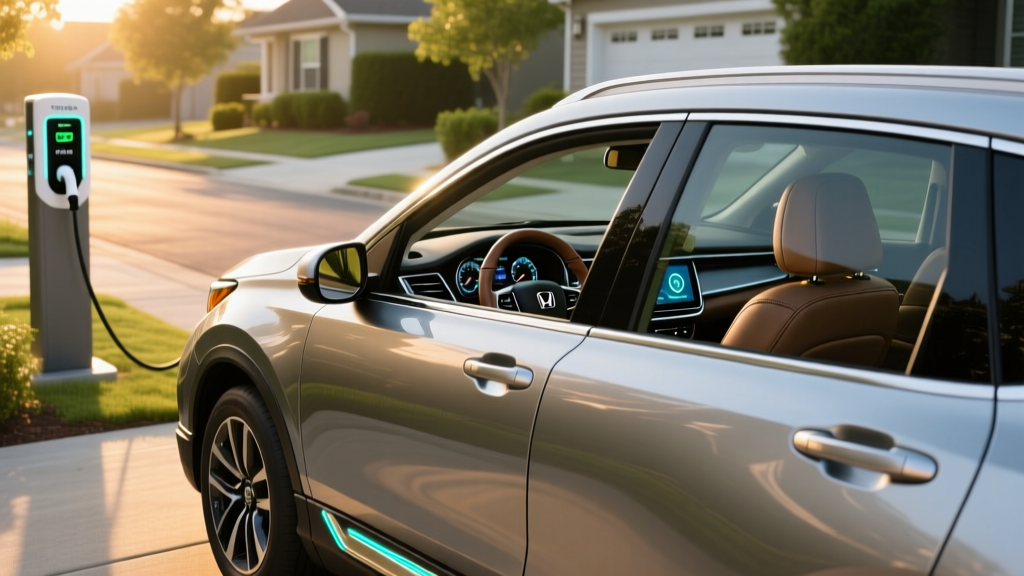
The 2025 Honda CR-V Hybrid Touring is the top-trim, conventionally electrified compact SUV for buyers who want meaningful fuel savings without plugging in. With an EPA-estimated 40 MPG combined on the front-wheel-drive model, a 204-horsepower two-motor hybrid powertrain, and Honda's full suite of safety and infotech, the Touring trim packs the most features into the CR-V Hybrid lineup. It is not a plug-in hybrid — there is no EV-only mode and no charging port. If you need electric-only commuting, you'll want to look at a PHEV or a full battery-electric vehicle. But if your goal is 400+ miles of total range with zero behavior change from your current gas car, the CR-V Hybrid Touring delivers.
| Specification | 2025 CR-V Hybrid Touring (FWD) | 2025 CR-V Hybrid Touring (AWD) |
|---|---|---|
| EPA Combined MPG | 40 MPG | 37 MPG |
| EPA City / Highway MPG | 43 / 36 | 40 / 34 |
| Powertrain | 2.0L Atkinson-cycle 4-cyl + two-motor hybrid system | |
| Combined Horsepower | 204 hp | |
| Combined Torque | 247 lb-ft (motor peak) | |
| Drivetrain | FWD | Real Time AWD™ |
| Fuel Tank | 14.0 gallons | |
| Total Range (EPA est.) | ~560 miles | ~518 miles |
| Cargo Volume (behind rear seats) | 36.3 cu ft | |
| 0-60 mph (est.) | ~7.6 seconds | |
| MSRP (incl. destination) | $41,845 (FWD) / $43,345 (AWD) | |
| Hybrid Battery Warranty | 8 years / 100,000 miles | |
HEV vs PHEV: What the CR-V Hybrid Actually Is
One of the most common points of confusion in the electrified SUV market is the difference between a conventional hybrid (HEV) and a plug-in hybrid (PHEV). The 2025 Honda CR-V Hybrid is a conventional hybrid (HEV). It has a small lithium-ion battery pack (approximately 1.1 kWh usable) that is charged exclusively through regenerative braking and the gasoline engine. You never plug it in. The system automatically manages when to run on the electric motors, the gas engine, or both.
| Feature | HEV (CR-V Hybrid) | PHEV (e.g., Toyota RAV4 Prime) | Full EV (e.g., Tesla Model Y) |
|---|---|---|---|
| Plug-in Charging | No | Yes (Level 1/2) | Yes (Level 1/2/DC) |
| Electric-Only Range | ~1 mile at low speed | 35-42 miles | 260-330+ miles |
| Total Range | ~518-560 miles | ~550+ miles (gas+electric) | 260-330+ miles |
| Fuel Economy (gas mode) | 37-40 MPG combined | 36-38 MPG combined | N/A (MPGe: 110-130) |
| Requires Behavior Change | None | Plug in nightly for best value | Plan charging & trips |
| Federal Tax Credit (§30D) | Not eligible | Up to $7,500 (if eligible) | Up to $7,500 (if eligible) |
| Starting Price Range | ~$36,000-$43,000 | ~$44,000-$50,000 | ~$38,000-$55,000+ |
Honda does not currently offer a CR-V PHEV in the United States. If plug-in capability is a priority, competitors like the Toyota RAV4 Prime (42 miles electric-only, ~94 MPGe) or the Hyundai Tucson PHEV (33 miles electric-only) are the segment alternatives.
Fuel Economy: EPA Ratings vs Real-World MPG
The EPA rates the 2025 CR-V Hybrid Touring FWD at 43 MPG city, 36 MPG highway, and 40 MPG combined. The AWD Touring drops to 40/34/37 MPG respectively. These figures come from fueleconomy.gov, the official DOE/EPA source.
| Driving Scenario | FWD Touring (EPA) | AWD Touring (EPA) | Real-World Expectation |
|---|---|---|---|
| City / Stop-and-Go | 43 MPG | 40 MPG | Often exceeds EPA — 42-46 MPG typical |
| Highway (70+ mph) | 36 MPG | 34 MPG | Expect 32-36 MPG; hybrids lose advantage at sustained high speed |
| Combined (55/45 mix) | 40 MPG | 37 MPG | 38-42 MPG for most drivers |
| Cold Weather (below 32°F) | — | — | Expect 10-15% reduction; ~34-36 MPG FWD combined |
The real-world advantage of Honda's two-motor hybrid system is city driving. Because the electric motors handle low-speed propulsion and the 2.0L Atkinson-cycle engine acts primarily as a generator, the CR-V Hybrid excels in stop-and-go traffic — often beating its EPA city rating by 2-3 MPG in warm weather. Highway efficiency is less impressive because at sustained speeds above 65 mph, the engine must directly drive the wheels through a lock-up clutch, and the aerodynamic drag of an SUV works against you. On a 75-mph interstate cruise, expect figures closer to 32-34 MPG for the AWD Touring.
Cold weather reduces efficiency in any hybrid. Battery chemistry becomes less responsive below freezing, the engine runs more frequently to maintain cabin heat, and winter fuel blends carry slightly less energy. Plan for a 10-15% reduction in MPG during sustained sub-32°F driving.
Powertrain Deep Dive: How the Two-Motor System Works
The CR-V Hybrid uses Honda's fourth-generation two-motor hybrid system. Here's the breakdown:
- Engine: 2.0-liter Atkinson-cycle inline-4, producing 145 hp and 138 lb-ft of torque on its own
- Propulsion Motor: AC permanent-magnet synchronous motor producing up to 184 hp and 247 lb-ft
- Generator Motor: Second motor acts as a starter, generator, and regenerative-braking unit
- Combined System Output: 204 hp (limited by engine-generator throughput, not motor peak)
- Battery: ~1.1 kWh lithium-ion pack (not user-accessible capacity; managed by the system)
In normal driving, the CR-V Hybrid operates in three modes: EV Drive (motor only, at low speeds and light loads for roughly a mile or less), Hybrid Drive (engine spins the generator to feed electricity to the propulsion motor), and Engine Drive (the lock-up clutch engages at highway speeds, letting the engine directly turn the wheels). The system transitions between modes seamlessly — most drivers will never notice the shifts.
The 204-hp combined output delivers a 0-60 mph time of approximately 7.6 seconds. That puts the CR-V Hybrid squarely between the non-hybrid CR-V (190 hp, ~8.3 sec) and performance-oriented competitors. Acceleration from a stop feels punchy thanks to the motor's instant 247 lb-ft of torque, but passing power at highway speed tapers as the system relies on the 145-hp engine for sustained output.
Touring Trim: What You Get for $41,845+
The Touring sits at the top of the CR-V Hybrid range. For the 2025 model year, Honda includes:
- 9-inch touchscreen with wireless Apple CarPlay and Android Auto
- Bose premium 12-speaker audio system
- Wireless phone charging pad
- Heated front seats and heated steering wheel
- Leather-trimmed seats
- Hands-free power tailgate with walk-away close
- Low-speed braking control and front/rear parking sensors
- Traffic Jam Assist and low-speed follow on adaptive cruise
- Honda Sensing® suite (collision mitigation, lane keeping, road departure mitigation, adaptive cruise)
- Rain-sensing wipers and auto high-beam headlights
The FWD Touring starts at $41,845 including Honda's $1,345 destination charge. Adding Real Time AWD™ bumps the price to $43,345. The only factory option is paint color — Crystal Black Pearl is no-cost, while Platinum White Pearl and Radiant Red Metallic add $395. A fully loaded AWD Touring will sticker around $43,740 out the door before dealer fees.
Pros
- 40 MPG combined is excellent for the class; real-world city MPG often exceeds EPA
- Smooth, quiet powertrain transitions — no CVT drone typical of competitors
- Top-tier safety: IIHS Top Safety Pick, 5-star NHTSA overall
- Spacious 36.3 cu ft cargo area, competitive with non-hybrid CR-V
- No plug-in requirement — zero behavior change from a gas vehicle
- Honda Sensing ADAS suite is standard, not a pricey add-on
Cons
- No plug-in hybrid option — cannot commute on electric only
- Highway MPG (34-36) less impressive than city figures
- Touring trim price ($43k+ AWD) approaches entry-level EV territory
- Not eligible for the §30D federal EV tax credit
- No DC fast charging or any plug-in capability
- 204 hp is adequate but not quick for highway merging with cargo
Hybrid Battery Longevity, Warranty, and Replacement Cost
Honda Hybrid Battery Warranty
Coverage: 8 years or 100,000 miles (whichever comes first) in most states. In California Air Resources Board (CARB) states — including CA, CT, ME, MD, MA, NJ, NY, OR, RI, VT, WA, and others adopting CARB rules — the hybrid battery warranty extends to 10 years or 150,000 miles.
What's covered: Defects in materials and workmanship, and capacity loss below a functional threshold (Honda does not publish a specific State of Health percentage, but the system is designed to maintain hybrid functionality within the warranty period).
The CR-V Hybrid's ~1.1 kWh lithium-ion battery pack is far smaller than a full EV's battery and experiences less stress because it operates within a narrow state-of-charge window — typically between 40% and 80%. This partial-cycling strategy significantly reduces degradation. Based on long-term data from Honda's hybrid fleet (Insight, Accord Hybrid, previous-gen CR-V Hybrid), most hybrid battery packs retain functional capacity well beyond 150,000 miles.
Replacement cost if out of warranty: A Honda hybrid battery replacement typically runs between $2,500 and $4,500 including labor at a dealership. Independent hybrid specialists may offer refurbished packs for $1,500-$2,500. This is a fraction of full EV battery replacement costs ($8,000-$20,000+) because the pack is small and the labor is less involved. For most owners who sell or trade within 8-10 years, the battery will never need replacement.
Real-world reliability data is encouraging. The CR-V as a platform consistently earns above-average reliability scores from major outlets, and Honda's hybrid system has proven durable across multiple model generations. The IIHS awarded the 2025 CR-V a Top Safety Pick designation, and NHTSA rates it 5 stars overall.
Tax Credits and Incentives: What Applies to the CR-V Hybrid?
Because the CR-V Hybrid is a conventional HEV — not a plug-in vehicle — it does not qualify for the federal §30D Clean Vehicle Credit (up to $7,500 for new EVs and PHEVs). The IRS restricts this credit to vehicles with a battery capacity of at least 7 kWh and plug-in charging capability, per irs.gov. The CR-V Hybrid's ~1.1 kWh pack and lack of a charge port make it ineligible.
Tax Credit Eligibility for the 2025 CR-V Hybrid
- ❌ Federal §30D New Clean Vehicle Credit ($7,500) — Not eligible (HEV, not plug-in)
- ❌ Federal §25E Used Clean Vehicle Credit ($4,000) — Not eligible (same reason)
- ⚠️ State/local incentives — Vary by jurisdiction. Some states offer rebates for any electrified vehicle, including HEVs. Check your state energy office or dealer for current programs.
- ✅ IRS Alternative Fuel Vehicle Refueling Property Credit — N/A (no home charger needed)
If the federal tax credit is a dealbreaker, you'd need to look at a PHEV like the RAV4 Prime or a full EV like the Hyundai Ioniq 5. However, the CR-V Hybrid's lower sticker price (vs. PHEVs that often start above $44,000) partially offsets the missing credit. The math depends on your specific income, filing status, and state — consult a tax professional for personalized guidance.
Hybrid vs PHEV vs EV: Which One Fits Your Life?
Choose the CR-V Hybrid (HEV) if:
- You cannot install a home charger (apartment, street parking, no garage)
- You want fuel savings with zero behavior change — just fill up with gas
- Your budget caps around $43,000 and you want a fully loaded compact SUV
- You drive a mix of city and highway and value 500+ miles of total range
- You plan to keep the vehicle 5-8 years and want proven, low-risk hybrid tech
Choose a PHEV (e.g., RAV4 Prime, Tucson PHEV) if:
- You can charge at home nightly (Level 1 outlet is sufficient for most PHEVs)
- Your daily commute is under 35 miles and you want electric-only weekday driving
- You want the §30D federal tax credit (up to $7,500) and qualify based on income/MSRP
- You take road trips on weekends and want gas-engine range as backup
Choose a Full EV (e.g., Tesla Model Y, Ioniq 5) if:
- You have reliable home Level 2 charging and your daily drive is under 250 miles
- You want the lowest per-mile fuel cost (electricity vs. gasoline)
- You want to eliminate oil changes and reduce maintenance
- You qualify for the §30D credit and can absorb higher insurance premiums
The CR-V Hybrid's strongest competitive position is the buyer who wants electrification without infrastructure dependency. If you live in an apartment complex with no charging access, or if you regularly drive 400+ miles through rural areas where DC fast chargers are sparse, the HEV eliminates every pain point that EVs and PHEVs introduce.
Ownership Costs: 5-Year Estimate
| Cost Category | CR-V Hybrid Touring AWD | CR-V EX-L (Gas, AWD) | Model Y Long Range (AWD) |
|---|---|---|---|
| MSRP (approx.) | $43,345 | $38,395 | $48,990 (after credit: ~$41,490) |
| Fuel/Energy (5 yr, 15k mi/yr) | ~$7,200 (gas, 37 MPG) | ~$9,400 (gas, 28 MPG) | ~$3,800 (electric, $0.14/kWh) |
| Maintenance (5 yr) | ~$2,800 | ~$3,500 | ~$1,800 |
| Insurance (5 yr avg) | ~$9,500 | ~$8,800 | ~$12,000 |
| Estimated Depreciation | ~$18,000 | ~$17,000 | ~$20,000 |
| 5-Year Total (approx.) | ~$80,845 | ~$77,095 | ~$79,090 |
The CR-V Hybrid Touring AWD lands in a competitive 5-year cost position. It costs more upfront than the gas CR-V but saves roughly $2,200 in fuel over five years. Compared to a Model Y Long Range (assuming the buyer qualifies for the full $7,500 §30D credit), the CR-V Hybrid is slightly more expensive over five years due to higher fuel costs — but it avoids charging-infrastructure dependency and EV insurance premiums. Actual costs vary significantly by local gas/electricity prices, driving habits, and insurance market. These estimates use national averages from AAA and insurer data.
Frequently Asked Questions
How many MPG does the 2025 Honda CR-V Hybrid Touring get?
The FWD Touring is EPA-rated at 43 city / 36 highway / 40 combined MPG. The AWD Touring is rated at 40 city / 34 highway / 37 combined. In real-world city driving, many owners report exceeding the EPA city figure by 2-3 MPG thanks to the hybrid system's regenerative braking. Highway driving at 75+ mph tends to fall 2-4 MPG below the EPA highway rating.
Does the CR-V Hybrid need to be plugged in?
No. The CR-V Hybrid is a conventional hybrid (HEV). Its small battery charges automatically through regenerative braking and the gasoline engine. There is no plug, no charging port, and no electric-only driving mode beyond very low-speed maneuvering. You fuel it exactly like a regular gas car.
Is there a plug-in hybrid (PHEV) version of the CR-V?
Not in the United States. Honda sells a CR-V e:PHEV in China and Europe, but it is not available in the U.S. market as of the 2025 model year. If you want a PHEV compact SUV, the Toyota RAV4 Prime (42 miles EV range), Hyundai Tucson PHEV (33 miles), and Mitsubishi Outlander PHEV (38 miles) are the primary alternatives.
Is the CR-V Hybrid reliable, and what does battery replacement cost?
Honda's hybrid system has a strong reliability track record across multiple generations. The hybrid battery is warranted for 8 years/100,000 miles (10 years/150,000 miles in CARB states). Out-of-warranty replacement typically costs $2,500-$4,500 at a dealer, or $1,500-$2,500 for a refurbished pack from an independent specialist. Most hybrid batteries last well beyond 150,000 miles under normal use.
Does the 2025 CR-V Hybrid qualify for any tax credit?
The CR-V Hybrid does not qualify for the federal §30D Clean Vehicle Credit because it is a conventional hybrid, not a plug-in vehicle. Some states and localities may offer small rebates for hybrid purchases — check your state energy office or ask your dealer. If the federal credit is essential, you'll need a PHEV or full EV.
How does the CR-V Hybrid compare to the Toyota RAV4 Hybrid?
The 2025 RAV4 Hybrid (XLE, the closest volume trim) is EPA-rated at 41/38/39 MPG combined (AWD standard) and starts around $34,000. The CR-V Hybrid Touring offers a more premium interior and more standard features at a higher price. Both are excellent; the RAV4 Hybrid has a slight highway MPG edge and AWD standard on all trims, while the CR-V Hybrid delivers more torque (247 lb-ft vs 163 lb-ft) and a more refined two-motor driving feel. The RAV4 Prime PHEV variant also exists if you want plug-in capability.
What is the towing capacity of the CR-V Hybrid?
The 2025 CR-V Hybrid is rated to tow up to 1,000 pounds when properly equipped. This is adequate for a small utility trailer or a couple of dirt bikes but not sufficient for a camper or boat. If towing is a priority, the non-hybrid CR-V AWD is rated at 1,500 pounds, and competitors like the Ford Escape Hybrid can tow up to 1,500 pounds as well.
Sources: EPA fuel economy data from fueleconomy.gov; Honda specifications from Honda's official site; federal tax credit rules from IRS.gov; safety ratings from IIHS and NHTSA.