Quick Verdict: The 2025 Honda CR-V Hybrid SUV
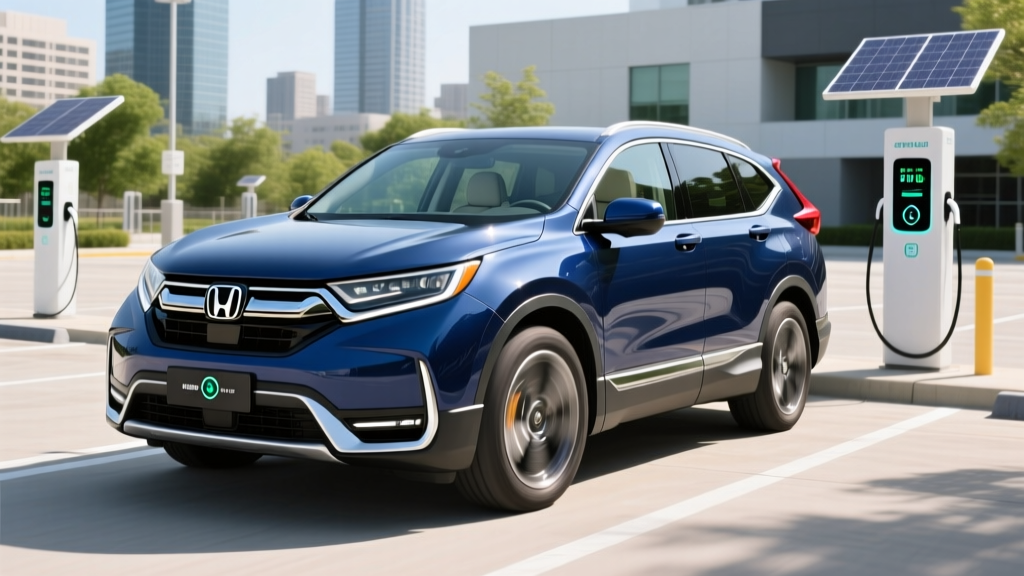
The 2025 Honda CR-V Hybrid SUV occupies a specific niche: buyers who want the cargo space and ride height of a compact crossover, the fuel savings of electrification, and zero changes to their refueling habits. This is a conventional hybrid electric vehicle (HEV), not a plug-in hybrid (PHEV). You never plug it in. The two-motor hybrid system recovers energy during braking and deceleration, stores it in a small lithium-ion battery, and uses it to assist the gasoline engine or drive the wheels at low speeds. The result is an EPA-estimated 40 MPG combined for front-wheel-drive trims — a number you'll likely match or beat in city driving.
For 2025, Honda continues the sixth-generation CR-V Hybrid across four trims: Sport, Sport-L, Sport Touring, and the newly positioned EX-L Hybrid. All share the same fourth-generation two-motor hybrid powertrain producing 204 combined horsepower. If you need all-wheel drive, the available Real Time AWD drops the EPA combined figure to 37 MPG — still excellent for an AWD compact SUV.
2025 Honda CR-V Hybrid — Key Specifications
| Spec | FWD | AWD (Real Time) |
|---|---|---|
| Combined HP | 204 hp | 204 hp |
| Engine | 2.0L Atkinson-cycle 4-cyl + 2 motors | 2.0L Atkinson-cycle 4-cyl + 2 motors |
| EPA City MPG | 43 | 40 |
| EPA Highway MPG | 36 | 34 |
| EPA Combined MPG | 40 | 37 |
| 0–60 mph (est.) | ~7.8 sec | ~7.9 sec |
| Cargo Volume (behind 2nd row) | 36.3 cu ft | 36.3 cu ft |
| Towing Capacity | 1,000 lbs | 1,500 lbs |
| Base MSRP (Sport trim) | $36,675 | $38,175 |
How Many MPG Does the 2025 Honda CR-V Hybrid Get?
EPA Fuel Economy by Drivetrain
| Drivetrain | City | Highway | Combined |
|---|---|---|---|
| FWD | 43 MPG | 36 MPG | 40 MPG |
| AWD | 40 MPG | 34 MPG | 37 MPG |
Source: EPA fueleconomy.gov
The 2025 Honda CR-V Hybrid's two-motor system behaves like most Toyota and Honda hybrids: it excels in city traffic where regenerative braking constantly replenishes the battery and the electric motor handles low-speed driving. Expect to meet or exceed the 43 MPG city rating in stop-and-go commutes. Highway driving is the weaker scenario — sustained 70–80 mph cruising relies more heavily on the 2.0L gasoline engine, and you'll see figures closer to 33–35 MPG on the FWD model.
Real-World MPG: What Owners Actually See
Based on aggregated driver reports and long-term testing from outlets like Edmunds, most CR-V Hybrid owners report 37–41 MPG combined in mixed driving. Drivers with predominantly urban commutes regularly see 42–45 MPG on the FWD model. Cold weather (below 35°F) reduces fuel economy by roughly 5–10% due to increased engine warm-up cycles and cabin heating demand. In short: the EPA sticker is realistic for this hybrid, unlike some EVs where real-world range falls notably short.
Hybrid vs. Plug-In Hybrid vs. Full EV: Which Fits You?
The CR-V Hybrid is an HEV — it has no plug, no electric-only driving range, and no battery large enough for sustained zero-emission travel. Honda does not currently offer a CR-V Plug-In Hybrid (PHEV) in the United States for the 2025 model year. If you're comparing powertrain options, here's how the categories break down:
| Feature | HEV (CR-V Hybrid) | PHEV (e.g., Toyota RAV4 Prime) | Full EV (e.g., Hyundai Ioniq 5) |
|---|---|---|---|
| Plug-in Required? | No | Yes (Level 1 or 2) | Yes (Level 2 or DC fast) |
| Electric-Only Range | None | 25–42 miles | 250–320+ miles |
| Combined MPG / MPGe | 37–40 MPG | 38 MPG + 94 MPGe | 110+ MPGe |
| Federal Tax Credit (§30D) | Not eligible | Up to $7,500* | Up to $7,500* |
| Home Charging Needed | No | Recommended | Essential |
| Best For | No garage/outlet access | Short commutes + road trips | Home charging + daily commute |
*§30D credit eligibility depends on MSRP caps, buyer income limits, and battery-sourcing requirements. Verify current-year rules at IRS.gov.
If you can't install a home charger or lack reliable access to a plug, the HEV route is your best electrification option. If you have a garage with a 240V outlet and a sub-35-mile commute, a PHEV like the RAV4 Prime lets you drive most days on electricity while keeping a gas engine for road trips. A full EV makes sense if you have reliable home charging and want the lowest per-mile operating cost.
Powertrain Deep Dive: 204 HP From a 2.0L Hybrid System
The 2025 CR-V Hybrid uses Honda's fourth-generation two-motor hybrid system. The setup pairs a 2.0-liter Atkinson-cycle four-cylinder gasoline engine (producing 146 hp on its own) with two electric motors integrated into the transmission housing. The combined system output is 204 horsepower and 247 lb-ft of torque.
Here's how the system actually drives: from a stop, the CR-V Hybrid launches on electric motor torque alone — quiet, smooth, and responsive up to roughly 25 mph. Under moderate acceleration, the gas engine kicks in primarily as a generator, sending electricity to the drive motor (this is a series-hybrid mode). At highway cruising speeds, a lock-up clutch connects the gas engine directly to the wheels for better efficiency (parallel-hybrid mode). There is no traditional geared transmission — Honda uses an e-CVT design that eliminates shift shock entirely.
The AWD model adds a rear-mounted electric motor that engages the rear axle when traction is needed. Unlike mechanical AWD systems, there's no driveshaft connecting the front and rear — the rear motor operates independently, reducing parasitic losses when AWD isn't needed. The trade-off is a 3 MPG combined penalty and a 500-lb increase in towing capacity (1,500 lbs vs. 1,000 lbs for FWD).
Pricing, Trims, and Tax Credit Eligibility
The 2025 Honda CR-V Hybrid is offered in four trims. Here's the current MSRP breakdown (destination charge included):
| Trim | FWD MSRP | AWD MSRP | Key Features |
|---|---|---|---|
| Sport | $36,675 | $38,175 | 18" wheels, 7" display, Honda Sensing suite |
| Sport-L | $38,675 | $40,175 | Leather seats, power liftgate, heated front seats |
| EX-L Hybrid | $39,675 | $41,175 | 9" touchscreen, wireless CarPlay/Android Auto |
| Sport Touring | — | $43,175 | AWD standard, Bose audio, panoramic roof, heated rear seats |
Does the 2025 CR-V Hybrid Qualify for a Federal Tax Credit?
No. The conventional hybrid CR-V does not qualify for the IRS §30D Clean Vehicle Credit. That credit applies only to plug-in electric vehicles (PHEVs and BEVs) that meet battery-sourcing, MSRP, and buyer-income requirements. The CR-V Hybrid has no plug and no battery capacity large enough to meet the §30D threshold.
Some states and utilities offer rebates or incentives for hybrid purchases, but these vary widely by jurisdiction. Check your state energy office or local utility for current programs.
Real-World Ownership: Reliability and Battery Warranty
Honda's hybrid system has a strong reliability track record. The fourth-generation two-motor design has been in production across the Accord Hybrid and CR-V Hybrid since 2023, and earlier Honda hybrid systems (Insight, Accord Hybrid) have demonstrated 200,000+ mile longevity with minimal battery degradation.
Honda Hybrid Battery Warranty
| Coverage | Term |
|---|---|
| Hybrid Battery (capacity & defects) | 8 years / 100,000 miles |
| Hybrid Battery (CARB states) | 10 years / 150,000 miles |
| Powertrain (engine, motors, e-CVT) | 5 years / 60,000 miles |
| New Vehicle Limited | 3 years / 36,000 miles |
CARB states include CA, CO, CT, DE, ME, MD, MA, NJ, NM, NY, OR, RI, VT, WA, and others adopting California emissions standards — covering roughly 40% of the U.S. population.
What Does a CR-V Hybrid Battery Replacement Cost?
If your hybrid battery fails outside warranty, a replacement from Honda typically runs $2,000–$4,000 for parts and labor. However, hybrid battery failures before 150,000 miles are uncommon based on historical data. Unlike full EV batteries (which cost $10,000–$20,000+ to replace), the CR-V Hybrid's battery pack is small — roughly 1.1 kWh usable — and its job is to buffer energy, not provide primary range. The smaller size means lower replacement cost and less degradation concern.
The e-CVT transmission also avoids the wear issues of conventional automatic transmissions. There are no friction clutch packs or torque converters to replace. Long-term maintenance for the hybrid system is minimal: standard coolant changes and cabin air filter replacements are the primary hybrid-specific service items.
2025 CR-V Hybrid Pros and Cons
Pros
- 40 MPG combined (FWD) — achievable in real-world city driving
- No plug-in required; zero change to refueling habits
- Smooth, quiet electric-motor launch from stops
- 36.3 cu ft cargo space — identical to gas CR-V
- Honda Sensing ADAS suite standard on all trims
- Strong reliability record; 8–10 year hybrid battery warranty
- AWD available with only 3 MPG penalty
Cons
- No federal tax credit eligibility (HEV, not PHEV/BEV)
- Highway MPG drops to 34–36 — less advantage over gas models at speed
- 1,000–1,500 lb towing capacity — below gas CR-V's 1,500 lb rating for non-hybrid AWD
- No PHEV option in the U.S. for electric-only commuting
- CVT drone under hard acceleration (no simulated gear shifts)
- Sport Touring AWD pushes past $43,000 — near luxury compact pricing
Who Should Buy the 2025 Honda CR-V Hybrid?
The CR-V Hybrid is the right choice if you want meaningful fuel savings without infrastructure changes. Specifically:
- Urban commuters who rack up city miles in stop-and-go traffic will see the biggest MPG advantage — 43+ MPG is realistic in dense metro driving.
- Apartment dwellers and renters who can't install a Level 2 charger get electrification benefits without needing a plug.
- High-mileage drivers covering 15,000+ miles/year save $400–$700 annually in fuel costs versus the gas CR-V (assuming $3.50/gal and 15,000 miles/year).
- Families wanting simplicity — one vehicle that handles school runs, road trips, and daily commuting without range planning or charging logistics.
Look elsewhere if you have home charging access and a short commute (a PHEV gives you electric-only weekday driving), or if you want the lowest possible operating cost (a full EV eliminates fuel entirely). The CR-V Hybrid doesn't try to be an EV — it's a fuel-efficient gas car that happens to use electric motors intelligently.
Frequently Asked Questions
How many MPG does the 2025 Honda CR-V Hybrid get?
The FWD model is EPA-rated at 43 city / 36 highway / 40 combined MPG. The AWD model drops to 40 city / 34 highway / 37 combined. Real-world results from owners typically fall in the 37–42 MPG combined range depending on driving mix and climate.
Is the 2025 CR-V Hybrid a plug-in hybrid?
No. The CR-V Hybrid is a conventional hybrid (HEV). It charges its own battery through regenerative braking and the gasoline engine. You never plug it in. Honda does not offer a plug-in hybrid CR-V in the U.S. market for 2025.
How far can the CR-V Hybrid drive on electric power alone?
Only about 1–2 miles at very low speeds (under 25 mph). The battery is roughly 1.1 kWh — far too small for meaningful electric-only range. Its purpose is to assist the gas engine and recover braking energy, not to replace gasoline.
Is the Honda CR-V Hybrid reliable?
Yes. Honda's hybrid systems have a strong track record spanning two decades. The hybrid battery carries an 8-year/100,000-mile warranty (10 years/150,000 miles in CARB states), and the e-CVT transmission avoids the mechanical wear of conventional automatics. Battery replacement costs $2,000–$4,000 if needed outside warranty, but premature failure is rare.
Does the CR-V Hybrid qualify for any tax credits?
The CR-V Hybrid does not qualify for the federal §30D Clean Vehicle Credit, which is limited to plug-in vehicles (PHEVs and BEVs). Some state or utility incentives may apply to hybrid purchases — check local programs for current availability.
How does the CR-V Hybrid compare to the gas CR-V on fuel economy?
The gas-powered 2025 CR-V with the 1.5L turbo engine is EPA-rated at 29 city / 36 highway / 32 combined (FWD). The hybrid gains 11 MPG in the city and 8 MPG combined — a significant improvement, especially for urban drivers. Highway efficiency is nearly identical between gas and hybrid models.
What's the total driving range on a full tank?
With a 15.3-gallon fuel tank and 40 MPG combined (FWD), the CR-V Hybrid can travel approximately 610 miles between fill-ups. AWD models see roughly 565 miles of total range at 37 MPG combined.