Quick Verdict: The CR-V Hybrid at a Glance
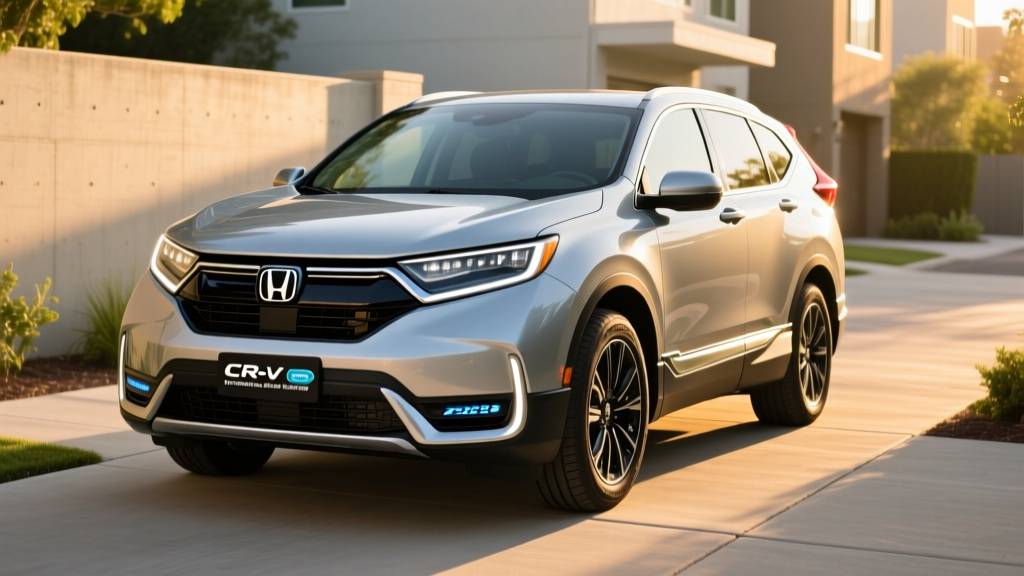
The 2025 Honda CR-V Hybrid remains one of the best-selling compact hybrid SUVs in the United States, and for good reason. It pairs a 2.0-liter Atkinson-cycle four-cylinder engine with a two-motor hybrid system for a combined 204 horsepower, delivers up to 40 MPG in city driving, and offers available all-wheel drive without sacrificing cargo space. For owners and prospective buyers researching maintenance specifics — particularly the 2025 Honda CR-V Hybrid oil capacity — this guide covers everything from fluid specs to long-term battery reliability.
| Spec | 2025 Honda CR-V Hybrid (FWD) | 2025 Honda CR-V Hybrid (AWD) |
|---|---|---|
| Oil Capacity (with filter) | 4.4 quarts (4.2 liters) | 4.4 quarts (4.2 liters) |
| Recommended Oil | 0W-20 Full Synthetic | 0W-20 Full Synthetic |
| Combined HP | 204 hp | 204 hp |
| Engine | 2.0L Atkinson-cycle I-4 | 2.0L Atkinson-cycle I-4 |
| EPA City / Hwy / Combined | 43 / 36 / 40 MPG | 40 / 34 / 37 MPG |
| Fuel Tank | 14.0 gallons | 14.0 gallons |
| Total Range (est.) | ~560 miles | ~518 miles |
| Cargo Volume (rear seats up) | 36.3 cu ft | 36.3 cu ft |
| Base MSRP (Sport trim) | $34,750 | $36,250 |
| Battery Warranty | 8 years / 100,000 miles (10 yr/150k mi in CARB states) | |
Oil Capacity and Maintenance Essentials
The 2025 Honda CR-V Hybrid oil capacity is 4.4 quarts (4.2 liters) with a filter change. Honda specifies 0W-20 full synthetic oil for this powertrain. This is the same oil capacity whether you choose front-wheel drive or the available real-time all-wheel-drive system, because the hybrid powertrain's engine block is identical across both configurations.
Why Oil Matters More in a Hybrid
Hybrid engines like the CR-V's 2.0L Atkinson-cycle unit experience more frequent start-stop cycles than a conventional gas engine. The engine shuts off at stops, during low-speed electric-only driving, and during coasting — then restarts seamlessly when additional power is needed. This means the oil must protect against the unique wear patterns of cold-start-rich driving. Using the correct 0W-20 full synthetic is critical; conventional oil or the wrong viscosity can accelerate wear during these frequent restarts.
Maintenance Interval
Honda's Maintenance Minder system monitors oil life based on actual driving conditions rather than a fixed mileage schedule. In practice, most CR-V Hybrid owners see oil-change reminders between 7,500 and 10,000 miles. If you drive primarily in stop-and-go city traffic — where the hybrid system shines but the engine cycles on and off frequently — expect reminders closer to the 7,500-mile mark. The Maintenance Minder will display a wrench icon and a code (typically "A1" or "B1") when service is due.
Fuel Economy: EPA Ratings vs. Real-World MPG
The 2025 CR-V Hybrid's EPA fuel economy ratings place it among the most efficient compact SUVs available. According to fueleconomy.gov, the FWD model achieves 43 city / 36 highway / 40 combined MPG, while AWD drops slightly to 40 city / 34 highway / 37 combined MPG.
| Driving Condition | FWD EPA | FWD Real-World (est.) | AWD EPA | AWD Real-World (est.) |
|---|---|---|---|---|
| City | 43 MPG | 41–46 MPG | 40 MPG | 38–43 MPG |
| Highway | 36 MPG | 33–37 MPG | 34 MPG | 31–35 MPG |
| Combined | 40 MPG | 38–42 MPG | 37 MPG | 35–39 MPG |
Why Hybrids Often Beat EPA City Numbers
Unlike gas-only vehicles, hybrids tend to exceed their EPA city rating in real-world stop-and-go driving. The CR-V Hybrid can operate in electric-only mode at low speeds (typically under 25 mph for short distances), and regenerative braking recaptures energy that would otherwise be lost as heat. Drivers in dense urban environments like San Francisco, New York, or Chicago frequently report 42–46 MPG in warm-weather city driving with the FWD model.
Where MPG Drops
Highway driving at sustained speeds above 70 mph is where the CR-V Hybrid's efficiency advantage narrows. The engine runs continuously at highway speeds, and the added weight of the hybrid battery system (roughly 200 lbs more than the gas-only CR-V) works against it. Cold weather also reduces efficiency — expect a 5–10% MPG reduction in winter as the engine runs more often to provide cabin heat and the battery's chemical reactions slow down. Short-trip winter driving in sub-freezing temperatures can push real-world city MPG into the mid-30s.
Powertrain Deep Dive: How the CR-V Hybrid Works
The 2025 CR-V Hybrid uses Honda's two-motor hybrid system, which is a conventional hybrid (HEV) — not a plug-in hybrid. This is a critical distinction: you never plug this vehicle in. It generates all its electricity internally through the gasoline engine and regenerative braking.
HEV vs. PHEV: Where the CR-V Hybrid Fits
| Feature | Honda CR-V Hybrid (HEV) | Plug-In Hybrid (e.g., Toyota RAV4 Prime) |
|---|---|---|
| Plug-in charging? | No — self-charging | Yes — plug in for EV range |
| Electric-only range | ~1 mile at low speed | 25–42 miles typical |
| Battery size | ~1.1 kWh (small buffer) | 13–18 kWh |
| Gas engine needed? | Yes, always runs in parallel | Not until battery depletes |
| Federal tax credit | No | Up to $7,500 (if eligible) |
The CR-V Hybrid's powertrain combines:
- 2.0L Atkinson-cycle I-4 engine: 145 hp, optimized for efficiency over peak power
- Two electric motors: One serves as a generator, the other drives the wheels. Combined electric motor output is 181 hp
- System combined output: 204 hp and 247 lb-ft of torque
- Lithium-ion battery pack: Approximately 1.1 kWh, mounted under the cargo floor
The two-motor system operates primarily in electric-drive mode at low and moderate speeds, with the engine acting as a generator. At highway speeds, a lock-up clutch connects the engine directly to the drive wheels for maximum efficiency. This is fundamentally different from a traditional planetary-gear hybrid like Toyota's system, and it gives the CR-V Hybrid a smoother, more EV-like feel in city driving.
Pricing, Trims, and Tax Credit Eligibility
The 2025 Honda CR-V Hybrid is available in four trims, all with the same powertrain:
- Sport (base hybrid): $34,750 FWD / $36,250 AWD
- Sport-L: $37,350 FWD / $38,850 AWD
- Sport Touring: $40,850 AWD only
Does the CR-V Hybrid Qualify for a Federal Tax Credit?
No. The 2025 Honda CR-V Hybrid is a conventional hybrid (HEV), not a plug-in hybrid or battery-electric vehicle. Under current IRS §30D Clean Vehicle Credit rules, only plug-in electric vehicles (BEVs and PHEVs with sufficient battery capacity) qualify for the federal tax credit of up to $7,500. The CR-V Hybrid's ~1.1 kWh battery is far below the 7 kWh minimum threshold required for PHEV credit eligibility.
Some states offer modest rebates or HOV-lane access for conventional hybrids, but these vary widely by jurisdiction. Check your state's energy office or DMV website for current programs. The fuel savings alone, however, are substantial: at 40 MPG combined versus the gas-only CR-V's 30 MPG combined, and with gas at $3.50/gallon, the hybrid saves approximately $730 per year for a driver covering 15,000 miles annually.
Battery Warranty, Reliability, and Replacement Cost
Hybrid battery longevity is consistently the top concern among buyers switching from a conventional gas car. Honda addresses this with robust warranty coverage.
CR-V Hybrid Battery Warranty
- Federal (non-CARB states): 8 years / 100,000 miles
- CARB states (CA, CO, CT, ME, MD, MA, NJ, NY, OR, RI, VT, WA): 10 years / 150,000 miles
- Hybrid system components (inverter, motor, control unit): Same coverage period
- Capacity threshold: Warranty covers defects and significant capacity loss — Honda does not publish a specific percentage threshold like some EV makers, but industry practice triggers replacement when the battery can no longer support normal hybrid operation
Real-World Reliability Data
Honda's two-motor hybrid system has been in production since 2014 (first in the Accord Hybrid) and has proven durable. The CR-V Hybrid was introduced for the 2020 model year, and there have been no widespread battery failure reports. Honda's hybrid batteries use a relatively small, conservatively managed lithium-ion pack — the system never fully charges or fully depletes the battery, keeping it in a narrow state-of-charge window (roughly 40–80%) that dramatically extends cell life.
Based on industry data from hybrid vehicles of similar architecture, a well-maintained CR-V Hybrid battery should last 150,000–200,000+ miles before significant degradation. Many Toyota and Honda hybrids from the 2010s are still running on their original battery packs at over 200,000 miles.
Battery Replacement Cost
If a replacement is eventually needed out of warranty, a new Honda CR-V Hybrid battery pack currently costs between $2,000 and $4,000 including labor at a dealership. Third-party refurbished packs are becoming available for older model years at $1,200–$2,500. This is significantly less than a full EV battery replacement, which can exceed $10,000–$20,000, because the hybrid pack is much smaller (~1.1 kWh versus 60–100 kWh in a BEV).
Who Should Choose the CR-V Hybrid (and Who Shouldn't)
Pros
- 40 MPG combined (FWD) — among the best in the compact SUV segment
- No plug-in required; no charging infrastructure dependency
- Smooth, EV-like low-speed driving feel
- 36.3 cu ft cargo space matches the gas-only CR-V
- Strong reliability history with conservative battery management
- AWD available on all trims
Cons
- No federal tax credit (HEV, not PHEV or BEV)
- Highway MPG advantage over gas CR-V narrows at sustained speed
- ~$1,500–$2,000 premium over equivalent gas-only CR-V trims
- No electric-only driving beyond very low speeds (~1 mile)
- Engine noise becomes noticeable under hard acceleration
The Decision Framework
Choose the CR-V Hybrid if: You want maximum fuel savings without changing your refueling habits. You drive a mix of city and highway miles, don't have reliable access to home or workplace charging, and want a compact SUV that will reliably deliver 37–40 MPG for 200,000+ miles with standard maintenance.
Choose a PHEV (like the Toyota RAV4 Prime) if: You have home charging access, your daily commute is under 40 miles, and you want to drive mostly on electricity while retaining gas-engine range for road trips. A PHEV qualifies for a federal tax credit (up to $7,500, subject to IRS §30D eligibility rules including MSRP caps, income limits, and battery-sourcing requirements).
Choose a full BEV (like the Hyundai Ioniq 5 or Tesla Model Y) if: You have reliable home Level 2 charging, your daily driving is under 250 miles, you want zero tailpipe emissions, and you want the lowest per-mile "fuel" cost (electricity at $0.13/kWh equates to roughly $1.20/gallon equivalent). BEVs qualify for the full $7,500 federal credit if eligible, and have fewer moving parts to maintain — no oil changes, no spark plugs, no exhaust system.
Frequently Asked Questions
How many quarts of oil does the 2025 Honda CR-V Hybrid take?
The 2025 Honda CR-V Hybrid requires 4.4 quarts (4.2 liters) of 0W-20 full synthetic oil with a filter change. This is the same for both FWD and AWD models.
How many MPG does the 2025 CR-V Hybrid get?
The FWD model is EPA-rated at 43 city / 36 highway / 40 combined MPG. The AWD model is rated at 40 city / 34 highway / 37 combined MPG. Real-world city MPG often exceeds the EPA rating due to regenerative braking and electric-only low-speed driving, with many owners reporting 42–46 MPG in warm-weather urban conditions.
Does the CR-V Hybrid need to be plugged in?
No. The CR-V Hybrid is a conventional hybrid (HEV). It charges its small battery pack through the gasoline engine and regenerative braking. You fuel it like any other gas car — there is no plug and no electric-only range to manage.
Is the CR-V Hybrid reliable, and what does a battery replacement cost?
Honda's two-motor hybrid system has a strong reliability record since its 2014 debut. The hybrid battery is warranted for 8 years/100,000 miles (10 years/150,000 miles in CARB states). Out-of-warranty replacement costs range from $2,000–$4,000 at a dealer, or $1,200–$2,500 for a refurbished pack. Most hybrid batteries last 150,000–200,000+ miles.
Does the 2025 CR-V Hybrid qualify for any tax credit?
No federal tax credit is available. The IRS §30D Clean Vehicle Credit applies only to plug-in vehicles (BEVs and qualifying PHEVs). The CR-V Hybrid's ~1.1 kWh battery does not meet the 7 kWh minimum for PHEV eligibility. Some states may offer small hybrid incentives — check your state energy office for current programs.
How often should I change the oil in the CR-V Hybrid?
Follow Honda's Maintenance Minder system, which typically triggers oil change reminders between 7,500 and 10,000 miles depending on driving conditions. City-heavy driving with frequent engine start-stop cycles may push reminders closer to 7,500 miles. Always use 0W-20 full synthetic oil.
What is the difference between the CR-V Hybrid and a plug-in hybrid SUV?
The CR-V Hybrid (HEV) never plugs in and has virtually no electric-only range. A plug-in hybrid (PHEV) like the Toyota RAV4 Prime has a larger battery (18.1 kWh), 42 miles of electric-only range, and can be charged at home. PHEVs cost more upfront but may qualify for a federal tax credit and offer dramatically lower fuel costs for short commutes driven on electricity.