Quick Verdict: The Everyday Efficiency King
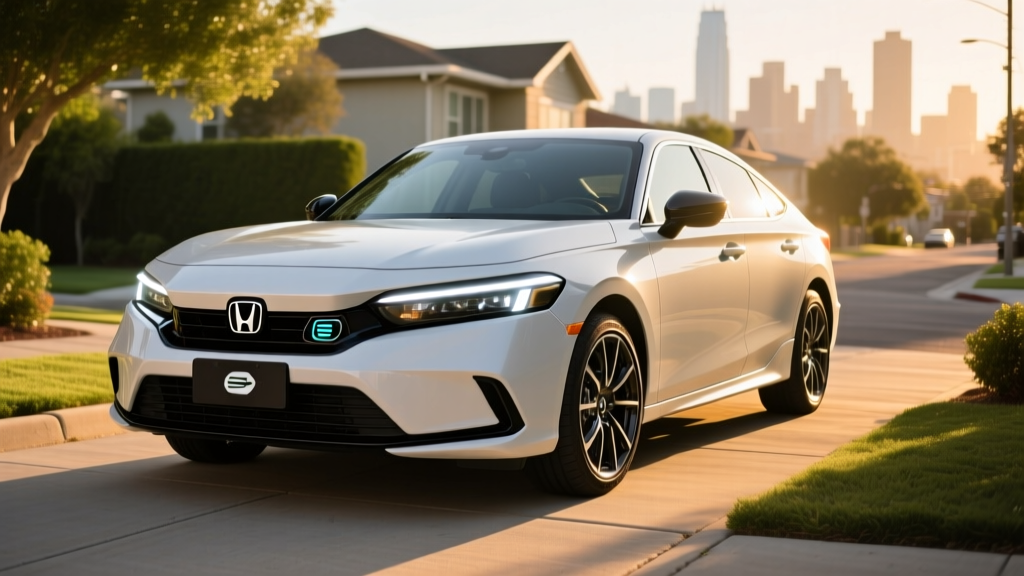
The 2025 Honda Civic Sport Touring Hybrid sits at the top of Honda's compact hybrid lineup, pairing a 200-horsepower two-motor powertrain with an EPA-estimated 50 MPG combined. For buyers who want electrified efficiency without plugging in, it delivers genuine daily fuel savings, Honda Sensing driver-assist tech, and a practical sedan form factor — all starting around $32,850 including destination.
Unlike a plug-in hybrid (PHEV) or a full battery-electric vehicle (BEV), the Civic Sport Touring Hybrid is a conventional hybrid (HEV). It recovers energy through regenerative braking and its gasoline engine — no charging cord required. That makes it ideal for apartment dwellers, street parkers, and anyone who wants EV-like city MPG without lifestyle changes.
HEV vs PHEV vs EV: Where the Civic Hybrid Fits
Conventional Hybrid (HEV) — The 2025 Civic Sport Touring Hybrid. No plug. Small battery (~1.1 kWh) recharged by the engine and regen braking. Best for drivers without home charging access who want maximum MPG with zero behavior change.
Plug-in Hybrid (PHEV) — Larger battery (typically 12–20 kWh), offers 25–45 miles of electric-only driving before the gas engine kicks in. Requires regular plug-in charging to realize benefits. Example: Toyota RAV4 Prime.
Battery Electric (BEV) — No gasoline. 250–400+ miles of EPA range, zero tailpipe emissions. Requires reliable home or workplace charging. Example: Tesla Model 3, Hyundai IONIQ 6.
The Civic Sport Touring Hybrid is strictly an HEV. Honda does not currently offer a plug-in variant of the Civic in the U.S. market. If you need electric-only commuting, you'd need to look at a PHEV like the Toyota Prius Prime or step up to a full BEV.
Fuel Economy: EPA Numbers and Real-World MPG
The EPA rates the 2025 Honda Civic Sport Touring Hybrid at 50 MPG combined, broken down as follows:
| Cycle | EPA Estimate | Real-World Expectation |
|---|---|---|
| City | 50 MPG | 50–55 MPG |
| Highway | 47 MPG | 42–46 MPG |
| Combined | 50 MPG | 46–52 MPG |
Why real-world MPG differs: Honda's two-motor hybrid system excels in stop-and-go traffic, where the electric motor handles low-speed propulsion and regenerative braking recovers energy constantly. City drivers often match or exceed the EPA city estimate. Highway driving, however, relies more heavily on the 2.0-liter gasoline engine at sustained speeds, where aerodynamic drag reduces efficiency. Expect 42–46 MPG on long freeway trips at 70–80 mph. Cold weather (below 35°F) typically drops fuel economy by 5–10% as the engine runs more frequently for cabin heat and battery warming.
With a 12.4-gallon fuel tank, total range lands around 570–620 miles per tank in mixed driving — enough for most drivers to visit a gas station once every two weeks.
Powertrain Specs: 200 HP From Honda's Two-Motor System
| Specification | 2025 Civic Sport Touring Hybrid |
|---|---|
| Engine | 2.0L Atkinson-cycle 4-cylinder |
| Engine Output | 146 hp / 134 lb-ft torque |
| Electric Motors | Two-motor hybrid system (drive + generator) |
| Electric Motor Output | 184 hp / 232 lb-ft torque |
| Combined System Output | 200 hp / 232 lb-ft torque |
| Transmission | e-CVT (no traditional gears) |
| Drivetrain | Front-wheel drive |
| Hybrid Battery | ~1.1 kWh lithium-ion (not plug-in) |
| 0–60 mph | ~7.2 seconds (est.) |
| Fuel Tank | 12.4 gallons |
| Curb Weight | ~3,100 lbs |
Honda's e:HEV two-motor system operates primarily in electric-drive mode at low and moderate speeds, with the gasoline engine acting as a generator. At highway speeds, a lock-up clutch connects the engine directly to the wheels for efficiency. The result is smooth, responsive acceleration with the electric motor's instant torque — 232 lb-ft available from near-zero RPM — while still delivering 50 MPG combined. The Sport Touring trim also includes paddle-shift-selectable regen levels, letting you modulate regenerative braking intensity without a true one-pedal mode.
Pricing, Trim Features, and Tax Credit Eligibility
The 2025 Honda Civic Sport Touring Hybrid carries an MSRP of approximately $32,850 (including $1,095 destination). Key standard equipment includes:
- Wireless Apple CarPlay and Android Auto on a 9-inch touchscreen
- Wireless phone charging
- Bose premium audio (12 speakers)
- Leather-trimmed seats, heated front seats
- Honda Sensing suite (adaptive cruise, lane-keeping, collision mitigation, traffic sign recognition)
- LED headlights with auto high-beam
- 18-inch alloy wheels
Federal Tax Credit: Not Eligible. The 2025 Honda Civic Sport Touring Hybrid is a conventional hybrid (HEV), not a plug-in vehicle. Under IRS §30D rules, the federal clean vehicle credit applies only to BEVs and PHEVs with qualifying battery capacity and North American assembly. Conventional hybrids do not qualify for the $7,500 federal credit or the up-to-$4,000 used-EV credit. Some states may offer minor incentives for high-efficiency vehicles — check your state energy office — but no major federal incentive applies to this model.
Battery Warranty, Reliability, and Replacement Cost
Honda Hybrid Battery Warranty: 8 years / 100,000 miles (10 years / 150,000 miles in CARB states including California, New York, Massachusetts, and others adopting California emissions standards). This covers the hybrid battery pack against defects and capacity loss below a functional threshold.
Powertrain Warranty: 5 years / 60,000 miles.
Bumper-to-Bumper: 3 years / 36,000 miles.
Honda's hybrid system has proven highly durable across multiple generations. The Civic Hybrid's lithium-ion battery pack is modest in size (~1.1 kWh) and operates in a narrow state-of-charge window — typically between 30% and 70% — which significantly reduces degradation stress compared to a BEV or PHEV that cycles through deeper charge ranges. Honda has used similar two-motor systems in the Accord Hybrid, CR-V Hybrid, and Insight with strong long-term reliability records.
Replacement cost if out of warranty: Based on dealer pricing and aftermarket data, a Civic Hybrid battery replacement runs approximately $2,000–$4,000 including labor — substantially less than a BEV battery pack. Independent hybrid specialists often offer refurbished packs for $1,500–$2,500. In practice, most Honda hybrid batteries outlast the vehicle's useful life; failures within the warranty period are covered, and out-of-warranty failures remain uncommon in vehicles under 200,000 miles.
According to NHTSA data and IIHS testing, the Civic continues to earn strong safety ratings, with the Honda Sensing suite providing robust crash-avoidance technology as standard equipment across all hybrid trims.
Who Should Choose the Civic Sport Touring Hybrid?
Pros
- 50 MPG combined — among the highest in the compact sedan segment
- 200 hp provides confident passing power, a meaningful upgrade over the 158-hp gas Civic
- No plug required — zero lifestyle adjustment vs. a gas car
- Top-tier Sport Touring trim loaded with premium features at ~$33K
- Strong Honda reliability history and 8–10 year hybrid battery warranty
- Regen paddle selectors add driving engagement
Cons
- No federal tax credit (HEVs are ineligible)
- FWD only — no AWD option unlike the Toyota Prius
- e-CVT drone under hard acceleration (mitigated by simulated shift points)
- Highway MPG drops to low 40s on sustained freeway driving
- Not a PHEV — no electric-only mode for zero-emission short trips
- Sport Touring is the only hybrid trim with full premium features; lower hybrid trims have fewer amenities
Decision Framework:
- Choose the Civic Sport Touring Hybrid if you want maximum fuel savings without plugging in, you lack home charging access, your commute involves heavy city or suburban driving, and you value a well-equipped compact sedan under $35K.
- Choose a PHEV (e.g., Prius Prime) if you have home charging and a short commute (under 40 miles) and want electric-only daily driving with gas-engine backup for road trips.
- Choose a full BEV (e.g., Tesla Model 3, Hyundai IONIQ 6) if you have reliable home Level 2 charging, want zero tailpipe emissions, qualify for the $7,500 federal tax credit, and your typical trips fall within 250–350 miles.
- Stick with the gas Civic if you drive under 8,000 miles per year and the $3,000–$4,000 hybrid premium won't pay back in fuel savings within your ownership window.
Ownership Economics: 5-Year Fuel Cost Comparison
At 12,000 miles per year and a national average of $3.40/gallon (regular unleaded), the Civic Sport Touring Hybrid's annual fuel cost is approximately:
| Vehicle | Combined MPG | Annual Fuel Cost | 5-Year Fuel Cost |
|---|---|---|---|
| 2025 Civic Sport Touring Hybrid | 50 MPG | $816 | $4,080 |
| 2025 Civic Sport (gas, 1.5T) | 33 MPG | $1,236 | $6,180 |
| 2025 Toyota Prius (LE AWD) | 54 MPG | $756 | $3,780 |
The hybrid Civic saves roughly $2,100 over five years compared to the turbocharged gas Civic. Given the Sport Touring Hybrid's ~$3,500–$4,000 price premium over an equivalently equipped gas Civic Sport Touring, the fuel savings narrow the gap significantly — and the hybrid's smoother low-speed drivetrain response and extra 42 horsepower add subjective value that fuel math alone doesn't capture. Per fueleconomy.gov, the Civic Hybrid's annual petroleum consumption is approximately 7 barrels versus 11 barrels for the gas model.
Frequently Asked Questions
How many MPG does the 2025 Honda Civic Sport Touring Hybrid get?
The EPA rates it at 50 MPG city / 47 MPG highway / 50 MPG combined. In real-world driving, city-heavy commuters often see 50–55 MPG, while sustained highway driving at 75+ mph typically yields 42–46 MPG. Cold weather reduces these figures by roughly 5–10%.
Does the Civic Hybrid need to be plugged in?
No. The 2025 Civic Sport Touring Hybrid is a conventional hybrid (HEV). Its small lithium-ion battery recharges through regenerative braking and the gasoline engine. There is no plug, no charging cord, and no electric-only driving mode of meaningful distance. You fuel it like any other car at a gas station.
How far can the Civic Hybrid go on electric power alone?
Essentially zero miles in pure EV mode. The hybrid system uses the electric motor extensively at low speeds and during acceleration assist, but the ~1.1 kWh battery doesn't store enough energy for sustained electric-only driving. This is by design — the system prioritizes seamless hybrid operation, not EV range. If electric-only commuting is your goal, you need a PHEV or BEV.
Is the 2025 Civic Hybrid reliable, and what does battery replacement cost?
Honda's hybrid system has an excellent reliability track record across multiple model lines. The hybrid battery is warrantied for 8 years/100,000 miles (10 years/150,000 miles in CARB states). Out-of-warranty replacement costs approximately $2,000–$4,000 — far less than a BEV battery. Most hybrid batteries last the life of the vehicle with proper maintenance.
Does the 2025 Honda Civic Hybrid qualify for a federal tax credit?
No. Under current IRS §30D rules, only plug-in electric vehicles (BEVs and PHEVs) qualify for the federal clean vehicle credit. Conventional hybrids like the Civic Sport Touring Hybrid are ineligible for the $7,500 credit. Some states may offer minor efficiency incentives, but these vary by jurisdiction — consult your state energy office or a tax professional for specifics.
How does the Civic Hybrid compare to the Toyota Prius?
The Prius LE achieves a higher 54 MPG combined and offers AWD, but the Civic Hybrid delivers more horsepower (200 vs. 194), a more refined interior in the Sport Touring trim, and arguably more engaging driving dynamics. The Prius starts lower in price, but the Civic Sport Touring Hybrid includes Bose audio, leather, and wireless charging as standard — features that cost extra or aren't available on base Prius trims.
What maintenance does the Civic Hybrid require?
Routine maintenance mirrors the gas Civic: oil changes (the 2.0L engine still uses conventional oil), tire rotations, brake fluid, and cabin air filters. Brake pad life is typically extended due to regenerative braking handling much of the deceleration. There is no additional hybrid-specific maintenance item beyond occasional inverter coolant checks covered under standard service intervals.