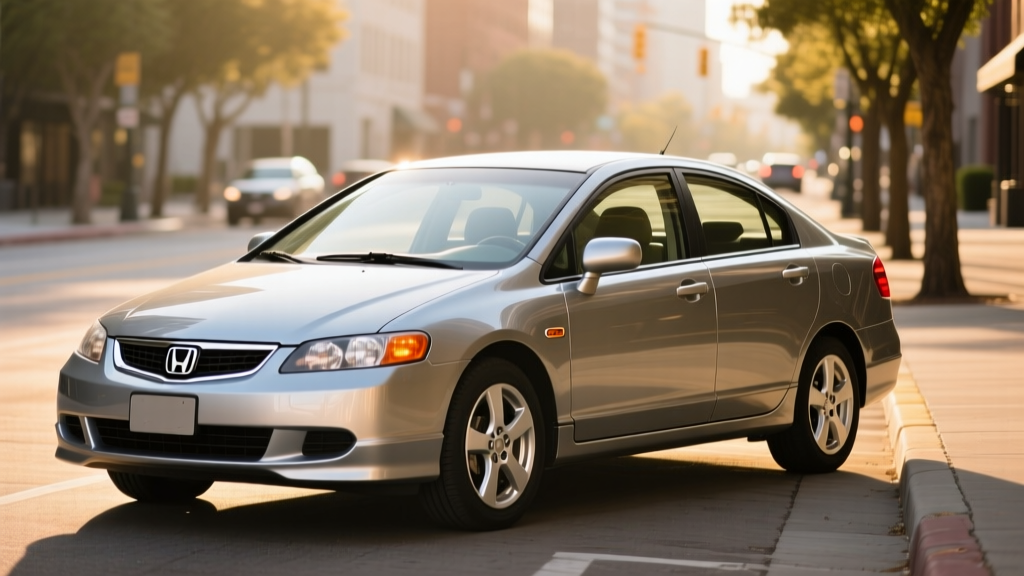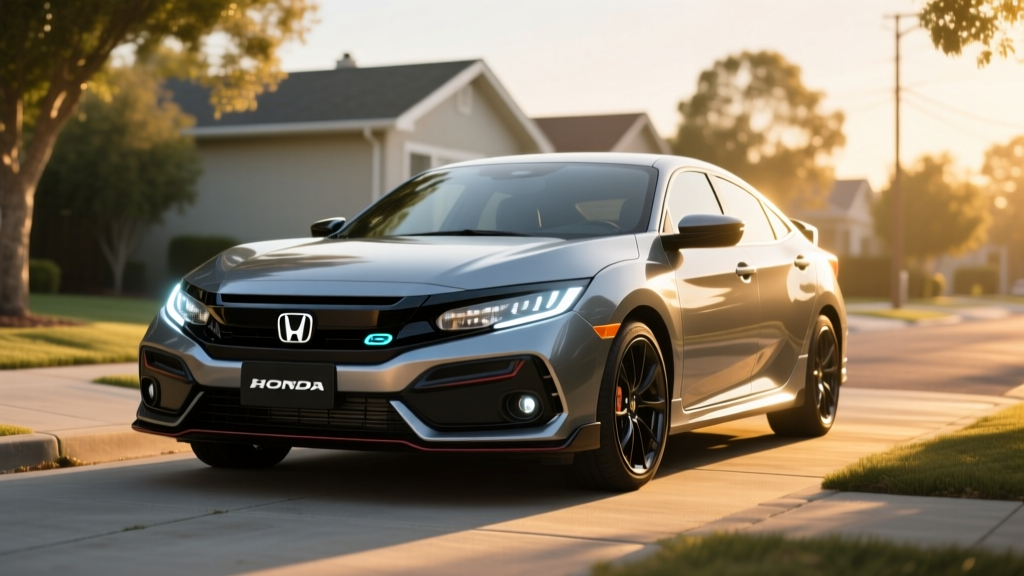
The 2025 Honda Civic Sport Hybrid Sedan occupies a narrow but important lane: it delivers near-Prius city efficiency in a package that actually looks and drives like a compact sport sedan. With a combined EPA rating of 49 MPG and 200 horsepower from Honda's two-motor hybrid system, it answers the buyer who wants fuel savings without sacrificing driving dynamics — and who isn't ready to plug in or go full electric.
This guide covers the exact numbers that matter — EPA and real-world MPG, powertrain specs, battery warranty, pricing, tax-credit eligibility, and how the Civic Sport Hybrid stacks up against PHEVs and BEVs in 2026's market.
HEV vs PHEV: Where the Civic Sport Hybrid Fits
Before examining specs, it's essential to clarify what the 2025 Civic Sport Hybrid is — and what it isn't. Honda offers this model as a conventional hybrid (HEV), not a plug-in hybrid (PHEV). That distinction drives everything from daily operation to fuel-economy expectations.
| Feature | HEV (Civic Sport Hybrid) | PHEV (e.g., Toyota Prius Prime) | BEV (e.g., Tesla Model 3) |
|---|---|---|---|
| Plug-in charging required? | No — self-charging via engine & regen | Yes — Level 1/2 for EV range | Yes — Level 2 or DC fast charge |
| Electric-only range | ~1 mile at low speed (EV mode) | 30–45 miles typical | 250–360+ miles (EPA) |
| Gasoline engine | 2.0L 4-cyl + 2 motors | 2.0L 4-cyl + motor | None |
| Battery size | ~1.0 kWh (small buffer) | 13–18 kWh usable | 50–82 kWh usable |
| Federal tax credit (§30D) | Not eligible | Up to $7,500 if sourcing/income rules met | Up to $7,500 if sourcing/income rules met |
| Best for | No home charging, high mileage, simplicity | Home charging + short commutes + road trips | Home charging, lower operating cost, zero tailpipe |
The Civic Sport Hybrid recovers energy through regenerative braking and uses its gasoline engine to generate electricity or drive the wheels directly at highway speeds. You never plug it in. You never need to think about charging infrastructure. You simply fill up at any gas station and drive.
Fuel Economy: EPA Ratings and Real-World MPG
Honda publishes the following EPA fuel-economy figures for the 2025 Civic Sport Hybrid Sedan, and fueleconomy.gov confirms them:
| Driving Cycle | EPA MPG |
|---|---|
| City | 50 MPG |
| Highway | 47 MPG |
| Combined | 49 MPG |
How many MPG does this hybrid get in real-world driving? Hybrids consistently outperform their EPA city estimates in stop-and-go traffic because the electric motor handles low-speed propulsion where gasoline engines are least efficient. Owners who drive primarily in urban or suburban conditions commonly report 50–54 MPG on the trip computer.
Highway driving tells a different story. At sustained 75–80 mph speeds, the 2.0L Atkinson-cycle engine is doing most of the work, and real-world highway economy drops to approximately 42–45 MPG. Cold weather further reduces efficiency — expect a 5–10% drop in winter months as the engine runs more frequently for cabin heat and battery conditioning.
Total range: With a 12.4-gallon fuel tank and 49 MPG combined, the Civic Sport Hybrid delivers approximately 607 miles of total range per fill-up. Real-world mixed driving with highway bias yields roughly 520–560 miles before the low-fuel warning.
Powertrain: 200 HP Two-Motor Hybrid System
The Civic Sport Hybrid uses Honda's fourth-generation two-motor hybrid system. Unlike Toyota's planetary-gear power-split approach, Honda's system primarily operates in series-hybrid mode at low and moderate speeds — the engine acts as a generator, and the electric drive motor powers the wheels. At highway cruising speeds, a lock-up clutch connects the engine directly to the front axle for efficiency.
| Specification | 2025 Civic Sport Hybrid Sedan |
|---|---|
| Engine | 2.0L DOHC 4-cylinder (Atkinson cycle) |
| Engine output | 146 hp / 134 lb-ft torque |
| Drive motor output | 184 hp / 232 lb-ft torque |
| Combined system output | 200 hp / 232 lb-ft torque |
| Transmission | e-CVT (single-speed direct drive + engine clutch) |
| Drivetrain | Front-wheel drive |
| 0–60 mph | ~7.2 seconds (estimated) |
| Battery type | Lithium-ion, ~1.0 kWh |
| Fuel tank | 12.4 gallons |
| Curb weight | ~3,150 lbs |
The 232 lb-ft of torque from the electric drive motor is available from zero RPM, which gives the Civic Sport Hybrid a responsive, punchy feel off the line that belies its efficiency focus. The Sport trim also includes paddle shifters that let you select among four levels of regenerative braking — useful for slowing into corners or maximizing energy recapture in traffic without touching the brake pedal.
Pricing, Trims, and Tax Credit Eligibility
The 2025 Honda Civic Sport Hybrid Sedan carries a starting MSRP of $29,845 (including destination charge). Honda positions it between the LX and the Touring Hybrid trims:
- Sport Hybrid: $29,845 — 18-inch alloy wheels, sport-tuned suspension, leather-wrapped steering wheel, 7-inch touchscreen, wireless Apple CarPlay/Android Auto
- Sport Touring Hybrid: $32,845 — adds Bose 12-speaker audio, 9-inch touchscreen, wireless phone charging, heated front seats, navigation, Honda Sensing suite with expanded ADAS features
Does the 2025 Civic Sport Hybrid qualify for a federal tax credit? No. The IRS §30D Clean Vehicle Credit applies only to plug-in electric vehicles (PHEVs and BEVs) with a minimum battery capacity of 7 kWh. The Civic Sport Hybrid's ~1.0 kWh battery disqualifies it entirely. There is no federal purchase incentive for conventional hybrids in 2025 or 2026.
Some states offer modest rebates or HOV-lane access for hybrids — check your state's energy office or the Alternative Fuels Data Center for current programs. However, these are the exception rather than the rule.
Battery Warranty, Reliability, and Replacement Cost
Hybrid battery longevity remains the top concern for buyers switching from a conventional gas car. Honda addresses this with robust coverage:
Honda Hybrid Battery Warranty:
- Duration: 8 years / 100,000 miles (10 years / 150,000 miles in CARB states including CA, CT, MA, ME, MD, NJ, NY, OR, RI, VT, WA)
- Coverage: Defects and capacity loss below a defined threshold
- Hybrid system components: Inverter, electric motor, and related electronics covered under the same 8yr/100k term
- Powertrain warranty: 5 years / 60,000 miles
Is the Civic Hybrid reliable? Honda's two-motor hybrid system is now in its fourth generation, with real-world fleet data spanning the Accord Hybrid, CR-V Hybrid, and prior Civic Hybrid models. The lithium-ion hybrid battery is small (~1.0 kWh) and operates within a narrow state-of-charge window — typically between 40% and 80% — which dramatically reduces degradation stress compared to a full EV battery that cycles through wider ranges.
Third-generation Civic Hybrids (2014–2015) and Accord Hybrids have shown battery lifespans well exceeding 150,000 miles with minimal capacity loss. The smaller battery also means lower replacement cost if failure occurs outside warranty: expect $2,000–$3,500 for a replacement hybrid battery pack, compared to $8,000–$20,000+ for a full EV battery.
Honda Sensing — the brand's Level 2 driver-assistance suite — comes standard and includes adaptive cruise control, lane-keeping assist, automatic emergency braking, and traffic-sign recognition. The IIHS has historically rated the Civic sedan as a Top Safety Pick when equipped with LED headlights.
Who Should Buy the Civic Sport Hybrid vs a PHEV or EV?
The decision between HEV, PHEV, and BEV comes down to three questions: Can you charge at home? How far is your daily commute? And how often do you take long road trips?
Reasons to Choose the Civic Sport Hybrid
- No access to home or workplace charging — you need a car that works with gas stations only
- High annual mileage (15,000+ miles/year) where 49 MPG produces significant fuel savings
- Want a sport-sedan driving feel with responsive electric torque, not a crossover
- Prefer lower purchase price and zero plug-in complexity
- Live in an apartment or street-park where charging is impractical
Reasons to Consider a PHEV or BEV Instead
- You have Level 2 home charging and a commute under 35 miles (PHEV eliminates most gas use)
- You want federal tax credit eligibility — up to $7,500 for qualifying PHEVs/BEVs under IRS §30D rules
- You prioritize zero tailpipe emissions for daily driving
- You want one-pedal driving and stronger regenerative braking
- You're ready for the lower per-mile energy cost of electricity (~$0.04/mile) vs gasoline (~$0.10/mile at 49 MPG)
Choose the Civic Sport Hybrid if: You can't plug in at home, drive 12,000–20,000 miles/year, want sub-$30K pricing, and value a 600+ mile road-trip range with zero charging stops.
Choose a PHEV (like the Prius Prime) if: You can install a Level 2 charger, commute under 40 miles round-trip, want 30–40 miles of electric-only driving for daily errands, and still need gas-engine range for weekend trips.
Choose a BEV (like the Model 3 or Ioniq 6) if: You have reliable home charging, want the lowest operating cost, qualify for the $7,500 federal credit, and your longest regular trip is under 250 miles (or you don't mind DC fast-charging stops).
Ownership Economics: 5-Year Cost Snapshot
To put the Civic Sport Hybrid's value in context, here's a simplified five-year cost estimate assuming 15,000 miles/year, $3.50/gallon regular unleaded, and average maintenance:
| Cost Category | Civic Sport Hybrid (49 MPG) | Gas Civic Sport (33 MPG) | Comparable BEV |
|---|---|---|---|
| Fuel / energy (5 yr) | $5,357 | $7,955 | $3,182 (at $0.13/kWh) |
| Maintenance (5 yr) | ~$2,200 | ~$2,800 | ~$1,200 |
| Purchase price (base) | $29,845 | $26,845 | ~$38,990 |
| Federal tax credit | $0 | $0 | Up to $7,500 |
| Estimated 5-yr total | ~$37,402 | ~$37,600 | ~$35,872 |
The Civic Sport Hybrid essentially matches or beats the gas-only Civic on five-year cost despite the $3,000 higher sticker price, because fuel savings offset the premium within roughly 3.5 years. A BEV with the $7,500 credit can be cheaper still — but only if you have home charging access and the higher upfront price fits your budget.
Frequently Asked Questions
How many MPG does the 2025 Honda Civic Sport Hybrid get?
The EPA rates it at 50 city / 47 highway / 49 combined MPG. In real-world city driving, many owners see 50–54 MPG. Highway driving at 75+ mph typically returns 42–45 MPG. Cold weather reduces efficiency by 5–10%.
Does the Civic Sport Hybrid need to be plugged in?
No. It is a conventional hybrid (HEV), not a plug-in hybrid. The small lithium-ion battery recharges through regenerative braking and the gasoline engine. You operate it exactly like a standard gas car — just fill up at any station.
Can the Civic Sport Hybrid drive on electric power alone?
Only at very low speeds (under ~25 mph) for short distances (roughly one mile or less). The EV mode is designed for creeping through parking lots or residential streets, not for meaningful electric-only commuting. If you want 30+ miles of EV range, you need a PHEV.
Is the hybrid battery reliable, and what does replacement cost?
Honda covers the hybrid battery for 8 years/100,000 miles (10 years/150,000 miles in CARB states). Real-world data from Honda's hybrid fleet shows batteries lasting well beyond 150,000 miles. If replacement is needed out of warranty, expect $2,000–$3,500 — significantly less than a full EV battery replacement.
Does the 2025 Civic Sport Hybrid qualify for any tax credit?
Not the federal §30D Clean Vehicle Credit, which requires a minimum 7 kWh battery and plug-in capability. The Civic Sport Hybrid's ~1.0 kWh battery does not qualify. Check your state's energy office for any local hybrid incentives, though these are uncommon.
How does the Civic Sport Hybrid compare to the Toyota Prius?
The Prius (57 MPG combined) is more efficient but offers a less engaging driving experience and lower horsepower (196 hp). The Civic Sport Hybrid trades ~8 MPG for a more conventional sedan design, sportier handling, and a more intuitive infotainment system. Both are excellent — your preference comes down to efficiency-first (Prius) vs. driving-dynamics-first (Civic).
What's the difference between the Sport and Sport Touring Hybrid trims?
The Sport Touring Hybrid ($32,845) adds a 9-inch touchscreen, Bose 12-speaker audio, wireless phone charging, heated front seats, and built-in navigation. Both trims share the identical 200 hp hybrid powertrain and 49 MPG combined rating.