Quick Verdict: A Stylish Three-Row Hybrid That Sips Fuel
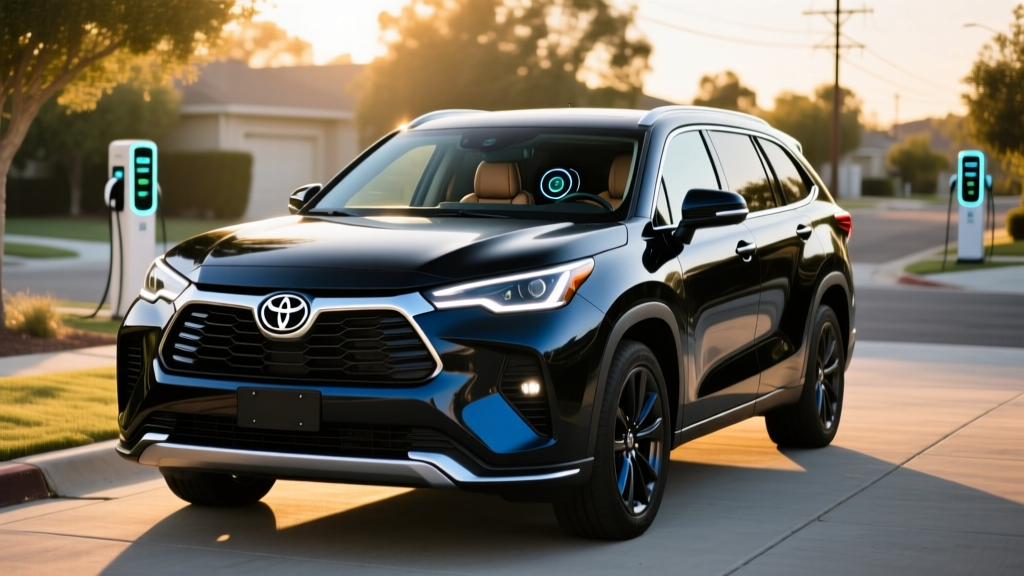
The 2025 Toyota Highlander Hybrid XLE Nightshade threads a specific needle: three-row family hauler, all-wheel drive, and a blacked-out aesthetic — all while returning an EPA-estimated 35 MPG combined. Toyota's fourth-generation hybrid system pairs a 2.5-liter four-cylinder with front and rear electric motors for a combined 243 horsepower, no plug required. The Nightshade edition adds black 20-inch wheels, black mirror caps, black badging, and a panoramic moonroof over the already well-equipped XLE trim.
At an MSRP of approximately $48,470 (including destination), the Highlander Hybrid XLE Nightshade undercuts most three-row SUV competitors on fuel cost while carrying Toyota's reputation for hybrid longevity. It is a conventional hybrid (HEV), not a plug-in — meaning you never need to plug it in. The gasoline engine and regenerative braking handle all battery charging automatically.
| Spec | Value |
|---|---|
| Powertrain | 2.5L I4 + 2 electric motors (AWD-i) |
| Combined Horsepower | 243 hp |
| Drivetrain | Electronic On-Demand AWD |
| EPA MPG (City / Hwy / Combined) | 35 / 35 / 35 |
| Fuel Tank Capacity | 17.1 gallons |
| Total Driving Range (EPA Est.) | ~598 miles |
| Hybrid Battery Type | Nickel-Metal Hydride (NiMH), sealed |
| 0–60 mph | ~7.8 seconds (est.) |
| Towing Capacity | 3,500 lbs |
| Seating | 7 passengers (2nd-row captain's chairs) or 8 (bench) |
| Cargo (Behind 3rd / 2nd / 1st Row) | 16.1 / 48.4 / 84.3 cu ft |
| MSRP (incl. destination) | ~$48,470 |
| Federal Tax Credit (§30D) | Not eligible (HEV, not PHEV/BEV) |
Fuel Economy: EPA Numbers and Real-World MPG
The EPA rates the 2025 Highlander Hybrid AWD at 35 MPG city, 35 MPG highway, and 35 MPG combined, per fueleconomy.gov. This flat city/highway split is a hallmark of Toyota's hybrid synergy drive: the electric motor handles low-speed propulsion where gasoline engines are least efficient, while the engine takes over at cruising speeds.
| Vehicle | City MPG | Highway MPG | Combined MPG |
|---|---|---|---|
| 2025 Toyota Highlander Hybrid AWD | 35 | 35 | 35 |
| 2025 Hyundai Santa Fe Hybrid AWD | 35 | 31 | 33 |
| 2025 Kia Sorento Hybrid AWD | 34 | 31 | 32 |
| 2025 Mazda CX-90 PHEV (gas-only mode) | 25 | 28 | 25 |
| 2025 Toyota Grand Highlander Hybrid AWD | 35 | 34 | 35 |
Real-World MPG: What Owners Actually See
Toyota's hybrid system tends to deliver — or slightly exceed — EPA estimates in mixed suburban driving. Owner-reported data on Fuelly and Edmunds forums clusters around 33–37 MPG combined for the AWD Highlander Hybrid. City-heavy commutes with frequent stops favor the hybrid system, often pushing owners toward 37–38 MPG. Sustained highway driving at 75+ mph, especially in cold weather or with a loaded roof box, can pull figures down to 30–32 MPG.
For context, the non-hybrid 2025 Highlander (turbocharged 2.4L, AWD) returns an EPA 24 MPG combined — making the hybrid roughly 46% more fuel-efficient in everyday driving.
Hybrid (HEV) vs. Plug-In Hybrid (PHEV): Which Highlander Is Right?
Toyota offers the Highlander exclusively as a conventional hybrid (HEV) in the U.S. market. There is no plug-in hybrid (PHEV) Highlander variant. If you want a Toyota PHEV with three rows, you would need to look at the 2025 Toyota Grand Highlander (which currently offers only HEV in the U.S.) or step to the two-row RAV4 Prime PHEV.
| Feature | HEV (Highlander Hybrid) | PHEV (e.g., RAV4 Prime) | BEV (e.g., Tesla Model X) |
|---|---|---|---|
| Plug-in Required? | No — self-charging | Yes — for electric range | Yes — always |
| Electric-Only Range | ~1 mile at low speed | 30–42 miles typical | 250–350 miles |
| Total Range | ~598 miles | 500–600 miles | 250–350 miles |
| Home Charging Needed? | No | Recommended (Level 2) | Essential (Level 2) |
| Federal Tax Credit (§30D) | Not eligible | Up to $7,500 (if eligible) | Up to $7,500 (if eligible) |
| Best For | No garage/outlet access; road-trip families | Short commutes + road trips | Home charging + daily driving |
The Highlander Hybrid's self-charging architecture is ideal for buyers who lack reliable access to a Level 2 home charger or who frequently take long road trips where charging infrastructure adds complexity. You fuel it like any gas car — the hybrid system simply makes each gallon go further.
Powertrain Deep Dive: How the Hybrid System Works
The 2025 Highlander Hybrid uses Toyota's fourth-generation hybrid system with the following components:
- Gasoline Engine: 2.5-liter Dynamic Force inline-4, producing 186 hp and 186 lb-ft of torque on its own. This is an Atkinson-cycle engine optimized for thermal efficiency (Toyota claims 41%), not peak power.
- Front Electric Motor: Integrated into the transaxle, contributing to a combined system output of 243 hp. Handles low-speed propulsion and assists during acceleration.
- Rear Electric Motor: A separate 54-hp motor on the rear axle provides electronic on-demand AWD. It activates during acceleration, slippery conditions, or when the front wheels lose traction — no mechanical driveshaft connects the axles.
- Hybrid Battery: A sealed nickel-metal hydride (NiMH) pack located under the second-row seats. Toyota does not publish the exact kWh capacity for the HEV pack (it is small — roughly 1.6 kWh nominal — because it only needs to buffer energy, not provide sustained electric driving).
- Regenerative Braking: Captures kinetic energy during deceleration to recharge the hybrid battery, extending brake pad life in the process.
The result is seamless electric-assisted driving with no plug, no range anxiety, and no behavioral change from a conventional SUV. The eCVT (electronically controlled continuously variable transmission) is smooth but can drone under hard acceleration — a common hybrid trait.
Nightshade Edition: What You Get for the Money
The Nightshade package is an appearance upgrade layered on top of the XLE trim. Here is what the XLE Nightshade adds over the standard XLE Hybrid:
- Black 20-inch alloy wheels (vs. 18-inch machine-finished on standard XLE)
- Black mirror caps, black window surrounds, black roof rails
- Black Toyota badging and "HEV" emblem
- Panoramic glass moonroof with power sunshade
- Darkened headlight accents
- Available exterior colors: Midnight Black Metallic, Celestial Silver Metallic, Wind Chill Pearl, Cement, Ruby Flare Pearl
Standard XLE Hybrid equipment carries over: SofTex-trimmed heated front seats, 8-inch Toyota Audio Multimedia touchscreen with wireless Apple CarPlay and Android Auto, Toyota Safety Sense 3.0 (pre-collision, lane tracing, adaptive cruise, blind-spot monitor), Qi wireless charging pad, and a hands-free power liftgate.
The Nightshade aesthetic commands roughly a $1,200–$1,500 premium over the standard XLE Hybrid AWD, landing the MSRP around $48,470 with destination. Fully loaded with options (premium paint, cargo accessories, door-edge guards), expect a sticker near $50,000–$50,500.
Pricing, Tax Credits, and Total Cost of Ownership
Because the Highlander Hybrid is a conventional HEV — not a plug-in hybrid or battery-electric vehicle — it does not qualify for the federal §30D clean vehicle tax credit. That credit (up to $7,500) applies only to new PHEVs and BEVs meeting battery sourcing, MSRP, and buyer income requirements per IRS guidelines.
Some states offer rebates for conventional hybrids, but these are increasingly rare as incentive programs shift toward PHEVs and BEVs. Check your state's energy office or AFDC state incentive database for any current local programs.
Five-Year Fuel Cost Comparison
Where the Highlander Hybrid shines is at the pump. Assuming 15,000 miles/year, $3.50/gallon regular unleaded, and EPA combined ratings:
| Vehicle | Combined MPG | Annual Fuel Cost | 5-Year Fuel Cost |
|---|---|---|---|
| 2025 Highlander Hybrid AWD | 35 | $1,500 | $7,500 |
| 2025 Highlander Turbo AWD (gas) | 24 | $2,188 | $10,938 |
| 2025 Kia Telluride AWD (gas) | 21 | $2,500 | $12,500 |
| 2025 Mazda CX-90 Turbo AWD (gas) | 25 | $2,100 | $10,500 |
Over five years, the Highlander Hybrid saves roughly $3,400–$5,000 in fuel versus non-hybrid three-row competitors. That saving partially offsets the hybrid powertrain's upfront premium and helps justify the purchase even without a tax credit.
Hybrid Battery Warranty, Reliability, and Replacement Cost
Toyota Hybrid Battery Warranty
- Coverage: 10 years / 150,000 miles (whichever comes first) on the hybrid battery and all hybrid-system components, for all 50 states.
- What's Covered: Hybrid battery pack, hybrid control module, inverter, electric motors, and related wiring.
- Capacity Threshold: Toyota warrants the hybrid battery against defects and abnormal loss of capacity. Unlike BEV warranties, there is no published "70% SoH" threshold — Toyota covers functional failure.
- Transferable: Yes, the hybrid warranty transfers to subsequent owners at no cost.
Real-World Hybrid Battery Longevity
Toyota's NiMH hybrid batteries have an exceptional track record. The Prius, Camry Hybrid, and Highlander Hybrid packs routinely last 150,000–200,000+ miles before any degradation concern arises. Taxi fleets running Toyota hybrids in New York and Los Angeles have documented 300,000+ miles on original hybrid batteries.
NiMH chemistry degrades more gracefully than early lithium-ion packs — it loses capacity slowly rather than suffering sudden failure. The Highlander Hybrid's battery is also relatively small (~1.6 kWh), so the depth-of-discharge cycles are shallow, further extending life.
Hybrid Battery Replacement Cost
If the hybrid battery does fail outside warranty, replacement costs have come down significantly:
- New OEM Toyota battery: $2,500–$3,500 installed at a dealer
- Refurbished/reconditioned battery: $1,200–$2,000 installed at independent hybrid specialists
- Individual module replacement: Some shops replace only the failed cell modules for $500–$1,000
For comparison, a BEV battery replacement can run $10,000–$25,000+. The Highlander Hybrid's small NiMH pack is one of the least expensive "batteries" to replace in any electrified vehicle.
Overall Reliability
Toyota consistently ranks at or near the top of J.D. Power Vehicle Dependability Studies and Consumer Reports reliability surveys. The fourth-generation hybrid powertrain is one of the most proven systems on the road, with millions of units in global service. The Highlander Hybrid specifically carries no major known systemic issues for the 2025 model year.
Who Should Buy the Highlander Hybrid XLE Nightshade?
Pros
- 35 MPG combined in a 4,500-lb three-row SUV — class-leading efficiency
- No plug required — zero lifestyle change from a gas SUV
- Standard AWD with electronic rear motor — confident in rain and snow
- 10-year/150,000-mile hybrid battery warranty
- Nightshade styling stands out without a luxury-brand premium
- Strong Toyota resale value; proven hybrid reliability
- ~598 miles of total range between fill-ups
Cons
- No federal tax credit eligibility (HEV, not PHEV)
- 243 hp feels adequate, not quick — 0-60 in ~7.8 seconds
- Third row is tight for adults on long trips (consider Grand Highlander)
- eCVT drone under hard acceleration
- 20-inch Nightshade wheels slightly reduce ride comfort vs 18-inch
- Only 16.1 cu ft cargo behind the third row
- 8-inch touchscreen feels dated vs competitors' 12-inch+ screens
Choose the Highlander Hybrid XLE Nightshade If:
- You need three rows and AWD but want to minimize fuel costs
- You cannot install a Level 2 home charger (apartment, street parking)
- You take frequent road trips and don't want to plan around charging stops
- You value long-term reliability and low maintenance over cutting-edge EV tech
- You like the Nightshade blacked-out look without paying luxury-SUV pricing
Look at a PHEV or BEV Instead If:
- You have home Level 2 charging and a short daily commute (a PHEV like the RAV4 Prime covers 42 miles on electricity alone)
- You want to maximize federal tax credits — up to $7,500 on eligible PHEVs/BEVs
- You want stronger acceleration (most EVs hit 0-60 in under 5 seconds)
- You want the lowest possible per-mile energy cost (home-charged EVs run ~$0.04–$0.06/mile vs ~$0.10/mile for this hybrid)
Frequently Asked Questions
How many MPG does the 2025 Toyota Highlander Hybrid get?
The EPA rates the 2025 Highlander Hybrid AWD at 35 MPG city, 35 MPG highway, and 35 MPG combined. Real-world owner reports typically range from 33–37 MPG depending on driving mix, weather, and terrain. City-heavy driving tends to push results above the EPA estimate thanks to regenerative braking.
Does the Highlander Hybrid need to be plugged in?
No. The Highlander Hybrid is a conventional hybrid (HEV), not a plug-in hybrid (PHEV). The gasoline engine and regenerative braking system charge the hybrid battery automatically. You simply refuel at any gas station with regular 87-octane unleaded.
Is there a plug-in hybrid (PHEV) version of the Highlander?
As of the 2025 model year, Toyota does not offer a PHEV Highlander in the United States. If you want a Toyota PHEV SUV, the RAV4 Prime (42 miles electric-only range, up to $7,500 federal credit) is the closest option, though it seats only five. For a three-row PHEV, consider the Chrysler Pacifica Hybrid (32 miles electric, minivan) or the Mazda CX-90 PHEV (26 miles electric).
Does the 2025 Highlander Hybrid qualify for any tax credit?
No. The federal §30D clean vehicle credit applies only to plug-in electric vehicles (PHEVs and BEVs) with qualifying battery sourcing. Conventional hybrids like the Highlander Hybrid are not eligible. Check your state's incentive database for any local hybrid rebates, though these are uncommon.
How long will the Highlander Hybrid battery last?
Toyota's NiMH hybrid batteries are designed to last the life of the vehicle. Real-world data shows these packs routinely lasting 150,000–200,000+ miles. Toyota backs the hybrid battery with a 10-year/150,000-mile warranty. If replacement is ever needed outside warranty, expect $2,500–$3,500 for a new OEM pack or $1,200–$2,000 for a refurbished unit.
How does the Nightshade edition affect fuel economy?
The Nightshade package's 20-inch black alloy wheels are slightly heavier and wider than the standard XLE's 18-inch wheels, but Toyota rates both configurations at the same 35 MPG combined. In practice, the difference is negligible — perhaps 0.5 MPG in extreme testing scenarios.
Is the Highlander Hybrid good for towing?
The 2025 Highlander Hybrid is rated to tow up to 3,500 pounds when properly equipped — sufficient for a small boat trailer, pop-up camper, or light utility trailer. Towing will reduce fuel economy to approximately 22–26 MPG depending on trailer weight and terrain. For heavier towing (5,000+ lbs), you would need a body-on-frame SUV like the Toyota Sequoia Hybrid (5,000-lb rating, 22 MPG combined).
How does the Highlander Hybrid compare to the Grand Highlander Hybrid?
The Grand Highlander Hybrid shares the same 243-hp AWD hybrid powertrain and 35 MPG combined rating but adds roughly 6 inches of length for a genuinely usable third row and more cargo space (20.6 cu ft behind the third row). If you regularly carry adults in the third row, the Grand Highlander is worth the ~$2,500 premium. If the third row is for kids or occasional use, the standard Highlander Hybrid's smaller footprint makes it easier to park and maneuver.