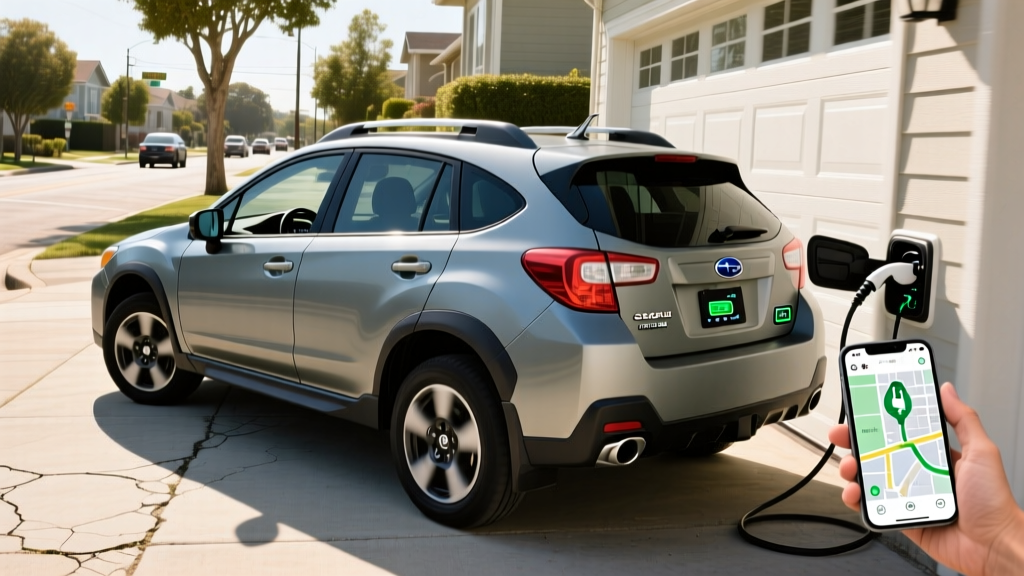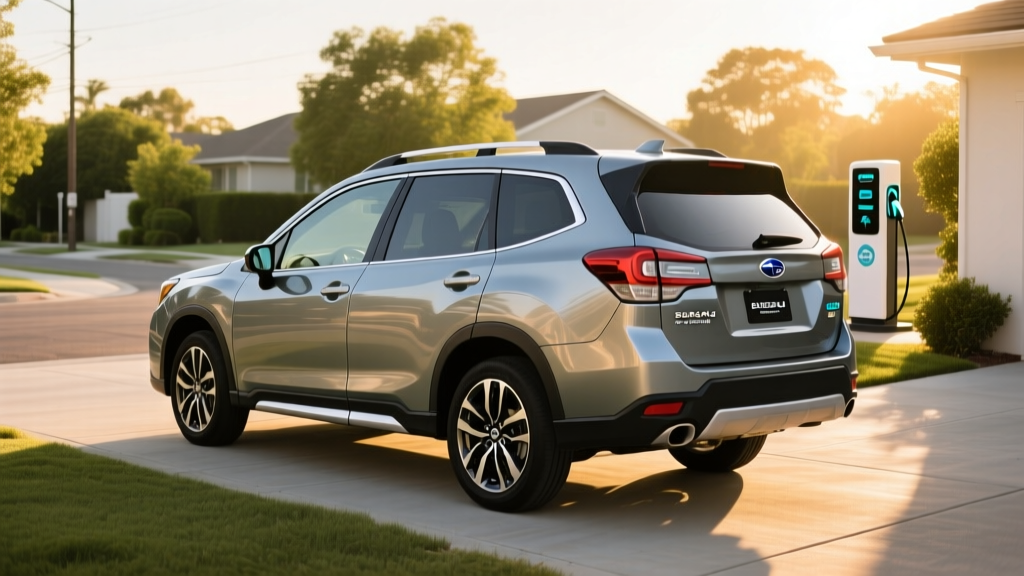
The 2025 Subaru Forester Touring Hybrid pairs Subaru's proven symmetrical all-wheel drive with a newly introduced hybrid powertrain, targeting buyers who want meaningful fuel savings without range anxiety or plug-in logistics. As the top-tier trim in the sixth-generation Forester lineup, the Touring Hybrid adds premium interior materials, advanced EyeSight safety tech, and the most efficient powertrain Subaru has ever offered in this compact SUV.
But how does it stack up against conventional gas models, plug-in hybrids, and full battery-electric vehicles? Below, we break down every number that matters — EPA MPG, powertrain output, battery warranty, real-world efficiency, pricing, and tax-credit eligibility — so you can decide if this is the right electrified SUV for your driveway.
2025 Forester Touring Hybrid: At-a-Glance Specs
| Specification | 2025 Forester Touring Hybrid |
|---|---|
| Powertrain Type | Conventional Hybrid (HEV) — no plug-in required |
| Engine | 2.5L 4-cylinder boxer + electric motor |
| Combined Horsepower | 208 hp (194 hp engine + electric motor assist) |
| Drivetrain | Symmetrical All-Wheel Drive (standard) |
| Transmission | Lineartronic CVT |
| EPA MPG (City / Hwy / Combined) | 35 / 33 / 35 |
| Fuel Tank Capacity | 14.0 gallons |
| Total Driving Range | ~490 miles |
| 0–60 mph | ~7.8 seconds (est.) |
| Cargo Volume (rear seats up / down) | 28.9 / 74.4 cu ft |
| Towing Capacity | 1,500 lbs |
| Starting MSRP (Touring Hybrid) | $41,995 |
| Hybrid Battery Warranty | 8 years / 100,000 miles |
Fuel Economy: EPA Ratings vs. Real-World MPG
The EPA rates the 2025 Forester Touring Hybrid at 35 MPG city, 33 MPG highway, and 35 MPG combined, according to fueleconomy.gov. That combined figure represents a roughly 25% improvement over the non-hybrid 2025 Forester (28 MPG combined with the standard 2.5L engine and CVT).
| Driving Scenario | EPA Rating | Real-World Expectation |
|---|---|---|
| City | 35 MPG | 34–37 MPG (hybrids often exceed EPA in stop-and-go) |
| Highway (70 mph cruise) | 33 MPG | 30–33 MPG (aerodynamic drag reduces hybrid advantage) |
| Combined | 35 MPG | 32–36 MPG depending on driving mix |
| Cold Weather (below 32°F) | — | 29–32 MPG (engine runs more for cabin heat) |
Why hybrids often beat their EPA city rating: Regenerative braking recaptures energy during deceleration, and the electric motor handles low-speed driving where gas engines are least efficient. In urban stop-and-go traffic, owners of similar Toyota/Subaru hybrid systems routinely report 1–2 MPG above the EPA city sticker. On the highway, however, the electric motor provides less benefit, and sustained high speeds erode the advantage.
HEV vs. PHEV vs. EV: Which Powertrain Fits You?
The 2025 Forester Touring Hybrid is a conventional hybrid (HEV), meaning it charges its small battery entirely through regenerative braking and the gasoline engine. There is no plug, no electric-only range, and no need to think about charging infrastructure. This is a critical distinction from plug-in hybrids and full EVs.
| Factor | HEV (Forester Hybrid) | PHEV (e.g., Toyota RAV4 Prime) | BEV (e.g., Tesla Model Y) |
|---|---|---|---|
| Plug-In Required? | No | Yes (for electric range) | Yes (always) |
| Electric-Only Range | 0 miles (motor assists only) | 35–42 miles typical | 250–330 miles typical |
| Fuel / Energy Cost | Gas only (~$0.12/mi) | Gas + electricity (~$0.06–0.12/mi) | Electricity only (~$0.04–0.08/mi) |
| Home Charging Needed? | No | Recommended (Level 2) | Essential (Level 2) |
| Federal Tax Credit | None | Up to $7,500 (eligibility varies) | Up to $7,500 (eligibility varies) |
| Maintenance | Standard (oil, filters) | Standard + battery system | Minimal (no oil, fewer fluids) |
| Best For | No home charging access; road-trip heavy | Short commute + home charger | Home charger + mostly under 250 mi/day |
- You don't have access to home or workplace charging
- You take frequent road trips beyond 300 miles and don't want to plan charging stops
- You want AWD capability in snow and rough weather without range loss concerns
- You want better MPG than a gas Forester without changing your fueling habits
- You have a garage or driveway where you can install a Level 2 charger
- Your daily commute is under 40 miles (a PHEV could eliminate most gas use)
- You want to minimize per-mile energy cost and qualify for federal tax credits
Powertrain Deep Dive: 208 HP with Hybrid Efficiency
Subaru equips the 2025 Forester Hybrid with a 2.5-liter naturally aspirated boxer four-cylinder engine paired with an electric motor integrated into the Lineartronic CVT. The combined system output is 208 horsepower — a meaningful bump over the non-hybrid Forester's 180 hp.
The hybrid system operates in several modes seamlessly managed by the vehicle's powertrain control module:
- EV Start / Low-Speed Electric Drive: The electric motor can propel the Forester at very low speeds (parking lots, crawling traffic) for brief distances, reducing fuel consumption in the least efficient driving scenarios.
- Combined Power: Under acceleration, both the gas engine and electric motor deliver torque simultaneously, providing the 208 hp peak and noticeably quicker off-the-line response than the standard Forester.
- Regenerative Braking: During deceleration and braking, the electric motor acts as a generator, converting kinetic energy back into battery charge.
- Engine Charging: At steady highway speeds or when battery state of charge drops, the gas engine charges the hybrid battery as needed.
The result is a 0–60 mph time in the high-7-second range — roughly a second quicker than the non-hybrid Forester. It's not sportscar territory, but it provides confident highway merging and passing power that the base Forester sometimes lacks when fully loaded with passengers and cargo.
Battery Warranty, Longevity, and Replacement Cost
How long do hybrid batteries actually last? Modern hybrid batteries are engineered for the life of the vehicle. Toyota and Subaru hybrid systems using similar lithium-ion packs have demonstrated 150,000–200,000+ miles of service with minimal capacity loss. Unlike full EV batteries, hybrid batteries are relatively small (typically 1–2 kWh usable capacity) and operate within a narrow state-of-charge window (roughly 40–80%), which dramatically reduces degradation stress.
Battery replacement cost: If a hybrid battery does fail outside of warranty, replacement typically runs $2,000–$4,000 including parts and labor at a dealership. Independent hybrid specialists may offer refurbished battery packs for $1,500–$2,500. However, based on long-term data from Subaru and Toyota hybrid platforms, out-of-warranty battery failure before 200,000 miles is uncommon.
The broader powertrain warranty covers the engine, CVT, and hybrid components for 5 years / 60,000 miles, and the basic vehicle warranty is 3 years / 36,000 miles.
Pricing, Trims, and Tax Credit Eligibility
The 2025 Subaru Forester Hybrid is offered in three trims, with the Touring Hybrid sitting at the top:
- Sport Hybrid: ~$36,995 MSRP
- Limited Hybrid: ~$39,495 MSRP
- Touring Hybrid: ~$41,995 MSRP
The Touring Hybrid includes premium features such as Nappa leather-trimmed upholstery, a Harman Kardon premium audio system, a 12.3-inch digital instrument cluster, heated and ventilated front seats, heated rear seats, a heated steering wheel, and Subaru's EyeSight Driver Assist Technology with advanced adaptive cruise control and lane-centering.
Federal Tax Credit Status
The 2025 Forester Touring Hybrid does not qualify for the federal §30D Clean Vehicle Credit. Under current IRS rules, the §30D credit (up to $7,500) applies only to plug-in electric vehicles (PHEVs and BEVs) with sufficient battery capacity. Conventional hybrids like the Forester HEV are excluded.
Some states offer their own incentives for hybrid vehicles, but these are typically modest ($500–$1,500 rebates) and vary by jurisdiction. Check your state's energy or environmental agency website for current programs. A tax professional can confirm any local credits or deductions available in your area.
Who Should Buy the 2025 Forester Touring Hybrid?
The Forester Touring Hybrid occupies a specific niche: buyers who want a premium compact AWD SUV with real fuel savings but aren't ready (or able) to adopt a plug-in vehicle. Here's how we'd frame the decision:
- 35 MPG combined — 25% better than gas Forester
- 208 hp provides confident passing power
- Standard AWD with no efficiency penalty vs. FWD competitors
- No charging infrastructure required
- ~490-mile total range eliminates refueling stops on most trips
- Touring trim offers near-luxury interior quality
- EyeSight 4.0 with lane-centering and pre-collision braking
- Strong reliability track record for Subaru hybrid systems
- $41,995 starting price is steep for a compact SUV
- No federal tax credit eligibility
- 1,500-lb towing capacity is limited vs. some rivals
- No electric-only driving mode (unlike PHEVs)
- CVT can drone under hard acceleration
- Hybrid battery adds ~150 lbs vs. gas model
Best fit: Snow-belt drivers with long commutes or frequent road trips who lack home charging access and want a premium, reliable AWD SUV with meaningfully lower fuel costs. The 35 MPG combined figure translates to roughly $400–$600 in annual fuel savings over the gas Forester (assuming 15,000 miles/year and $3.50/gallon), paying back the hybrid premium over 4–6 years.
Consider alternatives if: You have home charging and a short commute (a PHEV like the Toyota RAV4 Prime offers 42 miles of electric-only driving and qualifies for federal credits), or if you're ready to go fully electric (the Hyundai Ioniq 5 or Tesla Model Y offer lower per-mile energy costs and federal credit eligibility).
Frequently Asked Questions
How many MPG does the 2025 Forester Touring Hybrid get?
The EPA rates it at 35 MPG city, 33 MPG highway, and 35 MPG combined. In real-world driving, owners typically see 32–37 MPG combined, with city driving often exceeding the EPA rating thanks to regenerative braking. Cold weather and sustained highway speeds above 70 mph will reduce these figures.
Does the Forester Hybrid need to be plugged in?
No. The 2025 Forester Hybrid is a conventional hybrid (HEV). Its battery charges through regenerative braking and the gasoline engine. You fuel it exactly like a standard gas car — at the pump. There is no plug, no charging cable, and no electric-only driving range.
How far can the Forester Hybrid drive on electric only?
The Forester Hybrid cannot drive on electric power alone for meaningful distances. The electric motor assists the gas engine and can propel the vehicle at very low speeds (under ~15 mph) for short bursts in parking lots or heavy traffic, but it is not designed for electric-only commuting. If you need electric-only range, look at a PHEV like the Toyota RAV4 Prime (42 miles) or a full EV.
Is the Forester Hybrid reliable, and what does battery replacement cost?
Subaru's hybrid system shares engineering DNA with Toyota's proven hybrid platforms, which have demonstrated exceptional long-term reliability. The hybrid battery is warrantied for 8 years / 100,000 miles (10 years / 150,000 miles in CARB states). Replacement cost outside of warranty typically ranges from $2,000 to $4,000, though failures before 200,000 miles are uncommon based on historical data.
Does the 2025 Forester Hybrid qualify for any tax credit?
No. The federal §30D Clean Vehicle Credit applies only to plug-in vehicles (PHEVs and BEVs). As a conventional hybrid, the Forester Hybrid is not eligible. Some states may offer modest hybrid incentives — check your state's energy office or consult a tax professional for local programs.
How does the Forester Hybrid compare to the Toyota RAV4 Hybrid?
The Toyota RAV4 Hybrid is rated at 40 MPG combined (vs. 35 MPG for the Forester Hybrid) and starts at a lower price. However, the Forester offers standard AWD across all trims (the RAV4 Hybrid also has standard AWD), more cargo volume behind the rear seats, and Subaru's EyeSight safety suite. The Forester Touring Hybrid's premium interior appointments also exceed what Toyota offers in the RAV4 lineup. If maximum MPG is your priority, the RAV4 Hybrid wins; if you value interior quality, visibility, and Subaru's AWD reputation, the Forester is the stronger pick.
What is the towing capacity of the Forester Hybrid?
The 2025 Forester Hybrid is rated to tow up to 1,500 pounds when properly equipped. This is adequate for a small utility trailer, bike rack, or lightweight camping gear but not sufficient for most boats or larger campers. If you need heavier towing, consider a body-on-frame SUV or a midsize pickup.
Sources: EPA fueleconomy.gov, Subaru of America, IRS §30D Clean Vehicle Credit.