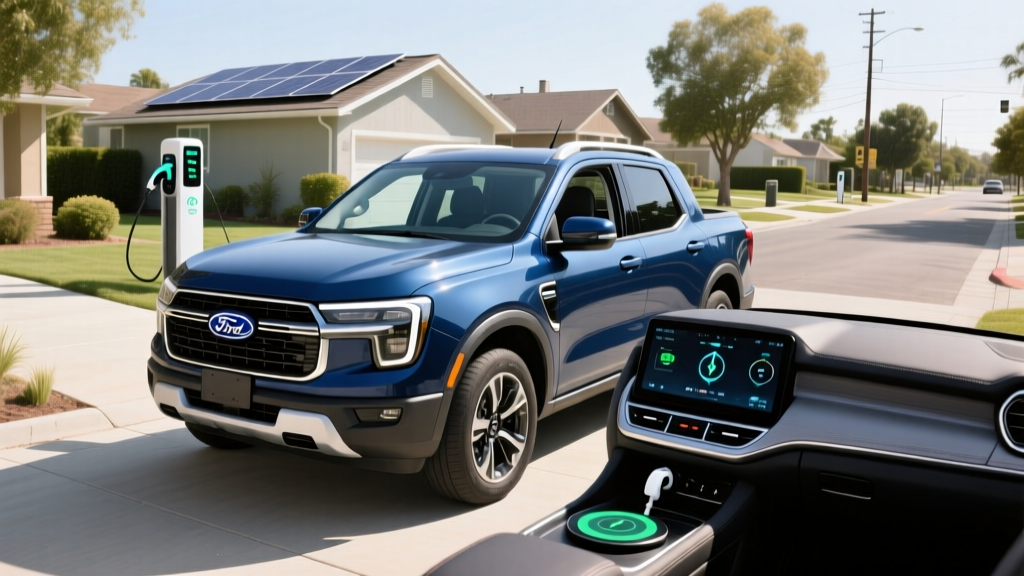
The 2025 Ford Maverick XL Hybrid occupies a rare position in the compact truck market: it's a hybrid that doesn't announce itself as one. There's no plug, no range-anxiety calculus, and no premium price tag for electrification. For buyers who want truck utility with sedan-like fuel bills, the base-trim Maverick XL Hybrid is one of the most practical vehicles Ford currently builds. Here's what the numbers actually look like once you get past the brochure.
HEV vs. PHEV: What the Maverick Hybrid Actually Is
A common source of confusion in hybrid shopping is the difference between a conventional hybrid (HEV) and a plug-in hybrid (PHEV). The 2025 Ford Maverick Hybrid is an HEV. That distinction matters for your daily routine and your wallet.
| Feature | HEV (Maverick Hybrid) | PHEV (e.g., Toyota RAV4 Prime) |
|---|---|---|
| Plug-in charging? | No — self-charging via engine and regen | Yes — plug in for electric-only miles |
| Electric-only range | ~1 mile at low speed | 25–42 miles typical |
| Battery size | ~1.1 kWh (small buffer) | 13–18 kWh usable |
| Federal tax credit (§30D) | Not eligible | Up to $7,500 if requirements met |
| Price premium over gas | ~$1,000–$1,500 | ~$5,000–$8,000 |
The Maverick's hybrid system captures energy during braking and deceleration to recharge its small lithium-ion battery pack. You never plug it in. The engine and motor work in tandem — sometimes the truck drives on electric power alone at very low speeds (parking lots, stop-and-go creep), but the gasoline engine is always available and does the majority of the work.
Fuel Economy: EPA Ratings vs. Real-World MPG
The EPA rates the 2025 Ford Maverick Hybrid (FWD) at 42 MPG city / 33 highway / 37 combined. These figures come from fueleconomy.gov, the official DOE/EPA source.
| Driving Cycle | EPA MPG | Real-World Expectation |
|---|---|---|
| City | 42 MPG | 38–45 MPG (hybrids often exceed EPA in city) |
| Highway | 33 MPG | 30–35 MPG (70+ mph sustained) |
| Combined | 37 MPG | 34–40 MPG |
Why hybrids often beat EPA city estimates: Hybrids recapture braking energy that gas vehicles waste as heat. The more stop-and-go traffic you encounter, the more the regenerative braking system feeds energy back into the battery, enabling more electric assist. In contrast, sustained highway driving above 70 MPH relies predominantly on the gasoline engine, where the hybrid advantage narrows. Expect highway fuel economy closer to 30–33 MPG at 75 MPH, especially with a loaded bed or towing.
Cold-weather note: In temperatures below freezing, expect a 5–10% fuel-economy reduction. The engine runs more frequently to maintain cabin heat and battery temperature, reducing electric-motor assist time. This is less dramatic than the 20–30% range loss a full EV experiences in cold weather, but it's measurable.
Powertrain and Performance Specs
| Specification | Value |
|---|---|
| Engine | 2.5L Atkinson-cycle inline-4 |
| Electric Motor | Permanent-magnet AC synchronous |
| Combined Horsepower | 191 hp |
| Transmission | eCVT (planetary gearset, not belt-driven) |
| Drivetrain | FWD (hybrid); AWD available (2025+) |
| 0–60 MPH | ~8.5 seconds |
| Max Towing (hybrid) | 2,000 lbs |
| Max Payload | 1,500 lbs |
| Fuel Tank | 16.5 gallons |
| Total Driving Range | ~610 miles (EPA combined) |
| Battery Capacity | ~1.1 kWh (lithium-ion) |
| Base MSRP (XL Hybrid) | $27,995 (incl. destination) |
The eCVT in the Maverick Hybrid is not a traditional belt-and-pulley CVT. Ford uses a planetary gearset that seamlessly blends engine and motor power. This design is shared with Toyota's hybrid synergy drive architecture and has a long track record for durability — there are no belts to wear or pulleys to fail.
AWD availability: Starting with the 2025 model year, Ford added an AWD option for the Maverick Hybrid, a significant expansion from prior FWD-only availability. AWD adds a rear-axle electric motor and reduces EPA fuel economy slightly (expect ~38 city / 31 highway). This opens the hybrid to buyers in snow-belt states who previously had to choose between the hybrid's efficiency and AWD traction.
Pricing, Trims, and Tax Credit Eligibility
The 2025 Maverick Hybrid is available across multiple trims. The XL is the entry point:
- XL Hybrid (FWD): $27,995 MSRP (incl. $1,495 destination)
- XLT Hybrid: ~$30,000–$32,000 depending on options
- Lariat Hybrid: ~$34,000–$36,000
- Tremor Hybrid (AWD): ~$38,000+
Even without the federal credit, the Maverick Hybrid's fuel savings close the gap quickly. At 37 MPG combined versus a comparable gas truck at 23 MPG combined, and gas at $3.30/gallon, the hybrid saves roughly $1,100–$1,300 per year in fuel for a driver covering 15,000 miles annually. The hybrid's ~$1,000 price premium over the gas-only Maverick XL pays for itself in under a year.
Battery Warranty, Reliability, and Replacement Cost
Reliability track record: Ford's 2.5L hybrid powertrain, shared with the Escape Hybrid and used in prior model years of the Maverick, has accumulated significant real-world miles. The eCVT planetary gearset is mechanically simple compared to traditional automatic transmissions, with fewer wear items. The hybrid battery is a relatively small ~1.1 kWh pack that operates within a narrow state-of-charge window (roughly 40–80%), which dramatically reduces degradation compared to the deep cycles a full EV battery endures.
Battery replacement cost: If the hybrid battery fails outside warranty, replacement costs typically range from $2,500 to $4,000 including parts and labor for a pack of this size. However, out-of-warranty hybrid battery failures remain uncommon for vehicles within their first 150,000 miles. The small battery in the Maverick Hybrid faces far less stress than the 60–100 kWh packs in full EVs, which is why failures are rare and costs are manageable.
Other hybrid components: The electric motor, inverter, and eCVT are also covered under the hybrid warranty. The regenerative braking system reduces wear on the conventional brake pads — many hybrid owners report original brake pads lasting 80,000+ miles because the electric motor handles much of the deceleration.
Who Should Choose the Maverick Hybrid vs. a Full EV or Gas Truck
Choose the Maverick Hybrid If:
- You want truck utility (bed, 1,500-lb payload) with car-like fuel costs
- You don't have access to home charging or live in an apartment
- You regularly drive in stop-and-go city traffic where hybrid efficiency peaks
- You want a low purchase price under $30,000 with no charging infrastructure investment
- You take frequent road trips and don't want to plan around charging stations
- You want AWD (now available with the hybrid) for moderate snow and rain
Consider a Full EV Instead If:
- You have reliable Level 2 home charging and a predictable daily commute under 250 miles
- You want to eliminate gasoline costs entirely and reduce tailpipe emissions to zero
- You qualify for the $7,500 federal tax credit, narrowing the price gap with hybrids
- You want instant torque, one-pedal driving, and near-silent operation
- You rarely need a truck bed and could use an electric SUV or sedan instead
The Maverick Hybrid makes the most sense for buyers who need a truck bed but drive primarily in urban or suburban environments. It's the rare vehicle that delivers genuine fuel savings without requiring any behavioral change — no plugging in, no range planning, no charging-app management. For buyers who already have home charging and don't need a bed, a full EV like the Hyundai Ioniq 5 or Tesla Model Y delivers lower per-mile energy costs and qualifies for federal incentives. But if your lifestyle demands a truck and you can't charge at home, the Maverick Hybrid is the most efficient option in its class by a wide margin.
Real-World Ownership Costs: 5-Year Estimate
| Cost Category | Maverick Hybrid (37 MPG) | Compact Gas Truck (23 MPG) |
|---|---|---|
| Fuel (at $3.30/gal avg) | $6,689 | $10,761 |
| Estimated Maintenance | $2,200 | $2,800 |
| Purchase Price (base) | $27,995 | $26,995 |
| Total (purchase + fuel + maint.) | $36,884 | $40,556 |
The hybrid saves approximately $3,600–$4,000 over five years despite the slightly higher purchase price, driven almost entirely by fuel savings. Maintenance costs are marginally lower because regenerative braking extends brake-pad life and the eCVT has no transmission fluid changes on the same interval as a traditional automatic.
Frequently Asked Questions
How many MPG does the 2025 Ford Maverick Hybrid actually get?
The EPA rates it at 42 city / 33 highway / 37 combined for FWD models. In real-world mixed driving, expect 34–40 MPG combined. City driving with frequent stops often yields 40+ MPG thanks to regenerative braking. Highway cruising at 75+ MPH will return closer to 30–33 MPG.
Is the Maverick Hybrid a plug-in? Do I need to charge it?
No. The Maverick Hybrid is a conventional HEV. It charges its own small battery through regenerative braking and the gasoline engine. You never plug it in. If you want plug-in capability, you need a PHEV like the Ford Escape PHEV or Toyota RAV4 Prime.
Does the 2025 Maverick Hybrid qualify for any federal tax credit?
No. The federal §30D clean vehicle credit applies only to plug-in electric vehicles (BEVs and PHEVs) meeting specific battery-sourcing, MSRP, and buyer-income requirements. Conventional hybrids like the Maverick Hybrid do not qualify. Some states may offer separate hybrid incentives — check your state energy office.
Can the Maverick Hybrid tow, and does towing kill fuel economy?
The Maverick Hybrid is rated to tow up to 2,000 pounds (with the proper equipment). Towing any trailer will reduce fuel economy significantly — expect 20–25 MPG combined when towing near the max rating. For heavier towing needs (up to 4,000 lbs), the gas-only Maverick with the 2.0L EcoBoost and the 4K Tow package is required.
How long will the hybrid battery last?
Ford warrants the hybrid battery for 8 years / 100,000 miles (10 years / 150,000 miles in CARB states). Based on the track record of Ford's 2.5L hybrid system in the Escape Hybrid, these batteries routinely last well beyond the warranty period. The small 1.1 kWh pack operates in a shallow charge window, which minimizes cell degradation.
Is the hybrid slower than the gas Maverick?
The hybrid produces 191 hp combined and reaches 60 MPH in roughly 8.5 seconds. The gas-only 2.0L EcoBoost makes 250 hp and hits 60 in about 6.5 seconds. The gas model is noticeably quicker, but the hybrid provides adequate acceleration for daily driving and merging. The electric motor delivers instant low-end torque, which helps the hybrid feel responsive around town despite the lower peak horsepower.
Is AWD available with the Maverick Hybrid?
Yes, starting with the 2025 model year, Ford offers AWD on the Maverick Hybrid for the first time. AWD uses a rear-axle electric motor and reduces fuel economy by approximately 3–4 MPG combined compared to FWD. This is a significant upgrade for buyers in northern climates.