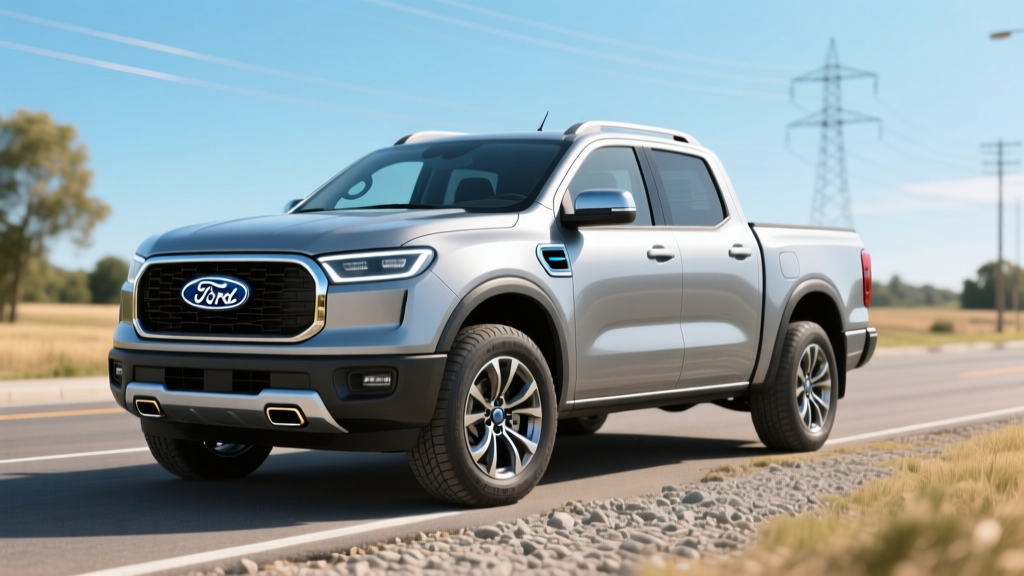
Quick Verdict: The Compact Hybrid Truck That Punches Above Its Weight
The 2025 Ford Maverick Hybrid remains one of the most fuel-efficient new vehicles you can buy that also happens to have a bed. With an EPA-estimated 42 MPG city and a starting price around $28,390, it occupies a niche no full-size truck can touch: genuine utility without the fuel-pump punishment. For 2025, Ford expanded all-wheel drive availability to the hybrid powertrain — addressing the single biggest complaint from snow-belt buyers since the Maverick's 2022 launch.
This is a conventional hybrid (HEV), not a plug-in. You never plug it in. The 1.1 kWh battery recharges through regenerative braking and the gasoline engine, making it dead-simple for apartment dwellers and street-parkers who lack charging access but still want to cut fuel costs dramatically versus a gas-only truck.
The Maverick Hybrid is a conventional hybrid (HEV). It cannot plug in, has no electric-only driving range, and carries a small 1.1 kWh battery. A plug-in hybrid (PHEV) like the Toyota RAV4 Prime offers 40+ miles of electric-only range but requires home charging access and costs significantly more. If you want EV-like commuting without plugging in, the Maverick HEV is the right fit. If you need electric-only miles, you'll need to look outside the compact truck segment entirely — no PHEV pickup is currently sold in the U.S. at this price point.
Fuel Economy: EPA Ratings vs Real-World MPG
| Configuration | City MPG | Highway MPG | Combined MPG |
|---|---|---|---|
| FWD Hybrid | 42 | 33 | 38 |
| AWD Hybrid | 40 | 34 | 37 |
Source: EPA / fueleconomy.gov
Hybrids thrive in stop-and-go city driving where regenerative braking recovers energy constantly. Expect the FWD hybrid to hit 40–44 MPG in urban commutes — many owners report exceeding the EPA city figure. Highway driving is a different story: at sustained 75+ MPH, the electric motor assists less and aerodynamic drag dominates. Plan for 30–33 MPG highway in real-world conditions. In cold weather (below 30°F), expect a 10–15% drop across the board as the engine runs more frequently for cabin heat and battery warming. A realistic mixed-driving annual average lands around 35–37 MPG for most owners.
Powertrain Specs: What's Under the Hood
| Specification | Value |
|---|---|
| Combined System Horsepower | 191 hp |
| Gasoline Engine | 2.5L Atkinson-cycle inline-4 (162 hp) |
| Electric Motor | Permanent-magnet synchronous (126 hp / 176 lb-ft) |
| Transmission | eCVT (power-split device, no fixed gears) |
| Hybrid Battery | 1.1 kWh lithium-ion (sealed, no plug-in) |
| Drivetrain Options | FWD standard; AWD available (new for 2025) |
| 0–60 MPH (est.) | ~8.5 seconds (FWD) |
| Max Towing Capacity | 2,000 lbs (hybrid — no tow package available) |
| Max Payload | ~1,500 lbs (FWD hybrid) |
The Maverick Hybrid uses Ford's fourth-generation hybrid system — the same architecture proven in the Escape Hybrid. The eCVT is not a belt-driven CVT like those found in some competitors; it's a planetary gearset that blends engine and motor power seamlessly. There are no rubber bands to snap, no shudder under load. It's one of the most reliable hybrid drivetrain designs on the market.
One critical limitation: the hybrid powertrain cannot be equipped with the 4K Tow Package. That 4,000-lb max tow rating is exclusive to the 2.0L EcoBoost gas engine. If you regularly tow a boat or camper exceeding 2,000 lbs, the hybrid is not the right configuration.
Pricing by Trim and Tax Credit Eligibility
| Trim | FWD MSRP | AWD MSRP |
|---|---|---|
| XL | $28,390 | $30,185 |
| XLT | $30,655 | $32,450 |
| Lariat | $35,390 | $37,185 |
| Lobo (performance) | N/A (EcoBoost only) | N/A |
Prices include destination charge. Source: Ford Media Center.
No. Under IRS §30D rules, the federal clean vehicle credit of up to $7,500 applies only to plug-in electric vehicles (BEVs and PHEVs) with a minimum battery capacity of 7 kWh. The Maverick Hybrid's 1.1 kWh battery disqualifies it entirely. This is true for all conventional hybrids regardless of manufacturer. No federal purchase incentive applies.
Some states offer their own hybrid incentives or HOV-lane access — check your state's energy office or DMV for current programs. Rules vary by jurisdiction and change frequently. For federal credit eligibility on plug-in vehicles, see the IRS §30D guidance.
Battery Longevity, Warranty, and Replacement Cost
Ford covers the Maverick Hybrid's high-voltage battery for 8 years or 100,000 miles (whichever comes first). In states that follow California Air Resources Board (CARB) emissions standards — including CA, NY, MA, WA, OR, and several others — the warranty extends to 10 years or 150,000 miles. This covers battery capacity loss below a defined threshold and any component failure.
The 1.1 kWh hybrid battery in the Maverick is small and lightly stressed compared to a full EV pack. It never cycles through deep charge/discharge ranges — it operates in a narrow state-of-charge window managed by the powertrain computer. This is why Toyota and Ford hybrid batteries routinely last 150,000–200,000+ miles without replacement.
If replacement is needed out of warranty, expect a cost in the $2,000–$3,500 range for the battery module, based on current Escape Hybrid parts pricing. Independent hybrid shops can often refurbish individual cells for significantly less. This is not the $15,000–$20,000 full-pack replacement scenario that EV buyers sometimes fear — the Maverick's hybrid system is modest in scale and well-proven.
Who Should Buy the Maverick Hybrid — and Who Shouldn't
✅ Choose the Maverick Hybrid If
- You commute in city/suburban traffic and want 40+ MPG
- You need a bed for weekend projects but don't tow heavy
- You lack home charging access (apartment, street parking)
- You want a low starting price with no plug-in complexity
- You want a compact footprint for urban maneuverability
❌ Look Elsewhere If
- You tow more than 2,000 lbs regularly (get the EcoBoost with 4K Tow)
- You need electric-only commuting (consider a PHEV SUV like the RAV4 Prime)
- You want full EV running costs (consider the Ford F-150 Lightning or Chevy Silverado EV)
- You need a full-size bed or crew-cab rear legroom
- You want a federal tax credit (only BEVs/PHEVs qualify under §30D)
Hybrid vs PHEV vs EV — Which Fits Your Truck Needs?
| Factor | HEV (Maverick Hybrid) | PHEV (e.g., RAV4 Prime) | BEV (e.g., F-150 Lightning) |
|---|---|---|---|
| Plug-in Required? | No | Yes (for EV miles) | Yes |
| Electric-Only Range | 0 mi | 30–42 mi | 230–320 mi |
| Home Charger Needed? | No | Recommended | Essential |
| Federal Tax Credit | $0 | Up to $7,500* | Up to $7,500* |
| Fuel Cost (est. $/mi) | ~$0.09 | ~$0.04–0.09 | ~$0.03–0.05 |
| Starting Price | ~$28,400 | ~$44,000+ | ~$55,000+ |
*§30D credit subject to MSRP caps, buyer income limits, and battery sourcing requirements. Verify current eligibility at IRS.gov.
5-Year Cost of Ownership: Maverick Hybrid vs Gas Maverick
| Cost Category | Maverick Hybrid FWD | Maverick EcoBoost FWD |
|---|---|---|
| Purchase Price (XL trim) | $28,390 | $28,390 |
| Fuel (75K mi, $3.40/gal avg) | ~$6,700 | ~$9,500 |
| Maintenance (est.) | ~$2,800 | ~$3,200 |
| Insurance (est. 5-yr) | ~$7,500 | ~$7,500 |
| Total (approx.) | ~$45,390 | ~$48,590 |
| 5-Year Fuel Savings | ~$2,800 savings (Hybrid) | |
Assumes 15,000 mi/yr, 55% city / 45% highway driving mix, $3.40/gal regular unleaded. Actual costs vary by region, driving style, and fuel prices. Hybrid maintenance savings come from reduced brake wear (regen braking) and less engine idling.
Frequently Asked Questions
How many MPG does the 2025 Ford Maverick Hybrid actually get?
The EPA rates the FWD hybrid at 42 city / 33 highway / 38 combined MPG. In real-world city driving, many owners report 40–44 MPG thanks to regenerative braking. Highway MPG drops to 30–33 at sustained speeds above 70 MPH. The AWD hybrid is rated at 40/34/37 MPG. Cold weather reduces these figures by roughly 10–15%.
Does the Maverick Hybrid need to be plugged in?
No. The Maverick Hybrid is a conventional HEV. Its 1.1 kWh battery charges exclusively through regenerative braking and the gasoline engine. There is no plug, no charging cable, and no home charger required. You fuel it at a gas station exactly like a conventional truck.
Can I tow with the Maverick Hybrid?
Yes, but with limits. The hybrid is rated for a maximum of 2,000 lbs — sufficient for a small utility trailer, a couple of dirt bikes, or a light pop-up camper. The 4,000-lb tow rating available on the Maverick requires the 2.0L EcoBoost engine with the 4K Tow Package, which is not available on the hybrid.
Is the Maverick Hybrid reliable, and what does battery replacement cost?
Ford's power-split hybrid system is derived from the Escape Hybrid, which has accumulated years of fleet and consumer reliability data. The hybrid battery is covered for 8 years/100,000 miles (10 years/150,000 miles in CARB states). Out-of-warranty replacement runs approximately $2,000–$3,500, and refurbished options may cost less. Deep-cycle degradation is minimal because the battery operates in a narrow state-of-charge window.
Does the 2025 Maverick Hybrid qualify for any federal tax credit?
No. The IRS §30D clean vehicle credit applies only to plug-in vehicles (BEVs and PHEVs) with battery capacities of at least 7 kWh. The Maverick Hybrid's 1.1 kWh battery does not meet this threshold. Some state or local utility programs may offer small incentives for hybrid purchases — check your jurisdiction. For current federal credit rules, consult the IRS §30D page or a tax professional.
Is AWD available on the Maverick Hybrid?
Yes — AWD became available on the Maverick Hybrid for the 2025 model year. Previously, all-wheel drive was limited to the EcoBoost gas engine. The AWD hybrid carries a small MPG penalty (37 combined vs 38 combined) and adds approximately $1,795 to the MSRP depending on trim.