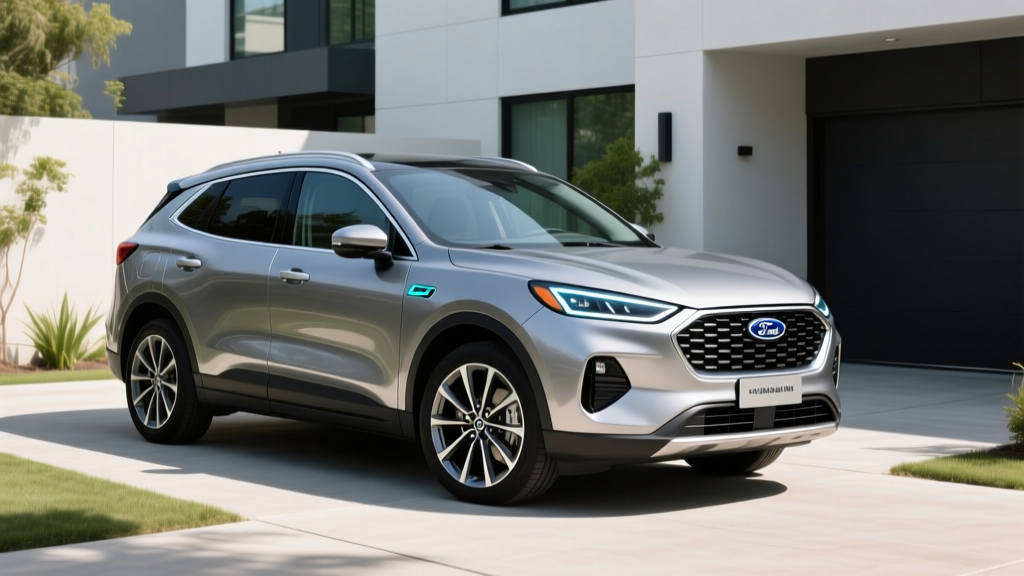
The 2025 Ford Escape Platinum 2.5L Hybrid CVT SUV sits at the top of Ford's compact hybrid crossover lineup, pairing a 2.5-liter Atkinson-cycle four-cylinder with an electric motor for a combined 210 horsepower. Buyers searching for the Platinum trim want premium features without stepping into a fully electric vehicle—and the Escape Hybrid delivers strong city fuel economy, standard all-wheel drive, and a proven hybrid powertrain that requires no plug-in charging or behavioral change.
This guide breaks down every spec that matters: real-world MPG versus the EPA sticker, how the hybrid system actually works, battery longevity and warranty coverage, total pricing for the Platinum trim, and whether this HEV makes more sense than a PHEV or full BEV for your daily driving.
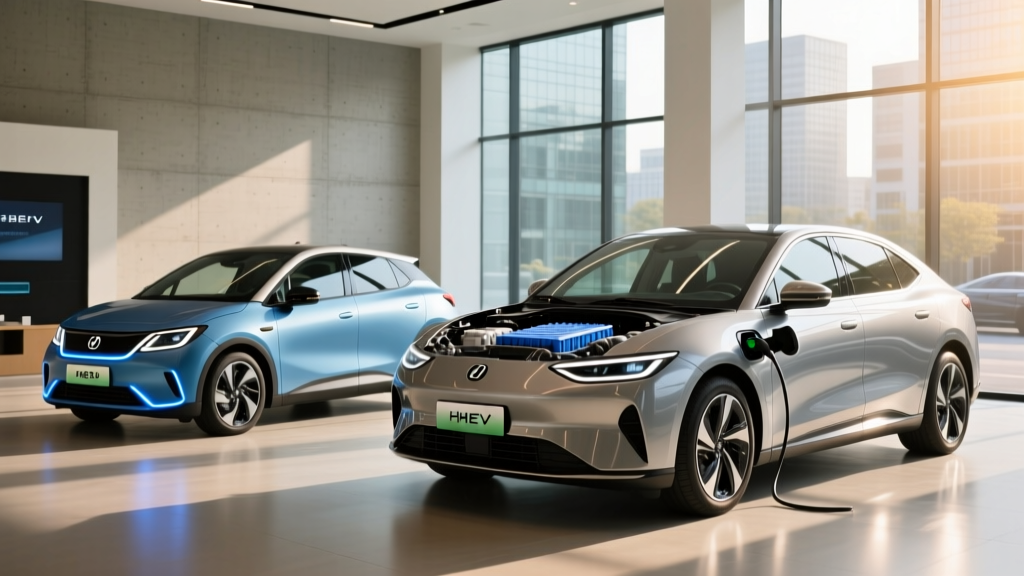
HEV vs PHEV: What the Escape Hybrid Actually Is
The 2025 Ford Escape Hybrid is a conventional hybrid (HEV). It does not plug in. It recovers energy through regenerative braking and the gasoline engine to charge its relatively small battery pack. You fuel it like a normal car at any gas station.
The Ford Escape PHEV (plug-in hybrid) is a separate model. It has a larger battery (14.4 kWh usable), plugs into a wall outlet or Level 2 charger, and delivers an EPA-rated 37 miles of electric-only driving before the gas engine kicks in. The PHEV is available in select trims but not the Platinum trim for 2025.
This distinction matters because buyers sometimes assume "hybrid" means plug-in. The Escape Platinum Hybrid you're researching here never needs a charger. If you want electric-only commuting capability, you'd need to look at the Escape PHEV (SEL or Premium trims) or a full EV like the Ford Mustang Mach-E.
Fuel Economy: EPA Ratings and Real-World MPG
The 2025 Ford Escape Hybrid with standard all-wheel drive carries the following EPA fuel economy ratings:
| Driving Cycle | EPA Rating | Real-World Expectation |
|---|---|---|
| City | 42 MPG | 38–44 MPG (hybrids often beat EPA in stop-and-go) |
| Highway | 36 MPG | 32–35 MPG (sustained 70+ mph reduces regen benefit) |
| Combined | 39 MPG | 35–40 MPG depending on driving mix |
Like most Toyota- and Ford-derived hybrid systems, the Escape Hybrid uses the electric motor heavily at low speeds, where gasoline engines are least efficient. This is why the city rating (42 MPG) significantly exceeds the highway rating (36 MPG)—the opposite of a conventional gas car.
Real-world factors that shift these numbers:
- Cold weather: Expect a 5–10% MPG drop in winter. The engine runs more often to provide cabin heat and warm the catalytic converter.
- Hilly terrain: Regenerative braking on descents can partially offset the climb penalty, but net efficiency drops on sustained grades.
- Driving style: Aggressive acceleration forces the 2.5L engine to carry the full load, negating the electric motor's efficiency advantage.
Over a 15,000-mile year at the combined 39 MPG rating and $3.40/gallon regular unleaded, annual fuel cost lands around $1,308—roughly $600–$800 less than a comparable non-hybrid compact SUV averaging 26 MPG combined.
Powertrain Specs: 210 HP Through an eCVT
| Specification | 2025 Escape Platinum Hybrid AWD |
|---|---|
| Engine | 2.5L Atkinson-cycle inline-4 |
| Engine Output | 163 HP / 155 lb-ft torque |
| Electric Motor | Permanent-magnet synchronous (integrated in transaxle) |
| Combined System Output | 210 HP |
| Transmission | eCVT (planetary gearset, not a belt-driven CVT) |
| Drivetrain | Standard AWD (rear electric motor drives rear axle) |
| 0–60 MPH | ~7.5 seconds (estimated) |
| Towing Capacity | 1,500 lbs (when properly equipped) |
| Fuel Tank | 11.1 gallons |
| Total Driving Range | ~433 miles (EPA combined) |
Ford's hybrid system uses a planetary gearset to blend engine and motor power—this is fundamentally different from the rubber-belt CVTs found in some competitors. There's no "rubber-band" sensation under acceleration. The eCVT provides smooth, stepless ratio changes through mechanical gear blending, which is both more durable and more responsive than traditional CVT designs.
The AWD system is worth noting: the rear axle is driven by a separate electric motor, not a mechanical driveshaft from the engine. This means the rear wheels can engage instantly when slip is detected, and the system can operate in front-wheel-drive mode under light loads to save fuel.
Pricing: What the Platinum Trim Costs in 2025
The 2025 Ford Escape Platinum Hybrid AWD starts at an MSRP of approximately $40,500 (including destination charge). Key Platinum-trim inclusions:
- Leather-trimmed sport seats with heated and ventilated front rows
- 14.4-inch SYNC 4 touchscreen with wireless Apple CarPlay and Android Auto
- B&O 10-speaker premium audio system
- Ford Co-Pilot360 Assist+ (adaptive cruise, evasive steering, intersection assist)
- Hands-free liftgate, wireless charging pad, ambient lighting
- 19-inch machined aluminum wheels
Common option packages (panoramic sunroof, Premium Technology package with head-up display) can push the out-the-door price to $44,000–$46,000.
Tax Credit Eligibility
The 2025 Ford Escape Hybrid (HEV) does not qualify for the federal §30D clean vehicle tax credit. That credit, worth up to $7,500, applies only to plug-in electric vehicles (BEVs and PHEVs) meeting battery sourcing, MSRP, and buyer income requirements under current IRS rules.
The Escape PHEV may qualify for a partial or full credit depending on battery component and critical mineral sourcing—check the latest IRS qualified vehicle list before purchasing. For the conventional hybrid Platinum trim you're researching, there is no federal purchase incentive. Some states or local utilities offer small rebates for hybrid purchases, but these vary widely by jurisdiction.
Battery Longevity, Warranty, and Replacement Cost
Hybrid Battery Warranty: Ford covers the Escape Hybrid's high-voltage battery for 8 years or 100,000 miles (whichever comes first). In states that follow California Air Resources Board (CARB) emissions standards—currently 16 states plus D.C.—that coverage extends to 10 years or 150,000 miles.
Warranty Threshold: Ford warrants the battery against capacity loss below 70% of original capacity during the coverage period.
The Escape Hybrid uses a lithium-ion battery pack (approximately 1.1 kWh usable capacity). Because this is a conventional hybrid, the battery is relatively small and operates within a narrow state-of-charge window—typically between 40% and 80%. This shallow cycling is one of the main reasons hybrid batteries last so long compared to EV batteries that regularly cycle from 10% to 90%.
Real-world durability data: Ford's 2.5L hybrid powertrain, shared in various forms with the Ford Maverick Hybrid and Lincoln Corsair Hybrid, has accumulated significant fleet mileage since its 2020 introduction. Early failure rates have been low. Taxi and ride-share fleets using this architecture have reported 150,000+ miles on original batteries without capacity-related issues.
Replacement cost if out of warranty: A replacement hybrid battery pack for the Escape Hybrid currently costs approximately $3,000–$4,500 (parts only), with labor adding $500–$900. Total replacement runs $3,500–$5,400. For context, this is significantly less than an EV traction battery replacement ($8,000–$20,000+) because the hybrid pack is much smaller.
Reliability and Safety Overview
The 2025 Escape carries a NHTSA 5-Star Overall Safety Rating. Standard driver-assistance features on the Platinum trim include:
- Pre-Collision Assist with Automatic Emergency Braking
- Blind Spot Information System (BLIS) with Cross-Traffic Alert
- Lane-Keeping System with lane-centering
- Adaptive Cruise Control with Stop-and-Go and Lane Centering
- Evasive Steering Assist
Important: Ford Co-Pilot360 Assist+ is a SAE Level 2 driver-assistance system. It provides combined steering and speed assistance, but the driver must remain fully engaged, hands on or near the wheel, at all times. This is not autonomous or self-driving capability.
On reliability, J.D. Power and Consumer Reports have rated recent Escape Hybrid model years as average to slightly above average for the compact SUV segment. The eCVT planetary gearset has fewer wear components than a traditional automatic transmission, and regenerative braking reduces brake pad wear significantly—many owners report 60,000+ miles on original brake pads.
Escape Hybrid vs PHEV vs Full EV: Which Fits You?
Choose the Escape HEV (Platinum Hybrid) If:
- You have no access to home or workplace charging
- You want zero behavioral change—just fill up at gas stations
- Your driving is a mix of city and highway with no predictable short commute
- You want lower upfront cost than a PHEV or EV (~$5,000–$12,000 less)
- You frequently take long road trips and don't want to plan charging stops
Choose the Escape PHEV If:
- You can install a Level 2 charger at home
- Your daily commute is under 37 miles round-trip (electric-only range)
- You want to drive mostly on electricity but keep gas for road trips
- You may qualify for the federal tax credit (up to $7,500 depending on sourcing)
- You're willing to pay ~$3,000–$5,000 more upfront for the PHEV powertrain
When a full EV makes more sense: If your daily driving is predictable, you have reliable home charging, and you want to eliminate gasoline entirely, a full EV like the Hyundai Ioniq 5, Tesla Model Y, or Ford Mustang Mach-E will deliver lower per-mile fuel costs (typically $0.04–$0.06/mile on electricity vs $0.09–$0.10/mile on gas at 39 MPG) and lower maintenance costs. The trade-off is higher purchase price, charging planning on road trips, and cold-weather range reduction of 20–30%.
Ownership Costs: 5-Year Projection
| Cost Category | Escape Hybrid AWD (5 yr / 75,000 mi) | Comparable Gas-Only SUV (26 MPG) |
|---|---|---|
| Fuel | ~$6,540 (at $3.40/gal, 39 MPG) | ~$9,810 (at $3.40/gal, 26 MPG) |
| Maintenance | ~$2,800 (less brake wear, no transmission fluid changes) | ~$3,500 |
| Insurance (avg) | ~$7,500 | ~$7,200 |
| Depreciation (est.) | ~$16,000 | ~$15,000 |
| Total (approx.) | ~$32,840 | ~$35,510 |
The hybrid saves approximately $2,500–$3,000 over five years in fuel and maintenance, partially offset by slightly higher insurance premiums and depreciation. The real savings advantage grows as you keep the vehicle longer and accumulate more miles.
Frequently Asked Questions
How many MPG does the 2025 Ford Escape Platinum Hybrid get?
The EPA rates it at 42 MPG city, 36 MPG highway, and 39 MPG combined with standard AWD. Real-world results vary: city drivers often see 40–44 MPG thanks to heavy electric motor use at low speeds, while sustained highway driving at 75+ MPH typically yields 32–35 MPG.
Does the Escape Hybrid need to be plugged in?
No. The Escape Hybrid (HEV) is a self-charging conventional hybrid. The battery charges through regenerative braking and the gasoline engine. You never plug it in. Only the Escape PHEV (a different model) requires plug-in charging to access its electric-only range.
How far can the Escape PHEV go on electric only?
The Ford Escape PHEV (not available in Platinum trim) delivers an EPA-rated 37 miles of electric-only driving on a full charge. After that, it operates as a conventional hybrid. Total combined range (electric + gas) exceeds 500 miles. The PHEV uses a 14.4 kWh battery and charges in approximately 3.5 hours on a 240V Level 2 outlet. It does not support DC fast charging.
Is the Escape Hybrid reliable, and what does a battery replacement cost?
The 2.5L hybrid powertrain has demonstrated solid reliability since its 2020 introduction, with the eCVT design proving more durable than traditional automatics. The hybrid battery is warrantied for 8 years/100,000 miles (10 years/150,000 miles in CARB states). Out-of-warranty replacement costs approximately $3,500–$5,400 including labor.
Does the 2025 Escape Hybrid qualify for any tax credit?
The conventional Escape Hybrid (HEV) does not qualify for the federal §30D clean vehicle tax credit, which applies only to plug-in vehicles. The Escape PHEV may qualify depending on battery sourcing and your income level—consult the current IRS qualified vehicle list before purchasing. Some state or utility rebates may apply to hybrids; check your local programs.
How does the eCVT differ from a regular CVT?
Ford's eCVT uses a planetary gearset to blend engine and electric motor power—it has no rubber belt, no cones, and no friction-based variable ratio mechanism. This makes it mechanically simpler, more durable, and more responsive than belt-type CVTs. There is no "drone" or "rubber-band" effect under acceleration.
Can I tow with the Escape Hybrid?
Yes, with a maximum towing capacity of 1,500 pounds when properly equipped with the factory tow package. This is sufficient for a small utility trailer or a pair of jet skis but not for larger boat or camper trailers.