Quick Verdict: Efficiency Without Complication
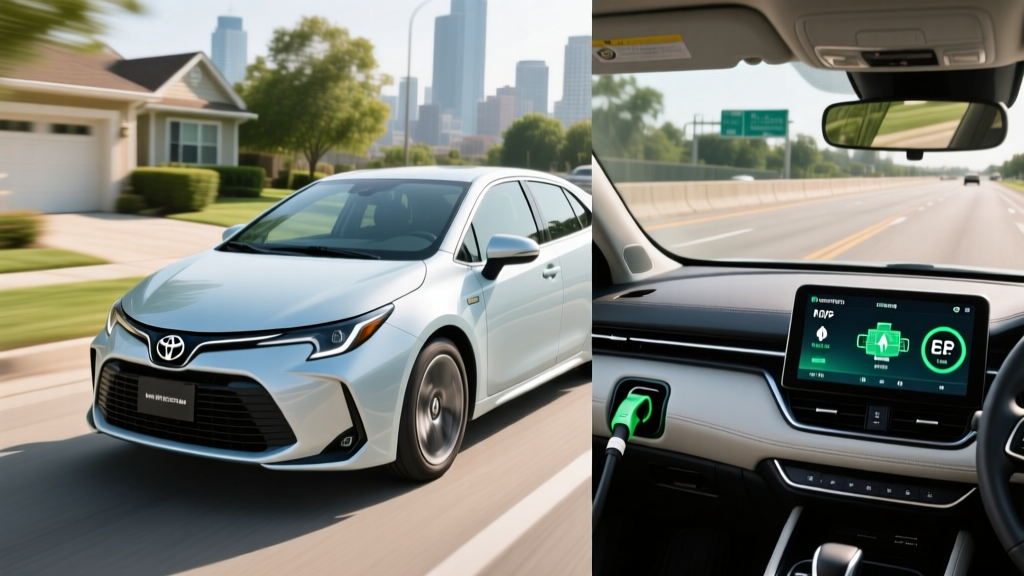
The 2025 Toyota Corolla Hybrid remains one of the most accessible high-MPG vehicles on the market, returning an EPA-estimated 50 MPG combined in front-wheel-drive form. Unlike plug-in hybrids or full battery-electric vehicles, it requires no charging infrastructure, no range planning, and no lifestyle adjustment — just fuel it like any conventional car and let Toyota's fifth-generation hybrid system handle the rest. For buyers weighing fuel savings against the complexity of electrification, the Corolla Hybrid occupies a pragmatic middle ground.
2025 Corolla Hybrid MPG: EPA Numbers and Real-World Results
Fuel economy varies by trim and drivetrain. The LE FWD trim maximizes efficiency, while the SE and XLE trims with available electronic all-wheel drive (AWD) trade a few MPG for added traction.
| Trim | Drivetrain | City MPG | Highway MPG | Combined MPG |
|---|---|---|---|---|
| LE | FWD | 53 | 46 | 50 |
| LE | AWD | 51 | 44 | 48 |
| SE | AWD | 50 | 43 | 47 |
| XLE | AWD | 50 | 43 | 47 |
Hybrid (HEV) vs. Plug-In Hybrid (PHEV): What's the Difference?
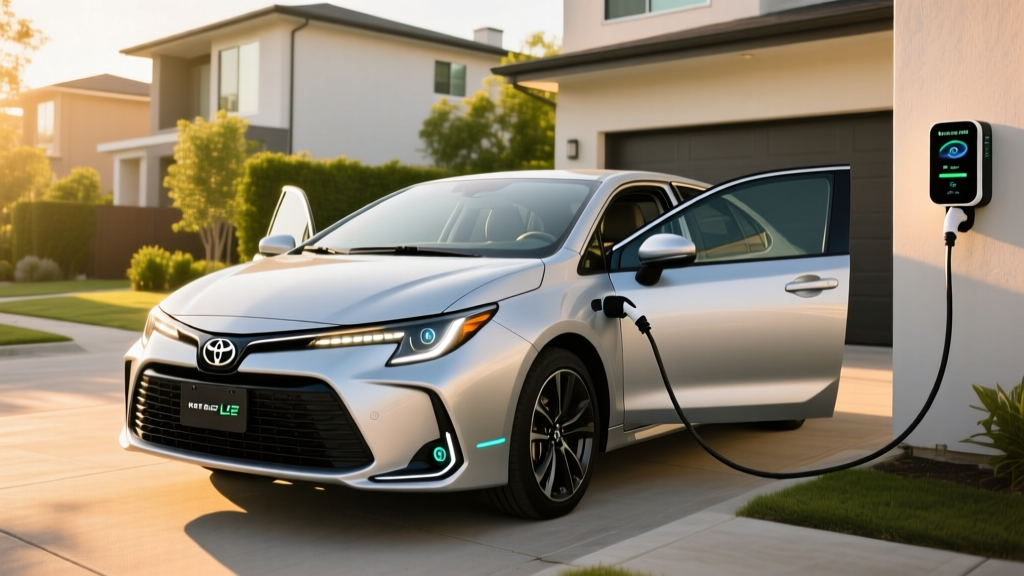
The 2025 Corolla Hybrid is a conventional hybrid electric vehicle (HEV), not a plug-in hybrid. This is a critical distinction that confuses many shoppers.
| Feature | Corolla Hybrid (HEV) | Plug-In Hybrid (PHEV) Example |
|---|---|---|
| Plugs in to charge? | No — self-charging via regenerative braking and engine | Yes — charges from a wall outlet or public charger |
| Electric-only driving | Very short distances at low speed (under 1 mile) | 25–45 miles typical on battery alone |
| Battery size | ~1.0 kWh (small buffer) | 13–18 kWh (larger pack) |
| Federal tax credit | Not eligible | Up to $7,500 if eligible (varies by model) |
| Home charging required? | No | Recommended for full benefit |
Toyota does not offer a Corolla Plug-In Hybrid in the U.S. market. If you want Toyota plug-in capability with similar size and price, the Toyota Prius Prime offers 44 miles of electric-only range and qualifies for a partial federal tax credit. The Corolla Hybrid is for buyers who want maximum simplicity — no charging cables, no planning, no range anxiety.
Powertrain and Performance Specs
The 2025 Corolla Hybrid pairs a 1.8-liter four-cylinder Atkinson-cycle engine with Toyota's latest hybrid transaxle. FWD models use a single front motor; AWD models add a second, independent rear motor for electronic all-wheel drive without a mechanical driveshaft.
| Specification | Detail |
|---|---|
| Engine | 1.8L 4-cylinder Atkinson cycle |
| Combined System Horsepower | 138 hp |
| Front Motor Output | 70 kW (94 hp) |
| Rear Motor (AWD only) | 30 kW (40 hp) |
| Hybrid Battery | Lithium-ion, ~1.0 kWh (nominal) |
| Transmission | eCVT (planetary gearset, no belts) |
| 0–60 mph | ~9.1 seconds (FWD) |
| Cargo Volume | 13.1 cu ft (trunk) |
| Fuel Tank | 11.4 gallons |
| Total Driving Range | ~570 miles (FWD LE) |
Acceleration is adequate for commuting and merging but not quick. The eCVT delivers smooth, linear power without the rubber-band effect of older belt-driven CVTs. The AWD system engages the rear motor automatically during acceleration from a stop, on slippery surfaces, or when the front wheels lose traction — it's transparent in operation.
Pricing and Tax Credit Eligibility
| Trim | MSRP (2025) |
|---|---|
| LE (FWD) | $23,500 |
| LE (AWD) | $24,900 |
| SE (AWD) | $27,000 |
| XLE (AWD) | $28,400 |
Without a federal credit, the Corolla Hybrid's value proposition rests on low fuel costs and strong resale value rather than purchase-price subsidies. At 50 MPG combined and $3.25/gallon regular unleaded, annual fuel cost runs roughly $975 for a 15,000-mile year — compared to approximately $1,625 for a comparable 30 MPG gas-only compact sedan.
Battery Warranty, Reliability, and Replacement Cost
Toyota's hybrid systems have a strong long-term reliability record. The Prius, which shares fundamental architecture with the Corolla Hybrid, has demonstrated hybrid battery longevity well beyond 200,000 miles in fleet and taxi service. The Corolla Hybrid's lithium-ion pack is smaller and less stressed than a PHEV or BEV battery, reducing thermal degradation risk.
Replacement cost if out of warranty: A new OEM hybrid battery for the Corolla Hybrid typically runs $2,000–$3,500 installed at a Toyota dealer. Refurbished or reconditioned units are available from $1,000–$1,800. Given the 10-year warranty and the battery's modest size, unplanned replacement is uncommon within the vehicle's typical ownership lifecycle.
Corolla Hybrid vs. Full EV vs. Gas Sedan: Which Fits You?
Choose the Corolla Hybrid if:
- You lack access to home or workplace charging
- You want 500+ miles of total range without planning stops
- Your budget is under $30,000 and you want minimal maintenance
- You drive a mix of city and highway and want strong city MPG
- You live in a region with extreme cold that significantly reduces EV range
Choose a Plug-In Hybrid (e.g., Prius Prime) if:
- You can charge at home and want 40+ miles of daily electric-only commuting
- You want to reduce gasoline use substantially but still take long road trips
- You may qualify for a federal or state PHEV tax credit
Choose a Full EV (e.g., Tesla Model 3, Hyundai Ioniq 6) if:
- You have reliable Level 2 home charging
- You want the lowest per-mile energy cost and zero tailpipe emissions
- You qualify for the $7,500 federal tax credit, narrowing the price gap
- Most of your driving is under 250 miles per trip
Frequently Asked Questions
How many MPG does the 2025 Corolla Hybrid actually get?
The EPA rates the Corolla Hybrid LE FWD at 53 city / 46 highway / 50 combined MPG. In real-world mixed driving, most owners report 47–52 MPG. City driving favors the hybrid system; sustained highway speeds above 70 mph reduce efficiency to the low-to-mid 40s.
Do I need to plug in the Corolla Hybrid?
No. The 2025 Corolla Hybrid is a conventional (HEV) hybrid. Its small lithium-ion battery recharges automatically through regenerative braking and the gasoline engine. There is no plug, no charging cable, and no home charging setup required.
Is the Corolla Hybrid AWD system always on?
The electronic AWD is on-demand. The rear electric motor engages automatically during hard acceleration, on wet or slippery roads, or when front-wheel slip is detected. During steady cruising, the car operates in FWD to maximize fuel economy. You'll see 48 MPG combined with AWD versus 50 with FWD — a small trade-off for added confidence.
How long will the Corolla Hybrid battery last?
Toyota warranties the hybrid battery for 10 years or 150,000 miles. Based on long-term data from Toyota's hybrid fleet (Prius, Camry Hybrid), these batteries routinely last 150,000–200,000+ miles before significant capacity loss. The small battery in a conventional hybrid undergoes shallower charge cycles than a PHEV or BEV, contributing to longevity.
Does the 2025 Corolla Hybrid qualify for any tax credits?
It does not qualify for the federal §30D Clean Vehicle Credit, which is reserved for plug-in vehicles. Some states or municipalities may offer efficiency rebates or HOV-lane access for hybrids. Check the Alternative Fuels Data Center for state-specific incentives.
How does the Corolla Hybrid compare to the Prius?
The 2025 Prius offers up to 57 MPG combined (LE FWD), a more powerful 196-hp powertrain, and a more aerodynamic liftback body. The Prius starts around $28,350 — roughly $4,850 more than the Corolla Hybrid LE. If maximum efficiency and performance matter, the Prius wins. If budget and trunk-based practicality are priorities, the Corolla Hybrid delivers 90% of the Prius's efficiency at a lower price.
What is the maintenance schedule for the Corolla Hybrid?
Toyota recommends oil changes every 10,000 miles or 12 months using 0W-16 synthetic oil. The hybrid system requires no separate maintenance — there are no hybrid-specific fluids to change under normal conditions. Brake pad life is extended by regenerative braking, often lasting 80,000–100,000+ miles.