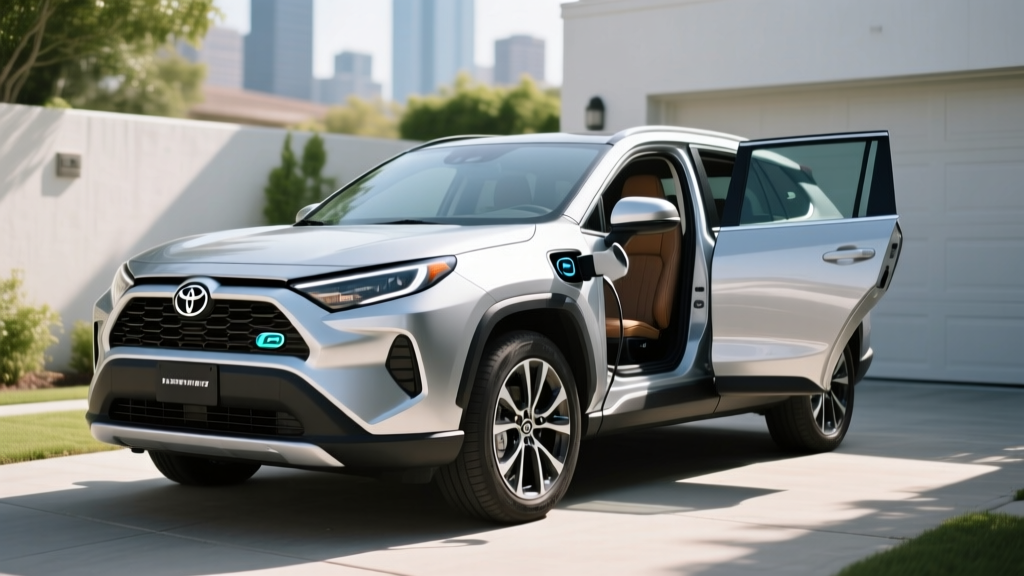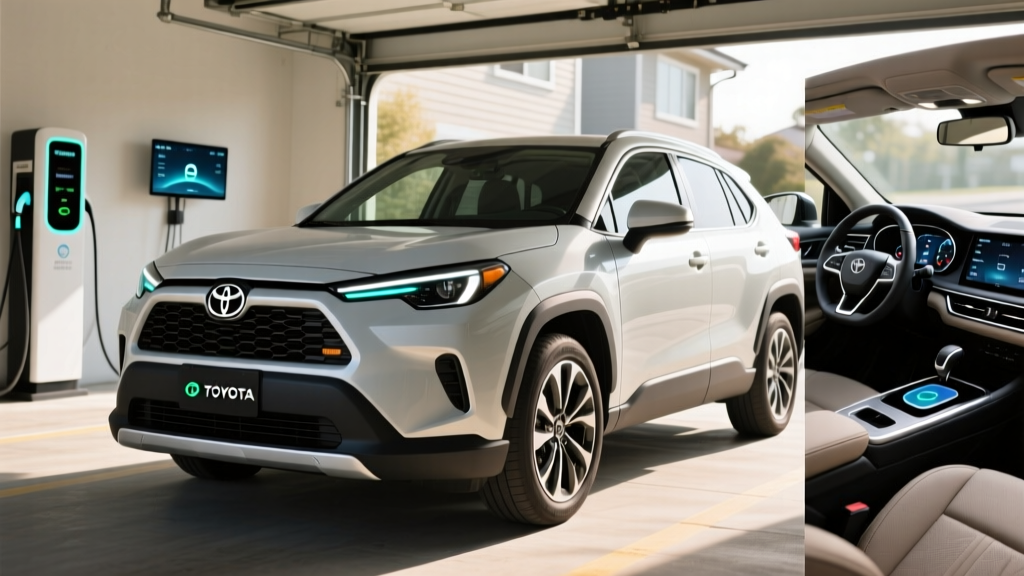
The subcompact crossover segment is crowded, but the 2025 Toyota Corolla Cross Hybrid occupies a distinct lane: it delivers genuinely excellent fuel economy without asking buyers to plug in, change their driving habits, or pay a steep premium. For shoppers weighing a conventional hybrid against a plug-in hybrid (PHEV) or a full battery-electric vehicle (BEV), the Corolla Cross Hybrid presents a compelling low-friction entry into electrified driving. Here is the data-driven breakdown you need to make an informed decision.
Quick Verdict: Who the Corolla Cross Hybrid Is For
The 2025 Corolla Cross Hybrid is a conventional hybrid electric vehicle (HEV). It charges its own battery through regenerative braking and the gasoline engine — you never plug it in. This matters because it eliminates the single biggest barrier to electrified ownership: access to charging infrastructure. If you live in an apartment, park on the street, or simply don't want to think about charging logistics, a conventional HEV removes that friction entirely.
With an EPA-estimated 42 MPG combined, standard all-wheel drive, and a starting MSRP around $29,590 (before destination), the Corolla Cross Hybrid targets practical buyers who want crossover utility, strong city efficiency, and Toyota's hybrid reliability track record — without the range anxiety or charging dependency of a BEV.
HEV vs PHEV vs EV: Where Does the Corolla Cross Fit?
Before diving into specs, it's critical to understand the three electrified powertrain types available in this segment:
| Powertrain Type | Plug In? | Electric-Only Range | Typical Use Case |
|---|---|---|---|
| HEV (Conventional Hybrid) | No | ~1 mile at low speed | Max MPG, no charging needed |
| PHEV (Plug-In Hybrid) | Yes | 20–45 miles | Short commutes on electricity, gas for longer trips |
| BEV (Battery Electric) | Yes (required) | 200–400+ miles | Full electric, home charging access preferred |
The Corolla Cross Hybrid is strictly an HEV. Toyota does not currently offer a PHEV version of the Corolla Cross. If you want plug-in capability in Toyota's lineup, you'd look at the RAV4 Prime (a PHEV with 42 miles of electric range) or the Prius Prime. Those vehicles cost significantly more and require access to a Level 1 or Level 2 charger to realize their efficiency benefits. The Corolla Cross Hybrid keeps things simpler: fill up with gas and drive.
Fuel Economy: EPA Ratings and Real-World MPG
The headline number for the 2025 Corolla Cross Hybrid is its EPA-estimated fuel economy. According to fueleconomy.gov, all trims (S, SE, XSE) share the same powertrain and AWD configuration, yielding identical ratings:
| Driving Condition | EPA Estimated MPG |
|---|---|
| City | 46 MPG |
| Highway | 38 MPG |
| Combined | 42 MPG |
Real-World MPG: What to Actually Expect
Toyota's hybrid system excels in stop-and-go city driving, where the electric motor handles low-speed propulsion and regenerative braking recaptures energy. In real-world city and suburban driving, many owners report exceeding the EPA city estimate, with some seeing 48–50 MPG in warm weather on routes with frequent stops.
Highway driving is where hybrids lose their advantage. At sustained speeds above 65 mph, the gasoline engine does most of the work, and aerodynamic drag increases exponentially. Expect highway-only road trips to yield 35–38 MPG, slightly below the EPA highway estimate if you're driving at 75+ mph or in cold weather.
Cold-weather impact: In sub-freezing temperatures, expect a 5–10% reduction in fuel economy. The engine runs more frequently to generate cabin heat and maintain battery temperature. This is a smaller penalty than the 20–30% range loss that BEVs experience in winter, but it's worth noting for northern-climate buyers.
Powertrain Specs: Engine, Motors, and Horsepower
The 2025 Corolla Cross Hybrid uses Toyota's fifth-generation hybrid system, pairing a 2.0-liter four-cylinder engine with two electric motor-generators and an electronically controlled continuously variable transmission (eCVT). Here are the exact figures:
| Specification | Value |
|---|---|
| Engine | 2.0L 4-cylinder DOHC |
| Net Combined Horsepower | 196 hp |
| Drivetrain | Electronic On-Demand AWD (standard) |
| Transmission | eCVT |
| Hybrid Battery | ~1.0 kWh lithium-ion (sealed, not plug-in) |
| 0–60 mph | ~7.5 seconds (est.) |
| Towing Capacity | Not rated for towing |
The rear axle is driven by a separate electric motor, providing all-wheel drive without a mechanical driveshaft. This system can send up to 60% of available torque to the rear wheels when needed, improving traction in rain and light snow. However, this is an on-demand AWD system designed for paved-road safety, not off-road capability.
The 196 combined horsepower figure is a meaningful upgrade over the non-hybrid Corolla Cross, which makes just 169 hp from its 2.0L engine. The hybrid's electric motor torque fills in the low-end gap that makes the gas-only version feel sluggish around town.
Pricing, Trims, and Tax Credit Eligibility
The 2025 Corolla Cross Hybrid is available in three trims. Pricing below is MSRP before destination charges:
| Trim | MSRP (approx.) | Key Features |
|---|---|---|
| S | $29,590 | Toyota Safety Sense 3.0, 8" touchscreen, wireless CarPlay/Android Auto |
| SE | $31,090 | Sport-tuned suspension, SofTex seats, 18" alloy wheels |
| XSE | $33,590 | JBL audio, heated front seats, power liftgate, ambient lighting |
Federal Tax Credit: Does It Qualify?
No. Under current IRS §30D rules, the federal clean vehicle credit of up to $7,500 applies only to plug-in electric vehicles — BEVs and PHEVs with a minimum battery capacity of 7 kWh. The Corolla Cross Hybrid's ~1.0 kWh battery does not meet this threshold, and as a conventional HEV, it is not eligible for the federal EV tax credit.
Some states offer their own incentives for hybrid vehicles, but these are less common than EV incentives and vary significantly by jurisdiction. Check your state's department of revenue or energy office for current programs. A few states have offered rebates for hybrids in the past, but most have shifted incentive budgets toward plug-in vehicles.
For authoritative details on federal credit eligibility, consult the IRS clean vehicle credit page.
Battery Warranty, Lifespan, and Replacement Cost
Hybrid battery longevity is the single most common concern among first-time hybrid buyers. Toyota addresses this with one of the strongest warranty packages in the industry:
Toyota Hybrid Battery Warranty (2025 Models)
- Hybrid Battery: 10 years / 150,000 miles (whichever comes first)
- Hybrid System Components: 8 years / 100,000 miles
- Basic New Vehicle: 3 years / 36,000 miles
- Powertrain: 5 years / 60,000 miles
Toyota's hybrid batteries are designed to last the life of the vehicle. Data from millions of Prius units on the road shows that most hybrid batteries retain sufficient capacity well beyond 150,000 miles. Degradation in a conventional hybrid is far less consequential than in a BEV because the battery is small — even a 20% loss in the ~1.0 kWh pack doesn't meaningfully affect fuel economy the way it would reduce a BEV's range.
Replacement cost if out of warranty: A replacement hybrid battery for the Corolla Cross Hybrid is estimated at $2,000–$3,500 (parts and labor) based on comparable Toyota hybrid systems. Third-party refurbishment options may reduce this to $1,200–$2,000. Given the 10-year/150,000-mile warranty, most original owners will never face this expense.
Reliability and Safety
Toyota's hybrid powertrain has an unmatched reliability record spanning over 25 years since the original Prius. The Corolla Cross Hybrid uses proven, carryover hybrid architecture with no experimental components. Consumer Reports and J.D. Power consistently rank Toyota among the top brands for long-term dependability, and the hybrid system adds fewer wear items than a conventional powertrain (no traditional starter motor, no alternator, regenerative braking extends brake pad life).
On the safety front, all 2025 Corolla Cross Hybrid trims come standard with Toyota Safety Sense 3.0, which includes:
- Pre-Collision System with Pedestrian Detection
- Lane Departure Alert with Steering Assist
- Lane Tracing Assist
- Dynamic Radar Cruise Control (full-speed)
- Road Sign Assist
- Automatic High Beams
This is a Level 1–2 driver-assistance suite per SAE automation definitions. The driver must remain fully engaged at all times — hands on the wheel, eyes on the road. Lane Tracing Assist provides centering support but is not autonomous driving. Check NHTSA.gov and IIHS.org for the latest crash-test ratings as they become available.
Driving Impressions and Practical Utility
The Corolla Cross Hybrid drives like a slightly elevated Corolla sedan — composed, quiet, and unremarkable in the best way. The eCVT eliminates shift shock, and the electric motor's instant torque makes city acceleration feel brisk even though the 0–60 time of roughly 7.5 seconds isn't sporty. The standard AWD system engages seamlessly on wet pavement without any driver input.
Cargo space: The hybrid battery is packaged under the rear seats, so cargo volume is unaffected compared to the gas-only Corolla Cross. You get approximately 25.5 cubic feet behind the rear seats and 56.9 cubic feet with the rear seats folded — competitive for the subcompact crossover class.
Ride quality: The SE and XSE trims with 18-inch wheels transmit more road imperfections than the S trim's 17-inch wheels. If ride comfort is a priority, the base S trim actually rides more smoothly despite its lower equipment level.
Pros
- 42 MPG combined EPA — excellent for an AWD crossover
- No plug-in required; zero charging logistics
- Standard AWD on all trims
- 196 hp — noticeably quicker than gas-only model
- 10-year / 150,000-mile hybrid battery warranty
- Toyota Safety Sense 3.0 standard on every trim
- Strong resale value and proven reliability
Cons
- No federal tax credit eligibility
- Highway MPG drops to mid-30s at 75+ mph
- Not rated for towing
- Modest cargo space vs. RAV4 Hybrid
- No PHEV option if you want electric-only commuting
- Rear seat legroom is tight for taller passengers
Corolla Cross Hybrid vs. the Alternatives
How does the Corolla Cross Hybrid stack up against the three paths a buyer might consider?
vs. Gas-only Corolla Cross: The gas version starts around $24,000 and gets 31 MPG combined (FWD). The hybrid costs roughly $5,500 more upfront but saves approximately $500–$700 per year in fuel at 12,000 miles/year and $3.50/gallon. Payback takes roughly 8–10 years on fuel alone, but the hybrid also delivers more power, standard AWD, and higher resale value — narrowing the effective gap significantly.
vs. RAV4 Hybrid: The RAV4 Hybrid starts around $33,000 and gets 39 MPG combined. It's larger, offers more cargo room (37.5 cu ft), and is rated to tow 1,750 lbs. If you need space or towing, the RAV4 Hybrid is worth the premium. If you don't, the Corolla Cross Hybrid is more efficient and easier to park.
vs. a full EV (e.g., Hyundai Kona Electric): The Kona Electric offers ~261 miles of EPA range, zero tailpipe emissions, and eligibility for the $7,500 federal tax credit (if income and sourcing requirements are met). After the credit, an EV can be price-competitive. However, EVs require home charging access for convenient ownership, and road trips require DC fast-charging planning. The Corolla Cross Hybrid eliminates all of that complexity at the cost of higher per-mile fuel expense and tailpipe emissions.
Decision Framework: Should You Buy the Corolla Cross Hybrid?
Choose the Corolla Cross Hybrid if:
- You want excellent fuel economy without plugging in
- You live in an apartment or lack home charging access
- You regularly drive in city/suburban stop-and-go traffic
- You want AWD for rain/snow without a fuel-economy penalty
- You plan to keep the vehicle 8+ years (maximizing warranty and reliability)
Choose a PHEV (RAV4 Prime, Prius Prime) if:
- You have home Level 2 charging and a short commute (<40 miles)
- You want electric-only daily driving with gas backup for road trips
- You want to qualify for the federal tax credit (up to $7,500)
Choose a full BEV if:
- You have reliable home charging (Level 2)
- Your daily driving is under 200 miles and you can plan road-trip charging
- You want the lowest per-mile energy cost and zero tailpipe emissions
- You want to maximize federal/state incentives
Frequently Asked Questions
How many MPG does the 2025 Corolla Cross Hybrid get?
The EPA rates it at 46 MPG city, 38 MPG highway, and 42 MPG combined. Real-world city driving often exceeds the EPA estimate, while sustained highway driving at high speeds may return 35–38 MPG.
Does the Corolla Cross Hybrid need to be plugged in?
No. It is a conventional hybrid (HEV) that charges its battery through regenerative braking and the gasoline engine. You fuel it like any other gas car.
How far can it go on electric only?
Effectively about 1 mile at very low speeds (under 25 mph) in EV mode. The battery is too small (~1.0 kWh) for meaningful electric-only driving. This is by design — the electric motor assists the gas engine continuously rather than powering the car independently.
Is the Corolla Cross Hybrid reliable?
Toyota's hybrid system has over 25 years of proven reliability across millions of vehicles. The hybrid battery is warranted for 10 years/150,000 miles, and the system has fewer wear components than a conventional powertrain. Independent reliability surveys consistently rank Toyota hybrids among the most dependable vehicles on the road.
What does a hybrid battery replacement cost?
Out-of-warranty replacement is estimated at $2,000–$3,500 for a new OEM battery, or $1,200–$2,000 for a refurbished unit. Most hybrid batteries last well beyond the warranty period, and many original owners will never need a replacement.
Does the 2025 Corolla Cross Hybrid qualify for a tax credit?
It does not qualify for the federal §30D clean vehicle credit, which requires a plug-in vehicle with at least 7 kWh of battery capacity. Some states may offer minor incentives for hybrids, but these are less common than EV incentives. Check your state's energy office for current programs.
How does the Corolla Cross Hybrid compare to the RAV4 Hybrid?
The Corolla Cross Hybrid is smaller, more efficient (42 vs. 39 MPG combined), and less expensive. The RAV4 Hybrid offers more cargo space, more rear legroom, a towing rating of 1,750 lbs, and an available PHEV variant (RAV4 Prime). Choose based on your space and towing needs.