Quick Verdict: The Benchmark Compact Hybrid SUV
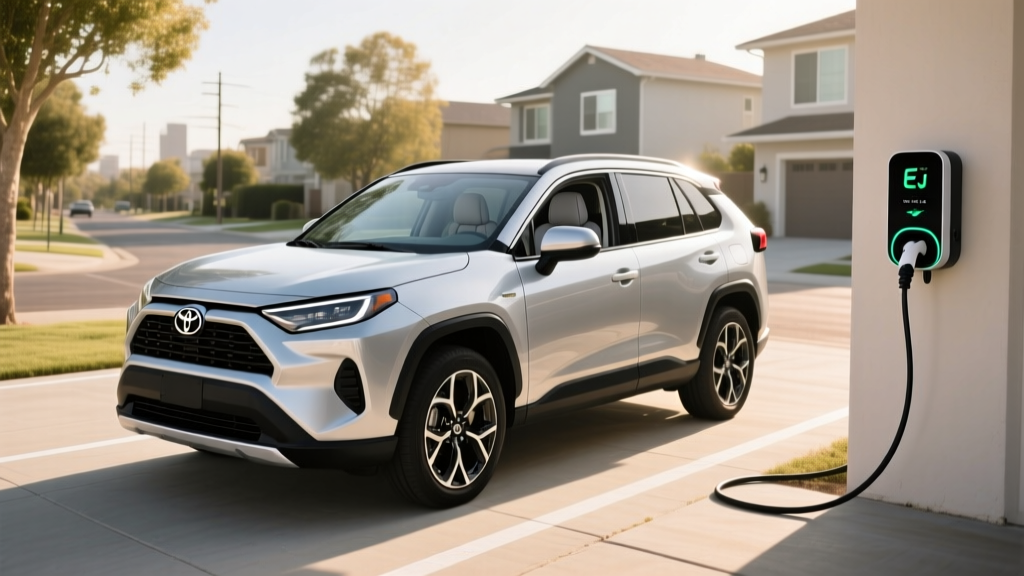
The 2024 Toyota RAV4 Hybrid LE remains the default recommendation for buyers seeking a compact SUV that slashes fuel costs without requiring any lifestyle changes. No plugs, no range anxiety, no charging apps—just a 39 MPG EPA combined rating that frequently exceeds expectations in real-world city driving. Starting at $32,675 including destination, it undercuts the RAV4 Prime PHEV by nearly $12,000 while delivering 90% of the utility for drivers without home charging access.
| Spec | Value |
|---|---|
| EPA Combined MPG | 39 MPG |
| EPA City / Highway | 41 city / 38 highway |
| Combined Horsepower | 219 hp |
| Powertrain | 2.5L 4-cyl + 3 electric motors (AWD) |
| 0-60 mph | 7.4 seconds |
| Cargo Volume | 37.5 cu ft (rear seats up) |
| Base MSRP (LE AWD) | $32,675 |
| Hybrid Battery Warranty | 10 years / 150,000 miles |
RAV4 Hybrid (HEV) vs RAV4 Prime (PHEV): Know the Difference
Toyota sells two electrified RAV4 variants, and confusing them is the most common buyer mistake. The RAV4 Hybrid is a conventional hybrid electric vehicle (HEV)—it generates all its electricity onboard through regenerative braking and the gasoline engine. You never plug it in. The RAV4 Prime is a plug-in hybrid (PHEV) with a larger 18.1 kWh battery that delivers 42 miles of electric-only range before the engine kicks in.
| Feature | RAV4 Hybrid (HEV) | RAV4 Prime (PHEV) |
|---|---|---|
| Plug-in Required? | No | Yes (Level 1/2) |
| Electric-Only Range | ~1 mile at low speed | 42 miles (EPA) |
| Battery Capacity | 1.6 kWh (NiMH) | 18.1 kWh (Li-ion) |
| Combined HP | 219 hp | 302 hp |
| EPA Combined MPG/MPGe | 39 MPG | 94 MPGe (electric) / 38 MPG (gas) |
| Base MSRP | $32,675 | $44,440 |
| Federal Tax Credit | None | Up to $7,500 (§30D, if eligible) |
If you can charge at home and your commute is under 40 miles round-trip, the Prime makes compelling economic sense after the federal credit. If you lack charging access or want the lowest upfront cost, the Hybrid LE is your answer.
Fuel Economy: EPA Numbers vs Real-World MPG
The EPA rates the 2024 RAV4 Hybrid LE at 41 MPG city, 38 MPG highway, and 39 MPG combined. These numbers come from fueleconomy.gov and apply to all RAV4 Hybrid trims with the electronic AWD system.
| Driving Scenario | EPA Estimate | Real-World Expectation |
|---|---|---|
| City (stop-and-go) | 41 MPG | 42-45 MPG (regen-heavy) |
| Highway (70 mph cruise) | 38 MPG | 34-37 MPG (aero drag, less regen) |
| Combined mixed driving | 39 MPG | 37-41 MPG |
| Cold weather (below 32°F) | N/A | 33-36 MPG (engine runs for heat) |
The counterintuitive reality: hybrids often beat their EPA city rating because regenerative braking recaptures energy that gas cars waste as heat. On highway routes, however, expect a 3-5 MPG shortfall versus the sticker—the electric motor assists less at sustained speeds, and aerodynamic drag dominates. In sub-freezing temperatures, the gasoline engine runs more frequently to provide cabin heat, dropping economy to the low-to-mid 30s.
Powertrain: How 219 Horsepower Gets Made
The RAV4 Hybrid LE pairs a 2.5-liter Dynamic Force four-cylinder engine (176 hp, 163 lb-ft) with three electric motors—two integrated into the front transaxle and one powering the rear axle for electronic on-demand AWD. Combined system output is 219 horsepower.
The rear motor is key: it activates only when slip is detected or during hard acceleration, meaning the RAV4 Hybrid operates as a front-wheel-drive vehicle in most cruising conditions to maximize efficiency. There's no mechanical driveshaft to the rear wheels, reducing weight and friction losses.
The 0-60 mph time of 7.4 seconds puts it in the middle of the compact SUV pack—adequate for merging and passing, though the RAV4 Prime's 302 hp drops that to 5.7 seconds if performance matters to you.
Battery Longevity, Warranty, and Replacement Cost
The 2024 RAV4 Hybrid uses a 1.6 kWh nickel-metal hydride (NiMH) battery pack. Toyota's hybrid battery warranty covers 10 years or 150,000 miles, whichever comes first—transferable to subsequent owners. This is among the best in the industry and reflects Toyota's two decades of hybrid system refinement since the original Prius.
Hybrid Battery Warranty: 10 years / 150,000 miles
Expected Lifespan: 15-20 years / 200,000+ miles based on fleet data
Replacement Cost (out of warranty): $3,000-$4,500 including labor at a Toyota dealer
NiMH chemistry sacrifices energy density for exceptional cycle stability. Real-world failure data from Toyota's hybrid fleet shows battery degradation is rarely an issue before 150,000 miles. Individual cell replacement (rather than the full pack) is sometimes possible at independent hybrid specialists for $500-$1,500 if you're out of warranty.
Pricing, Trims, and Tax Credit Reality
The 2024 RAV4 Hybrid LE starts at $32,675 (including $1,425 destination). Key trim pricing:
- Hybrid LE: $32,675
- Hybrid XLE: $34,175
- Hybrid XLE Premium: $36,695
- Hybrid Woodland Edition: $37,545
- Hybrid Limited: $40,555
Federal tax credit: The conventional RAV4 Hybrid does not qualify for the IRS §30D clean vehicle credit. That credit applies only to plug-in vehicles (BEVs and PHEVs) meeting battery sourcing and MSRP caps. The RAV4 Prime PHEV may qualify for up to $7,500, but eligibility depends on your adjusted gross income, the vehicle's critical mineral and battery component sourcing, and the MSRP cap ($80,000 for SUVs). Check current rules at IRS.gov or consult a tax professional before purchasing.
Some states offer rebates for conventional hybrids—check your state energy office, but don't count on it. Most state incentives have shifted to plug-in vehicles.
Who Should Buy the RAV4 Hybrid LE?
Choose the RAV4 Hybrid LE if:
- You lack home or workplace charging access
- Your budget is under $35,000 for a new compact SUV
- You want maximum cargo space (37.5 cu ft) with AWD
- You drive 15,000+ miles/year and want to cut fuel costs ~40% vs gas-only
- You prioritize proven reliability and low maintenance
Look elsewhere if:
- You can install a Level 2 charger at home (consider RAV4 Prime or a BEV)
- Your daily commute is under 30 miles and you want zero-emission driving (PHEV/BEV)
- You want faster acceleration (RAV4 Prime or Tesla Model Y)
- You want the $7,500 federal tax credit (requires a plug-in vehicle)
Hybrid vs PHEV vs Full EV: Which Fits You?
The decision tree is straightforward:
- HEV (RAV4 Hybrid): No charging infrastructure, want lowest upfront cost, drive long distances regularly, or simply want a no-compromise gas-and-go experience with better fuel economy.
- PHEV (RAV4 Prime): Can charge at home (Level 2 ideal), daily driving under 50 miles, want electric commuting with gas backup for road trips, and qualify for the federal credit.
- BEV (Tesla Model Y, Hyundai Ioniq 5): Can charge at home, daily driving under 250 miles, want lowest operating cost and zero tailpipe emissions, comfortable with public DC fast charging for road trips.
For most apartment dwellers, street parkers, and high-mileage drivers without reliable charging access, the RAV4 Hybrid LE is the pragmatic choice that delivers immediate fuel savings with zero behavioral change.
Frequently Asked Questions
How many MPG does the 2024 RAV4 Hybrid LE actually get?
The EPA rates it at 41 city / 38 highway / 39 combined. In real-world testing, city drivers often see 42-45 MPG thanks to regenerative braking, while highway-heavy drivers should expect 34-37 MPG. Cold weather reduces economy by 3-6 MPG due to increased engine runtime for cabin heating.
Does the RAV4 Hybrid need to be plugged in?
No. The RAV4 Hybrid is a conventional HEV that charges its small 1.6 kWh battery through regenerative braking and the gasoline engine. You fuel it like any other car at a gas station. Only the RAV4 Prime PHEV variant requires plug-in charging to access its 42-mile electric range.
Is the hybrid battery reliable and expensive to replace?
Toyota's hybrid batteries are among the most reliable in the industry, with most lasting 15-20 years or 200,000+ miles. The 10-year/150,000-mile warranty provides substantial coverage. Out-of-warranty replacement runs $3,000-$4,500 at a dealer, though independent hybrid shops can sometimes replace individual cells for less.
Does the 2024 RAV4 Hybrid qualify for any tax credit?
The conventional RAV4 Hybrid does not qualify for the federal §30D clean vehicle credit, which requires a plug-in vehicle (BEV or PHEV). Some states may offer hybrid rebates—check your state energy office. The RAV4 Prime PHEV may qualify for up to $7,500 federally, subject to income limits, MSRP caps, and battery sourcing requirements.
How does the RAV4 Hybrid compare to the gas-only RAV4?
The gas-only 2024 RAV4 LE AWD gets 30 MPG combined versus the Hybrid's 39 MPG—a 30% improvement. The hybrid also delivers smoother acceleration from electric motor torque, standard AWD (optional on gas models), and a quieter powertrain at low speeds. The ~$2,500 price premium typically pays back in fuel savings within 3-4 years at 15,000 miles/year.
Sources: EPA fuel economy data from fueleconomy.gov; MSRP and specifications from Toyota Motor North America; federal tax credit rules from IRS.gov §30D guidance.