2024 RAV4 Hybrid MPG: EPA Ratings vs Real-World Results
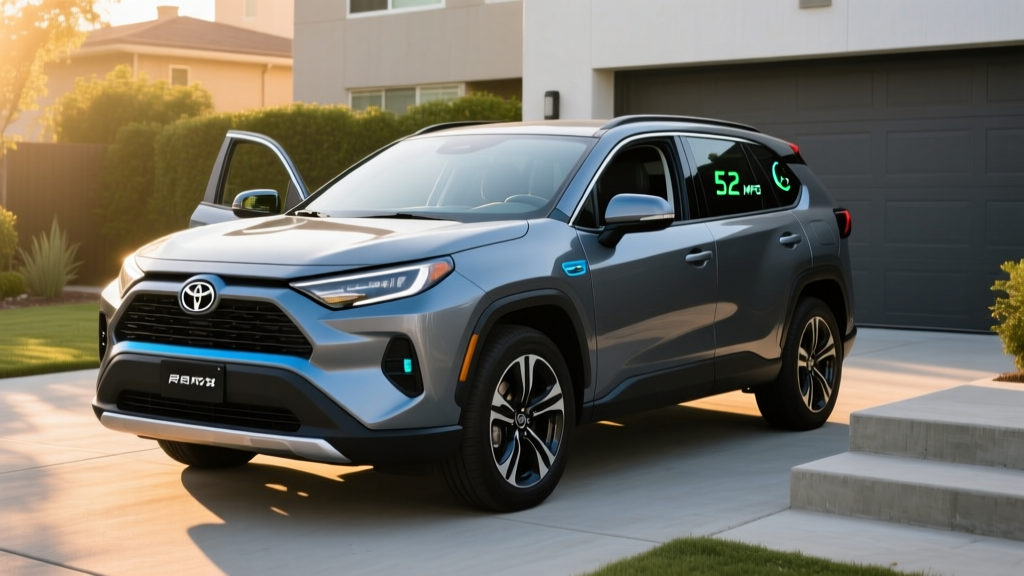
If you've been searching for the 2024 RAV4 Hybrid MPG numbers to decide whether Toyota's best-selling crossover lives up to its efficiency promises, you're looking at one of the most data-rich hybrids on the market. The RAV4 Hybrid has been on sale long enough that we have robust EPA data, thousands of owner-reported fuel logs, and real-world testing to separate marketing from reality.
The short answer: the 2024 RAV4 Hybrid delivers an EPA-estimated 41 MPG city / 38 MPG highway / 39 MPG combined for most trims (LE, XLE, XLE Premium, SE, XSE). The Woodland Edition, with its more aggressive all-terrain tires and slightly different tuning, drops to 38 city / 35 highway / 37 combined. But as any hybrid owner will tell you, EPA stickers are just the starting point.
| Trim | City MPG | Highway MPG | Combined MPG | Annual Fuel Cost* |
|---|---|---|---|---|
| LE / XLE / XLE Premium / SE / XSE | 41 | 38 | 39 | ~$1,550 |
| Woodland Edition | 38 | 35 | 37 | ~$1,650 |
*Based on 15,000 miles/year, 55% city / 45% highway, and $3.50/gallon regular unleaded. Source: fueleconomy.gov.
RAV4 Hybrid vs RAV4 Prime: Understanding HEV and PHEV
Before going further, it's critical to distinguish between the two electrified RAV4 variants, because buyers frequently confuse them:
RAV4 Hybrid (HEV)
- No plug required — charges itself via regenerative braking and the gas engine
- 1.6 kWh battery (not externally chargeable)
- Cannot drive on electric-only power beyond very low speeds/short distances
- 39 MPG combined (EPA)
- Starts at ~$33,425 MSRP
- No federal tax credit
RAV4 Prime (PHEV)
- Plug-in capable — charges via Level 1/Level 2 AC charging
- 18.1 kWh battery (14.5 kWh usable)
- 42 miles EPA electric-only range
- 94 MPGe combined (electric + gas), 38 MPG combined (gas-only after battery depleted)
- Starts at ~$44,440 MSRP
- No longer eligible for $7,500 federal credit (credit phased out for Toyota)
The conventional RAV4 Hybrid is a self-charging system. You never plug it in. The gasoline engine and regenerative braking keep a small battery charged, and electric motors assist the engine to reduce fuel consumption. The RAV4 Prime is a plug-in hybrid (PHEV) with a much larger battery that you charge at home or at public Level 2 stations, giving you genuine electric-only commuting before the gas engine kicks in.
| Specification | RAV4 Hybrid (HEV) | RAV4 Prime (PHEV) |
|---|---|---|
| Powertrain | 2.5L 4-cyl + 2 electric motors (AWD) | 2.5L 4-cyl + 2 electric motors (AWD) |
| Combined Horsepower | 219 hp | 302 hp |
| Battery Capacity | 1.6 kWh (NiMH) | 18.1 kWh (Li-ion, 14.5 kWh usable) |
| Electric-Only Range | N/A (motor assist only) | 42 miles (EPA) |
| Total Range | ~580 miles | ~600 miles (electric + gas) |
| 0-60 mph | 7.4 seconds | 5.7 seconds |
| EPA Combined MPG / MPGe | 39 MPG | 94 MPGe / 38 MPG (gas-only) |
| Charging (Level 2, 240V) | Not applicable | ~2.5 hours (6.6 kW onboard charger) |
| DC Fast Charging | No | No |
| Base MSRP (2024) | $33,425 | $44,440 |
| Federal Tax Credit (§30D) | Not eligible | Not eligible (Toyota phase-out) |
How the RAV4 Hybrid Powertrain Actually Works
The 2024 RAV4 Hybrid pairs Toyota's 2.5-liter Dynamic Force four-cylinder engine (176 hp, 163 lb-ft of torque on its own) with two electric motor-generators and an electronically controlled continuously variable transmission (eCVT). A third electric motor powers the rear axle, giving the RAV4 Hybrid standard electronic all-wheel drive (AWD-i) across every trim — there's no front-wheel-drive option.
The combined system output is 219 horsepower. That's competitive with turbocharged rivals and more than sufficient for merging, passing, and loaded cargo runs. The eCVT avoids the rubber-band feel of older CVTs because the planetary gearset creates a direct mechanical path at higher speeds.
Where the hybrid system earns its MPG advantage is in city driving. At low speeds and during deceleration, the electric motors handle propulsion and recapture braking energy. The gas engine shuts off at stops and during coasting. In practice, this means a driver doing a 10-mile suburban commute with multiple stoplights will consistently beat the EPA city estimate, sometimes by 3–5 MPG. Highway driving reverses this advantage: at sustained 70+ mph speeds, the engine does most of the work, and the hybrid system adds weight (roughly 200 lbs more than the gas RAV4) without meaningful benefit.
RAV4 Prime PHEV: Electric Range, Charging, and Daily Driving
For buyers considering the RAV4 Prime instead, the electric-only proposition is genuine. The EPA rates it at 42 miles of electric-only range, and in moderate weather with gentle driving, many owners report 44–48 miles before the engine fires up. In winter or at highway speeds, expect 32–38 miles of electric range.
Charging the Prime's 18.1 kWh battery takes approximately 12 hours on a standard 120V household outlet (Level 1, ~1.4 kW) or about 2.5 hours on a 240V Level 2 home charger at its maximum 6.6 kW onboard charge rate. The RAV4 Prime does not support DC fast charging — there is no CCS or CHAdeMO port. This is typical for PHEVs, whose smaller batteries make the cost and weight of DC fast-charging hardware hard to justify.
If your daily round-trip commute is under 40 miles and you can charge at home overnight, the RAV4 Prime effectively operates as an electric car Monday through Friday, with the gas engine available for weekend road trips. Once the battery depletes, it functions as a conventional hybrid returning 38 MPG combined — only marginally less than the standard RAV4 Hybrid, thanks to the extra battery weight.
Battery Warranty, Lifespan, and Replacement Cost
- Hybrid Battery (HEV): 10 years / 150,000 miles (in CARB states); 8 years / 100,000 miles (non-CARB states)
- Prime PHEV Battery: 10 years / 150,000 miles (CARB); 8 years / 100,000 miles (non-CARB)
- Hybrid System Components (inverter, transaxle, ECU): 8 years / 100,000 miles nationwide
Toyota has been building hybrids since the 1997 Prius. Real-world data shows RAV4 Hybrid batteries routinely lasting 150,000–200,000+ miles with minimal capacity loss, largely because the system never fully charges or fully depletes the battery — it operates in a narrow state-of-charge window that dramatically extends cycle life.
The question every hybrid buyer asks: what does a replacement battery cost? As of 2025–2026, a new OEM RAV4 Hybrid traction battery from Toyota runs approximately $3,000–$4,000 for the part alone, with labor adding another $500–$800 at a dealership. For the RAV4 Prime, the larger lithium-ion pack is more expensive, typically $6,000–$8,000 installed. However, the aftermarket and refurbished battery market offers alternatives in the $1,500–$2,500 range for the HEV.
Given the warranty coverage and Toyota's track record, battery replacement is statistically unlikely to fall on the original owner. The vast majority of RAV4 Hybrids sold since the model's 2019 introduction are still running on their original packs.
RAV4 Hybrid Reliability: What the Data Shows
The 2024 RAV4 Hybrid benefits from Toyota's hybrid powertrain, which is arguably the most proven electrified system on the road. The 2.5L A25A-FXS engine uses a combination of port and direct injection (D-4S), which largely eliminates the carbon buildup issues that plagued some earlier direct-injection-only engines. The eCVT has no belts, clutches, or traditional friction components — it's a planetary gearset that Toyota has refined over 25+ years of Prius, Camry Hybrid, and Highlander Hybrid production.
According to IIHS, the 2024 RAV4 earned Top Safety Pick+ status when equipped with specific headlights, reflecting strong crash-test performance. NHTSA awarded it a 5-star overall safety rating.
Common complaints tracked by owners and the NHTSA database for the current-generation RAV4 Hybrid include occasional 12V auxiliary battery drain (not the hybrid traction battery), minor infotainment software glitches, and some reports of a slight hesitation during initial acceleration from a stop. None of these relate to the hybrid system's core reliability.
Pricing, Trims, and Tax Credit Eligibility
The 2024 RAV4 Hybrid starts at a base MSRP of $33,425 (LE trim, including destination). Here's the trim-level pricing breakdown:
| Trim | MSRP | Key Additions |
|---|---|---|
| LE | $33,425 | Toyota Safety Sense 2.5+, 8" touchscreen, wireless CarPlay/Android Auto |
| XLE | $34,925 | Dual-zone climate, blind-spot monitoring, power liftgate |
| XLE Premium | $36,825 | SofTex seats, sunroof, 19" wheels |
| SE | $37,425 | Sport-tuned suspension, paddle shifters, 18" black wheels |
| XSE | $38,825 | Bi-tone exterior, heated seats, 9" touchscreen |
| Woodland Edition | $36,625 | All-terrain tires, TRD-tuned suspension, roof rails |
| Limited | $41,125 | Panoramic moonroof, JBL audio, digital rearview mirror |
Tax credit reality: The conventional RAV4 Hybrid (HEV) does not qualify for the federal §30D clean vehicle tax credit. The credit is reserved for plug-in electric vehicles (BEVs and PHEVs) meeting specific battery sourcing, MSRP, and buyer income requirements per IRS guidelines. The RAV4 Prime (PHEV) would have qualified for the $7,500 credit, but Toyota's cumulative sales exceeded the 200,000-vehicle manufacturer cap in 2022, phasing out eligibility. Under current §30D rules (2024–2026), PHEVs must also meet critical-mineral and battery-component sourcing requirements, and the vehicle MSRP must not exceed $80,000 for SUVs — but the manufacturer cap remains the disqualifying factor for Toyota.
Some states offer their own hybrid or PHEV incentives. California's CVRP program, for instance, has historically offered rebates, though funding availability varies. Check your state energy office or AFDC state incentive database for current programs.
Hybrid vs PHEV vs Full EV: Which RAV4 Is Right for You?
Choose the RAV4 Hybrid (HEV) if:
- You want maximum MPG without changing your fueling habits
- You don't have access to home or workplace charging
- Your budget is under $40,000
- You drive a mix of city and highway miles
- You want proven reliability with minimal complexity
Choose the RAV4 Prime (PHEV) if:
- Your daily commute is under 40 miles round-trip
- You can install a Level 2 home charger
- You want electric daily driving with gas-engine flexibility for road trips
- You value the 302 hp performance upgrade (5.7-second 0-60)
- You can absorb the ~$11,000 price premium over the HEV
Choose a Full EV (e.g., Tesla Model Y, Hyundai Ioniq 5) if:
- You have reliable home charging and your trips rarely exceed 250 miles
- You want the lowest per-mile fuel cost (~$0.04–0.06/mile on home electricity vs ~$0.10/mile for the hybrid)
- You want to eliminate oil changes and most drivetrain maintenance
- You qualify for the $7,500 federal tax credit on eligible BEVs
The RAV4 Hybrid's sweet spot is clear: it's for buyers who want crossover practicality, standard AWD, and significantly reduced fuel costs without any lifestyle adjustment. No plug, no range planning, no charging apps. You fill up at the same gas station, just less often.
5-Year Ownership Cost: RAV4 Hybrid vs Gas RAV4
| Cost Category | RAV4 Hybrid (XLE) | RAV4 Gas (XLE AWD) |
|---|---|---|
| MSRP | $34,925 | $33,425 |
| Fuel (75K mi @ $3.50/gal) | $6,730 (39 MPG) | $9,375 (28 MPG) |
| Maintenance (est.) | $2,800 | $3,200 |
| Insurance (avg.) | $7,200 | $6,900 |
| Depreciation (est.) | -$14,000 | -$14,500 |
| 5-Year Net Cost | ~$37,655 | ~$38,400 |
The RAV4 Hybrid's ~$1,500 MSRP premium over the gas model is typically recovered through fuel savings within 3–4 years of average driving. Hybrid models also tend to hold their value well — the RAV4 Hybrid consistently appears on best-resale-value lists, and used examples command strong prices. Maintenance is marginally lower because regenerative braking reduces brake pad wear, and the hybrid system eliminates the traditional starter motor and alternator.
Frequently Asked Questions
How many MPG does the 2024 RAV4 Hybrid actually get in real driving?
The EPA rates it at 41 city / 38 highway / 39 combined for most trims. Real-world owner averages cluster between 36 and 43 MPG combined depending on driving style, climate, and city-vs-highway mix. City-dominant drivers often exceed the EPA estimate; highway-dominant drivers fall slightly below it.
Does the RAV4 Hybrid need to be plugged in?
No. The conventional RAV4 Hybrid (HEV) is a self-charging system. It recovers energy through regenerative braking and uses the gas engine to maintain the small 1.6 kWh battery. You never plug it in. Only the RAV4 Prime (PHEV) requires plugging in to access its 42-mile electric-only range.
How long will the RAV4 Hybrid battery last and what does replacement cost?
Toyota's hybrid battery warranty covers 10 years/150,000 miles in CARB states and 8 years/100,000 miles elsewhere. Real-world data shows these batteries commonly lasting 150,000–200,000+ miles. A replacement OEM battery costs approximately $3,000–$4,000 for the part, plus $500–$800 in labor. Refurbished options are available for $1,500–$2,500.
Does the 2024 RAV4 Hybrid qualify for a federal tax credit?
No. The federal §30D clean vehicle credit applies only to plug-in vehicles (BEVs and PHEVs). The RAV4 Hybrid is a conventional (non-plug-in) hybrid and is not eligible. The RAV4 Prime PHEV is also ineligible because Toyota exceeded the 200,000-unit manufacturer cap that triggered a phase-out. Some state-level incentives may apply — check your local programs.
Is the RAV4 Hybrid better than the gas RAV4?
For most buyers, yes. The hybrid delivers 39 MPG combined versus 28 MPG for the gas AWD model, includes standard electronic AWD on every trim, offers slightly more horsepower (219 vs 203), and the ~$1,500 price premium is typically recovered in fuel savings within 3–4 years. The only scenario where the gas model wins is if you drive predominantly highway miles at high speeds, where the hybrid efficiency advantage narrows.
How far can the RAV4 Prime go on electric only?
The 2024 RAV4 Prime is EPA-rated at 42 miles of electric-only range. Real-world results vary from roughly 32 miles (cold weather, highway speeds) to 48 miles (mild weather, gentle city driving). Once the battery depletes, the Prime operates as a conventional hybrid at 38 MPG combined.