Quick Verdict: Two Electrified Paths in One Compact SUV
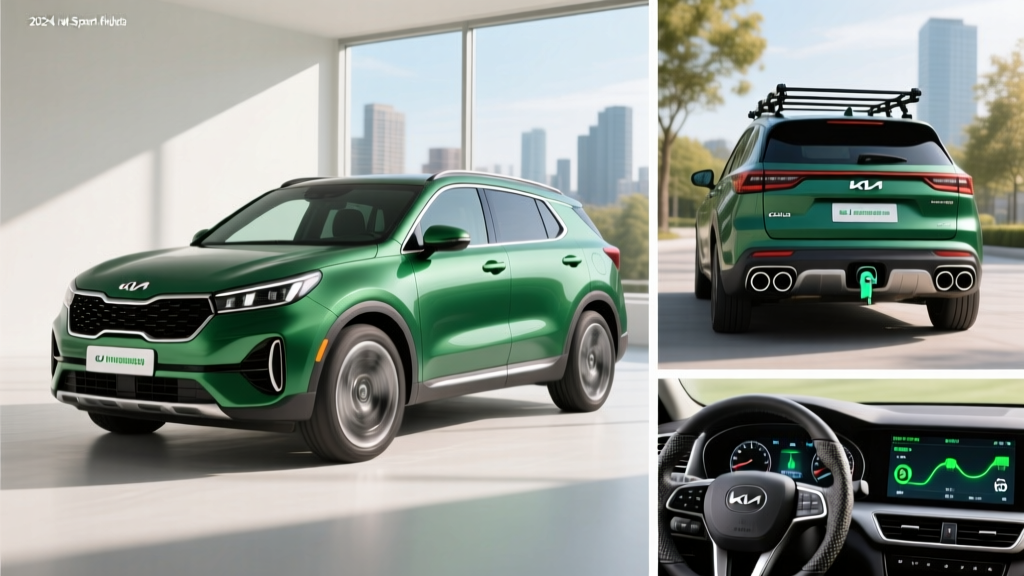
The 2024 Kia Sportage lineup offers two distinct electrified options that frequently get conflated by shoppers: a conventional hybrid (HEV) and a plug-in hybrid (PHEV). Both share the same turbocharged 1.6-liter four-cylinder architecture paired with an electric motor, but they serve fundamentally different use cases. The HEV delivers up to 43 MPG combined with zero plug-in hassle, while the PHEV provides 34 miles of electric-only range before the gas engine engages. Choosing between them — or against a full battery-electric vehicle — depends on your daily mileage, charging access, and budget.
HEV vs PHEV: Understanding the Difference Before You Buy
Plug-in Hybrid (PHEV): Has a much larger battery you charge by plugging in (Level 1 or Level 2). It drives on electricity alone for a set range, then seamlessly switches to hybrid operation. If you can charge at home and your commute fits within the electric range, you'll rarely burn gas on weekdays.
For the 2024 Sportage specifically, Kia sells the HEV across LX, EX, and SX-Prestige trims, while the PHEV is available in X-Line and X-Line Prestige trims. Both are AWD as standard, which is unusual in this segment and worth noting for snow-belt buyers.
| Attribute | Sportage HEV | Sportage PHEV |
|---|---|---|
| Powertrain | 1.6L turbo I4 + 44 kW motor | 1.6L turbo I4 + 72 kW motor |
| Combined HP | 226 hp | 261 hp |
| Drivetrain | AWD (standard) | AWD (standard) |
| Battery | 1.49 kWh (small buffer) | 13.7 kWh usable |
| EPA Electric Range | N/A (no plug) | 34 miles |
| EPA Combined MPG | 38 MPG (AWD) | 35 MPG (gas mode) / 84 MPGe |
| Total Range | ~430 miles | ~390 miles |
| Plug Required? | No | Yes (Level 1 or 2) |
| 0-60 mph | ~7.4 sec | ~6.8 sec |
| Base MSRP | $28,590 (LX) | $39,090 (X-Line) |
Fuel Economy: Real-World MPG vs EPA Stickers
The EPA rates the 2024 Sportage HEV AWD at 38 MPG combined (38 city / 38 highway), according to fueleconomy.gov. The FWD-only HEV variant bumps that to 43 MPG combined (42 city / 44 highway), making it the efficiency leader in the lineup.
| Trim/Drivetrain | City MPG | Highway MPG | Combined MPG |
|---|---|---|---|
| HEV FWD | 42 | 44 | 43 |
| HEV AWD | 38 | 38 | 38 |
| PHEV AWD (gas mode) | 36 | 35 | 35 |
| PHEV AWD (electric+gas) | 84 MPGe combined | ||
Real-world expectation: Kia's hybrid system, like Toyota's, tends to overperform its EPA city rating because regenerative braking recaptures more energy in stop-and-go traffic. Owners consistently report 40-44 MPG in city driving with the FWD HEV. Highway mileage at sustained 75+ mph typically drops to 34-36 MPG for the AWD model due to aerodynamic drag and the absence of regen benefit. In cold weather (below 30°F), expect a 5-10% reduction as the engine runs more frequently for cabin heat.
Sportage PHEV: 34 Miles Electric-Only and Charging Details
The Sportage PHEV's 13.7 kWh battery delivers an EPA-rated 34 miles of electric-only range. That covers the average American one-way commute (roughly 16 miles each way, per Census Bureau data), meaning many PHEV owners burn virtually no gasoline on weekdays.
Charging the 13.7 kWh battery is straightforward but slow by EV standards:
- Level 1 (120V household outlet): ~11 hours for a full charge — viable if you plug in every night after work.
- Level 2 (240V home charger, 3.3 kW onboard): ~3 hours and 25 minutes for 0-100%. The PHEV's onboard charger maxes at 7.2 kW, but real-world Level 2 charging completes in under four hours.
- DC fast charging: Not available. The Sportage PHEV has no DC fast-charge port. This is typical for PHEVs — the battery is too small to justify the hardware cost and weight.
Once the battery depletes, the PHEV seamlessly transitions to hybrid mode at 35 MPG combined. Total combined range (electric + gas tank) reaches approximately 390 miles — less than the HEV's 430 miles because the PHEV carries extra battery weight and has a slightly smaller fuel tank.
Powertrain Performance and Driving Impressions
Both powertrains pair a 1.6-liter turbocharged inline-four with an electric motor and a 6-speed automatic transmission — not a CVT, which is a differentiator versus the Toyota RAV4 Hybrid's eCVT. The result is more natural-feeling acceleration without the "rubber-band" drone common to CVT hybrids.
HEV (226 hp combined): The 44 kW electric motor fills in torque at low RPM before the turbo spools, giving responsive off-the-line acceleration. The 0-60 mph time of approximately 7.4 seconds is adequate for merging and passing. The HEV's 1.49 kWh battery serves as a small buffer for regen capture and electric assist — it is not designed for electric-only driving beyond very low-speed creeping.
PHEV (261 hp combined): The larger 72 kW motor provides noticeably stronger electric-only acceleration and a 0-60 time around 6.8 seconds. In EV mode, the PHEV is quiet and smooth, with sufficient power for suburban driving without the engine engaging. When you need full power, both the engine and motor deliver 261 hp and 258 lb-ft of torque simultaneously.
Pricing, Trims, and Tax Credit Eligibility
The 2024 Sportage Hybrid lineup spans a wide price range:
| Trim | Type | MSRP (incl. destination) |
|---|---|---|
| LX | HEV AWD | $28,590 |
| EX | HEV AWD | $31,590 |
| SX-Prestige | HEV AWD | $36,490 |
| X-Line | PHEV AWD | $39,090 |
| X-Line Prestige | PHEV AWD | $43,190 |
Federal Tax Credit: What Actually Applies
Under current IRS §30D clean vehicle credit rules, the Sportage HEV does not qualify for any federal tax credit. Conventional hybrids are not "clean vehicles" under the statute — only BEVs and PHEVs with at least 7 kWh of battery capacity are eligible.
The Sportage PHEV qualifies for up to $3,750 (not the full $7,500) depending on battery component and critical mineral sourcing requirements. The exact amount varies by production batch and sourcing compliance. Key eligibility factors:
- Buyer income cap: AGI must not exceed $150,000 (single) or $300,000 (joint filing).
- MSRP cap: SUVs are capped at $80,000 — all Sportage PHEV trims clear this easily.
- Battery sourcing: The $3,750 critical-minerals component and $3,750 battery-components component are evaluated separately. Kia's South Korean-built batteries and supply chain currently satisfy one but not both requirements for most VINs, yielding $3,750.
- Point-of-sale transfer: You can transfer the credit to the dealer at purchase for an immediate price reduction, rather than waiting to claim it on your tax return.
Consult a tax professional before relying on credit eligibility. IRS sourcing requirements have tightened annually since 2023, and specific VIN eligibility can change. Always verify your vehicle's credit status on the IRS clean vehicle reporting portal before purchase.
Reliability, Battery Warranty, and Long-Term Costs
• Hybrid/EV battery: 10 years / 100,000 miles (whichever comes first)
• Hybrid system components: 10 years / 100,000 miles
• Powertrain (engine, transmission): 10 years / 100,000 miles
• Basic bumper-to-bumper: 5 years / 60,000 miles
Kia's 10-year/100,000-mile hybrid battery warranty is among the longest in the segment and matches Hyundai's coverage. If the battery degrades below 70% of original capacity within the warranty period, Kia will repair or replace it at no cost.
Reliability track record: Kia's 1.6L turbo hybrid powertrain, shared with the Hyundai Tucson Hybrid and Sorento Hybrid, has proven durable since its 2021 introduction. The conventional 6-speed automatic avoids the long-term reliability questions that plague some CVT designs. The most common owner complaints relate to infotainment software rather than powertrain issues.
Battery replacement cost (out of warranty): Should the hybrid battery require replacement after the 10-year coverage expires, expect a dealer quote of approximately $2,000-$3,500 for the HEV's smaller battery pack and $6,000-$9,000 for the PHEV's 13.7 kWh pack. Third-party hybrid battery rebuilders often offer refurbished units at 40-60% of dealer pricing. Given that hybrid batteries routinely last 150,000-200,000+ miles before meaningful degradation, most original owners will never face this cost.
Who Should Choose the Sportage HEV, PHEV, or a Full EV?
Choose the HEV if:
- You have no home charging option (apartment, street parking)
- Your budget tops out around $30,000-$36,000
- You want maximum highway range without stopping
- You drive more than 15,000 miles/year with varied routes
- You want the simplest ownership experience — no plugs, no new habits
Choose the PHEV if:
- You can install a Level 2 charger at home
- Your daily round-trip commute is under 34 miles
- You want electric-only weekday driving but gas flexibility for road trips
- You can utilize the ~$3,750 federal credit
- You're not ready to commit to a full EV but want to reduce gas consumption
Choose a full BEV instead if:
- Your daily driving is under 250 miles and predictable
- You have reliable home Level 2 charging
- You want zero oil changes and minimal powertrain maintenance
- You qualify for the full $7,500 federal credit on a BEV
- You want to eliminate gasoline expenses entirely
Pros and Cons at a Glance
Pros
- Standard AWD on all HEV and PHEV trims — rare in this price range
- HEV FWD achieves 43 MPG combined, beating most competitors
- PHEV's 34-mile EV range covers most daily commutes
- 10-year/100,000-mile hybrid battery warranty
- 6-speed automatic avoids CVT drone
- Spacious cargo area (39.5 cu ft behind rear seats, 73.7 cu ft folded)
- Point-of-sale tax credit transfer available on PHEV
Cons
- AWD HEV drops to 38 MPG combined (FWD required for 43 MPG)
- PHEV cannot DC fast charge — Level 2 only
- PHEV qualifies for only ~$3,750, not the full $7,500 credit
- HEV has no federal tax credit eligibility
- PHEV starts at $39,090 — a steep premium over the HEV
- Electric-only range drops noticeably in cold weather and at highway speeds
- Infotainment learning curve reported by some owners
Frequently Asked Questions
How many MPG does the 2024 Kia Sportage Hybrid actually get?
The AWD HEV is EPA-rated at 38 MPG combined (38 city / 38 highway). The FWD HEV achieves 43 MPG combined. Real-world city driving often exceeds the EPA rating by 2-4 MPG thanks to regenerative braking, while sustained highway driving at 75+ mph typically yields 34-36 MPG for the AWD model.
How far can the Sportage PHEV go on electric power alone?
The EPA rates the Sportage PHEV at 34 miles of electric-only range. In warm weather with moderate city driving, you may see 32-35 miles. In cold weather or at highway speeds, expect 22-28 miles before the gas engine engages.
Does the 2024 Sportage Hybrid qualify for a federal tax credit?
The conventional HEV does not qualify for any federal tax credit — only BEVs and PHEVs are eligible under §30D. The PHEV qualifies for up to $3,750 depending on your income, the vehicle's battery sourcing compliance, and current IRS rules. Verify eligibility on the IRS portal before purchase.
Is the Sportage Hybrid battery reliable, and what does replacement cost?
Kia covers the hybrid battery for 10 years or 100,000 miles. Hybrid batteries commonly last 150,000-200,000+ miles. Out-of-warranty replacement costs approximately $2,000-$3,500 for the HEV and $6,000-$9,000 for the PHEV. Third-party refurbished options are available at lower cost.
Should I get the Sportage HEV, PHEV, or a full electric vehicle?
If you lack home charging access, the HEV is the clear choice — zero behavior change, strong MPG. If you can charge at home and commute under 34 miles daily, the PHEV eliminates most weekday gasoline use while preserving road-trip flexibility. If your driving is predictable, you charge at home, and you want the lowest running costs, a full BEV like the Hyundai Ioniq 5 or Kia EV6 may serve you better long-term.
Does the Sportage PHEV have DC fast charging?
No. The Sportage PHEV charges only via Level 1 (120V) or Level 2 (240V) AC power. A full Level 2 charge takes approximately 3 hours and 25 minutes. This is standard for PHEVs — the 13.7 kWh battery is too small to justify DC fast-charge hardware.