Quick Verdict: The Sonata Hybrid SEL at a Glance
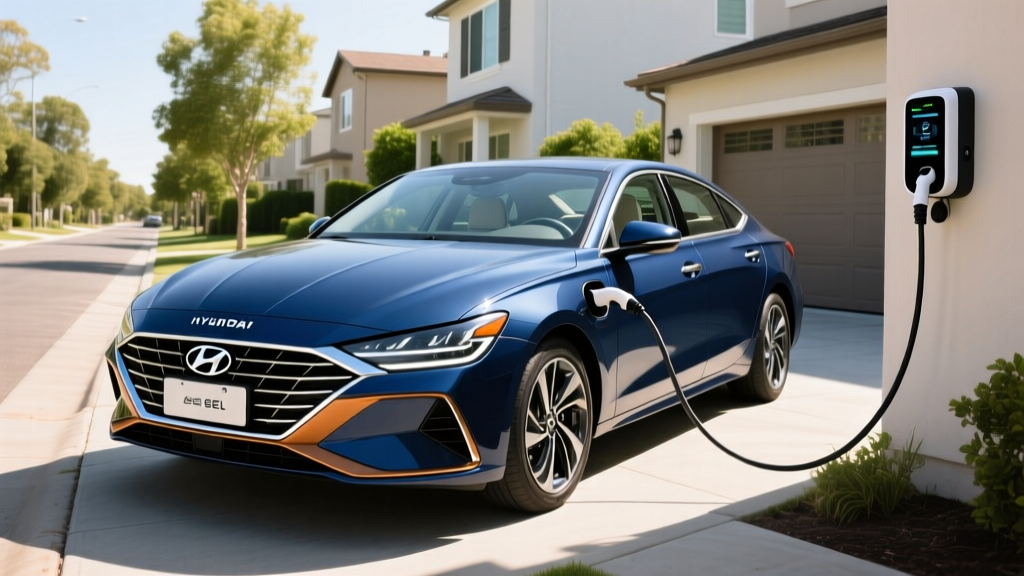
The 2024 Hyundai Sonata Hybrid SEL occupies a specific niche that many midsize sedan buyers are searching for: genuine hybrid fuel economy without the complexity, range anxiety, or charging infrastructure demands of a plug-in hybrid or full battery-electric vehicle. Redesigned for the 2024 model year with Hyundai's bold "RoboTie" front-end styling and a tech-forward interior, the Sonata Hybrid SEL delivers an EPA-rated 47 MPG combined while running as a conventional hybrid (HEV) — meaning you never plug it in.
At a starting MSRP of $30,250 (including destination), the SEL trim sits between the base Blue and the top-tier Limited. It adds features like heated front seats, a power driver's seat, and Hyundai's Digital Key 2, making it the value sweet spot in the Sonata Hybrid lineup. But how does it stack up against rivals like the Toyota Camry Hybrid, Honda Accord Hybrid, and Kia K5 Hybrid in real-world driving? And what should you expect from the battery over 100,000+ miles?
| Specification | 2024 Sonata Hybrid SEL |
|---|---|
| Powertrain | 2.0L I4 + electric motor (HEV) |
| Combined Horsepower | 192 HP |
| Engine | 150 HP @ 6,000 RPM / 139 lb-ft torque |
| Electric Motor | 39 kW (52 HP) / 151 lb-ft torque |
| Transmission | 6-speed automatic |
| EPA City / Highway / Combined | 44 / 51 / 47 MPG |
| Fuel Tank Capacity | 13.2 gallons |
| Estimated Total Range | ~620 miles |
| 0–60 MPH | ~7.7 seconds |
| Hybrid Battery | 1.62 kWh lithium-ion (not plug-in) |
| Drivetrain | Front-wheel drive |
| Base MSRP (SEL) | $30,250 |
| Federal Tax Credit | Not eligible (§30D is BEV/PHEV only) |
HEV vs. PHEV: What the Sonata Hybrid Actually Is
Before evaluating fuel economy and ownership costs, it's essential to understand what you're buying. The 2024 Sonata Hybrid is a conventional hybrid electric vehicle (HEV), not a plug-in hybrid (PHEV). This distinction matters enormously for how you use the car and what you can expect.
| Feature | HEV (Sonata Hybrid) | PHEV (e.g., Toyota RAV4 Prime) | BEV (e.g., Hyundai Ioniq 6) |
|---|---|---|---|
| Plug in to charge? | No — self-charging | Yes — 120V or 240V | Yes — 240V or DC fast |
| Electric-only range | ~1 mile at low speed | 25–42 miles typical | 200–360+ miles |
| Gasoline engine? | Yes (primary) | Yes (backup) | No |
| Federal tax credit (§30D) | No | Up to $7,500 (if eligible) | Up to $7,500 (if eligible) |
| Home charging needed? | No | Recommended for EV range | Essential |
| Best for | No garage/outlet access | Short commutes + road trips | Home charging + low running costs |
The Sonata Hybrid's 1.62 kWh lithium-ion battery is charged exclusively through regenerative braking and the gasoline engine. You cannot plug it into a wall outlet or charging station. This makes it ideal for buyers who live in apartments, lack garage access, or simply don't want to deal with charging logistics — but it also means you'll never drive more than roughly a mile on electric power alone at very low speeds.
Fuel Economy: EPA Ratings and Real-World MPG
According to fueleconomy.gov, the 2024 Hyundai Sonata Hybrid SEL carries the following EPA ratings:
| Driving Cycle | EPA Rating | Real-World Expectation |
|---|---|---|
| City | 44 MPG | 45–50 MPG (hybrids excel in stop-and-go) |
| Highway | 51 MPG | 46–49 MPG (aerodynamic drag at 75+ MPH) |
| Combined | 47 MPG | 45–48 MPG (mixed driving) |
One of the defining characteristics of conventional hybrids is that they often exceed their EPA city rating in real-world stop-and-go traffic. This is because regenerative braking recaptures kinetic energy during deceleration, and the electric motor handles low-speed propulsion where internal combustion engines are least efficient. If your commute involves heavy urban traffic, expect to see 46–50 MPG regularly.
Highway driving tells a different story. At sustained speeds above 70 MPH, the gasoline engine does most of the work, and aerodynamic drag increases exponentially. Expect highway fuel economy to settle around 46–49 MPG during summer driving. In cold weather (below freezing), you may see combined figures dip to 40–43 MPG as the engine runs more frequently to maintain cabin heat and battery temperature.
For context, the competing Toyota Camry Hybrid LE is EPA-rated at 51 combined MPG (53 city / 50 highway), while the Honda Accord Hybrid achieves 48 combined. The Sonata Hybrid SEL's 47 combined is competitive, though the Camry holds a slight edge in city efficiency thanks to Toyota's series-parallel hybrid architecture.
Powertrain Deep Dive: 192 HP Without the Complexity
Hyundai pairs a 2.0-liter naturally aspirated four-cylinder engine with a 39 kW (52 HP) electric motor integrated into the transmission housing. Combined system output is 192 horsepower, sent to the front wheels through a conventional 6-speed automatic transmission — not a continuously variable transmission (CVT) as found in the Camry and Accord hybrids.
This is a deliberate engineering choice. The 6-speed automatic provides more natural-feeling acceleration with defined gear shifts, avoiding the "rubber-band" sensation that some drivers dislike in CVTs. The trade-off is marginally lower efficiency in certain driving conditions, though Hyundai's calibration keeps the gap minimal.
The 0–60 MPH time of approximately 7.7 seconds places the Sonata Hybrid SEL squarely in the midpack of midsize hybrid sedans. It's not a performance car, but it merges onto highways and passes with adequate confidence. The electric motor's 151 lb-ft of torque is available from near-zero RPM, providing responsive off-the-line acceleration in city driving.
Hyundai's hybrid system also includes an Active Shift Control feature that synchronizes engine, motor, and transmission rotational speeds during shifts, reducing shift shock and improving durability. In practice, shifts are smooth and largely imperceptible during normal driving.
Hybrid Battery Warranty, Lifespan, and Replacement Cost
Battery Warranty Coverage
- Duration: 10 years / 100,000 miles (whichever comes first)
- Applies to: Hybrid battery pack, hybrid control unit, electric motor
- Transferable: Yes — to subsequent owners (may enhance resale value)
- Capacity threshold: Hyundai covers defects and significant capacity loss; consult dealer for specific SoH thresholds
The 1.62 kWh lithium-ion battery in the Sonata Hybrid is far smaller than what you'd find in a BEV or PHEV, and it operates under much less stress. It never fully depletes (the system maintains a buffer) and never charges to 100% — this partial-cycling strategy significantly extends battery lifespan.
Based on Hyundai's track record with the Ioniq Hybrid (discontinued after 2022) and earlier Sonata Hybrid generations, battery degradation in these systems is minimal. Many Hyundai/Kia hybrids have surpassed 150,000–200,000 miles on the original battery pack without requiring replacement. The 10-year/100,000-mile warranty provides strong protection during the highest-risk ownership period.
If replacement is eventually needed outside of warranty, expect a hybrid battery pack cost in the range of $2,000–$3,500 (parts and labor) at a Hyundai dealership. Independent hybrid specialists may offer refurbished packs for $1,200–$2,000. This is a fraction of the $10,000–$20,000+ replacement costs associated with large BEV battery packs, and the smaller capacity means lower material costs.
Pricing, Trims, and Tax Credit Reality
The 2024 Sonata Hybrid is available in three trims:
- Blue: $28,250 MSRP — highest efficiency (51 combined), fewer features
- SEL: $30,250 MSRP — the focus of this review; adds heated seats, Digital Key 2, power driver seat
- Limited: $35,250 MSRP — premium features including ventilated seats, panoramic sunroof, Highway Driving Assist
All prices include the $1,150 destination charge. The SEL trim's $2,000 premium over the Blue buys meaningful comfort and technology upgrades that most buyers will find worthwhile, particularly in colder climates where heated seats are essential.
Federal Tax Credit Eligibility
The 2024 Hyundai Sonata Hybrid does not qualify for the federal §30D clean vehicle tax credit. Under current IRS rules, the §30D credit of up to $7,500 applies exclusively to battery electric vehicles (BEVs) and plug-in hybrid electric vehicles (PHEVs) that meet battery sourcing, critical mineral, MSRP cap, and buyer income requirements. Conventional hybrids like the Sonata Hybrid are excluded entirely.
This is a meaningful consideration when comparing total purchase cost against PHEVs like the Toyota Prius Prime (EPA 52 combined MPG as HEV + 44 miles electric-only, eligible for up to $3,750 in federal credits depending on sourcing compliance) or BEVs like the Hyundai Ioniq 6. However, the Sonata Hybrid's lower base price and zero charging infrastructure requirements often offset the credit gap for buyers who cannot charge at home.
Some states offer their own hybrid incentives — check your state's energy office or department of environmental quality for current programs, as these vary widely and change frequently.
Safety, Tech, and the SEL Trim Experience
The 2024 Sonata Hybrid earned strong safety credentials. The Insurance Institute for Highway Safety (IIHS) awarded the Sonata the Top Safety Pick designation when equipped with specific headlights. Standard Hyundai SmartSense features include:
- Forward Collision-Avoidance Assist with pedestrian/cyclist detection
- Blind-Spot Collision-Avoidance Assist
- Rear Cross-Traffic Collision-Avoidance Assist
- Lane Keeping Assist and Lane Following Assist
- Safe Exit Warning
- Rear Occupant Alert
The SEL trim's 12.3-inch dual-screen setup (digital cluster + infotainment) with wireless Apple CarPlay and Android Auto is competitive with the class. Hyundai's Digital Key 2 allows your smartphone to function as the key fob via NFC and UWB — a feature typically reserved for luxury brands. The SEL also includes a wireless phone charging pad, dual-zone automatic climate control, and proximity key entry with push-button start.
One limitation worth noting: Hyundai's Highway Driving Assist (HDA), which combines adaptive cruise control with lane centering for SAE Level 2 driver assistance on divided highways, is standard only on the Limited trim. SEL buyers receive basic Smart Cruise Control with stop-and-go but must upgrade to Limited for the full hands-on-wheel highway assist experience. This is a driver-assist system — the driver must remain fully engaged at all times.
Who Should Choose the Sonata Hybrid SEL?
Choose the 2024 Sonata Hybrid SEL if:
- You lack home charging access (apartment, street parking, no garage outlet)
- Your commute is primarily city/stop-and-go where hybrids shine (45–50 MPG)
- You want low fuel costs without any behavioral change — just drive and refuel normally
- You prefer a conventional automatic transmission feel over CVT drone
- You want a 10-year/100,000-mile hybrid battery warranty for long-term peace of mind
Consider a PHEV or BEV instead if:
- You have home Level 2 charging and a short commute — a PHEV like the Prius Prime lets you drive 40+ miles on electricity daily, rarely using gas
- You want to qualify for the federal §30D tax credit (up to $7,500 for eligible BEVs/PHEVs)
- You want zero tailpipe emissions for daily driving (BEVs only)
- You drive under 40 miles daily round-trip and can charge nightly — a BEV's per-mile cost is roughly 3–5 cents vs. 10–12 cents in this hybrid
Pros
- 47 MPG combined EPA; often exceeds city rating in real-world traffic
- No plug-in charging required — zero infrastructure dependency
- 6-speed automatic avoids CVT drone
- 10-year/100,000-mile hybrid system warranty
- SEL trim well-equipped at $30,250
- 620+ mile total range per tank
Cons
- No federal tax credit eligibility
- Highway MPG trails city MPG (unusual among hybrids)
- Highway Driving Assist limited to top trim
- FWD only — no AWD option unlike Camry Hybrid
- 192 HP adequate but not sporty
Frequently Asked Questions
How many MPG does the 2024 Hyundai Sonata Hybrid SEL get?
The EPA rates the Sonata Hybrid SEL at 44 city / 51 highway / 47 combined MPG. In real-world city driving with stop-and-go traffic, many owners report 46–50 MPG. Highway cruising at 75+ MPH typically yields 46–49 MPG. Cold weather can reduce combined figures to 40–43 MPG.
Does the Sonata Hybrid need to be plugged in?
No. The 2024 Sonata Hybrid is a conventional hybrid (HEV), not a plug-in hybrid. Its 1.62 kWh battery charges through regenerative braking and the gasoline engine. You never plug it in — simply refuel with gasoline as you would any conventional car.
How far can the Sonata Hybrid drive on electric power alone?
Approximately 1 mile at very low speeds (under 25 MPH) in EV mode. This is not a plug-in hybrid and is not designed for meaningful electric-only driving. The electric motor primarily assists the gasoline engine for improved efficiency, not standalone propulsion.
Is the hybrid battery reliable, and what does replacement cost?
Hyundai's hybrid batteries have proven reliable, with many exceeding 150,000–200,000 miles without replacement. The battery is covered by a 10-year/100,000-mile warranty. Out-of-warranty replacement costs approximately $2,000–$3,500 at a dealer, or $1,200–$2,000 through an independent hybrid specialist with a refurbished pack.
Does the 2024 Sonata Hybrid qualify for any federal tax credit?
No. The federal §30D clean vehicle credit applies only to battery electric vehicles (BEVs) and plug-in hybrids (PHEVs). Conventional hybrids like the Sonata Hybrid are not eligible. Some states may offer separate hybrid incentives — check your state's energy office for current programs.
How does the Sonata Hybrid SEL compare to the Toyota Camry Hybrid?
The Camry Hybrid LE achieves 51 combined MPG (53 city / 50 highway) vs. the Sonata's 47 combined, and offers available AWD. However, the Sonata Hybrid SEL uses a 6-speed automatic (vs. Camry's CVT), offers a more distinctive design, and includes Digital Key 2. Both carry strong hybrid battery warranties (Toyota: 10 years/150,000 miles). The Camry Hybrid LE starts at ~$29,495, roughly $755 less than the Sonata SEL.
Should I buy the Sonata Hybrid or a full electric vehicle?
If you have reliable home Level 2 charging, drive under 250 miles daily, and want the lowest per-mile operating cost, a BEV like the Hyundai Ioniq 6 or Tesla Model 3 may save more long-term. If you lack charging access, frequently drive 400+ miles without stopping, or live in an area with unreliable public charging infrastructure, the Sonata Hybrid's 620-mile range and gas-station convenience make it the pragmatic choice.