The 2024 Hyundai Santa Fe arrived with a radical boxy redesign, and its hybrid powertrain is the version most buyers should actually consider. While the turbocharged 2.5-liter gas model exists, the Santa Fe Hybrid pairs a 1.6-liter turbo four-cylinder with an electric motor for meaningful fuel savings without range anxiety or plug-in requirements. Here's exactly what the numbers say — and where real-world driving diverges from the EPA sticker.
2024 Hyundai Santa Fe Hybrid: Core Specifications
| Attribute | Value |
|---|---|
| Powertrain | 1.6L turbo I-4 + electric motor (HEV) |
| Combined Horsepower | 230 HP |
| Combined Torque | 271 lb-ft |
| Transmission | 6-speed automatic |
| EPA Fuel Economy (FWD) | 36 city / 35 hwy / 36 combined MPG |
| EPA Fuel Economy (AWD) | 35 city / 34 hwy / 35 combined MPG |
| Fuel Tank Capacity | 17.7 gallons |
| Estimated Total Range | ~637 miles (FWD combined) |
| Battery Type | Lithium-ion polymer (1.49 kWh) |
| Drivetrain | FWD standard, HTRAC AWD available |
| 0–60 MPH | ~7.6 seconds (est.) |
| Starting MSRP (SEL Premium) | $38,660 |
| Top Trim MSRP (Limited) | $44,410 |
| Hybrid Battery Warranty | 10 years / 100,000 miles |
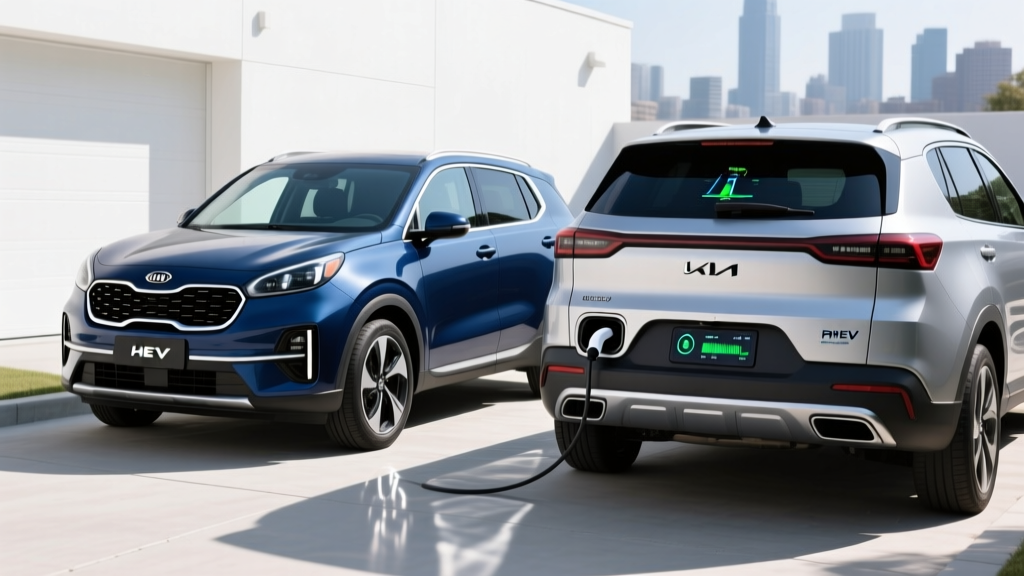
HEV vs PHEV: Which Santa Fe Hybrid Is Which?
Hyundai offers the Santa Fe in two electrified flavors for 2024, and confusing them is easy at the dealership. Here's the critical distinction:
| Feature | Santa Fe Hybrid (HEV) | Santa Fe Plug-In Hybrid (PHEV) |
|---|---|---|
| Plug-in charging required? | No — self-charging via regen + engine | Yes — 12.4 kWh battery, plug to charge |
| Electric-only range | ~1 mile at low speed | 30 miles (EPA est.) |
| Combined HP | 230 HP | 261 HP |
| EPA combined MPG / MPGe | 35–36 MPG | 79 MPGe (elec+gas) / 33 MPG (gas only) |
| Level 2 charge time (0–100%) | N/A | ~3 hours 45 min at 7.2 kW |
| DC fast charging | N/A | Not available |
| Battery capacity | 1.49 kWh | 12.4 kWh |
| Federal §30D tax credit | Not eligible | Not eligible (battery sourcing) |
| Starting MSRP | $38,660 | $41,160 |
The conventional HEV generates all its electricity onboard — through regenerative braking and the gasoline engine. You never plug it in. The PHEV adds a much larger 12.4 kWh battery pack and a more powerful electric motor, enabling 30 miles of electric-only driving before the gas engine kicks in. If your commute is under 30 miles round-trip and you can charge at home, the PHEV runs mostly on electricity during the week and operates as a 33 MPG hybrid on road trips.
Fuel Economy: EPA Ratings vs Real-World MPG
| Trim/Drivetrain | City MPG | Highway MPG | Combined MPG |
|---|---|---|---|
| SEL Premium FWD | 36 | 35 | 36 |
| Limited FWD | 36 | 35 | 36 |
| XRT AWD | 35 | 34 | 35 |
| Calligraphy AWD | 35 | 34 | 35 |
According to fueleconomy.gov, the FWD Santa Fe Hybrid achieves 36 MPG combined — a strong result for a three-row midsize SUV weighing over 4,400 pounds. But real-world results vary based on driving style and conditions.
Where hybrids overperform: City driving. The electric motor handles low-speed acceleration where gas engines are least efficient. Owners who drive 60%+ city routes frequently report 37–40 MPG in warm weather, exceeding the EPA sticker. Stop-and-go traffic maximizes regenerative braking, keeping the small battery charged and the engine off at stops.
Where hybrids underperform: Sustained highway driving above 75 MPH. Aerodynamic drag dominates at speed, and the boxy 2024 Santa Fe design doesn't help. Expect 30–33 MPG on long interstate trips at 75–80 MPH. Cold weather (below 30°F) reduces fuel economy by 5–10% across the board as the engine runs longer to heat the cabin and the battery's charge/discharge efficiency drops.
Practical annual fuel cost: At 15,000 miles/year, 35 MPG combined, and $3.40/gallon regular unleaded, you're spending roughly $1,457/year on fuel. The non-hybrid 2.5T Santa Fe (22 MPG combined) costs about $2,318/year — a $861 annual savings with the hybrid, or about $4,300 over five years.
Powertrain Deep Dive: How the Hybrid System Works
The 2024 Santa Fe Hybrid uses Hyundai's TMED-II (Transmission-Mounted Electric Drive) system. The 1.6-liter Smartstream turbocharged four-cylinder produces 178 HP and 195 lb-ft on its own. A 47.7 kW (64 HP) electric motor sits between the engine and the 6-speed automatic transmission, contributing to the combined system output of 230 HP and 271 lb-ft.
Unlike some competitors that use CVTs (which can drone under hard acceleration), Hyundai's 6-speed automatic delivers conventional shift feel. The electric motor fills in torque at low RPM before the turbo spools, eliminating the lag common in small-displacement turbo engines. The result is responsive off-the-line acceleration and confident highway merging.
The 1.49 kWh lithium-ion polymer battery sits under the rear seats. It's small by EV standards — it doesn't need to store much energy because it's constantly being cycled: charging under braking and deceleration, discharging during acceleration and low-speed electric-only creeping. This shallow cycling is actually ideal for battery longevity.
Santa Fe Plug-In Hybrid: Electric Range and Charging
If you're considering the PHEV variant, here's what the electric-only experience looks like:
- EPA electric-only range: 30 miles
- Real-world electric range: 25–32 miles depending on temperature, terrain, and speed. In warm weather city driving at moderate speeds, some owners squeeze 32–34 miles. In freezing temperatures with the heater running, expect 22–26 miles.
- Total combined range (electric + gas): Approximately 430 miles
- Electric motor output: 72 kW (96.5 HP) — significantly more powerful than the HEV's motor
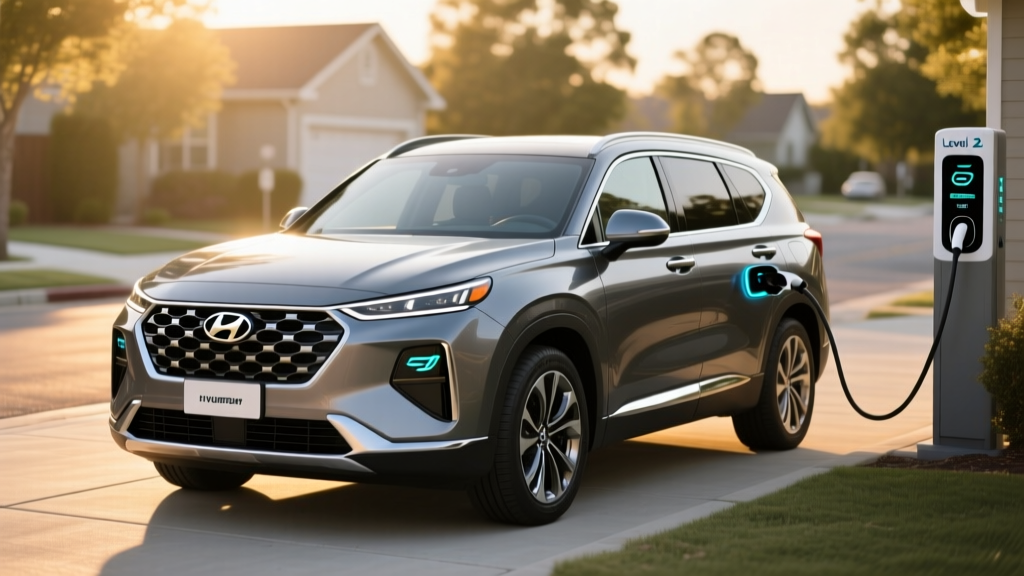
- Level 2 charging (240V, 7.2 kW): 0–100% in approximately 3 hours 45 minutes
- Level 1 charging (120V, 1.4 kW): 0–100% in approximately 11 hours — viable for overnight top-ups
- DC fast charging: Not available. The PHEV's 12.4 kWh pack uses a J1772 connector for AC charging only.
The PHEV's lack of DC fast charging is typical for plug-in hybrids — the battery is too small to justify the hardware cost and weight. For daily use, a Level 2 home charger installed in your garage replenishes the battery fully overnight or during a work-from-home day.
Pricing, Trims, and Tax Credit Eligibility
The 2024 Santa Fe Hybrid is offered in four trims, all well-equipped:
| Trim | Drivetrain | MSRP |
|---|---|---|
| SEL Premium | FWD or AWD | $38,660 (FWD) / $40,460 (AWD) |
| XRT | AWD | $41,060 |
| Limited | FWD or AWD | $44,410 (FWD) / $46,210 (AWD) |
| Calligraphy | AWD | $47,660 |
Federal tax credit status: Neither the Santa Fe HEV nor the Santa Fe PHEV qualifies for the IRS §30D federal clean vehicle tax credit (up to $7,500). The HEV is ineligible because conventional hybrids are excluded from §30D entirely — the credit applies only to plug-in vehicles with at least 7 kWh of battery capacity. The PHEV, despite meeting the battery-capacity threshold, fails the critical minerals and battery component sourcing requirements established under the Inflation Reduction Act. Hyundai's battery supply chain for this model does not meet the phased-in domestic-content thresholds.
State incentives: Some states offer their own rebates for hybrids and PHEVs. California's CVRP program, Colorado's state credit, and various utility company rebates may apply. These vary by jurisdiction and change frequently — check your state energy office or utility provider for current programs.
Battery Warranty, Reliability, and Replacement Cost
Hyundai Hybrid Battery Warranty Coverage
- Hybrid/EV battery warranty: 10 years / 100,000 miles (original owner)
- Capacity retention threshold: Hyundai warrants the battery against defects and excessive capacity loss — typically defined as falling below ~70% of original capacity
- Hybrid system components: 10 years / 100,000 miles (motor, inverter, converter)
- Transferability: The 10/100,000 powertrain and hybrid battery warranty reduces to 5 years / 60,000 miles upon transfer to a second owner
Hyundai's 10-year/100,000-mile hybrid battery warranty is among the best in the industry, matching Toyota's coverage and exceeding most competitors. This matters because battery replacement cost is a top concern for hybrid buyers.
Is the Santa Fe Hybrid reliable? Hyundai's 1.6T hybrid powertrain has been in use across the Tucson Hybrid, Sonata Hybrid, and Kia Sorento Hybrid since 2021–2022. Early models had some software-related rough-shift complaints, but Hyundai issued TSB (Technical Service Bulletin) updates to address transmission calibration. The system is now considered mature. Hyundai's hybrid architecture is simpler than Toyota's planetary-gear eCVT design, which has its own reliability advantages but different driving feel.
Battery replacement cost: If the hybrid battery fails outside of warranty (unlikely before 150,000+ miles based on industry data), replacement costs range from $2,500–$4,500 including labor for the 1.49 kWh HEV pack. The PHEV's 12.4 kWh pack would cost considerably more — estimated $6,000–$9,000. However, data from Consumer Reports and fleet studies show modern lithium-ion hybrid batteries routinely exceed 150,000–200,000 miles before significant degradation. The shallow charge/discharge cycles in an HEV are far less stressful than the deep cycles in a full EV.
Hybrid vs PHEV vs Full EV: Which Santa Fe Fits You?
Choose the Santa Fe Hybrid (HEV) if:
- You can't charge at home (apartment, street parking, no garage)
- You want maximum simplicity — no plugs, no charging apps, no route planning
- You drive 12,000–20,000 miles/year in mixed city/highway conditions
- You want the lowest upfront price in the electrified Santa Fe lineup
- You take frequent road trips and don't want to think about charging stops
Choose the Santa Fe Plug-In Hybrid (PHEV) if:
- You can install a Level 2 charger at home and your daily commute is under 30 miles round-trip
- You want to drive on electricity most weekdays but need gas flexibility for weekend trips
- You want the most powerful Santa Fe variant (261 HP vs 230 HP)
- Your local electricity rates make "fueling" on electrons significantly cheaper than gasoline
Choose a full EV (e.g., Hyundai Ioniq 5 or Kia EV9) if:
- You have reliable home charging and your daily driving is under 250 miles
- You want to eliminate gasoline entirely and minimize maintenance (no oil changes, no transmission fluid)
- You qualify for the $7,500 federal tax credit on an eligible EV, narrowing the price gap
- You prioritize instant torque, silent operation, and the lowest per-mile energy cost
The honest calculus: if you can charge at home and rarely drive more than 30 miles daily, the PHEV gives you EV-like commuting with gas-engine insurance. If you can't charge at home, the HEV is the clear winner — it requires zero behavioral change from a gas car while delivering 35–36 MPG. A full EV like the Ioniq 5 (305 miles EPA, eligible for the federal credit) makes the most financial sense for home-charging households ready to commit fully to electric — but it demands acceptance of public charging infrastructure for road trips.
Real Ownership Considerations
Insurance: Hybrid SUVs carry slightly higher insurance premiums than gas equivalents (typically 5–8% more) due to higher repair costs for the electrified powertrain. Get a quote before purchasing — the savings on fuel should still outweigh the premium increase.
Maintenance: The hybrid system adds virtually no maintenance burden. The engine still requires regular oil changes (every 7,500 miles with synthetic), but brake pad life is often extended because regenerative braking handles much of the deceleration. Expect brake pads to last 60,000–80,000+ miles in mixed driving.
Towing: The Santa Fe Hybrid is rated for 2,000 pounds towing capacity (with the factory tow package). That's adequate for a small utility trailer or a pair of dirt bikes but not enough for most campers or boats. If you need serious towing (3,500+ lbs), the gas-only 2.5T model rates at 3,500 pounds.
Cargo and space: The hybrid battery placement under the rear seats preserves cargo volume. You get 40.5 cubic feet behind the second row and 79.6 cubic feet with both rear rows folded — identical to the gas model. The boxy redesign maximizes interior usability, making this one of the most practical midsize hybrid SUVs available.
Pros
- 36 MPG combined is exceptional for a three-row SUV
- No plug-in charging required — zero lifestyle change from gas
- 10-year/100,000-mile hybrid battery warranty
- 230 HP with strong low-end torque from electric motor assist
- Spacious boxy interior with usable third row
- 6-speed automatic avoids CVT drone
- Standard wireless Apple CarPlay and Android Auto
Cons
- No federal tax credit eligibility for HEV or PHEV
- Highway MPG drops to 30–33 at sustained 75+ MPH
- 2,000-lb tow rating is below gas model and key rivals
- AWD adds $1,800 and costs 1 MPG
- Third row is tight for adults on long trips
- PHEV lacks DC fast charging
- Boxy styling creates more wind noise at highway speed
Frequently Asked Questions
How many MPG does the 2024 Hyundai Santa Fe Hybrid actually get?
The EPA rates the FWD Santa Fe Hybrid at 36 city / 35 highway / 36 combined MPG. AWD models drop to 35/34/35. In real-world driving, city-heavy routes in warm weather can yield 37–40 MPG, while sustained highway driving above 75 MPH typically returns 30–33 MPG. Cold weather reduces economy by 5–10%.
Does the Santa Fe Hybrid need to be plugged in?
No. The conventional Santa Fe Hybrid (HEV) charges its 1.49 kWh battery entirely through regenerative braking and the gasoline engine. You fuel it exactly like a regular gas car. Only the Santa Fe Plug-In Hybrid (PHEV) variant requires plug-in charging to access its 30-mile electric-only range.
How far can the Santa Fe Plug-In Hybrid go on electric only?
The EPA rates the Santa Fe PHEV at 30 miles of electric-only range. Real-world results range from 22–26 miles in cold weather to 32–34 miles in ideal warm-weather city conditions. Once the battery depletes, the PHEV operates as a conventional hybrid rated at 33 MPG combined.
Does the 2024 Santa Fe Hybrid qualify for any tax credit?
Neither the HEV nor the PHEV qualifies for the federal §30D clean vehicle tax credit. The HEV doesn't meet the minimum plug-in battery capacity requirement, and the PHEV fails the IRA's critical minerals and battery component sourcing rules. Some state-level incentives and utility rebates may apply — check your local programs.
How long will the Santa Fe Hybrid battery last and what does replacement cost?
Hyundai warrants the hybrid battery for 10 years / 100,000 miles. Based on industry data from similar lithium-ion hybrid systems, these batteries routinely last 150,000–200,000+ miles before significant degradation. The HEV's 1.49 kWh pack would cost approximately $2,500–$4,500 to replace out of warranty. The PHEV's 12.4 kWh pack would cost an estimated $6,000–$9,000.
Is the Santa Fe Hybrid better than the Toyota Highlander Hybrid?
It depends on priorities. The Highlander Hybrid achieves 35 MPG combined with standard AWD and offers more third-row space, but it uses a CVT that some drivers find unrefined under hard acceleration. The Santa Fe Hybrid matches its MPG (with FWD), offers a more conventional 6-speed transmission feel, and has a more modern interior. The Highlander wins on third-row comfort and proven long-term reliability track record; the Santa Fe wins on design freshness and warranty length.
Can the Santa Fe Hybrid tow a trailer?
Yes, but capacity is limited. The hybrid is rated for 2,000 pounds with the factory tow package. That covers a small utility trailer, bike rack with bikes, or a lightweight pop-up camper. For heavier loads (boats, larger campers), the gas-only 2.5T Santa Fe rates at 3,500 pounds.