Quick Verdict: The Top-Trim Hybrid That Pays for Itself at the Pump
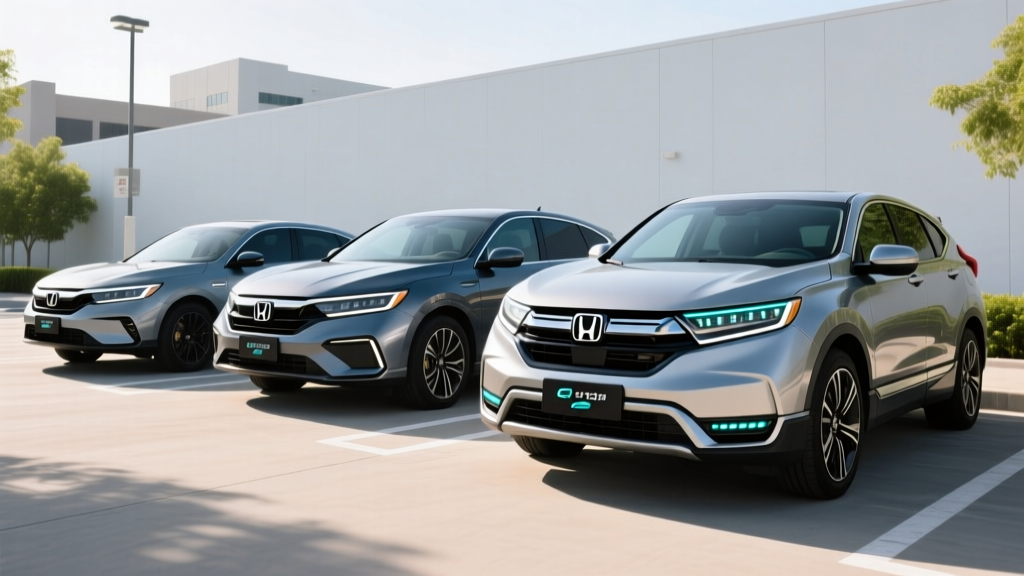
The 2024 Honda CR-V Hybrid Sport Touring sits at the apex of Honda's compact SUV hybrid lineup, pairing a 204-horsepower two-motor hybrid system with the most feature-rich trim available. With an EPA-estimated 40 MPG combined, it undercuts nearly every gasoline rival in the segment on fuel cost while delivering standard all-wheel drive, a premium cabin, and Honda's full suite of driver-assistance tech. For buyers who want meaningful fuel savings without plugging in, this is one of the most compelling packages on the market.
But sticker numbers don't always match what you'll see on your dashboard. Below, we break down the real-world MPG you should expect, the hybrid powertrain's engineering, long-term battery reliability, and whether this HEV makes more sense for your garage than a PHEV or full BEV.
EPA Fuel Economy vs. Real-World MPG
| Drive Cycle | EPA Estimate | Real-World Expectation |
|---|---|---|
| City | 40 MPG | 38–43 MPG (hybrids often beat EPA in city) |
| Highway | 34 MPG | 31–35 MPG |
| Combined | 37 MPG | 35–39 MPG |
Source: EPA fueleconomy.gov
Compared to the gasoline-only CR-V AWD (EPA 29 MPG combined), the hybrid saves roughly 8 MPG — translating to approximately 130–150 gallons per year for a driver covering 15,000 miles annually. At $3.50/gallon, that's $455–$525 in annual fuel savings.
HEV vs. PHEV vs. EV: Which Powertrain Fits You?
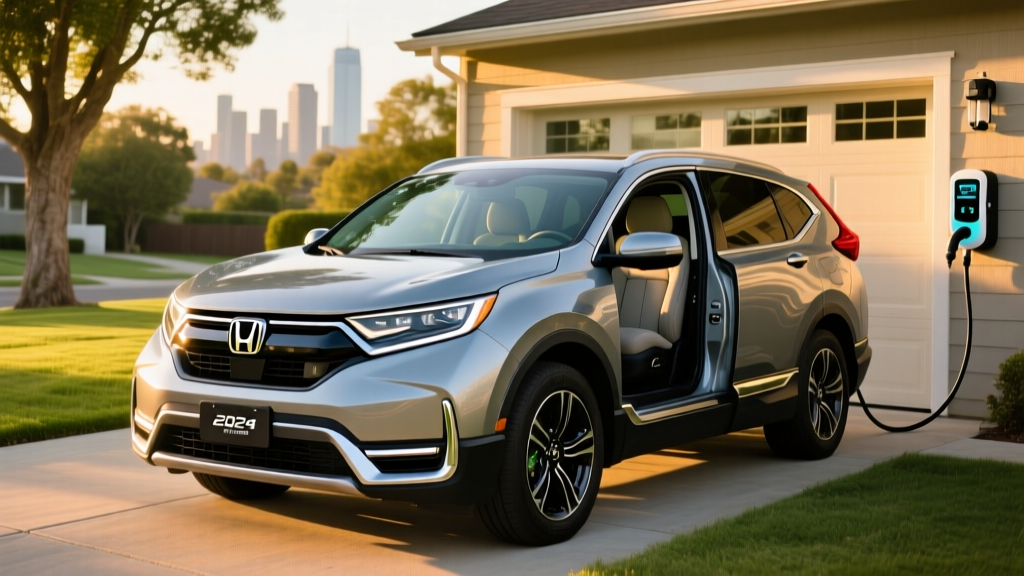
One of the most common buyer questions is whether to choose a conventional hybrid (HEV), a plug-in hybrid (PHEV), or a full battery-electric vehicle (BEV). The 2024 CR-V Hybrid is an HEV — it cannot be plugged in. Honda does not currently offer a PHEV version of the CR-V in the US market.
| Factor | HEV (CR-V Hybrid) | PHEV (e.g., Toyota RAV4 Prime) | BEV (e.g., Tesla Model Y) |
|---|---|---|---|
| Plug-in required? | No | Yes (optional but recommended) | Yes (mandatory) |
| Electric-only range | N/A (EV assist only) | ~35–42 mi | 260–330 mi |
| Total range | ~500 mi | ~550+ mi | 260–330 mi |
| Fuel cost per mile | ~$0.09 | ~$0.04 (electric) / $0.09 (gas) | ~$0.03–$0.05 |
| Home charging needed? | No | Recommended for full benefit | Essential |
| Federal tax credit (§30D) | Not eligible | Up to $7,500 (if eligible) | Up to $7,500 (if eligible) |
| Best for | No home charging access; want simplicity | Home charging + regular short commutes | Home charging + mostly under 250 mi/day |
- You rent or lack access to a dedicated parking spot with a 120V/240V outlet
- You want fuel savings with zero behavioral change — no plugging in, no route planning
- You regularly take road trips exceeding 300 miles and don't want to plan charging stops
- You want a lower purchase price than a comparable PHEV or BEV
- You have home Level 2 charging and a commute under 40 miles (PHEV covers most trips on electricity)
- You want to minimize fuel cost and qualify for the §30D federal tax credit
- You want one-pedal driving and instant electric torque as primary driving experiences
Powertrain and Performance Specs
| Powertrain | 2.0L DOHC 4-cylinder + two-motor hybrid system |
| Combined horsepower | 204 HP |
| Combined torque | 247 lb-ft (electric motor) |
| Drivetrain | Real Time AWD™ (standard on Sport Touring) |
| Transmission | Electronic Continuously Variable (eCVT) |
| 0–60 mph | ~7.6 seconds (est.) |
| Hybrid battery | Lithium-ion, ~1.1 kWh (small buffer, not plug-in) |
| Towing capacity | 1,000 lbs |
| Cargo volume | 36.3 cu ft (rear seats up) / 76.5 cu ft (folded) |
| EPA combined MPG | 37 MPG (AWD) |
| Fuel tank | 14.0 gallons |
| Total range | ~518 miles |
The CR-V Hybrid uses Honda's fourth-generation two-motor hybrid system. The gasoline engine primarily acts as a generator at low and moderate speeds, while the propulsion motor drives the front wheels. At highway speeds, a lock-up clutch connects the engine directly to the wheels for improved efficiency. The result is seamless, quiet acceleration in city driving and respectable highway passing power.
The 204 HP combined output makes the Sport Touring the most powerful CR-V trim — the gasoline-only CR-V produces 190 HP from its 1.5L turbo. The hybrid's 247 lb-ft of electric motor torque is available from near-zero RPM, giving it a responsive feel that the turbo engine can't match off the line.
Sport Touring Trim: What You Get for the Price
The 2024 CR-V Hybrid is available in three trims: Sport ($35,395), Sport-L ($37,695), and Sport Touring ($40,895). All prices include the $1,395 destination charge. The Sport Touring commands a premium but bundles nearly every available feature:
- Standard AWD — Real Time AWD is included on all Hybrid trims
- 9-inch touchscreen with wireless Apple CarPlay and Android Auto
- Bose premium audio — 12-speaker system
- Wireless phone charging pad
- Heated and ventilated front seats, heated steering wheel
- Hands-free power tailgate with walk-away close
- Honda Sensing® suite — adaptive cruise control, lane-keeping assist, collision mitigation, traffic sign recognition
- Low-speed braking control and traffic jam assist
- 19-inch alloy wheels
- Navigation with real-time traffic
Source: Honda Automobiles Official Specs
Battery Reliability, Warranty, and Replacement Cost
- Coverage: 8 years / 100,000 miles (10 years / 150,000 miles in CARB states including CA, CT, ME, MA, NJ, NY, OR, RI, VT, WA)
- What's covered: Defects in materials/workmanship, capacity loss below a defined threshold
- Powertrain warranty: 5 years / 60,000 miles
- Limited vehicle warranty: 3 years / 36,000 miles
The CR-V Hybrid's lithium-ion traction battery is relatively small (~1.1 kWh) compared to a PHEV or BEV, which works in its favor for longevity. Smaller batteries experience shallower charge-discharge cycles, and Honda's hybrid system carefully manages the state-of-charge window (typically keeping the battery between ~40% and ~80% SoC) to minimize degradation stress.
Honda's hybrid battery track record is strong. Third-generation CR-V Hybrids and earlier Insight models have demonstrated battery packs lasting well beyond 150,000 miles with minimal capacity loss. The two-motor system's design means even modest degradation doesn't dramatically affect drivability — the engine simply compensates.
Battery replacement cost: If the hybrid battery fails outside of warranty, expect a dealer replacement to cost between $2,000 and $4,000 including parts and labor. Independent hybrid specialists may offer refurbished packs for $1,500–$2,500. However, given Honda's warranty terms and the battery's conservative management, out-of-pocket replacement during typical ownership (5–10 years) is uncommon.
Tax Credits and Ownership Economics
Because the 2024 CR-V Hybrid is a conventional HEV (not a PHEV or BEV), it does not qualify for the IRS §30D federal clean vehicle tax credit. That credit, which can provide up to $7,500, is reserved for plug-in vehicles meeting battery sourcing, MSRP cap, and buyer income requirements per IRS guidelines.
However, the CR-V Hybrid's lower purchase price partially offsets the lack of a tax credit. Here's a five-year cost comparison:
| Cost Factor | CR-V Hybrid Sport Touring (HEV) | CR-V EX-L AWD (Gas) | RAV4 Prime SE (PHEV) |
|---|---|---|---|
| MSRP (approx.) | $40,895 | $38,290 | $44,590 |
| Federal tax credit | $0 | $0 | Up to $7,500* |
| Net purchase price | $40,895 | $38,290 | ~$37,090* |
| Fuel cost (5 yr, 75k mi) | ~$7,095** | ~$9,090** | ~$3,200** |
| Est. maintenance (5 yr) | ~$2,800 | ~$3,200 | ~$2,600 |
| 5-year total (est.) | ~$50,790 | ~$50,580 | ~$42,890* |
*Assumes full §30D credit eligibility; buyer income, MSRP caps, and battery sourcing rules apply. Verify at irs.gov.
**Based on 37 MPG (HEV), 29 MPG (gas), $3.50/gal; PHEV assumes 60% electric driving at $0.14/kWh.
The CR-V Hybrid and gas CR-V are closely matched over five years — the hybrid's fuel savings nearly offset its higher sticker price. The RAV4 Prime PHEV pulls ahead significantly if you qualify for the full $7,500 credit and charge regularly at home.
Pros and Cons
Pros
- 37–40 MPG real-world combined; excels in city driving
- No plug-in required — zero lifestyle change from a gas car
- 204 HP makes it the quickest CR-V variant
- Standard AWD across all Hybrid trims
- Sport Touring is fully loaded — Bose, ventilated seats, navigation
- Strong 8-year/100,000-mile hybrid battery warranty (10 yr in CARB states)
- Spacious cargo area (36.3 cu ft) with minimal hybrid packaging compromise
- Excellent IIHS safety ratings
Cons
- No federal tax credit eligibility (HEV, not PHEV)
- Highway MPG drops to 34 — less advantage on long freeway commutes
- ~$40,900 Sport Touring price approaches luxury compact SUV territory
- 1,000-lb towing capacity is modest for the class
- eCVT can produce a droning engine note under hard acceleration
- No PHEV CR-V option available from Honda
- Cold-weather MPG penalty of 8–12%
Frequently Asked Questions
How many MPG does the 2024 Honda CR-V Hybrid Sport Touring get?
The EPA rates the 2024 CR-V Hybrid AWD at 40 MPG city, 34 MPG highway, and 37 MPG combined. In real-world driving, city MPG often exceeds the EPA estimate (38–43 MPG), while highway driving at sustained speeds above 70 MPH typically yields 31–35 MPG. Cold weather can reduce combined fuel economy by 8–12%.
Does the CR-V Hybrid need to be plugged in?
No. The 2024 CR-V Hybrid is a conventional hybrid (HEV). Its small lithium-ion battery recharges through regenerative braking and the gasoline engine. There is no plug, no charging cable, and no electric-only driving range. You fuel it like any other car and the hybrid system handles the rest.
Is the CR-V Hybrid reliable, and what does battery replacement cost?
Honda's hybrid systems have demonstrated strong long-term reliability. The CR-V Hybrid battery is covered by an 8-year/100,000-mile warranty (10 years/150,000 miles in CARB states). If replacement is needed outside warranty, expect $2,000–$4,000 at a dealer. Based on Honda's track record with the Insight and previous CR-V Hybrid generations, most owners will never face an out-of-warranty battery replacement during typical ownership.
Does the 2024 CR-V Hybrid qualify for any tax credit?
The CR-V Hybrid does not qualify for the IRS §30D federal clean vehicle tax credit because it is a conventional hybrid (HEV), not a plug-in vehicle. Some states and local utilities offer rebates for hybrid purchases, but these vary by jurisdiction — check your state energy office or utility provider for current programs. The lack of a federal credit is offset by the hybrid's lower MSRP compared to PHEV alternatives.
How does the CR-V Hybrid compare to the Toyota RAV4 Hybrid?
The 2024 RAV4 Hybrid AWD is rated at 41 MPG city / 38 MPG highway / 40 MPG combined — slightly better than the CR-V Hybrid on the highway. The RAV4 also offers a PHEV variant (RAV4 Prime) with 42 miles of electric-only range and potential §30D tax credit eligibility. The CR-V Hybrid counters with a more premium interior in the Sport Touring trim, a slightly more powerful hybrid system (204 HP vs. 219 HP for the RAV4 Hybrid, though Honda's torque delivery feels more responsive in city driving), and a larger cargo area. Both are strong choices — the RAV4 Hybrid wins on pure MPG, while the CR-V Hybrid Sport Touring wins on features and refinement at the top trim.
Is the Honda Sensing driver-assistance system self-driving?
No. Honda Sensing is an SAE Level 2 driver-assistance system. It includes adaptive cruise control, lane-keeping assist, and collision mitigation braking, but the driver must remain fully engaged with hands on the wheel and eyes on the road at all times. It is not autonomous or "self-driving" in any capacity.