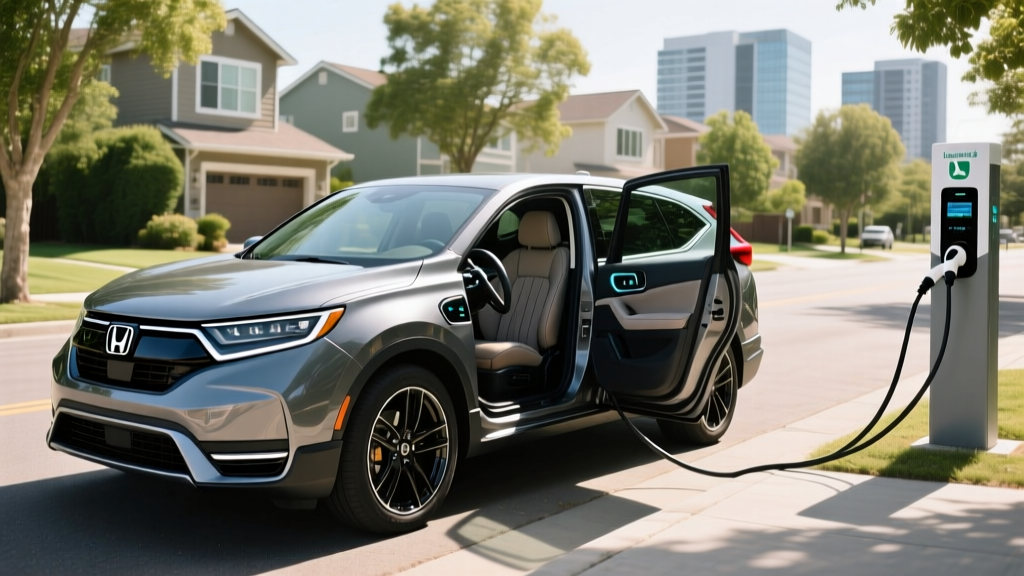
The 2024 Honda CR-V Hybrid Sport occupies a specific niche in the compact crossover market: it pairs a proven two-motor hybrid system with Honda's sport-tuned suspension and styling, delivering 40 MPG combined without ever needing a plug. For buyers weighing their options between a conventional gas CR-V, a plug-in hybrid, or a full battery-electric vehicle, this trim represents a low-friction entry into electrified driving — no charging infrastructure required, no range anxiety, and a well-documented reliability record.
This guide breaks down the exact EPA fuel economy figures, real-world efficiency observations, powertrain specs, battery warranty terms, and total ownership picture for the 2024 CR-V Hybrid Sport, so you can make a spec-driven decision.
2024 Honda CR-V Hybrid Sport: Core Specifications
| Specification | Value |
|---|---|
| Powertrain | 2.0L DOHC 4-cyl + 2-motor hybrid system |
| Combined Horsepower | 204 hp |
| Combined Torque | 247 lb-ft (motor) |
| Drivetrain | AWD (standard on Sport Hybrid) |
| EPA MPG (City / Hwy / Combined) | 40 / 34 / 37 (AWD) |
| Fuel Tank Capacity | 15.3 gallons |
| Total Driving Range | ~566 miles (EPA combined) |
| 0-60 mph | ~7.8 seconds (est.) |
| Cargo Volume (rear seats up / down) | 36.3 / 76.5 cu ft |
| Towing Capacity | 1,000 lbs |
| Base MSRP (Sport Hybrid AWD) | $36,395 (incl. destination) |
| Hybrid Battery Warranty | 8 years / 100,000 miles |
| Federal Tax Credit Eligibility | Not eligible (§30D applies to PHEVs/BEVs only) |
Fuel Economy: EPA Ratings vs. Real-World MPG
The 2024 CR-V Hybrid Sport with standard AWD carries EPA ratings of 40 MPG city, 34 MPG highway, and 37 MPG combined, according to fueleconomy.gov. The FWD variant (available on lower hybrid trims but not the Sport) bumps those to 43/36/40.
| Drivetrain | City MPG | Highway MPG | Combined MPG |
|---|---|---|---|
| FWD (LX Hybrid, EX Hybrid) | 43 | 36 | 40 |
| AWD (Sport Hybrid, Sport Touring Hybrid) | 40 | 34 | 37 |
Real-world observations: Honda's two-motor hybrid system excels in stop-and-go urban driving, where the electric motor handles low-speed propulsion and the gasoline engine acts primarily as a generator. Owners and independent testers frequently report exceeding the EPA city estimate — 42-45 MPG is achievable in warm-weather city driving with moderate acceleration. Highway driving at 75+ mph tends to land closer to 30-32 MPG, where the engine assumes direct drive and aerodynamic drag dominates. In cold weather (below 30°F), expect a 5-10% reduction across the board as the engine runs more frequently for cabin heat and the battery's charge/discharge efficiency drops.
Hybrid vs. Plug-In Hybrid vs. Full EV: Which Fits You?
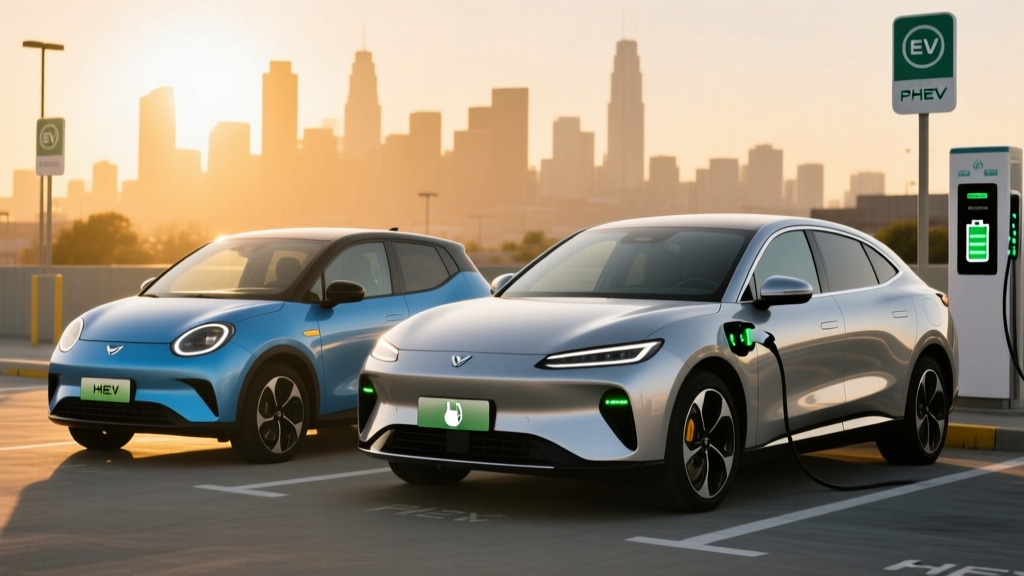
The CR-V lineup in 2024 does not offer a plug-in hybrid (PHEV) variant in the US market. Honda's US PHEV offerings are limited, and the CR-V Hybrid is strictly a conventional hybrid electric vehicle (HEV). Here's how these three electrified powertrains differ and who each serves best:
| Factor | HEV (CR-V Hybrid) | PHEV (e.g., Toyota RAV4 Prime) | BEV (e.g., Tesla Model Y) |
|---|---|---|---|
| Plug-in Required? | No | Yes (for EV range) | Yes |
| Electric-Only Range | N/A (EV assists only) | 25-42 miles typical | 250-330 miles |
| Fueling/Charging | Gas station only | Gas + Level 1/2 charging | Level 2 / DC fast charging |
| EPA Combined Efficiency | 37-40 MPG | 38-40 MPG + 94-105 MPGe | 110-130 MPGe |
| Federal Tax Credit (§30D) | Not eligible | Up to $7,500 (if eligible) | Up to $7,500 (if eligible) |
| Home Charging Needed? | No | Recommended for EV miles | Essential |
| Best For | No charging access, simplicity | Short commute + home charging | Full EV lifestyle, home charging |
Choose the CR-V Hybrid (HEV) if: You lack reliable home or workplace charging, you want a single-vehicle solution for city and road trips, and you want electrified efficiency without changing your fueling habits. The HEV's 566-mile total range and 37-40 MPG combined beat the gas-only CR-V (28 MPG combined AWD) by a wide margin.
Consider a PHEV if: You have home Level 2 charging, your daily commute is under 30-40 miles (covering most trips on electricity), and you want a gas engine for longer road trips. The Toyota RAV4 Prime (42 miles EV range, ~$44,000 MSRP) is the closest competitor in this segment.
Consider a BEV if: You have reliable home charging, your daily driving is under 250 miles, you want the lowest per-mile energy cost, and you qualify for the federal tax credit. The Tesla Model Y, Hyundai Ioniq 5, and Ford Mustang Mach-E are segment benchmarks.
Powertrain Deep Dive: 204 HP Two-Motor System
The 2024 CR-V Hybrid uses Honda's fourth-generation two-motor hybrid system, pairing a 2.0-liter Atkinson-cycle DOHC inline-4 with two electric motors mounted in the transmission housing. The system produces a combined 204 horsepower and 247 lb-ft of torque from the drive motor.
Unlike Toyota's planetary-gear Hybrid Synergy Drive, Honda's system operates in three distinct modes:
- EV Drive: Battery powers the drive motor alone (low speeds, gentle acceleration). The gasoline engine is off.
- Hybrid Drive: The engine spins the generator motor, which sends electricity to the drive motor. The engine does not mechanically drive the wheels. This is the dominant mode in city driving.
- Engine Drive: At highway cruising speeds, a lock-up clutch connects the engine directly to the front wheels for maximum efficiency. The electric motor provides assist as needed.
The AWD system on the Sport Hybrid adds a rear-mounted electric motor that provides torque to the rear axle when traction demands it — there is no mechanical driveshaft connecting the engine to the rear wheels. This keeps weight down and allows the system to operate as FWD in steady-state cruising, engaging the rear motor only during acceleration, slippery conditions, or hill climbs.
The hybrid battery is a lithium-ion pack mounted under the rear cargo floor. Honda does not publish the exact kWh capacity for the HEV battery (it is small — typically under 2 kWh usable — because its role is buffering energy, not storing it for EV-only driving). This is fundamentally different from a PHEV battery, which is typically 15-20 kWh and designed for sustained electric-only propulsion.
Battery Warranty, Reliability, and Replacement Costs
Reliability track record: Honda's hybrid systems have proven durable in long-term ownership. The two-motor design has fewer wear components than conventional transmissions — there are no traditional gear shifts, torque converters, or clutches (beyond the highway lock-up clutch) to fail. Consumer Reports and J.D. Power have generally rated Honda's hybrid powertrains favorably for reliability. The CR-V as a platform carries strong resale value, which reflects market confidence in long-term durability.
Battery replacement cost: If the hybrid battery fails outside warranty, replacement costs typically range from $2,000 to $4,000 for the battery pack, plus labor. This is significantly less than a full BEV battery replacement ($10,000-$20,000+) because the HEV battery is small (under 2 kWh). In practice, Honda hybrid batteries rarely require full replacement — individual cell balancing or module replacement is more common, and many units last well beyond 150,000 miles with proper maintenance.
Maintenance advantages: The hybrid system reduces wear on the gasoline engine (it shuts off at stops and during low-speed driving), extends brake life through regenerative braking, and eliminates the traditional alternator and starter motor. Honda recommends the same maintenance schedule as the gas CR-V: oil changes every 7,500-10,000 miles, tire rotations, and cabin air filter replacement.
Pricing, Trims, and Tax Credit Eligibility
The 2024 Honda CR-V Hybrid is available in four trims, all with the same 204-hp two-motor hybrid powertrain:
| Trim | Drivetrain | MSRP (incl. destination) |
|---|---|---|
| Sport Hybrid | AWD | $36,395 |
| Sport-L Hybrid | AWD | $38,395 |
| Sport Touring Hybrid | AWD | $41,195 |
Note: The non-hybrid CR-V LX, EX, and EX-L trims also offer a hybrid variant with FWD at slightly lower price points, but the Sport, Sport-L, and Sport Touring are exclusively AWD hybrid.
Federal tax credit: The 2024 CR-V Hybrid does not qualify for the federal §30D Clean Vehicle Credit. Under current IRS rules, the §30D credit applies only to plug-in electric vehicles (BEVs and PHEVs) that meet battery capacity, MSRP, buyer income, and critical-mineral sourcing requirements. Conventional hybrids (HEVs) like the CR-V Hybrid are excluded because they cannot be plugged in and their battery capacity falls below the 7 kWh threshold.
State incentives: Some states offer rebates or HOV lane access for hybrid vehicles, though these are less common than EV/PHEV incentives. Check your state's energy or environmental agency for current programs. These vary significantly by jurisdiction and change frequently.
Driving Experience: Sport Trim Character
The Sport Hybrid trim distinguishes itself from the standard CR-V Hybrid with a sport-tuned suspension, 19-inch alloy wheels, black exterior accents, and paddle shifters that adjust regenerative braking intensity through four levels. The steering is weighted slightly heavier than the non-Sport trims.
On the road, the hybrid system delivers seamless low-speed acceleration — the electric motor's instant torque (247 lb-ft available from 0 RPM) makes the CR-V Hybrid feel more responsive around town than the turbocharged gas CR-V (190 hp, 179 lb-ft), despite the similar 0-60 times. The transition between EV Drive, Hybrid Drive, and Engine Drive modes is nearly imperceptible in normal driving.
The Sport's firmer suspension tuning trades a small amount of ride comfort for improved body control on winding roads. Road noise remains a Honda weak point — the 19-inch wheels and thinner tire sidewalls transmit more pavement texture into the cabin than the 18-inch wheels on lower trims. For buyers prioritizing quietness, the Sport Touring Hybrid's additional sound insulation is worth the premium.
Honda Sensing (the brand's ADAS suite) is standard across all trims and includes adaptive cruise control with low-speed follow, lane-keeping assist, road departure mitigation, and traffic sign recognition. This is a SAE Level 2 driver-assistance system — it requires continuous driver attention and hands-on-wheel engagement. It is not autonomous driving.
Who Should Buy the 2024 Honda CR-V Hybrid Sport?
- 40 MPG city (FWD) / 37 MPG combined (AWD) — class-leading efficiency
- No plug-in charging required — works with existing gas-station habits
- 566-mile total range eliminates refueling stops on road trips
- Strong reliability record; 8yr/100k battery warranty
- AWD standard on Sport trim with electric rear motor
- Competitive cargo space (36.3 cu ft) with no battery intrusion
- No federal tax credit eligibility (HEV exclusion)
- 1,000-lb towing capacity — below gas CR-V's 1,500 lbs
- Road noise on 19-inch Sport wheels
- No PHEV variant in US market for EV-only commuting
- AWD fuel economy drops 3 MPG vs FWD hybrid trims
- You want 37+ MPG without installing a home charger or changing fueling habits
- You need AWD for snow/rain and value a proven hybrid system
- Your daily commute involves heavy stop-and-go traffic (where hybrids shine)
- You want a compact crossover with strong resale value and low maintenance costs
- You have home Level 2 charging and want electric-only commuting (consider a PHEV like the RAV4 Prime or a BEV like the Ioniq 5)
- You need more than 1,000 lbs of towing capacity
- You qualify for the $7,500 federal tax credit and want to maximize purchase incentives
Frequently Asked Questions
How many MPG does the 2024 Honda CR-V Hybrid Sport get?
The AWD Sport Hybrid is EPA-rated at 40 MPG city, 34 MPG highway, and 37 MPG combined. In real-world city driving, many owners report 42-45 MPG. Highway driving at 75+ mph typically yields 30-32 MPG. Cold weather reduces these figures by 5-10%.
Does the CR-V Hybrid need to be plugged in?
No. The CR-V Hybrid is a conventional hybrid (HEV). It charges its small lithium-ion battery through regenerative braking and the gasoline engine. You fuel it exclusively at gas stations — no plug, no home charger, and no change to your fueling routine.
Is there a plug-in hybrid (PHEV) version of the CR-V?
Not in the US market for 2024. Honda sells the CR-V exclusively as a conventional hybrid in North America. If you need PHEV functionality (electric-only commuting with gas-engine backup), the Toyota RAV4 Prime (42 miles EV range) or Hyundai Tucson PHEV (33 miles EV range) are the closest competitors in this segment.
Does the 2024 CR-V Hybrid qualify for a federal tax credit?
No. The IRS §30D Clean Vehicle Credit applies only to plug-in electric vehicles (BEVs and PHEVs) with a battery capacity of at least 7 kWh. The CR-V Hybrid's battery is under 2 kWh and it cannot be plugged in, so it does not qualify. Some states may offer separate hybrid incentives — check your state energy office.
How long will the hybrid battery last, and what does replacement cost?
Honda covers the hybrid battery for 8 years / 100,000 miles (10 years / 150,000 miles in CARB states). Based on historical data from Honda's hybrid fleet (Insight, Accord Hybrid, earlier CR-V Hybrids), the batteries typically last 150,000-200,000+ miles before significant degradation. If replacement is needed out of warranty, expect $2,000-$4,000 for the pack — far less than a full EV battery replacement.
How does the CR-V Hybrid compare to the gas-only CR-V?
The gas-only 2024 CR-V AWD is EPA-rated at 27 city / 32 highway / 29 combined MPG and produces 190 hp from its 1.5L turbo engine. The Hybrid AWD delivers 37 combined MPG (+28% improvement) and 204 hp with smoother low-speed acceleration. The hybrid costs approximately $3,000-$4,000 more upfront but typically recoups the premium through fuel savings within 3-5 years for average drivers (15,000 miles/year at $3.50/gallon). The hybrid also has a lower towing capacity (1,000 lbs vs. 1,500 lbs).
Is the CR-V Hybrid Sport reliable?
Honda's hybrid powertrain has a strong reliability record across multiple model lines. The two-motor system eliminates many failure-prone components found in conventional powertrains (no traditional transmission, no starter motor, no alternator). The CR-V platform consistently earns top marks from IIHS and NHTSA for crash safety. Long-term ownership data from Consumer Reports and owner forums indicates low incidences of hybrid system failures.