Quick Verdict: The Civic Hybrid Returns With 50 MPG and Real Refinement
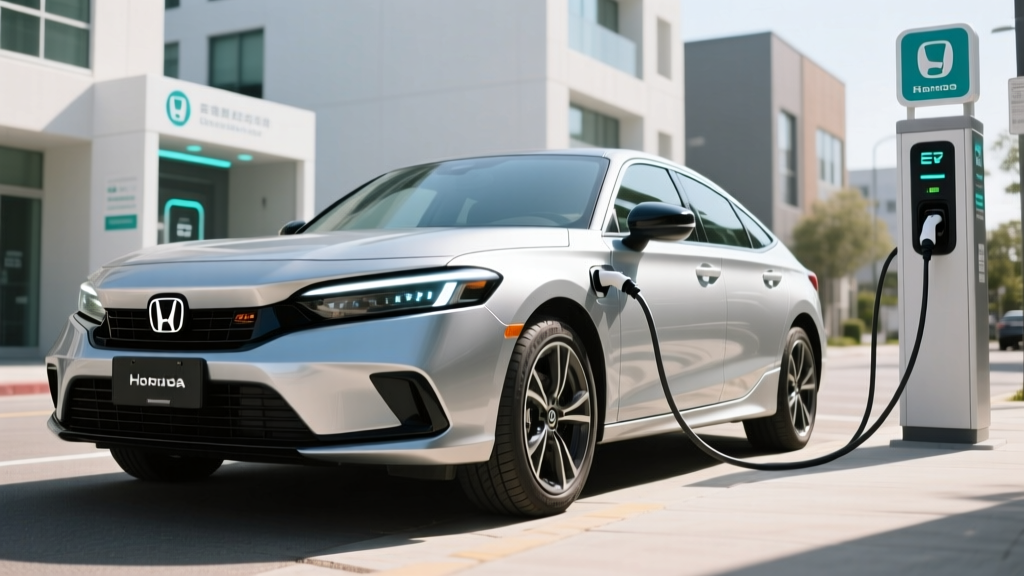
After a hiatus from the US market, Honda brought back the Civic Hybrid for 2024 with a two-motor powertrain that targets 50 MPG combined — a number we found surprisingly achievable in mixed driving. This is a conventional hybrid (HEV), not a plug-in, meaning there's no charging cord, no electric-only range to manage, and no range anxiety. You fill it with gas and drive.
For 2024, the Civic Hybrid slots into the Sport Hybrid and Sport Touring Hybrid trims, pairing a 2.0-liter Atkinson-cycle four-cylinder with Honda's fourth-generation two-motor hybrid system. The result is 200 combined horsepower — a meaningful bump over the non-hybrid Civic's 158 hp from its 2.0L engine — and torque delivery that makes this the most responsive Civic in the lineup short of the Si or Type R.
Starting at $29,845 (including destination) for the Sport Hybrid sedan, it undercuts the Toyota Prius on price while matching or beating it on highway refinement. Here's everything you need to know before you buy.
Spec Table: 2024 Honda Civic Hybrid at a Glance
| Spec | 2024 Civic Sport Hybrid | 2024 Civic Sport Touring Hybrid |
|---|---|---|
| Powertrain | 2.0L I-4 + 2-motor hybrid | 2.0L I-4 + 2-motor hybrid |
| Combined HP | 200 hp | 200 hp |
| Combined Torque | 232 lb-ft | 232 lb-ft |
| EPA City MPG | 50 | 50 |
| EPA Highway MPG | 47 | 47 |
| EPA Combined MPG | 49 | 49 |
| Drivetrain | FWD | FWD |
| 0–60 mph (est.) | ~7.2 sec | ~7.2 sec |
| Fuel Tank | 12.4 gal | 12.4 gal |
| Total Range | ~607 mi | ~607 mi |
| Base MSRP (incl. dest.) | $29,845 | $32,845 |
| Hybrid Battery Warranty | 8 yr / 100,000 mi | 8 yr / 100,000 mi |
Source: fueleconomy.gov, Honda Newsroom
Fuel Economy: EPA Ratings vs. Real-World MPG
The EPA rates the 2024 Civic Hybrid at 50 city / 47 highway / 49 combined MPG. Those numbers apply to both the Sport Hybrid and Sport Touring Hybrid sedans. (Note: Honda does not currently offer a Civic Hybrid hatchback in the US for 2024.)
| Driving Scenario | EPA Estimate | Real-World Expectation |
|---|---|---|
| City (stop-and-go) | 50 MPG | 48–54 MPG (hybrids often exceed EPA in city) |
| Highway (70+ mph) | 47 MPG | 42–46 MPG (aero drag reduces hybrid advantage) |
| Combined mixed | 49 MPG | 46–50 MPG |
| Cold weather (below 32°F) | — | 40–44 MPG (engine runs more for cabin heat) |
Conventional hybrids like the Civic thrive in city driving, where regenerative braking recaptures energy and the electric motor handles low-speed propulsion. On the highway, the gasoline engine does most of the work directly, so the hybrid advantage narrows. In cold weather, expect a 10–15% MPG drop — the engine must run more frequently to provide cabin heat since there's no electric-only heating system like you'd find in a BEV with a heat pump.
With a 12.4-gallon fuel tank, the Civic Hybrid delivers roughly 607 miles of total range at its EPA combined rating. That's Los Angeles to San Francisco and back on a single tank, with fuel to spare.
Powertrain: How Honda's Two-Motor Hybrid System Works
The 2024 Civic Hybrid uses Honda's e:HEV two-motor hybrid system — the same architecture found in the Accord Hybrid and CR-V Hybrid, but tuned for a lighter, more compact sedan.
Here's the breakdown:
- Engine: 2.0-liter Atkinson-cycle inline-4, producing roughly 143 hp on its own
- Drive motor: One electric motor that propels the wheels, rated at 184 hp / 232 lb-ft
- Generator motor: A second motor that either starts the engine or generates electricity from it
- Combined system output: 200 hp / 232 lb-ft
In most normal driving, the gasoline engine acts as a generator, feeding electricity to the drive motor. This gives the Civic Hybrid an EV-like feel around town — smooth, linear torque with no traditional gear shifts. At sustained highway speeds (roughly above 55 mph), a lock-up clutch connects the engine directly to the wheels for better efficiency, bypassing the electrical conversion step.
This is a key distinction from some competitor systems. Toyota's hybrid system in the Prius uses a planetary gearset to blend engine and motor power more continuously. Honda's approach favors electric-motor-driven feel at low speeds and direct mechanical coupling at highway speeds. Both are effective; the Honda simply feels more like driving an EV in everyday conditions.
HEV vs. PHEV vs. EV: Which Powertrain Fits You?
| Factor | HEV (Civic Hybrid) | PHEV (e.g., Prius Prime) | BEV (e.g., Tesla Model 3) |
|---|---|---|---|
| Plug in to charge? | No — gas only | Yes (Level 1/2) | Yes (Level 1/2/DC) |
| Electric-only range | None (motor assists only) | 25–44 mi typical | 250–360+ mi |
| Total range | ~607 mi | ~400–500 mi combined | 250–360+ mi |
| Home charging needed? | No | Recommended for EV-mode savings | Essential |
| Federal tax credit (§30D) | No | Up to $7,500 (if eligible) | Up to $7,500 (if eligible) |
| Upfront cost premium over gas | ~$1,500–$2,500 | ~$3,500–$6,000 | ~$8,000–$15,000+ |
| Maintenance complexity | Low (no plug, small battery) | Moderate (larger battery, charging) | Low (fewer moving parts) |
| Best for | No home charging access; long trips | Short commutes + home charging | Home charging + mostly under 300 mi/day |
Choose the Civic Hybrid (HEV) if: You don't have access to home or workplace charging, you take frequent long road trips, or you want the simplest path to 50 MPG without changing your fueling habits at all.
Choose a PHEV if: You have a garage or driveway with a 120V outlet, your daily commute is under 40 miles round-trip, and you want to drive mostly on electricity during the week while keeping gas flexibility for weekends.
Choose a full EV if: You can install a Level 2 home charger, your daily driving is well within the vehicle's range, and you want the lowest per-mile fuel cost and zero tailpipe emissions.
Pricing, Trims, and Tax Credit Eligibility
The 2024 Honda Civic Hybrid is available in two trims:
- Sport Hybrid Sedan: $29,845 (incl. $1,095 destination)
- Sport Touring Hybrid Sedan: $32,845 (incl. destination)
The Sport Touring adds leather-trimmed seats, a 12-speaker Bose audio system, wireless phone charging, a 9-inch touchscreen with wireless Apple CarPlay/Android Auto, and Honda's full Honda Sensing suite (which is standard on both trims).
Does the 2024 Civic Hybrid Qualify for a Federal Tax Credit?
No. The federal §30D Clean Vehicle Credit applies only to plug-in electric vehicles (PHEVs and BEVs) with a minimum battery capacity of 7 kWh. The Civic Hybrid is a conventional HEV with a small lithium-ion battery (approximately 1.1 kWh) that cannot be plugged in. It does not qualify for the federal EV tax credit.
Some states offer their own hybrid purchase incentives or HOV lane access for hybrids, but these vary significantly by jurisdiction. Check your state's energy or DMV website for current programs.
Federal §30D credit eligibility requires (for reference on PHEVs/BEVs):
- Vehicle must be a plug-in EV or PHEV with ≥7 kWh battery
- MSRP cap: $55,000 for sedans, $80,000 for SUVs/trucks/vans
- Buyer income cap: $150K single / $300K joint (modified AGI)
- Battery critical minerals and components must meet sourcing thresholds (phased annually)
- Point-of-sale transfer available beginning 2024
Source: IRS.gov — Clean Vehicle Credits
Battery Warranty, Reliability, and Replacement Cost
2024 Civic Hybrid Battery Warranty: 8 years / 100,000 miles (10 years / 150,000 miles in CARB states including CA, NY, MA, and others)
Battery type: Lithium-ion, approximately 1.1 kWh
Estimated out-of-warranty replacement cost: $2,000–$4,000 (parts + labor at a Honda dealer)
Honda's hybrid battery warranty is competitive with the industry standard. Toyota offers 10 years / 150,000 miles nationwide on its hybrid batteries, which is slightly more generous. However, Honda extends to 10/150K in states that follow California Air Resources Board (CARB) emissions standards — which now covers a significant portion of the US population.
In practice, hybrid batteries in modern Honda and Toyota vehicles routinely last 150,000–200,000+ miles before significant degradation. The Civic Hybrid's battery is small (1.1 kWh) and the system manages charge/discharge cycles conservatively — it never fully depletes or fully charges the pack, which dramatically extends cell life. This is fundamentally different from a BEV battery, which cycles through a much larger energy window daily.
If replacement is needed out of warranty, Honda's hybrid battery packs are less expensive than BEV packs by an order of magnitude. Expect $2,000–$4,000 for a dealer replacement, compared to $10,000–$20,000+ for a BEV battery. Third-party refurbishment services can sometimes reduce this further.
Honda's hybrid system has a strong reliability track record across the Accord Hybrid, CR-V Hybrid, and Insight (discontinued). The e:HEV two-motor architecture eliminates the traditional transmission entirely — there are no gear shifts, no CVT belt, and no torque converter to fail. Fewer mechanical wear points generally translates to lower long-term maintenance costs.
Driving Impressions and Daily Livability
The 2024 Civic Hybrid's standout quality is how normal it feels. Unlike early hybrids that droned under acceleration or felt sluggish, this powertrain delivers 232 lb-ft of electric motor torque from a standstill. The 0–60 mph sprint takes approximately 7.2 seconds — quicker than the non-hybrid Civic LX (which runs about 8.2 seconds with its 158-hp 2.0L) and comparable to the Civic Si.
Under light acceleration, the drive motor handles propulsion silently. Push harder, and the engine spins up to generate electricity, but Honda has improved sound insulation compared to earlier e:HEV implementations. The engine note is a distant hum rather than an intrusive drone.
The Sport Touring Hybrid's adaptive dampers (standard on that trim) add a level of ride compliance that makes this a genuinely comfortable highway cruiser. The 12.4-gallon tank and ~607-mile range mean you'll stop for fuel roughly every 10–12 hours of driving — less often than most competitors.
Cargo space is identical to the non-hybrid Civic sedan at 14.8 cubic feet. The hybrid battery sits beneath the rear seats, so trunk volume is unaffected. The Sport Touring's 60/40 split-folding rear seatbacks expand utility for longer items.
Who Should Buy the 2024 Honda Civic Hybrid?
Pros
- 49 MPG EPA combined — among the best in its class
- 200 hp / 232 lb-ft makes it genuinely quick for a hybrid
- No plug required — zero lifestyle change from a gas car
- ~607 miles of total range
- Competitive starting price ($29,845)
- Honda Sensing safety suite standard on all trims
- Strong reliability reputation for Honda's e:HEV system
Cons
- No federal tax credit (HEV, not PHEV/BEV)
- Sedan only — no hatchback hybrid option for 2024
- Highway MPG advantage narrows vs. efficient gas cars at 75+ mph
- FWD only — no AWD hybrid option (unlike the Prius AWD-e)
- 12.4-gallon tank is smaller than some competitors
Buy the 2024 Civic Hybrid if:
- You want 50 MPG without installing a home charger or changing fueling habits
- You take regular long road trips and need 600+ miles of range
- You want a compact sedan with more power than the base Civic but better efficiency than the Si
- You live in an apartment or lack reliable access to EV charging
Look elsewhere if:
- You want electric-only driving for short commutes (consider a PHEV like the Prius Prime)
- You need AWD (the Toyota Prius AWD-e or a PHEV SUV may suit better)
- You want a hatchback body style (the Civic Hybrid is sedan-only for 2024)
- You want to maximize tax incentives (a qualifying PHEV or BEV could net up to $7,500)
Frequently Asked Questions
How many MPG does the 2024 Honda Civic Hybrid get?
The EPA rates it at 50 city / 47 highway / 49 combined MPG. In real-world driving, expect 46–50 MPG combined, with city driving often exceeding the EPA estimate and highway driving at 75+ mph falling to 42–46 MPG. Cold weather can reduce efficiency by 10–15%.
Does the Civic Hybrid need to be plugged in?
No. The 2024 Civic Hybrid is a conventional hybrid (HEV). It charges its small battery through regenerative braking and the gasoline engine. You never plug it in — just fill it with gas like any other car.
How far can the Civic Hybrid go on electric only?
It can't drive on electric power alone for any meaningful distance. The electric motor assists the gasoline engine and handles low-speed propulsion, but the engine is always available and engages as needed. This is fundamentally different from a PHEV, which can travel 25–44 miles on battery alone.
Is the hybrid battery reliable, and what does replacement cost?
Honda's e:HEV hybrid system has a strong reliability record. The battery is warrantied for 8 years / 100,000 miles (10 years / 150,000 miles in CARB states). Real-world data from Honda's hybrid vehicles shows batteries regularly lasting 150,000+ miles. Out-of-warranty replacement runs approximately $2,000–$4,000 at a Honda dealer.
Does the 2024 Civic Hybrid qualify for any federal tax credit?
No. The federal §30D Clean Vehicle Credit requires a plug-in vehicle with at least 7 kWh of battery capacity. The Civic Hybrid's ~1.1 kWh battery and non-plug-in design make it ineligible. Check your state for any local hybrid incentives, which vary by jurisdiction.
Civic Hybrid vs. Toyota Prius: which is better?
The Prius (57 MPG combined for the LE FWD) beats the Civic Hybrid on pure efficiency, and offers an AWD-e option. The Civic Hybrid counters with more horsepower (200 vs. 194), a more conventional driving feel, and a lower starting price for the hybrid trim. If maximum MPG is your priority, the Prius wins. If you want a more engaging drive with nearly equal efficiency, the Civic Hybrid is the stronger pick.
Is the Civic Hybrid available as a hatchback?
Not for the 2024 model year in the United States. Honda offers the Civic Hybrid exclusively as a sedan. The Civic hatchback is available with the standard 2.0L gasoline engine only.
Pricing and specifications reflect the 2024 model year as listed on Honda's official site and fueleconomy.gov. Federal tax credit rules are subject to change; consult IRS.gov or a tax professional for eligibility. State incentives vary by jurisdiction.