Quick Verdict: The Escape PHEV in 2026
If you've been searching for a 2024 Escape plug-in hybrid wrap kit—whether you mean a full vinyl exterior wrap to customize your PHEV's look, or you're using "wrap" as shorthand for a comprehensive ownership package—you've landed in the right place. The 2024 Ford Escape Plug-In Hybrid remains one of the most practical compact PHEV crossovers on the used and certified-pre-owned market heading into 2026. With an EPA-rated 37 miles of electric-only range, 105 MPGe combined, and a usable 14.4 kWh battery, it bridges daily electric commuting with gas-powered road-trip freedom.
This guide wraps up everything you need: real-world MPG, charging logistics, battery longevity, tax-credit status, powertrain specs, and even a section on aftermarket vinyl wrap kits for owners looking to personalize their Escape PHEV's exterior.
HEV vs. PHEV: What's the Difference on the Escape?
| Feature | Escape Hybrid (HEV) | Escape Plug-In Hybrid (PHEV) |
|---|---|---|
| Plugs in to charge? | No — regenerative braking only | Yes — Level 1 (120V) and Level 2 (240V) |
| Electric-only range | ~1–2 miles at low speed | EPA 37 miles |
| Battery capacity | 1.1 kWh (small buffer) | 14.4 kWh usable |
| Combined MPG (gas) | EPA 39 combined | EPA 40 combined (after battery depletes) |
| MPGe (electric + gas) | N/A | 105 MPGe combined |
| DC fast charging | N/A | No — AC only (Level 1/2) |
| Federal tax credit (§30D) | No | Was eligible; credit ended for new PHEVs after Sept 30, 2025 |
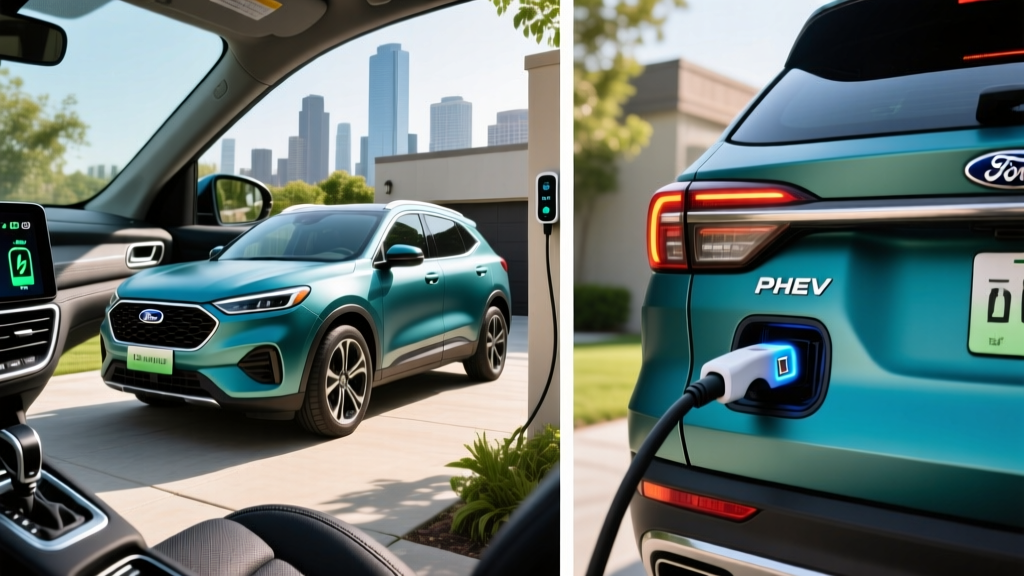
The conventional Escape HEV never plugs in; its small battery recaptures energy from braking and the engine. The PHEV carries a substantially larger 14.4 kWh lithium-ion pack that you charge via a J1772 connector, enabling genuine zero-tailpipe-emission commuting for most daily drives under 37 miles.
Fuel Economy: EPA Ratings vs. Real-World MPG
| Driving Mode | EPA Rating | Real-World Expectation |
|---|---|---|
| Electric-only (MPGe) | 105 MPGe combined | 90–110 MPGe depending on climate and speed |
| Gas-only (charge-sustaining) | 40 MPG combined | 35–42 MPG (city-favors hybrid regen; highway drops to ~34) |
| City (gas mode) | 42 MPG | 40–45 MPG — hybrids often beat EPA in stop-and-go |
| Highway (gas mode) | 37 MPG | 33–36 MPG at 70+ mph |
According to fueleconomy.gov, the 2024 Escape PHEV achieves 105 MPGe when operating on its electric battery and 40 MPG combined once the battery depletes and the 2.5-liter Atkinson-cycle four-cylinder takes over. In real-world mixed driving, owners who charge nightly and commute under 30 miles round-trip often report using almost no gasoline for weeks at a time. On a long road trip running purely on gas, expect 35–38 MPG at highway speeds — slightly below the EPA sticker, which is typical for compact crossovers at 75 mph.
Cold weather reduces electric-only range by roughly 20–30%. In freezing temperatures, that 37-mile EV range may drop to 25–30 miles before the engine kicks in. The Escape PHEV lacks a dedicated heat pump, so cabin heating draws from the traction battery in EV mode, accelerating depletion in winter.
Electric Range, Battery, and Charging Specs
| Specification | Value |
|---|---|
| Battery capacity (usable) | 14.4 kWh |
| Battery chemistry | NMC (Nickel Manganese Cobalt) |
| EPA electric-only range | 37 miles |
| Total range (EV + gas) | ~520 miles (14.2-gal tank) |
| Level 1 charging (120V / 12A) | ~1.4 kW — full charge in ~10–11 hours |
| Level 2 charging (240V / 32A) | ~3.3 kW onboard — full charge in ~3.5 hours |
| DC fast charging | Not supported |
| Charge port / connector | J1772 (standard AC) |
| Combined horsepower | 210 hp (engine + motor) |
| Engine | 2.5L Atkinson-cycle I4 (163 hp) |
| Electric motor | Permanent-magnet synchronous (integrated in eCVT) |
| Transmission | eCVT (planetary gearset, not belt-driven) |
| 0–60 mph | ~7.5 seconds (estimated) |
| Drivetrain | Front-wheel drive only (PHEV); AWD available on HEV |
The Escape PHEV's onboard charger is limited to 3.3 kW, meaning even on a 48-amp Level 2 home charger, the car will only draw about 3.3 kW. This is standard for compact PHEVs — the battery is small enough that overnight Level 1 charging from a standard 120V outlet is entirely viable if your daily drive is under 30 miles. A full Level 2 charge from empty takes roughly 3.5 hours.
About That "Wrap Kit" — Vinyl Wraps and PHEV Customization
If your search for a 2024 Escape plug-in hybrid wrap kit refers to a vinyl exterior wrap, here's what PHEV owners should know:
- Full-body vinyl wrap cost: $2,500–$5,000 installed for a quality 3M or Avery Dennison cast-vinyl wrap. Partial wraps (roof, hood, accents) run $800–$2,000.
- Paint protection film (PPF) kits: Pre-cut PPF kits for the Escape PHEV typically cost $500–$1,200 for front-end coverage (hood, fenders, bumper, mirrors) and $2,000–$3,500 for full-body PPF.
- DIY wrap kits: Vinyl overlay kits for the roof or trim pieces are available for $150–$400 from aftermarket suppliers. These are typically calendared vinyl with 3–5 year durability versus 7–10 years for professional cast vinyl.
- PHEV-specific note: The charge-port door on the driver's front fender requires careful cutting or pre-cut templates. Ensure any wrap kit accounts for this panel — improper wrapping around the J1772 port can interfere with the door latch or let moisture in.
- Warranty consideration: A vinyl wrap does not void Ford's powertrain or battery warranty, but if adhesive residue damages paint during removal, that cosmetic repair won't be covered.
Whether you're wrapping for aesthetics, paint protection, or commercial branding, the Escape PHEV's relatively flat body panels and compact crossover profile make it a straightforward vehicle for professional installers.
Pricing, Tax Credits, and Total Cost of Ownership
The 2024 Ford Escape PHEV was offered in a single trim — the PHEV (no sub-badging like ST-Line for the plug-in). Original MSRP started around $39,840 including destination. As a 2024 model now available on the used and certified-pre-owned market in 2026, expect pricing between $26,000–$34,000 depending on mileage, condition, and region.
Federal tax credit status: The Escape PHEV was eligible for up to $3,750 under IRS §30D for qualified new-vehicle purchases. However, under current rules effective in 2026, the §30D credit for new plug-in hybrids has been significantly restructured, and most PHEVs no longer qualify for the full $7,500 due to critical-mineral and battery-component sourcing requirements. For used PHEV purchases, the §25E used clean vehicle credit may apply — up to $4,000 or 30% of the sale price (whichever is lower), subject to income caps ($75,000 single / $150,000 joint) and a dealer sale-price cap of $25,000. Check current eligibility on IRS.gov.
| Cost Category | Escape PHEV (est.) | Escape Gas (2.0T, est.) | Full EV (e.g., Ioniq 5, est.) |
|---|---|---|---|
| Purchase price (used/CPO 2026) | $30,000 | $22,000 | $28,000 |
| Fuel/electricity (5 yrs, 15k mi/yr) | $3,200 | $9,500 | $4,000 |
| Maintenance (5 yrs) | $2,800 | $4,200 | $2,000 |
| Insurance (5 yrs avg) | $8,500 | $7,500 | $9,000 |
| Estimated 5-yr total | $44,500 | $43,200 | $43,000 |
The PHEV's fuel savings are substantial if you charge at home nightly — electricity at $0.14/kWh means a full 14.4 kWh charge costs roughly $2.00, versus $10–$12 for a gallon of gas that would cover fewer miles. Over five years, PHEV fuel costs can be 60–70% lower than a gas-only Escape for commuters who stay within EV range most days.
Battery Warranty, Reliability, and Replacement Costs
• Duration: 8 years / 100,000 miles (whichever comes first)
• Coverage threshold: Battery must retain at least 70% of original capacity during the warranty period
• What's covered: Traction battery cells, battery energy control module, associated wiring
• Out-of-warranty replacement cost: $4,500–$7,000 (parts + labor, dealership estimate)
Ford's hybrid battery track record is solid. The Escape Hybrid has been in production since 2005, and the PHEV variant since the 2020 model year. NMC batteries in PHEVs typically experience 1.5–2.5% capacity loss per year under normal use. By year 8, you can reasonably expect 80–88% state of health (SoH) — well above Ford's 70% warranty threshold.
For a 2024 model purchased in 2026, roughly 6 years and 75,000+ miles of battery warranty remain. If you're buying CPO, verify the battery's SoH via the FordPass app or request a dealer diagnostic report showing current capacity versus original.
Reliability: The 2024 Escape PHEV carries average-to-above-average reliability ratings. The eCVT transmission is a planetary gearset with no belts, clutches, or traditional wear items — it's one of the most durable transmissions in any vehicle class. The main maintenance items are engine oil changes (the gas engine still needs them, typically every 7,500–10,000 miles), cabin air filter, brake fluid, and tire rotation. Regenerative braking significantly extends brake pad life — many PHEV owners report original pads at 60,000+ miles.
Who Should Choose the Escape PHEV?
- Your daily round-trip commute is under 35 miles and you can charge at home overnight
- You want EV-like daily driving but need gas-engine freedom for road trips without route-planning around chargers
- You live in a region with extreme cold where full EV range loss is a concern
- You want a compact crossover with cargo space (34.4 cu ft behind rear seats) and don't need AWD (PHEV is FWD-only)
- You have reliable home charging and your longest regular trip is under 250 miles
- You want zero engine maintenance (no oil changes, no spark plugs, no exhaust system)
- You want access to DC fast charging for road trips (Escape PHEV has no DC capability)
- You cannot charge at home (apartment, street parking, no garage outlet)
- You want the simplicity of gas-station-only refueling with better MPG than a pure gas car
- You need AWD (available on HEV, not PHEV)
- 37-mile EV range covers most commutes gas-free
- Standard 120V charging — no Level 2 install required for daily use
- 40 MPG combined in gas mode — competitive with dedicated hybrids
- Smooth eCVT with no shift shock
- Remaining factory battery warranty on 2024 models
- Practical cargo space and compact footprint
- FWD only — no AWD option on PHEV
- No DC fast charging — irrelevant for most PHEV use, but limits flexibility
- 3.3 kW onboard charger is slow for public Level 2 top-ups
- EV range drops to ~25 miles in freezing weather
- Single trim limits feature options
- §30D new-vehicle tax credit largely unavailable in 2026
Frequently Asked Questions
How many MPG does the 2024 Escape PHEV get?
The EPA rates it at 105 MPGe in combined electric+gas operation and 40 MPG combined once the battery is depleted (42 city / 37 highway). In real-world city driving, owners often see 42–45 MPG in gas mode thanks to aggressive regenerative braking. Highway cruising at 75 mph drops to roughly 33–36 MPG.
How far can the Escape PHEV go on electric only?
The EPA rates it at 37 miles of all-electric range. Real-world results vary: 30–35 miles in mild weather, 25–30 in freezing cold, and up to 38 miles in ideal conditions (flat roads, 35–45 mph, warm temperatures). Once the battery depletes, the 14.2-gallon gas tank provides roughly 480+ additional miles.
Does the 2024 Escape PHEV qualify for a tax credit?
For new-vehicle purchases, the §30D credit was up to $3,750 but eligibility has been heavily restricted under 2026 sourcing rules. For used purchases in 2026, the §25E used clean vehicle credit may offer up to $4,000, subject to income caps ($75k single / $150k joint), a $25,000 sale-price cap, and purchasing through a licensed dealer. Consult a tax professional and verify on IRS.gov.
Is the Escape PHEV reliable, and what does a battery replacement cost?
The Escape PHEV powertrain is well-proven — Ford's hybrid system has been refined since 2005. The eCVT is exceptionally durable with no traditional wear components. The 14.4 kWh NMC battery is warranted for 8 years/100,000 miles at 70% capacity retention. Out-of-warranty replacement runs $4,500–$7,000 at a dealership. Most PHEV batteries outlast the vehicle's useful life under normal conditions.
What is a "wrap kit" for the Escape PHEV?
In the aftermarket context, a wrap kit typically refers to a vinyl exterior wrap or paint protection film (PPF) kit. Full-body vinyl wraps cost $2,500–$5,000 professionally installed. Pre-cut PPF kits for front-end protection run $500–$1,200. When wrapping a PHEV, ensure the installer accounts for the charge-port door on the driver's front fender to avoid latch interference or moisture intrusion.
Can I charge the Escape PHEV on a regular household outlet?
Yes. Level 1 charging on a standard 120V/12A outlet delivers roughly 1.4 kW, fully recharging the 14.4 kWh battery in about 10–11 hours. For most owners who plug in overnight and drive under 35 miles daily, this is sufficient. A 240V Level 2 charger reduces that to ~3.5 hours but is not strictly necessary given the PHEV's small battery.
Does the Escape PHEV have all-wheel drive?
No. The 2024 Escape PHEV is front-wheel drive only. If AWD is a priority, you'll need to look at the conventional Escape Hybrid (HEV), which offers an AWD powertrain but sacrifices the plug-in electric range.