Quick Verdict: The 2023 RAV4 Hybrid at a Glance
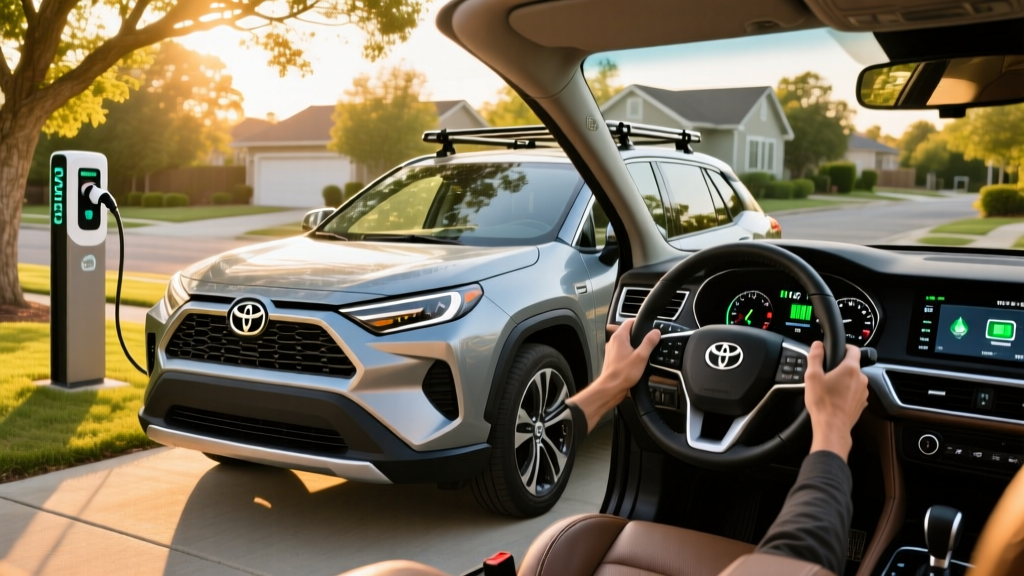
The 2023 Toyota RAV4 Hybrid remains one of the most practical compact SUVs on the road for buyers who want significant fuel savings without plugging in. With an EPA-rated 41 MPG combined, standard all-wheel drive, and Toyota's proven hybrid synergy drive system, it delivers real-world efficiency that frequently exceeds its sticker numbers in city driving. For the 2023 model year, Toyota streamlined the trim lineup and made Toyota Safety Sense 2.5+ standard across all grades.
If you're cross-shopping the conventional RAV4 Hybrid (HEV) against the plug-in RAV4 Prime (PHEV), this guide breaks down the exact specs, costs, and ownership realities of both — so you can decide which electrified RAV4 fits your driving pattern.
| Spec | RAV4 Hybrid (HEV) | RAV4 Prime (PHEV) |
|---|---|---|
| Powertrain | 2.5L 4-cyl + 3 electric motors (AWD-i) | 2.5L 4-cyl + front/rear electric motors (AWD-i) |
| Combined Horsepower | 219 HP | 302 HP |
| 0–60 mph | 7.4 seconds | 5.7 seconds |
| EPA Combined MPG | 41 MPG | 38 MPG (hybrid mode) / 94 MPGe (EV mode) |
| EPA City / Highway | 41 city / 38 highway | 40 city / 36 highway (gas) |
| Electric-Only Range | N/A (not plug-in) | 42 miles |
| Battery Capacity | 1.6 kWh (NiMH, self-charging) | 18.1 kWh (lithium-ion) |
| Plug-In Charging | No | Yes — Level 1 (120V) ~12 hrs / Level 2 (240V) ~4.5 hrs |
| DC Fast Charging | N/A | Not supported |
| Total Range | ~580 miles | ~600 miles (gas + electric) |
| Cargo Volume (rear seats up) | 37.5 cu ft | 33.5 cu ft |
| Base MSRP (2023) | $30,225 (LE) | $43,090 (SE) |
| Federal Tax Credit (§30D) | Not eligible | Not eligible (MSRP & sourcing) |
HEV vs PHEV: Understanding the Two RAV4 Hybrids
Toyota sells two distinct electrified RAV4 variants, and confusing them is one of the most common buyer mistakes. Here's the fundamental difference:
HEV vs PHEV — What's the Difference?
Conventional Hybrid (HEV) — RAV4 Hybrid: Uses a small battery (1.6 kWh) that recharges through regenerative braking and the gas engine. You never plug it in. It optimizes the gas engine's efficiency, delivering 41 MPG combined. Think of it as a smarter gas car.
Plug-In Hybrid (PHEV) — RAV4 Prime: Carries a much larger battery (18.1 kWh) that you charge by plugging into a wall outlet or Level 2 charger. It can drive 42 miles on electricity alone before the gas engine kicks in. Think of it as a short-range EV with a gas backup.
| Factor | RAV4 Hybrid (HEV) | RAV4 Prime (PHEV) |
|---|---|---|
| Upfront cost | $30,225–$39,420 | $43,090–$46,990 |
| Home charging needed? | No | Recommended (Level 2 for 4.5-hr charge) |
| Daily commute under 40 miles? | Great MPG but still burns gas | Can drive almost entirely on electricity |
| Long road trips | Excellent — 580+ mi range, no planning | Equally capable — gas engine takes over seamlessly |
| Performance priority | Adequate (219 HP) | Quick (302 HP, 5.7s 0–60) |
| Cargo space priority | 37.5 cu ft (larger battery eats some space in Prime) | 33.5 cu ft |
Fuel Economy: EPA Ratings vs Real-World MPG
The 2023 RAV4 Hybrid carries an EPA rating of 41 MPG city, 38 MPG highway, and 41 MPG combined across all trims (LE, XLE, XLE Premium, SE, XSE, Limited, and Woodland Edition). This is verified by fueleconomy.gov.
Real-World MPG Reality Check
City driving: Hybrids shine here. Expect 42–45 MPG in stop-and-go traffic and suburban errands. The electric motor handles low-speed propulsion, and regenerative braking recaptures energy at every stop. Many owners report exceeding the EPA city number.
Highway driving: Expect 34–37 MPG at sustained 70–80 mph speeds. Aerodynamic drag and the gas engine doing most of the work reduce the hybrid advantage. The EPA highway number of 38 is achievable at 60–65 mph but optimistic at interstate speeds.
Cold weather (below 35°F): Expect a 5–10% drop, bringing combined MPG to roughly 37–39. The engine runs more frequently to heat the cabin and warm the catalytic converter.
Combined realistic expectation: Plan for 38–42 MPG in mixed driving across most conditions.
| Driving Condition | EPA Rating | Real-World Expectation |
|---|---|---|
| City / suburban | 41 MPG | 42–45 MPG |
| Highway (65 mph) | 38 MPG | 36–38 MPG |
| Highway (75+ mph) | — | 33–35 MPG |
| Combined (mixed) | 41 MPG | 38–42 MPG |
| Cold weather (combined) | — | 37–39 MPG |
For comparison, the gas-only 2023 RAV4 AWD is rated at 30 MPG combined — meaning the hybrid saves roughly 2.4 gallons per 100 miles driven, or about 120 gallons per year at 12,000 miles annually.
RAV4 Prime (PHEV): Electric-Only Range and Charging
If you're considering the plug-in variant, the 2023 RAV4 Prime delivers an EPA-rated 42 miles of electric-only range on a full charge. This covers most daily commutes and errands without burning a drop of gasoline.
Battery specs: The Prime uses an 18.1 kWh lithium-ion battery pack (roughly 14.9 kWh usable, with the remainder held in buffer to protect longevity). Toyota does not support DC fast charging on the Prime — the maximum AC charge rate is approximately 3.3 kW on a Level 2 (240V) connection.
Charging times:
- Level 1 (120V household outlet): ~12 hours from empty to full
- Level 2 (240V, 3.3 kW): ~4.5 hours from empty to full
- DC fast charging: Not available
The lack of DC fast charging is a notable limitation. On road trips, you cannot quickly top up the battery at public fast-charging stations — you'll simply drive in hybrid mode (38 MPG) once the battery depletes. For daily use with overnight Level 2 charging at home, this is rarely an issue.
Once the 42 miles of electric range are used, the Prime operates as a conventional hybrid, returning 38 MPG combined with a total system range exceeding 600 miles.
Powertrain: 219 HP AWD Standard
The 2023 RAV4 Hybrid pairs a 2.5-liter Dynamic Force 4-cylinder engine (176 HP, 163 lb-ft) with three electric motor-generators — one integrated into the transaxle for front-wheel propulsion and regenerative braking, and two powering the rear axle via Toyota's AWD-i system. Combined system output is 219 horsepower.
The AWD-i system is not a traditional mechanical all-wheel drive. Instead, a dedicated rear electric motor provides torque to the rear wheels when needed — during acceleration, low-traction conditions, or cornering. This means there's no driveshaft or rear differential to maintain, reducing long-term mechanical complexity.
The RAV4 Prime bumps output to 302 HP with a more powerful front electric motor and the same rear motor setup. The result is a 5.7-second 0–60 time — making the Prime the quickest RAV4 variant and competitive with many turbocharged compact SUVs.
Both powertrains use Toyota's eCVT (electronically controlled continuously variable transmission), which is fundamentally different from belt-driven CVTs found in some competitors. Toyota's eCVT uses a planetary gearset with no belts or pulleys, contributing to its strong reliability record.
Pricing, Trims, and Tax Credit Eligibility
The 2023 RAV4 Hybrid starts at $30,225 for the LE trim (including destination) and tops out around $39,420 for the Limited. The Woodland Edition, with TRD-tuned suspension and all-terrain tires, slots in at approximately $36,610.
| Trim | MSRP (incl. destination) |
|---|---|
| LE | $30,225 |
| XLE | $31,760 |
| XLE Premium | $34,045 |
| SE | $34,020 |
| Woodland Edition | $36,610 |
| XSE | $35,560 |
| Limited | $39,420 |
Federal Tax Credit Status
RAV4 Hybrid (HEV): Not eligible for the federal §30D clean vehicle credit. Conventional hybrids that cannot be plugged in do not qualify under current IRS rules.
RAV4 Prime (PHEV): The RAV4 Prime was previously eligible for up to $7,500, but as of 2023, the revised §30D rules introduced battery component sourcing and critical mineral requirements that the Prime does not fully meet. Additionally, the $80,000 MSRP cap for SUVs applies. Always verify current eligibility on IRS.gov or consult a tax professional before purchase, as sourcing rules tighten annually.
State incentives: Some states offer separate rebates or HOV lane access for PHEVs. Check your state's energy office or AFDC state incentive database for current programs.
Battery Warranty, Reliability, and Replacement Cost
Hybrid battery longevity is consistently the top concern for first-time hybrid buyers. Here's what the data shows for the RAV4 Hybrid:
Battery Warranty Coverage
Hybrid battery: 10 years / 150,000 miles (whichever comes first) — Toyota extended this from 8 years/100,000 miles starting with 2020 model year vehicles in most states. In California Air Resources Board (CARB) states, hybrid system components carry coverage for 10 years/150,000 miles as well.
Hybrid system components: 8 years / 100,000 miles (inverter, control module, etc.)
Basic powertrain: 5 years / 60,000 miles
Real-world reliability: Toyota's hybrid system is among the most proven in the industry, with over 25 years of continuous production since the original Prius (1997). The RAV4 Hybrid's NiMH battery pack (1.6 kWh) operates within a narrow state-of-charge window — typically between 40% and 80% — which dramatically reduces stress and extends cycle life. Many Toyota hybrid batteries from the mid-2000s Prius generation are still in service at 200,000+ miles.
Replacement cost: If the hybrid battery does fail outside warranty, a new OEM replacement for the RAV4 Hybrid runs approximately $3,000–$4,500 (parts and labor). Refurbished or reconditioned packs are available for $1,500–$2,500. Given the 10-year/150,000-mile warranty and the system's track record, out-of-pocket battery replacement is uncommon for most owners.
The RAV4 Prime's larger 18.1 kWh lithium-ion pack carries the same 10-year/150,000-mile warranty. Replacement cost for the Prime battery, if needed outside warranty, is higher — estimated at $8,000–$12,000 — though failures in Toyota's lithium-ion PHEV packs remain rare based on current data.
Who Should Choose the RAV4 Hybrid vs a Full EV or Gas Car?
✅ Choose the RAV4 Hybrid (HEV) If:
- You want 40+ MPG without changing your fueling habits
- You lack access to home or workplace charging
- Your budget is $30K–$40K
- You take frequent road trips and don't want to plan charging stops
- You want AWD capability in snow or rain
- You prioritize proven reliability and low maintenance
✅ Choose the RAV4 Prime (PHEV) If:
- Your daily round-trip commute is under 42 miles
- You can install a Level 2 charger at home
- You want EV-like daily driving with gas-engine road-trip freedom
- You value the 302 HP performance upgrade
- You can absorb the ~$13,000 price premium over the Hybrid LE
✅ Choose a Full EV (e.g., Tesla Model Y, Ioniq 5) If:
- You have reliable home Level 2 charging
- You want zero tailpipe emissions and minimal maintenance
- Your daily driving is under 250 miles and you can plan DC fast-charge stops for road trips
- You want to take advantage of the full $7,500 §30D federal tax credit (on qualifying models)
- You prioritize instant torque and one-pedal driving
⚠️ When the RAV4 Hybrid Is NOT the Best Choice
If you have home charging and a commute under 30 miles, a full EV will deliver lower per-mile energy costs (roughly $0.04–$0.06/mile on electricity vs $0.10–$0.12/mile on gas for the hybrid at 41 MPG and $3.50/gal). If you drive primarily highway miles at 80+ mph, the hybrid's advantage over a gas RAV4 narrows — you'll see 33–35 MPG, closer to the gas model's 27–28 MPG highway, making the payback period longer.
Ownership Costs: 5-Year Fuel Savings vs Gas RAV4
The financial case for the RAV4 Hybrid is straightforward. At 12,000 miles per year and $3.50/gallon gasoline:
| Model | Combined MPG | Annual Fuel Cost | 5-Year Fuel Cost |
|---|---|---|---|
| 2023 RAV4 Hybrid AWD | 41 MPG | $1,024 | $5,122 |
| 2023 RAV4 Gas AWD | 30 MPG | $1,400 | $7,000 |
| 5-Year Savings (Hybrid) | — | $1,878 | |
The Hybrid LE's ~$2,000 price premium over the gas RAV4 LE AWD is typically recouped within 4–5 years through fuel savings alone — and the hybrid's stronger resale value often shortens that payback further. According to IIHS, the 2023 RAV4 Hybrid earned Top Safety Pick+ status, adding to its long-term value proposition.
Frequently Asked Questions
How many MPG does the 2023 RAV4 Hybrid actually get?
The EPA rates it at 41 city / 38 highway / 41 combined. In real-world mixed driving, expect 38–42 MPG. City driving often yields 42–45 MPG, while sustained highway driving at 75+ mph drops to 33–35 MPG. Cold weather typically reduces combined MPG by 5–10%.
Does the RAV4 Hybrid need to be plugged in?
No. The conventional RAV4 Hybrid (HEV) charges its own 1.6 kWh battery through regenerative braking and the gas engine. You fuel it like any other car at a gas station. Only the RAV4 Prime (PHEV) requires plugging in to access its 42-mile electric range.
How far can the RAV4 Prime go on electric only?
The EPA rates the 2023 RAV4 Prime at 42 miles of electric-only range. Real-world results vary: expect 38–44 miles depending on temperature, terrain, and driving style. Highway speeds and cold weather reduce this figure; mild-weather city driving can stretch it slightly beyond 42 miles.
Is the RAV4 Hybrid reliable, and what does battery replacement cost?
Toyota's hybrid system has over 25 years of proven reliability. The hybrid battery is warrantied for 10 years / 150,000 miles. Out-of-warranty replacement costs approximately $3,000–$4,500 for a new OEM pack, though failures are uncommon. The eCVT transmission uses a planetary gearset with no wear-prone belts, contributing to long-term durability.
Does the 2023 RAV4 Hybrid qualify for any federal tax credit?
No. The conventional RAV4 Hybrid (HEV) is not eligible for the §30D federal clean vehicle credit because it cannot be plugged in. The RAV4 Prime (PHEV) may qualify for a partial credit depending on current-year battery sourcing requirements — check IRS.gov for the latest eligibility rules. Some states offer separate incentives for PHEVs.
Hybrid vs PHEV vs EV — which should I choose?
Choose the Hybrid (HEV) if you want maximum simplicity, no charging infrastructure, and strong MPG. Choose the Prime (PHEV) if you can charge at home and your commute is under 42 miles — you'll drive mostly electric daily with gas-engine flexibility for road trips. Choose a full EV if you have home charging, want zero tailpipe emissions, lower per-mile energy costs, and qualify for the $7,500 federal credit on eligible models.
What's the difference between the RAV4 Hybrid and the gas RAV4?
The gas 2023 RAV4 AWD produces 203 HP and returns 30 MPG combined. The Hybrid adds 16 HP (219 total), standard AWD-i, and improves fuel economy to 41 MPG combined — a 37% improvement. The hybrid also provides smoother, quieter low-speed acceleration thanks to electric motor torque fill. The trade-off is roughly $2,000 in additional upfront cost and 37.5 cu ft of cargo space (vs 37.6 in the gas model — a negligible difference).