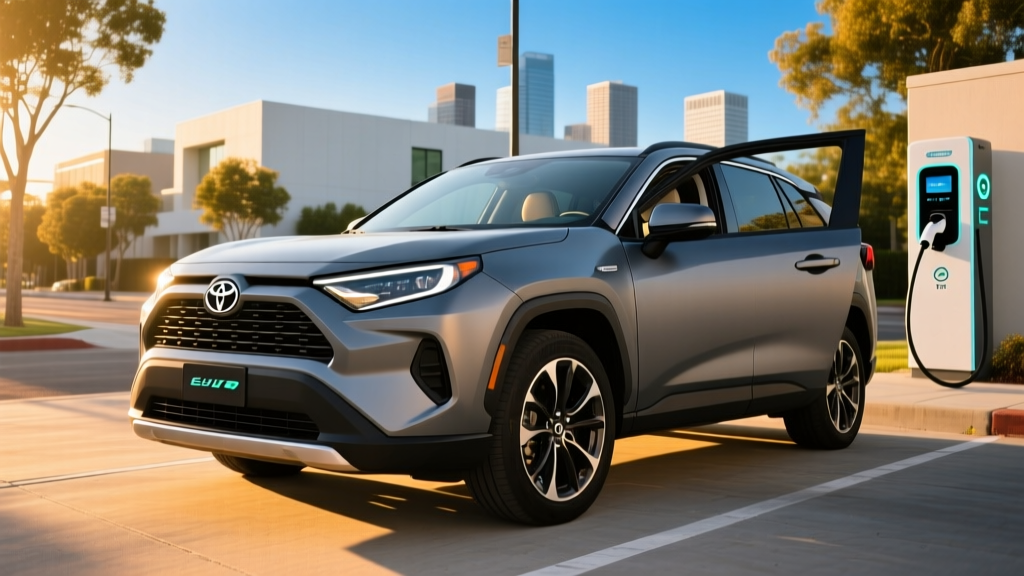
The 2023 Toyota RAV4 Hybrid LE remains one of the best-selling hybrid SUVs in the United States, and for good reason: it delivers 41 MPG combined EPA without ever needing a plug. For buyers navigating the maze of electrified options—from conventional hybrids to plug-in hybrids to full battery-electric vehicles—the RAV4 Hybrid LE occupies a practical sweet spot. It pairs Toyota's proven hybrid synergy drive with standard electronic all-wheel drive, all at a starting MSRP that undercuts many non-hybrid compact SUV competitors.
This guide breaks down the exact specs, real-world fuel economy expectations, powertrain details, battery longevity data, and total cost of ownership you need to make an informed purchase decision on the 2023 RAV4 Hybrid LE—whether you're buying new-old-stock, certified pre-owned, or comparing it against the RAV4 Prime PHEV or a full EV.
HEV vs. PHEV: What the RAV4 Hybrid LE Actually Is
Before diving into specs, it's critical to distinguish what the 2023 RAV4 Hybrid LE is—and isn't. This is a conventional hybrid electric vehicle (HEV), not a plug-in hybrid (PHEV). That distinction changes everything about how you use it.
| Feature | RAV4 Hybrid LE (HEV) | RAV4 Prime (PHEV) |
|---|---|---|
| Plug-in charging required? | No — self-charging via regenerative braking and engine | Yes — 120V or 240V plug-in |
| Battery capacity | 1.6 kWh (nickel-metal hydride) | 18.1 kWh (lithium-ion) |
| Electric-only range | Less than 1 mile at low speeds | 42 miles EPA electric-only |
| Combined horsepower | 219 hp | 302 hp |
| EPA combined fuel economy | 41 MPG (HEV) / 94 MPGe (PHEV electric) | 38 MPG (gas-only mode) / 94 MPGe |
| Federal tax credit (§30D) | Not eligible | Not eligible (credit phased out for Toyota in 2023) |
| Base MSRP (2023) | $30,225 | $43,090 |
The RAV4 Hybrid LE captures energy during braking and deceleration, stores it in a small battery, and uses it to assist the gasoline engine or drive the rear wheels via a separate electric motor. You never plug it in. You never need to think about charging infrastructure. You simply drive it like any other car and let the hybrid system optimize fuel consumption automatically.
The RAV4 Prime, by contrast, is the plug-in variant. It offers 42 miles of electric-only driving, a much larger battery, and significantly more horsepower—but at a price premium of over $12,000 and with the requirement that you have access to a plug to realize its efficiency benefits.
Fuel Economy: EPA Ratings and Real-World MPG
The headline number for the 2023 RAV4 Hybrid LE is its EPA-rated fuel economy. Here's the official breakdown from fueleconomy.gov:
| Driving Condition | EPA Rating | Real-World Expectation |
|---|---|---|
| City | 41 MPG | 38–44 MPG (hybrids often exceed EPA in city driving due to regenerative braking) |
| Highway | 38 MPG | 34–38 MPG (hybrid advantage diminishes at sustained high speeds) |
| Combined | 41 MPG | 37–42 MPG depending on driving mix and climate |
Why city MPG matches combined: Toyota's hybrid system is uniquely efficient in stop-and-go driving. The electric motor handles low-speed acceleration—where gasoline engines are least efficient—and regenerative braking recaptures energy that would otherwise be lost as heat. On the highway, the 2.5-liter four-cylinder engine does most of the work, which is why highway MPG drops to 38.
Real-world factors that shift your numbers:
- Cold weather (below 35°F): Expect a 5–10% MPG reduction. The engine runs more often to provide cabin heat and maintain battery temperature.
- Mountain driving: Uphill segments consume significantly more fuel, though regenerative braking on descents partially offsets this.
- Short trips (under 3 miles): The engine must warm up regardless, reducing the hybrid system's efficiency advantage.
- Aggressive acceleration: Heavy throttle use forces the engine into higher-RPM operation, bypassing the electric motor's efficiency contribution.
For a typical owner driving 15,000 miles per year at a 55/45 city/highway split, you can expect to use approximately 366 gallons of fuel annually at 41 MPG combined. At $3.50/gallon, that's roughly $1,281 per year in fuel costs—compared to approximately $1,820 for a comparable non-hybrid RAV4 LE AWD (rated at 30 MPG combined).
Powertrain Specs: 219 HP with Standard Electronic AWD
The 2023 RAV4 Hybrid LE uses Toyota's fourth-generation Hybrid Synergy Drive, pairing a 2.5-liter Atkinson-cycle four-cylinder engine with two electric motor-generators and a separate rear-axle electric motor for all-wheel drive.
| Specification | Detail |
|---|---|
| Engine | 2.5L 4-cylinder Atkinson-cycle |
| Engine output | 176 hp @ 5,700 rpm / 163 lb-ft torque @ 5,200 rpm |
| Front electric motor | 88 kW (118 hp) / 149 lb-ft |
| Rear electric motor (AWD) | 40 kW (54 hp) / 89 lb-ft |
| Net combined system output | 219 hp |
| Transmission | Electronic continuously variable (eCVT) |
| Drivetrain | Electronic AWD (eAWD) — standard on all Hybrid trims |
| 0–60 mph | 7.4 seconds (Car and Driver tested) |
| Towing capacity | 1,750 lbs |
| Hybrid battery | 1.6 kWh nickel-metal hydride (NiMH), 245V nominal |
| Fuel tank | 14.5 gallons |
| Total range | ~594 miles (14.5 gal × 41 MPG) |
The electronic AWD system is worth highlighting. Unlike mechanical AWD systems that use a driveshaft from the front axle, the RAV4 Hybrid's rear wheels are powered entirely by the dedicated 40 kW rear electric motor. The system automatically engages rear-wheel torque when it detects front-wheel slip, during hard acceleration, or in low-traction conditions. There is no mechanical connection between front and rear axles, which reduces weight and parasitic drivetrain loss.
The eCVT transmission uses a planetary gearset rather than a belt-and-pulley design (as found in some competitors). This means there's no belt to wear out, and the system is fundamentally more durable—contributing to Toyota's reputation for hybrid powertrain longevity.
Battery Longevity, Warranty, and Replacement Cost
Battery reliability is the single most common concern among first-time hybrid buyers. Here's what the data shows for the RAV4 Hybrid platform:
2023 RAV4 Hybrid LE Battery Warranty
- Hybrid battery coverage: 10 years / 150,000 miles (whichever comes first)
- Hybrid system components: 8 years / 100,000 miles (inverter, motor, control module)
- Capacity retention threshold: Toyota covers the battery if it fails to function as intended — unlike EV batteries, there is no specific percentage-based degradation threshold because the small NiMH battery is managed within a narrow state-of-charge window (roughly 40–80%) to maximize lifespan
- Emissions warranty: In California Air Resources Board (CARB) states, hybrid battery coverage extends to 10 years / 150,000 miles under PZEV provisions
Why Toyota's hybrid batteries last: The 1.6 kWh NiMH battery in the RAV4 Hybrid is never fully charged or fully discharged. The hybrid control system keeps it in a narrow operating window, avoiding the high-stress states that accelerate degradation. This is fundamentally different from a full EV battery that cycles through a much wider state-of-charge range daily.
Real-world longevity data: Toyota's hybrid battery packs in the RAV4 and Prius platforms routinely exceed 150,000 miles without replacement. Independent fleet data and owner surveys indicate that fewer than 5% of Toyota hybrid batteries require replacement within the first 10 years. Many first-generation Prius batteries (2001–2003) lasted beyond 200,000 miles.
Replacement cost if out of warranty:
- New OEM battery from Toyota: $3,000–$4,000 (installed)
- Refurbished/reconditioned battery: $1,500–$2,500 (installed)
- Individual module replacement: $500–$1,000 (only failed modules replaced — requires a specialist shop)
The NiMH chemistry in the 2023 RAV4 Hybrid LE is less energy-dense than the lithium-ion packs used in EVs and PHEVs, but it is exceptionally well-understood, thermally stable, and tolerant of abuse. It does not require active liquid cooling—the pack is air-cooled via a cabin-temperature intake vent near the rear seat. Keep this vent unobstructed to ensure proper battery thermal management.
Pricing, Trims, and Tax Credit Eligibility
The 2023 RAV4 Hybrid LE was the base trim in the hybrid lineup. Here's the pricing structure at launch:
| Trim | 2023 MSRP | Key Features |
|---|---|---|
| Hybrid LE | $30,225 | 17" alloy wheels, Toyota Safety Sense 2.5, 8" touchscreen, Apple CarPlay/Android Auto |
| Hybrid XLE | $31,725 | Blind-spot monitoring, dual-zone climate, Smart Key, 10-way power driver seat |
| Hybrid SE | $33,225 | Sport-tuned suspension, 18" wheels, SofTex seats |
| Hybrid XSE | $34,725 | Two-tone paint, heated front seats, 9" touchscreen |
| Hybrid XLE Premium | $34,425 | Power liftgate, moonroof, SofTex |
| Hybrid Limited | $38,525 | 19" wheels, JBL audio, panoramic moonroof, heated/ventilated front seats |
Federal Tax Credit: Not Eligible
The 2023 Toyota RAV4 Hybrid LE does not qualify for the federal §30D clean vehicle tax credit (up to $7,500). There are two reasons:
- It is a conventional hybrid (HEV), not a plug-in vehicle. The §30D credit applies only to plug-in electric vehicles (BEVs and PHEVs) with a minimum battery capacity of 7 kWh (4 kWh for pre-2023 rules). The RAV4 Hybrid's 1.6 kWh battery doesn't qualify.
- Toyota's PHEV credit was already phased out. Even the RAV4 Prime (the plug-in variant) lost its federal tax credit eligibility because Toyota exceeded the 200,000-unit manufacturer cap under prior law. The Inflation Reduction Act (IRA) removed the per-manufacturer cap starting January 1, 2023, but the RAV4 Prime's battery sourcing did not meet the new critical-mineral and battery-component requirements for 2023.
For current-year credit eligibility rules, always verify at irs.gov or consult a tax professional.
State incentives: Some states offer rebates or HOV-lane access for hybrids. California's Clean Vehicle Rebate Project (CVRP) has historically excluded conventional hybrids. New York, Colorado, and a few other states have offered modest hybrid incentives at various times. Check your state's energy or environmental agency for current programs.
Who Should Choose the RAV4 Hybrid LE (and Who Shouldn't)
Pros
- 41 MPG combined with no plug-in requirement—ideal for apartment dwellers or those without home charging
- Standard electronic AWD across all hybrid trims
- 10-year/150,000-mile hybrid battery warranty
- Proven reliability: Toyota's hybrid system has over 25 years of real-world data
- 594-mile total range means fewer fuel stops on road trips
- Competitive starting price ($30,225) vs. non-hybrid compact SUVs
- Toyota Safety Sense 2.5 standard (pre-collision, lane tracing, adaptive cruise, road sign assist)
Cons
- No federal tax credit eligibility
- NiMH battery (not lithium-ion) — heavier and less energy-dense, though very durable
- eCVT engine drone under hard acceleration (common to all Toyota hybrids)
- 1,750-lb towing capacity — lower than some turbocharged competitors
- LE trim lacks premium features (no heated seats, basic infotainment)
- Not eligible for HOV-lane stickers in most states (unlike PHEVs and BEVs)
RAV4 Hybrid LE vs. PHEV vs. Full EV: Which Fits You?
Choose the RAV4 Hybrid LE (HEV) if:
- You don't have access to home or workplace charging (apartment, street parking, no garage outlet)
- You want maximum simplicity—no charging cables, no apps, no range planning
- Your budget is under $35,000 and you want AWD
- You take frequent long road trips and don't want to plan around DC fast chargers
- You want proven long-term reliability with minimal maintenance
Choose the RAV4 Prime (PHEV) if:
- You have a garage or driveway where you can install a 120V or 240V outlet
- Your daily commute is under 40 miles round-trip (you'll rarely use gas on weekdays)
- You want 302 hp and 0–60 in 5.7 seconds alongside hybrid efficiency
- You live in a state offering PHEV rebates or HOV-lane access
Choose a full EV (e.g., Tesla Model Y, Hyundai Ioniq 5) if:
- You have reliable home Level 2 charging (240V)
- Your daily driving is under 250 miles and you're comfortable with public DC fast charging for road trips
- You want to eliminate gasoline entirely and qualify for the $7,500 federal tax credit (model-dependent)
- You want lower per-mile fuel costs ($0.04–$0.06/mile on home electricity vs. $0.09–$0.12/mile for the hybrid)
Ownership Costs: 5-Year Projection
Here's a five-year total cost of ownership comparison for the 2023 RAV4 Hybrid LE versus the gas-only 2023 RAV4 LE AWD, assuming 15,000 miles/year and $3.50/gallon regular unleaded:
| Cost Category | RAV4 Hybrid LE (41 MPG) | RAV4 LE AWD Gas (30 MPG) |
|---|---|---|
| Purchase price (MSRP) | $30,225 | $29,575 |
| Fuel cost (5 years, 75,000 miles) | $6,402 | $8,750 |
| Fuel savings vs. gas model | +$2,348 | — |
| Estimated maintenance (5 years) | $2,800 | $3,200 |
| Insurance (5-year average) | $7,500 | $7,200 |
| Estimated 5-year depreciation | $12,000 | $13,500 |
| 5-year total cost of ownership | $46,927 | $52,225 |
The hybrid's $650 price premium is recovered within the first 18 months through fuel savings alone. Over five years, the Hybrid LE costs approximately $5,300 less to own, even before accounting for the hybrid's typically stronger resale value. According to Kelley Blue Book and iSeeCars data, Toyota RAV4 Hybrids retain their value better than gas-only counterparts, with 5-year residual values approximately 3–5 percentage points higher.
Frequently Asked Questions
How many MPG does the 2023 RAV4 Hybrid LE get?
The EPA rates the 2023 RAV4 Hybrid LE at 41 MPG city, 38 MPG highway, and 41 MPG combined. In real-world driving, many owners report 38–44 MPG depending on conditions. City-heavy driving tends to produce results at or above the EPA rating because the hybrid system recaptures braking energy. Highway-heavy driving and cold weather will pull numbers toward the low-to-mid 30s.
Does the RAV4 Hybrid LE need to be plugged in?
No. The RAV4 Hybrid LE is a conventional hybrid (HEV). It charges its own 1.6 kWh battery through regenerative braking and the gasoline engine. There is no plug, no charging cable, and no dependency on charging infrastructure. You refuel it at any gas station.
How far can the RAV4 Hybrid LE drive on electric power alone?
Less than 1 mile, and only at very low speeds (under 25 mph). The hybrid battery is too small to provide meaningful electric-only range. If you want substantial electric-only driving, you need the RAV4 Prime PHEV (42 miles electric-only) or a full battery-electric vehicle.
Is the RAV4 Hybrid reliable? What will battery replacement cost?
Toyota's hybrid system is among the most reliable powertrains in the automotive industry, backed by over 25 years of continuous refinement since the 1997 Prius. The hybrid battery is covered for 10 years / 150,000 miles. Out-of-warranty replacement costs range from $1,500 (refurbished) to $4,000 (new OEM). Real-world data shows the majority of Toyota hybrid batteries last well beyond 150,000 miles without issue.
Does the 2023 RAV4 Hybrid LE qualify for any tax credit?
No federal tax credit applies to the RAV4 Hybrid LE. The §30D clean vehicle credit is limited to plug-in vehicles (BEVs and PHEVs) with sufficient battery capacity. As a conventional hybrid with a 1.6 kWh battery, the RAV4 Hybrid LE does not qualify. Some states may offer modest hybrid incentives—check your state's energy office. For definitive federal credit rules, see IRS.gov.
How does the RAV4 Hybrid AWD system work?
The RAV4 Hybrid uses electronic AWD (eAWD). A dedicated 40 kW (54 hp) electric motor powers the rear axle. There is no mechanical driveshaft connecting front and rear wheels. The system automatically sends torque to the rear wheels during acceleration, when front-wheel slip is detected, or in low-traction conditions (rain, snow, gravel). The rear motor can also apply regenerative braking to the rear wheels. This system adds approximately 130 lbs compared to a FWD-only hybrid but provides confident traction without the fuel-economy penalty of a traditional mechanical AWD system.
What maintenance does the RAV4 Hybrid require?
Maintenance is nearly identical to a gas-only RAV4: oil changes every 10,000 miles (0W-16 synthetic), tire rotations every 5,000 miles, cabin air filter replacement, and brake fluid inspection. One advantage: hybrid regenerative braking significantly reduces wear on the friction brake pads and rotors. Many RAV4 Hybrid owners report original brake pads lasting 80,000+ miles. There is no hybrid-specific maintenance required—the battery, inverter, and motors are sealed and maintenance-free.
Is the 2023 RAV4 Hybrid LE still available to buy?
As a 2023 model year vehicle, new-unit availability is limited to remaining dealer stock. However, the RAV4 Hybrid LE is widely available on the certified pre-owned (CPO) market, where it benefits from Toyota's CPO warranty extension (7-year/100,000-mile powertrain from date of original purchase). Given Toyota's strong resale values, CPO pricing typically ranges from $27,000–$32,000 depending on mileage and condition.
The 2023 Toyota RAV4 Hybrid LE is a straightforward, no-compromise hybrid SUV. It doesn't require lifestyle changes, charging infrastructure, or tax-credit paperwork. It simply delivers 41 MPG with standard AWD, a proven powertrain, and a 10-year battery warranty—making it one of the most rational electrified-vehicle purchases on the market.