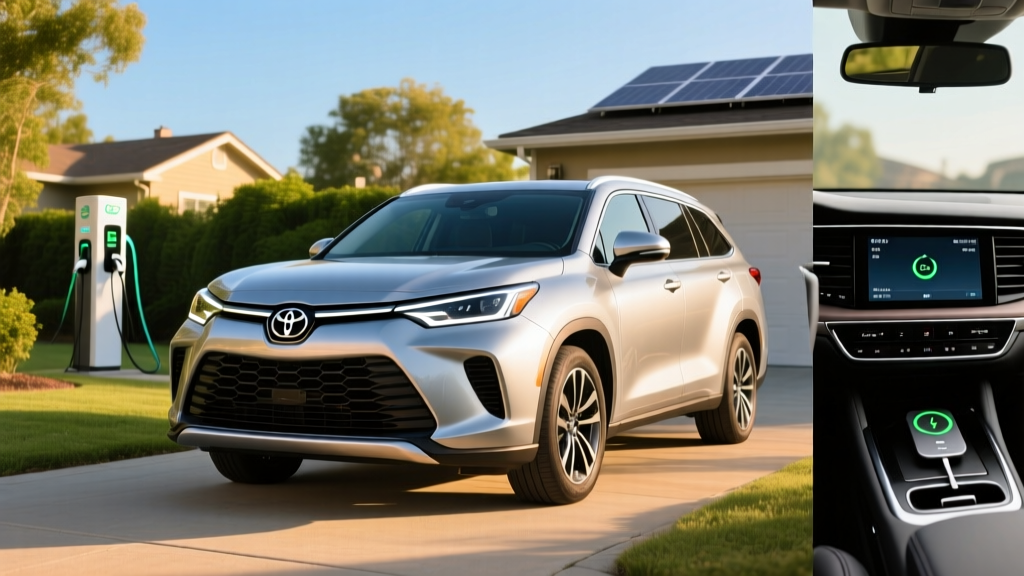
The 2023 Toyota Highlander Hybrid LE sits at an unusual crossroads in the electrified-vehicle market: it delivers meaningful fuel savings without requiring a plug, a charging routine, or any change in driving habits. For three-row SUV buyers who need family-hauler space but want to cut fuel costs, the Highlander Hybrid LE remains one of the most practical options available. Here's a data-driven look at what this hybrid actually delivers — and where its limits lie.
Quick Verdict: Who the 2023 Highlander Hybrid LE Is For
If you need three rows, all-wheel drive, and sub-400-mile fuel stops without ever plugging in, the 2023 Toyota Highlander Hybrid LE delivers. It is a conventional hybrid (HEV), meaning it generates all its electricity internally — no plug, no charging cable, no range anxiety. The tradeoff is that you won't get any electric-only driving miles. For that, you'd need to look at Toyota's plug-in hybrid (PHEV) lineup, such as the RAV4 Prime or the newer Highlander PHEV variant introduced for 2025+.
HEV vs. PHEV: What's the Difference?
HEV (Hybrid Electric Vehicle): The 2023 Highlander Hybrid LE is an HEV. A small battery (1.6 kWh) is charged by regenerative braking and the gas engine. You never plug it in. Fuel savings come from the electric motor assisting the engine and enabling low-speed electric-only movement in stop-and-go traffic.
PHEV (Plug-In Hybrid Electric Vehicle): A PHEV has a larger battery (typically 10–20 kWh) that you plug in to charge, offering 20–40+ miles of pure electric driving before the gas engine kicks in. The 2023 Highlander lineup did not offer a PHEV variant in the US market.
Fuel Economy: EPA Numbers and Real-World MPG
The headline number for the 2023 Toyota Highlander Hybrid LE is 35 MPG combined. But the city/highway split tells a more useful story for daily driving.
| Driving Condition | EPA Estimate | Real-World Expectation |
|---|---|---|
| City | 36 MPG | 36–40 MPG (hybrids often exceed EPA in city) |
| Highway | 35 MPG | 30–33 MPG (sustained 70+ mph reduces hybrid advantage) |
| Combined | 35 MPG | 32–36 MPG depending on driving mix |
According to fueleconomy.gov, the AWD Highlander Hybrid LE achieves 36 city / 35 highway / 35 combined MPG. Front-wheel-drive models bump slightly to 36/35/36.
Why city MPG beats highway in hybrids: Regenerative braking recaptures energy during frequent stops, and the electric motor handles low-speed acceleration where gas engines are least efficient. On sustained highway cruises, the gas engine does most of the work, narrowing the gap with a conventional vehicle.
Cold-weather impact: Expect a 5–10% fuel economy drop in freezing temperatures. The engine runs more often to provide cabin heat, and battery efficiency drops in cold. Owners in northern climates typically report 31–33 MPG combined in winter versus 35–37 MPG in mild weather.
Powertrain Specs: Engine, Motors, and Horsepower
| Specification | 2023 Highlander Hybrid LE |
|---|---|
| Engine | 2.5L 4-cylinder Atkinson cycle |
| Engine Output | 186 HP / 186 lb-ft torque |
| Electric Motors | Front motor (134 kW) + Rear motor (40 kW, AWD only) |
| Combined Net Horsepower | 243 HP |
| Transmission | eCVT (electronically controlled continuously variable) |
| Drivetrain | FWD or electronic AWD (AWD-i) |
| Hybrid Battery | 1.6 kWh nickel-metal hydride (NiMH) |
| 0–60 MPH | ~7.8 seconds (estimated, AWD) |
| Towing Capacity | 3,500 lbs |
| Fuel Tank | 17.9 gallons |
| Total Driving Range | ~627 miles (combined) |
The AWD-i system uses a dedicated rear electric motor rather than a mechanical driveshaft. This means the rear wheels receive power only when the system detects slip or during hard acceleration. It's effective for rain, snow, and light off-road conditions but isn't a substitute for a traditional mechanical AWD system on serious terrain.
The 2.5L Atkinson-cycle engine prioritizes efficiency over peak power. Combined with the electric motors, the 243 HP net output is adequate for highway merging and loaded driving, but it won't feel quick. The eCVT is smooth but produces the characteristic "rubber-band" drone under hard acceleration that some drivers find unrefined.
Pricing and Tax Credit Eligibility
The 2023 Toyota Highlander Hybrid LE launched with an MSRP of approximately $40,220 (FWD) and $41,820 (AWD), including destination charge. By 2026, used examples typically trade between $32,000 and $38,000 depending on mileage and condition.
Federal Tax Credit Status
The 2023 Highlander Hybrid LE does not qualify for the federal §30D new clean vehicle tax credit (up to $7,500). That credit is reserved for plug-in electric vehicles (BEVs and PHEVs) meeting specific battery-sourcing and critical-mineral requirements, as outlined by the IRS. Conventional hybrids like the Highlander Hybrid LE have never been eligible for this credit.
Used hybrid credit: The §25E used clean vehicle credit (up to $4,000) also applies only to plug-in vehicles, not conventional HEVs.
State incentives: A handful of states offer rebates or HOV-lane access for hybrids, but these programs are increasingly shifting toward plug-in vehicles. Check your state's energy or DMV website for current offerings.
Battery Warranty, Lifespan, and Replacement Cost
Toyota Hybrid Battery Warranty
- Hybrid Battery: 10 years / 150,000 miles (whichever comes first) — transferable to subsequent owners
- Hybrid System Components: 8 years / 100,000 miles
- Powertrain: 5 years / 60,000 miles
Toyota's hybrid battery track record is among the strongest in the industry. The NiMH pack in the Highlander Hybrid is small (1.6 kWh) and is never deeply discharged — the system keeps the battery between roughly 40% and 80% state of charge, which dramatically extends cycle life. Real-world data from Toyota's hybrid lineup (dating back to the 2001 Prius) shows most hybrid batteries lasting 150,000–200,000+ miles before significant degradation.
Replacement cost if out of warranty: A new OEM hybrid battery pack for the Highlander Hybrid typically runs $3,000–$4,500 installed at a Toyota dealer. Third-party refurbished packs are available for $1,500–$2,500 installed. Given the generous 10-year/150,000-mile warranty and the proven longevity of Toyota's NiMH packs, most owners will never face this expense.
For comparison, the 12V auxiliary battery (a standard lead-acell or AGM unit that powers electronics when the vehicle is off) may need replacement every 4–6 years at a cost of $150–$300 — the same as any conventional vehicle.
Hybrid vs. PHEV vs. Full EV: Which Powertrain Fits You?
| Factor | HEV (Highlander Hybrid) | PHEV (e.g., Toyota RAV4 Prime) | Full EV (e.g., Kia EV9) |
|---|---|---|---|
| Plug-in Required? | No | Yes (for EV miles) | Yes (always) |
| Electric-Only Range | None (low-speed assist only) | 20–42 miles typical | 230–310 miles typical |
| Fuel/Charging Cost | Gas only (~$0.12–0.16/mi) | Electric + gas (~$0.04–0.14/mi) | Electric only (~$0.03–0.06/mi home charging) |
| Home Charging Needed? | No | Recommended (120V or 240V) | Yes (240V Level 2 strongly recommended) |
| Federal Tax Credit | None | Up to $7,500 (if eligible) | Up to $7,500 (if eligible) |
| Three-Row Availability | Yes | Limited (few PHEV 3-row options) | Yes (Kia EV9, Tesla Model X) |
| Best For | No plug access; long road trips | Short commutes + road trips | Home charging + mostly under 250 mi/day |
Choose the Highlander Hybrid LE if: You don't have access to home or workplace charging, you regularly drive long distances, you need three rows, and you want a straightforward ownership experience with no plug-in routine.
Choose a PHEV if: You have access to a plug (even a standard 120V outlet), your daily commute is under 30 miles, and you still want gas-engine flexibility for road trips.
Choose a full EV if: You can install a Level 2 home charger, your daily driving is under 250 miles, and you want the lowest per-mile energy cost and minimal maintenance.
Reliability and Ownership Costs
Toyota's hybrid powertrain is one of the most proven systems on the road. The Highlander Hybrid carries strong reliability ratings from both Consumer Reports and J.D. Power. Key ownership considerations:
- Maintenance: Hybrid-specific maintenance is minimal. The regenerative braking system extends brake pad life significantly — many owners report 80,000+ miles on original pads. Oil changes follow the standard 10,000-mile interval.
- Insurance: Expect insurance premiums comparable to the gas Highlander, typically $1,400–$1,800 annually depending on your profile and state.
- Depreciation: The Highlander Hybrid holds value well. Toyota's reputation for reliability and strong demand for used three-row SUVs supports resale. Expect roughly 45–55% value retention at 5 years / 60,000 miles.
- Fuel cost savings vs. gas Highlander: The 2023 gas Highlander (2.4L turbo) gets approximately 24 MPG combined. At $3.50/gallon and 15,000 miles/year, the gas model costs ~$2,188/year in fuel versus ~$1,500/year for the hybrid — a savings of roughly $688/year or $3,440 over five years.
According to NHTSA, the 2023 Highlander Hybrid earned a 5-Star overall safety rating, adding to its appeal as a family vehicle.
Pros and Cons at a Glance
Pros
- 35 MPG combined in a 3-row, 4,500-lb SUV — no plug required
- Standard AWD on most trims with dedicated rear electric motor
- 10-year / 150,000-mile hybrid battery warranty
- 627+ mile total range — fewer fuel stops on road trips
- Proven Toyota hybrid reliability with extensive track record
- 3,500-lb towing capacity
- 5-Star NHTSA safety rating
Cons
- No electric-only driving range — this is not a PHEV
- No federal tax credit eligibility (HEV, not plug-in)
- 243 HP feels adequate, not quick — eCVT drone under hard acceleration
- Third row is tight for adults on longer trips
- Cargo space reduced vs. gas Highlander due to hybrid battery placement
- Infotainment system (2023 model year) is functional but dated vs. competitors
Frequently Asked Questions
How many MPG does the 2023 Toyota Highlander Hybrid LE get?
The EPA rates the 2023 Highlander Hybrid LE at 36 city / 35 highway / 35 combined MPG (AWD). In real-world driving, owners typically see 32–36 MPG combined depending on driving mix, with city driving often exceeding the EPA estimate and sustained highway driving falling slightly below.
Does the 2023 Highlander Hybrid need to be plugged in?
No. The 2023 Highlander Hybrid LE is a conventional hybrid (HEV), not a plug-in hybrid (PHEV). Its small battery charges through regenerative braking and the gas engine. You simply fill it with gasoline like any other vehicle.
How far can the 2023 Highlander Hybrid go on electric only?
The 2023 Highlander Hybrid LE cannot drive on electric power alone at meaningful speeds or distances. The electric motor assists the gas engine and enables brief low-speed movement (such as creeping in a parking lot), but there is no usable electric-only range. If electric-only driving is a priority, consider a PHEV or full EV.
Is the Highlander Hybrid battery reliable, and what does replacement cost?
Toyota's hybrid batteries have an exceptional longevity record, commonly lasting 150,000–200,000+ miles. The 2023 model is covered by a 10-year / 150,000-mile hybrid battery warranty. Out-of-warranty replacement runs $3,000–$4,500 for a new OEM pack, or $1,500–$2,500 for a refurbished unit.
Does the 2023 Highlander Hybrid qualify for any tax credit?
No. The federal §30D clean vehicle tax credit applies only to plug-in electric vehicles (BEVs and PHEVs), not conventional hybrids. The Highlander Hybrid LE does not qualify for the $7,500 new-vehicle credit or the $4,000 used-vehicle credit. Some state-level incentives may apply — check your state's energy office for current programs.
How does the Highlander Hybrid compare to the gas Highlander on cost?
The hybrid carries a roughly $2,000–$3,000 price premium over the equivalent gas trim. At current fuel prices, the hybrid's ~11 MPG advantage saves approximately $688 per year at 15,000 miles driven annually, meaning the premium is typically recouped in 3–4 years. Over a 10-year ownership period, total fuel savings can exceed $6,500.
Is the 2023 Highlander Hybrid LE still available in 2026?
The 2023 model year is no longer sold new but is widely available on the used market. Toyota continues to sell the Highlander Hybrid in subsequent model years with minor updates. Used 2023 LE trims typically range from $32,000–$38,000 depending on mileage and condition.
Sources: EPA fueleconomy.gov, NHTSA, IRS §30D Tax Credit Rules