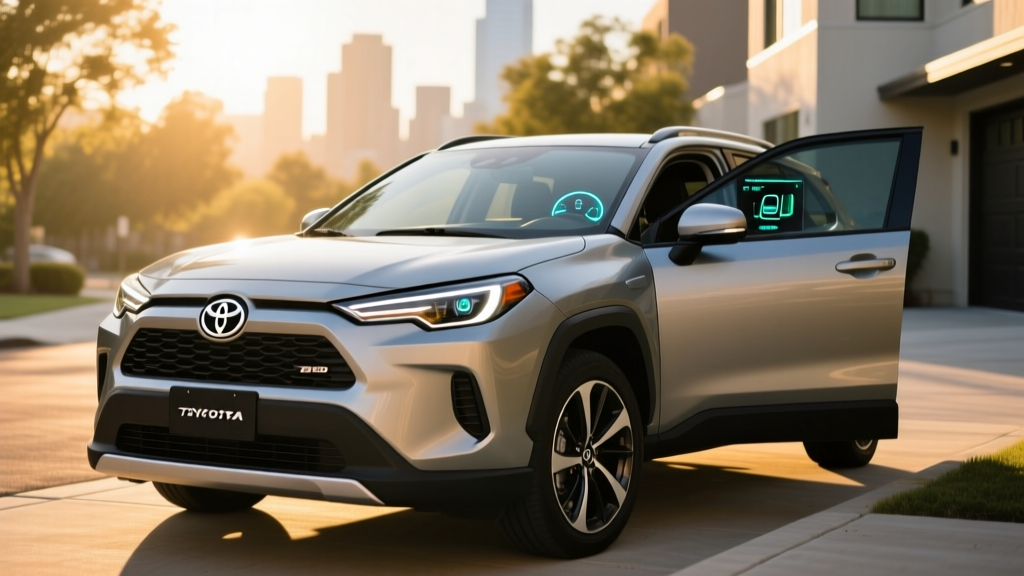
The 2023 Toyota Corolla Cross Hybrid SE occupies a specific niche: a compact crossover that delivers hybrid efficiency without requiring a plug, a charging routine, or a lifestyle change. For buyers who want the fuel savings of electrification but lack home charging access or don't want to manage a plug-in hybrid's electric-only range, this conventional hybrid (HEV) is a pragmatic middle ground. Here's a data-driven breakdown of what the Corolla Cross Hybrid SE actually delivers, from its EPA-rated 42 MPG combined to its real-world performance, pricing, and long-term ownership costs.
HEV vs PHEV vs EV: Where the Corolla Cross Hybrid Fits
Before examining specs, it's critical to clarify what this vehicle is — and what it isn't. The Corolla Cross Hybrid is a conventional hybrid (HEV), not a plug-in hybrid (PHEV) or a battery-electric vehicle (BEV).
| Feature | HEV (Corolla Cross Hybrid) | PHEV (e.g., RAV4 Prime) | BEV (e.g., bZ4X) |
|---|---|---|---|
| Plug-in charging required | No — self-charging via engine + regen | Yes — 120V or 240V outlet | Yes — Level 2 or DC fast |
| Electric-only range | ~1 mile at low speed | 25–42 miles typical | 200–300+ miles (full battery) |
| Battery size | ~1.3 kWh (small buffer) | 13–18 kWh usable | 60–90 kWh usable |
| Federal tax credit (§30D) | Not eligible | Up to $7,500 (if eligible) | Up to $7,500 (if eligible) |
| Best for | No home charging, simplicity | Home charging + short commutes | Home charging + full electrification |
The Corolla Cross Hybrid's small ~1.3 kWh nickel-metal hydride (NiMH) battery pack charges itself through regenerative braking and the gasoline engine. You never plug it in. The electric motor assists the engine during acceleration and enables brief electric-only driving at low speeds, but this is not a vehicle you "charge" — it's a vehicle that optimizes fuel consumption automatically.
Powertrain and Performance Specs
The 2023 Corolla Cross Hybrid pairs Toyota's fifth-generation hybrid system with a 2.0-liter four-cylinder engine and standard all-wheel drive (AWD). Here are the exact figures:
| Specification | 2023 Corolla Cross Hybrid SE |
|---|---|
| Engine | 2.0L inline-4 (150 hp, 139 lb-ft) |
| Electric motor | Front: 83 hp / Rear: 41 hp (eAWD) |
| Combined net horsepower | 196 hp |
| Transmission | eCVT (electronically controlled CVT) |
| Drivetrain | Electronic AWD (eAWD) — standard |
| Battery type | NiMH (nickel-metal hydride), ~1.3 kWh |
| 0–60 mph (est.) | ~7.5 seconds |
| Curb weight | ~3,310 lbs |
| Cargo volume (rear seats up) | 25.5 cu ft |
| Cargo volume (rear seats folded) | ~64 cu ft |
The 196 combined horsepower figure represents the net output of the engine and electric motors working together — not a simple sum. Toyota's hybrid system intelligently blends power sources: the electric motor provides instant torque from a stop, while the engine takes over at higher speeds. The rear electric motor engages only when the system detects slip or acceleration demand, making this an on-demand AWD system rather than a permanent one.
Fuel Economy: EPA Ratings and Real-World MPG
The Corolla Cross Hybrid's headline number is its EPA fuel economy. Here's the official breakdown per fueleconomy.gov:
| Driving Condition | EPA MPG |
|---|---|
| City | 45 MPG |
| Highway | 38 MPG |
| Combined | 42 MPG |
Real-world expectations: Toyota hybrids consistently match or slightly exceed their EPA city ratings in actual stop-and-go driving, where regenerative braking and electric-motor assist do the most work. On a mixed suburban commute, owners typically report 40–44 MPG combined. Highway-only driving at 70+ mph will drop efficiency closer to 36–38 MPG, as the engine bears more of the load and aerodynamic drag increases. In cold weather (below 30°F), expect a 5–10% reduction as the engine runs more frequently to maintain cabin heat and battery temperature.
For comparison: The gas-only 2023 Corolla Cross (2.0L, FWD) rates at 31 MPG combined — meaning the hybrid saves roughly 3.4 gallons per 100 miles. At $3.50/gallon and 12,000 miles/year, that's approximately $1,428 in annual fuel savings versus the gas model.
Pricing, Trims, and Tax Credit Eligibility
The 2023 Corolla Cross Hybrid was offered in three trims: S, SE, and XSE. The SE — the mid-tier and most popular — carried the following MSRP:
| Trim | MSRP (2023) | Key Features |
|---|---|---|
| S | $28,090 | 8" touchscreen, Toyota Safety Sense 3.0, 17" alloy wheels |
| SE (this review) | $29,240 | SofTex seats, heated front seats, 18" alloy wheels, sport-tuned suspension |
| XSE | $31,290 | JBL audio, power liftgate, wireless charging, ambient lighting |
Tax credit status: The Corolla Cross Hybrid is a conventional HEV and does not qualify for the federal §30D clean vehicle tax credit (up to $7,500). That credit applies only to plug-in hybrids (PHEVs) and battery-electric vehicles (BEVs) meeting battery-sourcing, MSRP cap, and buyer income requirements per IRS guidelines. Some states offer small rebates for hybrids, but these vary by jurisdiction — check your state's energy office for current programs.
The SE trim's ~$29,240 MSRP positions it against compact crossovers like the Honda HR-V, Subaru Crosstrek, and Mazda CX-30 — none of which offer a hybrid powertrain in this price range. The Hyundai Kona Hybrid (starting ~$33,000) is the closest competitor but launched later.
Reliability, Battery Lifespan, and Warranty
Toyota's hybrid battery warranty is one of the strongest in the industry and directly addresses the top concern for hybrid buyers: long-term battery replacement cost.
Toyota Hybrid Battery Warranty:
- Coverage: 10 years / 150,000 miles (whichever comes first)
- Applies to: Hybrid battery pack, hybrid control module, inverter
- Capacity threshold: Warranty covers defects and significant capacity loss — Toyota does not publish a specific degradation percentage trigger, but real-world data shows Toyota NiMH packs retain 85–90%+ capacity at 150,000 miles
Real-world battery longevity: Toyota's hybrid system has been in production since the 1997 Prius. NiMH packs in the Prius and Camry Hybrid routinely exceed 200,000 miles with minimal degradation. The Corolla Cross Hybrid uses a smaller, less-stressed pack (it never fully charges or fully depletes — the system maintains a 40–80% state-of-charge buffer). Replacement cost, should it be needed out of warranty, typically ranges from $2,000–$3,500 for the battery module, though third-party refurbishment options exist for $1,000–$1,800.
The powertrain warranty covers 5 years / 60,000 miles, and the basic vehicle warranty is 3 years / 36,000 miles. Toyota Safety Sense 3.0 (pre-collision, lane departure, adaptive cruise, automatic high beams) is standard across all trims.
Who Should Choose the Corolla Cross Hybrid SE?
Pros
- 42 MPG combined with no plug-in requirement — ideal for apartment dwellers or those without home charging
- Standard AWD at a ~$29K price point
- 10-year / 150,000-mile hybrid battery warranty
- Strong real-world reliability track record (Toyota hybrid system)
- ~$1,400/year fuel savings vs. gas Corolla Cross
Cons
- No federal tax credit eligibility (HEV, not PHEV)
- Modest cargo space (25.5 cu ft) vs. RAV4 Hybrid (37.5 cu ft)
- eCVT can feel rubbery under hard acceleration
- No DC fast charging or meaningful electric-only range
- SE trim lacks wireless Apple CarPlay/Android Auto (wired only)
Choose the Corolla Cross Hybrid SE if: You want 40+ MPG in a compact crossover, lack home charging access (or don't want to manage plug-in routines), prioritize long-term reliability, and your cargo needs are modest (1–2 passengers, light hauling).
Choose a PHEV (e.g., RAV4 Prime) if: You have home Level 2 charging, a commute under 40 miles, and want to drive mostly on electricity while keeping a gas engine for road trips. PHEVs also qualify for the §30D tax credit if eligible.
Choose a full EV (e.g., Hyundai Kona Electric) if: You have reliable home charging, want zero tailpipe emissions, and your daily driving is under 200 miles. BEVs have lower per-mile "fuel" costs but higher upfront prices.
Frequently Asked Questions
How many MPG does the 2023 Corolla Cross Hybrid SE get?
The EPA rates it at 45 city / 38 highway / 42 combined MPG. Real-world mixed driving typically yields 40–44 MPG combined, with highway-only trips dropping to 36–38 MPG.
Can I plug in the Corolla Cross Hybrid to charge it?
No. This is a conventional hybrid (HEV), not a plug-in hybrid (PHEV). The small battery charges itself through regenerative braking and the gasoline engine. You never plug it in — you simply refuel with gasoline.
How far can it drive on electric power alone?
Approximately 1 mile at very low speeds (under 25 mph) in ideal conditions. This is not a vehicle designed for electric-only commuting — the electric motor's role is to assist the engine and improve fuel efficiency, not to replace it.
Is the hybrid battery reliable, and what does replacement cost?
Toyota's hybrid batteries are among the most proven in the industry, routinely lasting 200,000+ miles. The warranty covers 10 years / 150,000 miles. Out-of-warranty replacement costs $2,000–$3,500 for a new module, with refurbished options available for $1,000–$1,800.
Does the Corolla Cross Hybrid qualify for any tax credits?
It does not qualify for the federal §30D clean vehicle credit, which is limited to PHEVs and BEVs. Some states offer small hybrid rebates, but these vary — check your state's energy or environmental agency for current programs.
How does it compare to the RAV4 Hybrid?
The RAV4 Hybrid is larger (37.5 cu ft cargo vs. 25.5), more powerful (219 hp vs. 196 hp), and rates at 40 MPG combined — slightly lower due to its size and weight. The RAV4 Hybrid also starts ~$3,000 higher. If you need more cargo room or plan frequent road trips, the RAV4 is the better fit. For city commuting and tighter budgets, the Corolla Cross Hybrid wins on price and efficiency.
Is the SE trim worth the upgrade over the S?
The SE adds SofTex (synthetic leather) seats, heated front seats, 18-inch alloy wheels, and a sport-tuned suspension for $1,150 more than the S. If you live in a cold climate or value the upgraded interior, the SE is the sweet spot. The XSE adds premium features (JBL audio, power liftgate) but pushes the price above $31,000.
The 2023 Toyota Corolla Cross Hybrid SE is not revolutionary — it's a compact crossover with a proven hybrid system, standard AWD, and 42 MPG combined. For buyers who want electrified efficiency without the complexity of plug-in charging, tax-credit eligibility math, or range planning, it delivers exactly what it promises: lower fuel costs, Toyota reliability, and zero lifestyle compromise.