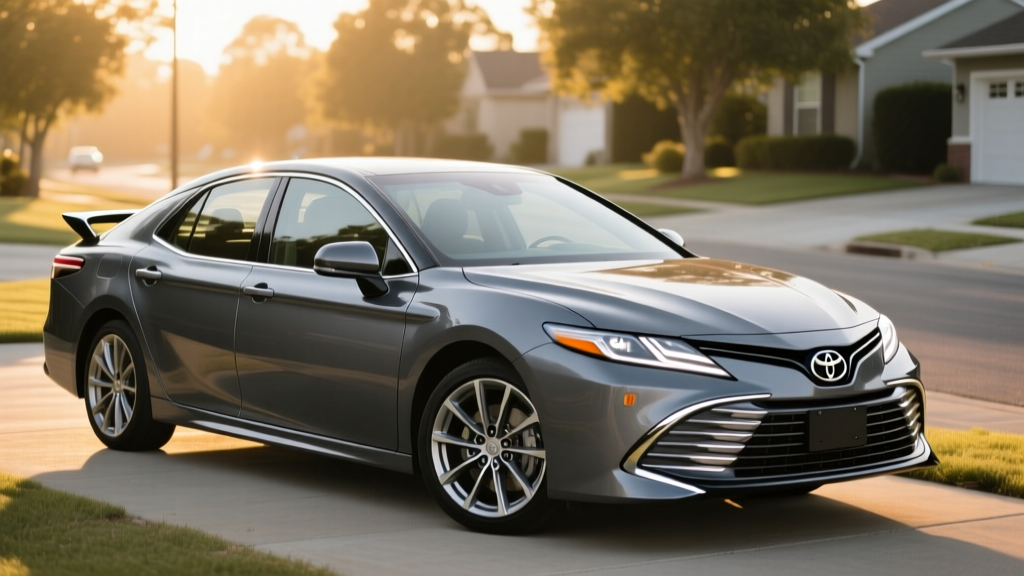
The 2023 Toyota Camry XSE Hybrid sits at an interesting crossroads. It pairs Toyota's proven hybrid synergy drive with the sportiest trim in the Camry lineup, targeting drivers who want meaningful fuel savings without sacrificing the aggressive styling and firmer suspension tuning of the XSE grade. For 2023, Toyota made all-wheel drive standard on every Camry Hybrid trim, including the XSE — a move that broadens its appeal across snow-belt states without a significant fuel-economy penalty.
This guide covers the exact numbers buyers need: EPA and real-world MPG, powertrain output, battery warranty terms, pricing, and whether any federal or state incentives apply. We'll also clarify where the Camry Hybrid fits against plug-in hybrids and full battery-electric vehicles for different driving patterns.
2023 Toyota Camry XSE Hybrid: Key Specifications
| Attribute | Specification |
|---|---|
| Powertrain | 2.5L 4-cyl + electric motor (HEV, self-charging) |
| Combined Horsepower | 208 hp (net system) |
| Drivetrain | Electronic AWD (standard on 2023 Hybrid) |
| EPA MPG (City / Hwy / Combined) | 44 / 47 / 46 |
| Fuel Tank Capacity | 13.2 gallons |
| Total Driving Range | ~607 miles (EPA est.) |
| 0–60 mph | ~7.1 seconds (est.) |
| Hybrid Battery | ~1.6 kWh lithium-ion (sealed, not plug-in) |
| Base MSRP (XSE Hybrid AWD) | $33,490 (2023) |
| Hybrid Battery Warranty | 10 years / 150,000 miles |
| Federal §30D Tax Credit | Not eligible (HEV, not a PHEV or BEV) |
Source: EPA fueleconomy.gov, Toyota USA.
How Many MPG Does the Camry XSE Hybrid Actually Get?
The EPA rates the 2023 Camry XSE Hybrid AWD at 44 mpg city, 47 mpg highway, and 46 mpg combined. The highway-biased split is unusual — most hybrids score higher in the city where regenerative braking and electric-only low-speed operation dominate. The XSE's slightly taller gearing and AWD system contribute to this inverted profile compared to the LE Hybrid (which achieves 51/53/52).
| Trim | City | Highway | Combined |
|---|---|---|---|
| LE Hybrid AWD | 51 | 53 | 52 |
| SE Hybrid AWD | 44 | 47 | 46 |
| XSE Hybrid AWD | 44 | 47 | 46 |
| XLE Hybrid AWD | 44 | 47 | 46 |
The LE's advantage comes from lower-rolling-resistance tires and lighter weight. The XSE's 19-inch alloy wheels, sport-tuned suspension, and wider rubber cost roughly 6 mpg combined versus the LE.
HEV vs PHEV vs EV: Which Powertrain Fits You?
The Camry XSE Hybrid is a conventional hybrid (HEV). It has no plug, no electric-only driving mode of meaningful distance, and no external charging requirement. The small 1.6 kWh lithium-ion battery charges exclusively through regenerative braking and the gasoline engine. This is fundamentally different from a plug-in hybrid (PHEV) like the Toyota RAV4 Prime or a full battery-electric vehicle (BEV) like the Tesla Model 3.
| Factor | HEV (Camry Hybrid) | PHEV (e.g., RAV4 Prime) | BEV (e.g., Model 3) |
|---|---|---|---|
| Plug-in Required? | No | Yes (Level 1/2) | Yes (Level 1/2/DC) |
| Electric-Only Range | <1 mile at low speed | 25–42 miles typical | 250–350+ miles |
| Total Range | ~607 miles | ~500–600 miles | 250–350 miles |
| Home Charging Needed? | No | Recommended | Essential |
| Federal Tax Credit (§30D) | Not eligible | Up to $7,500 (if eligible) | Up to $7,500 (if eligible) |
| Best For | No home charging; long trips | Short commutes + road trips | Home charging + daily commute |
| Upfront Cost | Lowest | Mid | Highest |
- You lack access to home or workplace charging (apartment, street parking)
- You regularly drive 400+ miles between stops and don't want to plan around chargers
- You want a lower purchase price (~$33K) versus a PHEV ($40K+) or BEV ($38K+)
- You tow occasionally or drive in extreme cold where BEV range drops 20–40%
Powertrain Deep Dive: 208 hp With AWD Efficiency
The 2023 Camry Hybrid uses Toyota's fourth-generation Hybrid Synergy Drive. A 2.5-liter Dynamic Force four-cylinder engine (176 hp, 163 lb-ft) pairs with a front electric motor (88 kW / 118 hp) through a planetary gearset that acts as an electronically controlled continuously variable transmission (eCVT). A rear-mounted 40 kW electric motor provides AWD traction by engaging automatically when front-wheel slip is detected or during hard acceleration from a stop.
The net system output is 208 horsepower. This is not additive — you cannot simply sum engine and motor horsepower because they peak at different RPMs. The eCVT keeps the engine in its most efficient operating range during cruising, then supplements with electric torque during acceleration.
The XSE trim adds a sport-tuned suspension with stiffer dampers and a quicker steering ratio versus the LE and XLE. It doesn't change the powertrain calibration, but the firmer setup and 19-inch wheels give the XSE a more planted feel in corners at the cost of some ride compliance on rough pavement.
Battery Warranty, Lifespan, and Replacement Cost
Toyota's hybrid batteries have an exceptionally strong longevity track record. The nickel-metal hydride packs in early Prius models routinely exceeded 200,000 miles, and the current lithium-ion packs are more energy-dense and better thermally managed. Independent data from fleet operators and owner surveys suggest a typical hybrid battery lifespan of 150,000–250,000 miles before meaningful degradation occurs.
If replacement is eventually needed outside warranty, a new OEM hybrid battery for the Camry Hybrid costs approximately $2,500–$4,000 including labor at a dealership. Independent hybrid specialists often offer refurbished or reconditioned packs for $1,500–$2,500. This is a fraction of BEV battery replacement costs ($8,000–$20,000+), because the Camry's hybrid battery is only ~1.6 kWh — far smaller than a BEV's 60–100 kWh pack.
The hybrid system also includes a hybrid system warranty covering the inverter, electric motors, and eCVT for 8 years / 100,000 miles (10 years / 150,000 miles in states that follow California emissions standards, including CA, CT, ME, MA, NJ, NY, OR, RI, VT, WA, and others adopting CARB rules).
Pricing, Trims, and Tax Credit Eligibility
The 2023 Camry XSE Hybrid AWD carried an MSRP of $33,490, including destination charge. Adding options like the panoramic glass roof, navigation, or the advanced technology package could push the as-tested price to $36,000–$38,000.
As a conventional hybrid (HEV), the Camry Hybrid does not qualify for the federal §30D clean vehicle tax credit. That credit is reserved for plug-in electric vehicles — PHEVs with at least 7 kWh of battery capacity and BEVs. Some states offer their own incentives for hybrids, but these are uncommon and typically modest. Check your state's energy office or IRS §30D guidelines for current eligibility rules.
| Trim | MSRP (AWD) | Federal Tax Credit |
|---|---|---|
| LE Hybrid | $29,990 | None (HEV) |
| SE Hybrid | $31,290 | None (HEV) |
| XSE Hybrid | $33,490 | None (HEV) |
| XLE Hybrid | $34,090 | None (HEV) |
For buyers in states with CARB-aligned emissions rules, some utilities offer rebates for purchasing any hybrid (typically $250–$500), but these are not guaranteed. The lack of a federal tax credit is the primary financial disadvantage versus a PHEV like the RAV4 Prime or a BEV like the Chevy Equinox EV, both of which may qualify for up to $7,500 if income, MSRP, and battery-sourcing requirements are met.
Reliability, Safety Ratings, and Ownership Costs
Toyota's hybrid powertrain is among the most proven in the industry, with over 25 years of continuous production since the original Prius. The Camry Hybrid carries strong reliability ratings from both IIHS (Top Safety Pick+ for 2023) and owner-survey data from Consumer Reports and J.D. Power.
The eCVT has no clutch packs, belts, or traditional gears to wear — it uses a planetary gearset with no friction elements. This contributes to lower long-term maintenance costs versus conventional automatic transmissions. Toyota recommends no transmission fluid changes under normal driving conditions.
Five-year total cost of ownership benefits from:
- Fuel savings: At 46 mpg combined and $3.50/gallon, annual fuel cost for 12,000 miles is approximately $913 — roughly $600–$800 less per year than a comparable gas-only midsize sedan at 28 mpg
- No plug-in infrastructure cost: Zero home charging installation expense ($0 vs $500–$2,000 for Level 2)
- Lower maintenance: Regenerative braking extends brake pad life (60,000–100,000 miles is common); no spark plugs until 120,000 miles on the Dynamic Force engine
- Insurance: Typically 5–10% higher than gas Camry due to hybrid-specific repair costs, but lower than most BEVs
Pros and Cons of the 2023 Camry XSE Hybrid
Pros
- 46 mpg combined EPA — real-world often 43–48 mpg
- Standard AWD with no significant mpg penalty
- 607-mile total range eliminates refueling stops on long trips
- No home charging infrastructure needed
- 10-year / 150,000-mile hybrid battery warranty
- XSE sport suspension and styling upgrades
- IIHS Top Safety Pick+ rating
- Strong resale value and Toyota reliability record
Cons
- No federal tax credit eligibility (HEV, not PHEV/BEV)
- XSE's 19-inch wheels reduce mpg by ~6 vs LE trim
- Only ~1.6 kWh battery — no meaningful electric-only driving
- eCVT drone under hard acceleration (no stepped gear feel)
- Rear seat slightly tighter than competitors (38.0" legroom)
- No DC fast charging capability (not applicable to HEV)
- Infotainment interface dated vs newer competitors
Frequently Asked Questions
How many MPG does the 2023 Toyota Camry XSE Hybrid get in real-world driving?
The EPA rates it at 44 city / 47 highway / 46 combined. Real-world owner averages cluster between 43–48 mpg combined in mixed driving. City-heavy commutes with frequent stops tend to push numbers toward the high 40s, while sustained 80 mph highway driving in cold weather can drop to 38–42 mpg.
Does the Camry XSE Hybrid need to be plugged in?
No. The Camry Hybrid is a conventional HEV (hybrid electric vehicle). Its small battery charges through regenerative braking and the gasoline engine. There is no plug, no charging port, and no electric-only range to manage. You fuel it like any gasoline car.
How far can it drive on electric power alone?
Less than one mile at very low speeds (under 25 mph). The hybrid system uses the electric motor primarily to assist acceleration and enable engine-off coasting — not for sustained electric-only driving. If electric-only commuting is a priority, consider a PHEV like the Toyota RAV4 Prime (42 miles EV range) or a full BEV.
Is the hybrid battery reliable, and what does replacement cost?
Toyota's hybrid batteries have an excellent longevity record, with many exceeding 200,000 miles. The 2023 Camry Hybrid battery is covered by a 10-year / 150,000-mile warranty. Out-of-warranty replacement costs approximately $2,500–$4,000 at a dealer, or $1,500–$2,500 through an independent hybrid specialist using a refurbished pack.
Does the 2023 Camry Hybrid qualify for any tax credit?
It does not qualify for the federal §30D clean vehicle tax credit, which requires a plug-in vehicle with at least 7 kWh of battery capacity. Some states or utilities may offer small rebates for hybrid purchases ($250–$500), but these vary by location and are not guaranteed. Consult IRS guidelines and your state energy office for specifics.
Should I buy the Camry Hybrid or a full EV like the Tesla Model 3?
If you have reliable home charging (garage or dedicated outlet), drive under 300 miles daily, and want the lowest per-mile energy cost, a BEV offers lower running costs and potential tax credits. If you lack home charging, regularly drive long distances, live in extreme cold, or want a lower purchase price with zero charging logistics, the Camry Hybrid is the more practical choice. The XSE Hybrid's 607-mile range and 5-minute refueling eliminate all range planning.
What's the difference between the Camry XSE Hybrid and the Camry SE Hybrid?
The XSE is the premium sport trim: it adds 19-inch machined alloy wheels, a panoramic glass roof option, leather-trimmed sport seats, ambient lighting, and additional driver-assist features over the SE. Both share the same 208 hp hybrid AWD powertrain and 46 mpg combined EPA rating. The XSE starts roughly $2,200 higher than the SE Hybrid.