Quick Verdict: A Practical Plug-In Hybrid for Families Who Aren't Ready to Go Full EV
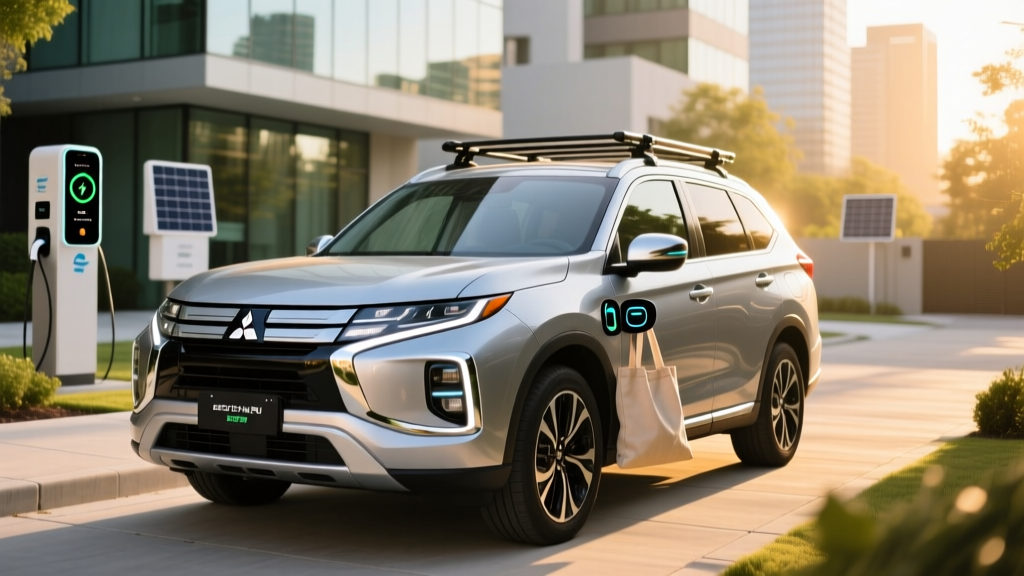
The 2023 Mitsubishi Outlander PHEV occupies a specific niche: a three-row compact SUV that can handle daily commutes on electricity alone while retaining a gasoline engine for longer trips. With an EPA-rated 38 miles of electric-only range, standard all-wheel drive, and the ability to DC fast charge, it addresses the most common objections to full battery-electric vehicles — range anxiety and charging time — without demanding the lifestyle adjustments a BEV requires.
From a 2026 ownership perspective, the 2023 model year represents a mature platform with a proven powertrain. Mitsubishi redesigned the Outlander PHEV for 2023 with a larger battery, more power, and improved interior quality over the prior generation. Let's break down exactly what the numbers look like in real-world driving.
HEV vs. PHEV: Understanding What the Outlander PHEV Actually Is
Conventional Hybrid (HEV) vs. Plug-In Hybrid (PHEV)
Conventional Hybrid (HEV): A small battery (typically 1-2 kWh) is charged entirely by the engine and regenerative braking. You never plug it in. Examples include the Toyota RAV4 Hybrid. Electric-only driving is limited to brief low-speed coasting.
Plug-In Hybrid (PHEV): A significantly larger battery (the Outlander PHEV uses a 20.0 kWh pack) can be charged from an external power source — a wall outlet, Level 2 charger, or DC fast charger. This enables meaningful electric-only driving range (38 miles EPA) before the gasoline engine activates.
The 2023 Outlander PHEV is strictly a plug-in hybrid. There is no conventional HEV variant of the current-generation Outlander sold in the United States. If you see an Outlander without a charge port, it's either a pre-2023 model from a different market or a different vehicle entirely.
Range, MPG, and Efficiency: The Complete Numbers
| Metric | EPA Rating | Real-World Expectation |
|---|---|---|
| Electric-only range | 38 miles | 32-36 mi (mixed driving); 25-28 mi (highway/cold weather) |
| Combined MPGe (electric mode) | 64 MPGe | 58-62 MPGe in moderate temps |
| Gas-only combined MPG | 25 MPG | 23-26 MPG (city-favorable); 22-24 MPG (highway) |
| Gas-only city MPG | 25 MPG | 24-27 MPG (regen-heavy city routes) |
| Gas-only highway MPG | 26 MPG | 22-24 MPG at 70+ mph |
| Total combined range | ~400 miles | ~350-380 mi (real-world combined) |
| Fuel tank capacity | 14.8 gallons | — |
Source: EPA / fueleconomy.gov
Real-World Range Reality Check
The EPA's 38-mile electric range assumes moderate temperatures and mixed driving. In practice, expect 32-36 miles on a full charge during spring and fall. Summer A/C use drops this to roughly 30-34 miles. Winter conditions (below 35°F) can reduce electric range to 25-28 miles due to cabin heating demands and battery chemistry limitations. Highway-speed driving at 70+ mph also reduces electric range significantly compared to city use, where regenerative braking recaptures energy.
The gas-only MPG figures deserve context. The Outlander PHEV's 25 MPG combined on gasoline is unremarkable for a compact SUV — a conventional hybrid like the Toyota RAV4 Hybrid achieves 40 MPG combined. However, the Outlander PHEV's value proposition is that most daily commutes fall within the 38-mile electric envelope, meaning many owners burn little to no gasoline during the work week.
Powertrain Specs: Engine, Motors, and Combined Output
| Component | Specification |
|---|---|
| Gasoline engine | 2.4L Atkinson-cycle 4-cylinder, 126 HP |
| Front electric motor | 85 kW (114 HP) |
| Rear electric motor | 100 kW (134 HP) |
| Combined system output | 221 HP |
| Drivetrain | Standard AWD (S-AWC — Super All-Wheel Control) |
| Battery capacity (total / usable) | 20.0 kWh total / ~17.0 kWh usable |
| Battery chemistry | Lithium-ion (NMC-type) |
| 0-60 mph (est.) | ~7.5 seconds |
| Towing capacity | 1,500 lbs |
The dual-motor AWD system is one of the Outlander PHEV's strongest features. Unlike many competitors that use a mechanical driveshaft to power the rear wheels, the Outlander PHEV uses a dedicated rear electric motor, enabling precise torque vectoring and instant AWD response. Mitsubishi's S-AWC system manages front/rear torque split and brake-based yaw control.
The 221 HP combined output makes the Outlander PHEV adequately quick for merging and passing, though it's not sporty. The electric motors deliver immediate torque from a stop, giving it a responsive feel around town that belies its 4,700-pound curb weight.
Charging: Levels, Speeds, and the DC Fast Charge Advantage
| Charging Level | Power (kW) | Time (0-100%) | Connector |
|---|---|---|---|
| Level 1 (120V household outlet) | ~1.4 kW | ~14 hours | Standard J1772 |
| Level 2 (240V home/public) | ~3.7 kW (onboard charger limited) | ~5.5 hours | J1772 |
| DC Fast Charge (CHAdeMO) | Up to ~22 kW peak | ~25 min (0-80%) | CHAdeMO |
The Outlander PHEV is one of the few plug-in hybrids on the market that supports DC fast charging — a significant practical advantage. However, there are important caveats.
The CHAdeMO connector issue: The Outlander PHEV uses the CHAdeMO DC fast-charging standard, which has been losing ground in North America to CCS and Tesla's NACS. While Electrify America and some other networks still maintain CHAdeMO connectors at many stations, new installations increasingly prioritize CCS and NACS. This means DC fast-charging options may become more limited over the vehicle's ownership period. Check your local charging infrastructure before relying on DC fast charging as a regular feature.
The 3.7 kW Level 2 limitation: The onboard AC charger is limited to 3.7 kW, meaning even a 7.2 kW or 11.5 kW home Level 2 station will only charge the Outlander at 3.7 kW. A full charge still takes about 5.5 hours on Level 2, which is perfectly adequate for overnight charging but slower than some competitors.
For most owners, overnight Level 2 charging at home will be the primary charging method. A standard 120V outlet (Level 1) works in a pinch but takes roughly 14 hours — feasible only if you drive very little daily and can leave it plugged in for extended periods.
Battery Warranty, Degradation, and Long-Term Reliability
Mitsubishi Battery & Powertrain Warranty
- Main drive lithium-ion battery: 10 years / 100,000 miles (capacity retention warranty)
- Powertrain (engine, motors, transaxle): 10 years / 100,000 miles
- Basic vehicle warranty: 5 years / 60,000 miles
- Capacity retention threshold: Mitsubishi warrants the battery against falling below approximately 70% of original capacity during the warranty period (confirm with dealer for exact terms by model year)
Mitsubishi's 10-year/100,000-mile battery warranty is among the strongest in the industry and directly addresses the top concern for PHEV buyers: what happens when the battery degrades?
In practice, PHEV batteries experience less stress than full BEV batteries because they operate in a narrower state-of-charge window (the vehicle's software maintains a buffer at both the top and bottom of the battery to protect longevity). The 20.0 kWh pack in the Outlander PHEV has roughly 17 kWh of usable capacity, meaning about 3 kWh is reserved as buffer — a conservative approach that favors long-term durability over maximizing range.
Battery replacement cost: If the battery falls outside warranty coverage and requires replacement, expect a cost in the range of $6,000-$9,000 for the battery pack plus labor. This is a significant expense, but the 10-year warranty provides substantial protection. Third-party refurbishment options may emerge as the platform ages, potentially reducing this cost.
Reliability track record: Mitsubishi's PHEV system has been in production since 2013 (first in the previous-generation Outlander PHEV sold in other markets). The technology is proven, though Mitsubishi as a brand tends to score mid-pack in J.D. Power and Consumer Reports reliability surveys. The PHEV powertrain itself has been relatively trouble-free based on owner forums and long-term reports.
Pricing, Trims, and Tax Credit Eligibility
| Trim Level | MSRP (incl. destination) |
|---|---|
| ES | ~$41,090 |
| SE | ~$43,690 |
| SEL | ~$45,590 |
| SEL Platinum Edition | ~$47,290 |
| SEL Black Edition | ~$47,290 |
| GT-Premium | ~$49,890 |
Federal Tax Credit (§30D) Eligibility
The 2023 Outlander PHEV is eligible for a partial federal tax credit under IRS §30D rules. Due to battery component and critical mineral sourcing requirements that tightened through 2023-2025, the credit amount has varied. As of current IRS guidelines, the Outlander PHEV may qualify for up to $3,750 (the critical minerals portion), depending on the specific vehicle's battery sourcing and the buyer's tax liability.
§30D Tax Credit Requirements (2026 Rules)
- Buyer income cap: AGI must not exceed $150,000 (single), $225,000 (head of household), or $300,000 (married filing jointly)
- Vehicle MSRP cap: SUVs/vans/pickups capped at $80,000 — all Outlander PHEV trims qualify
- Battery sourcing: Critical minerals and battery component percentages must meet phase-in thresholds — verify with the dealer for the specific VIN
- Point-of-sale transfer: The credit can be transferred to the dealer at purchase for an immediate price reduction (available since Jan 1, 2024)
- Tax liability: Credit is non-refundable if claimed on taxes; point-of-sale transfer bypasses this limitation
Always verify credit eligibility with the selling dealer and consult a tax professional before relying on the credit in your purchase decision. Rules change, and sourcing requirements can shift between model year production runs.
Used market opportunity: As a 2023 model, the Outlander PHEV is now available on the used market. Under the §25E used clean vehicle credit, buyers may qualify for 30% of the sale price up to $4,000 on a used PHEV purchased from a dealer, subject to income caps ($75,000 single / $150,000 joint) and a sale price cap of $25,000.
Outlander PHEV vs. Full EV vs. Conventional Hybrid: Which Is Right for You?
Choose the Outlander PHEV If:
- Your daily commute is under 35 miles round-trip and you can charge at home overnight
- You regularly take road trips exceeding 200+ miles and don't want to plan around charging stops
- You need three rows of seating and AWD but aren't ready for a full EV
- You live in an area with limited public DC fast-charging infrastructure
- You want electric daily driving with zero range anxiety for longer trips
Choose a Full EV (BEV) If:
- You have reliable home Level 2 charging and your daily driving is under 250 miles
- You want to eliminate gasoline costs and maintenance entirely (no oil changes, no engine)
- You qualify for the full $7,500 federal tax credit on a BEV
- You prioritize lower long-term operating costs over maximum trip flexibility
Choose a Conventional Hybrid (HEV) If:
- You cannot charge at home (apartment, no garage, street parking only)
- You want better gas-only fuel economy (the RAV4 Hybrid gets 40 MPG combined vs. 25 MPG)
- Your budget is tighter and you want to avoid the PHEV price premium
- You drive more than 60 miles daily and rarely would use the electric-only range
The Outlander PHEV's ideal buyer has home charging access, a sub-35-mile commute, and a family that needs three rows plus AWD. It's a bridge vehicle — not as efficient as a BEV when running on electricity, and not as efficient as a conventional hybrid when running on gas, but versatile enough to serve both roles adequately.
Pros, Cons, and the Bottom Line
Pros
- 38-mile EPA electric range covers most daily commutes
- Standard AWD with dual electric motors (S-AWC)
- DC fast charging capability (rare for PHEVs)
- 10-year/100,000-mile battery warranty
- Three-row seating in a compact SUV footprint
- Quiet, smooth electric driving in EV mode
- CH-DC fast charge can add ~80% in 25 minutes
Cons
- Only 25 MPG combined on gasoline (poor for a hybrid)
- CHAdeMO connector is losing infrastructure support
- 3.7 kW Level 2 onboard charger is slow vs. competitors
- Third row is very tight — best for small children only
- Partial tax credit only (up to $3,750, not the full $7,500)
- Higher MSRP than comparable gas or conventional hybrid SUVs
- Towing limited to 1,500 lbs
Frequently Asked Questions
How many MPG does the 2023 Outlander PHEV get?
The EPA rates the 2023 Outlander PHEV at 64 MPGe when running on electricity and 25 MPG combined (25 city / 26 highway) when running on gasoline alone. In real-world driving, owners report 23-27 MPG on gas depending on conditions. The 25 MPG gas figure is modest — conventional hybrids like the RAV4 Hybrid achieve 40 MPG combined — but the PHEV's advantage is that many daily trips use no gasoline at all.
How far can the 2023 Outlander PHEV go on electric only?
The EPA rates it at 38 miles of electric-only range. Real-world range varies from about 25-28 miles in cold winter highway driving to 34-36 miles in mild conditions around town. For most commuters with a sub-35-mile round trip, this means running on electricity most weekdays and only using gasoline for longer weekend trips.
Does the 2023 Outlander PHEV qualify for a tax credit?
It may qualify for a partial federal tax credit of up to $3,750 under IRS §30D, depending on battery sourcing requirements and buyer income. It does not currently qualify for the full $7,500 due to critical mineral sourcing thresholds. On the used market, it may qualify for up to $4,000 under the §25E used clean vehicle credit if the sale price is $25,000 or less. Always verify with the dealer and consult a tax professional.
Is the Outlander PHEV reliable, and what does battery replacement cost?
Mitsubishi's PHEV system has been in production since 2013 and is generally considered reliable. The battery is covered by a 10-year/100,000-mile warranty. Out-of-warranty battery replacement costs approximately $6,000-$9,000. The conservative battery buffer design (roughly 3 kWh reserved) helps protect long-term health. Mitsubishi's overall brand reliability scores mid-pack in industry surveys.
Can I charge the Outlander PHEV at home with a regular outlet?
Yes. A standard 120V household outlet (Level 1) provides about 1.4 kW of charging power, which fully charges the battery in approximately 14 hours. For most owners, a 240V Level 2 home charger is recommended — it cuts charging time to about 5.5 hours, making overnight top-ups practical. Note that the onboard charger is limited to 3.7 kW, so even a higher-capacity Level 2 station won't charge faster.
Does the Outlander PHEV have a conventional hybrid (non-plug-in) version?
No. In the United States, the current-generation Outlander is only available as a PHEV (plug-in hybrid) or as a conventional gasoline model (non-hybrid). There is no self-charging HEV variant. If you want a hybrid without plugging in, you'd need to look at competitors like the Toyota RAV4 Hybrid or Honda CR-V Hybrid.