Quick Verdict: A Practical PHEV for the Charging-Curious
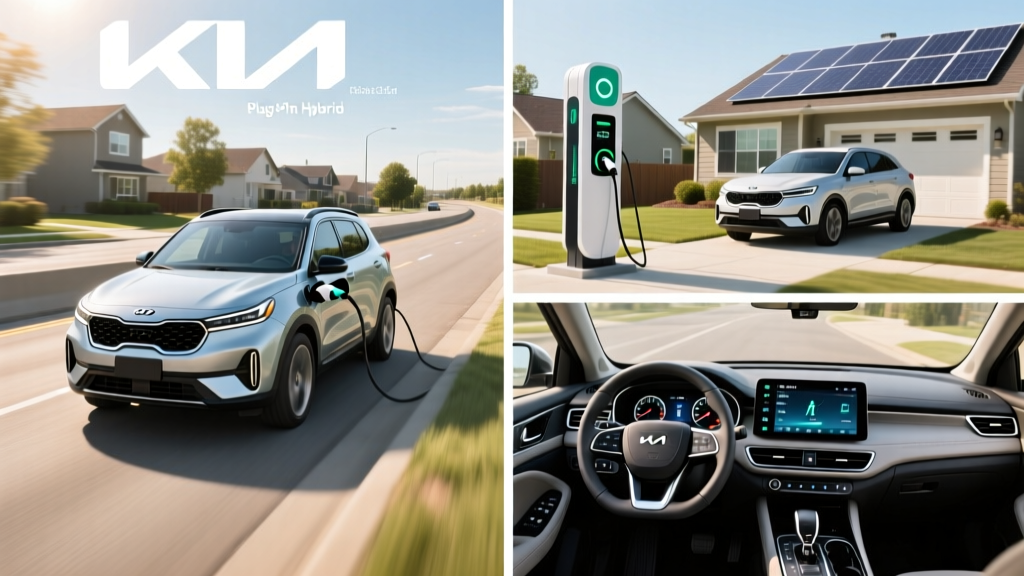
The 2023 Kia Sportage Plug-In Hybrid occupies a specific niche: buyers who want meaningful electric-only commuting without committing to a full battery-electric vehicle. With 34 miles of EPA-rated electric range, 84 MPGe combined in charge-depleting mode, and 261 combined horsepower, it covers most daily commutes on electrons alone while retaining a 1.6-liter turbocharged gas engine for road trips. Starting at $36,090 MSRP (SX trim) before destination charges, it undercuts many rival compact PHEV SUVes — though federal tax credit eligibility requires careful attention to IRS sourcing and income rules.
This guide breaks down the real-world efficiency, charging logistics, powertrain behavior, and long-term battery outlook you need before signing the paperwork. We'll also clarify where the Sportage PHEV fits against the conventional Sportage Hybrid (HEV) and full-electric alternatives like the Kia EV6.
HEV vs PHEV: Which Sportage Is Right for You?
Kia offers the Sportage in three electrified flavors for the 2023 model year. Understanding the difference is essential before comparing specs.
| Attribute | Sportage Hybrid (HEV) | Sportage Plug-In Hybrid (PHEV) |
|---|---|---|
| Plugs in to charge? | No — self-charging via regen & engine | Yes — 13.7 kWh battery, J1772/Level 2 |
| Electric-only range | None (EV assist only) | 34 miles (EPA) |
| EPA combined fuel economy | 43 MPG (FWD) / 38 MPG (AWD) | 84 MPGe (EV mode) / 38 MPG (gas only) |
| Combined horsepower | 227 hp | 261 hp |
| Drivetrain | FWD or AWD | AWD standard |
| Starting MSRP (2023) | $28,490 (LX) | $36,090 (SX) |
| Federal tax credit eligible? | No | Potentially — up to $7,500 (§30D) |
The bottom line: If you cannot charge at home or work, the conventional HEV is the smarter buy — it requires zero behavioral change and still delivers 38–43 MPG combined. The PHEV only unlocks its value if you can plug in regularly. Drive it on electric most days and you'll barely touch the gas tank. Forget to charge and you're carrying 300+ lbs of battery dead weight, netting the same 38 MPG as the HEV at a $7,600 premium.
Powertrain & Performance Specs
| Specification | 2023 Kia Sportage PHEV |
|---|---|
| Engine | 1.6L turbocharged 4-cylinder (178 hp / 195 lb-ft) |
| Electric motor | Permanent-magnet synchronous (110 hp / 258 lb-ft) |
| Combined system output | 261 hp / 258 lb-ft |
| Transmission | 6-speed automatic (no CVT) |
| Drivetrain | AWD (standard, all trims) |
| Battery capacity | 13.7 kWh (lithium-ion polymer) |
| EPA electric range | 34 miles |
| EPA MPGe (charge-depleting) | 84 MPGe combined |
| EPA MPG (charge-sustaining / gas only) | 35 city / 44 hwy / 38 combined |
| Total combined range | ~390 miles (EV + gas tank) |
| Fuel tank | 11.1 gallons |
| 0–60 mph | ~7.4 seconds (est.) |
| Towing capacity | 2,000 lbs |
| Cargo volume (rear seats up) | 34.5 cu ft |
| Cargo volume (rear seats folded) | 65.7 cu ft |
The Sportage PHEV pairs a 1.6-liter turbo four with a 110-hp electric motor integrated into the transmission housing, sending power to all four wheels through a conventional 6-speed automatic. Unlike many competitors that use a CVT or e-CVT, Kia's geared transmission delivers more natural acceleration feel and avoids the rubber-band effect common in Toyota's hybrid system.
In EV mode, the electric motor alone provides brisk acceleration up to roughly 65 mph — sufficient for highway merging. When the battery depletes or you demand full throttle, the turbo engine seamlessly engages. The transition is well-masked; most drivers won't notice the handoff without watching the power-flow display.
Fuel Economy: EPA Numbers vs Real-World Results
| Mode | City | Highway | Combined |
|---|---|---|---|
| EV mode (charge-depleting) | 84 MPGe combined (34-mile range) | ||
| Gas-only (charge-sustaining) | 35 MPG | 44 MPG | 38 MPG |
The EPA rates the Sportage PHEV at 84 MPGe combined when operating on battery power, translating to roughly 29 kWh per 100 miles — competitive for a compact PHEV SUV. Once the battery depletes, the vehicle operates as a conventional hybrid at 38 MPG combined (35 city / 44 highway), per fueleconomy.gov.
Real-world MPG expectations:
- City driving, charged daily: Most owners report 38–42 MPG combined in charge-sustaining mode, with some exceeding EPA city estimates thanks to aggressive regenerative braking in stop-and-go traffic.
- Highway cruising at 70+ mph: Expect 36–40 MPG gas-only. Aerodynamic drag and AWD drivetrain losses reduce efficiency above 65 mph.
- Cold weather (below 32°F): Battery range drops 20–30% (roughly 24–27 electric miles). Cabin heating draws from the battery unless the engine activates. Gas-mode MPG typically falls to 33–35 combined in winter.
- Short commutes under 34 miles with daily charging: You may use zero gasoline for weeks. The engine may only engage for longer weekend trips or when the car auto-starts the engine for maintenance cycles.
One nuance PHEV buyers should understand: if your daily round-trip commute is 25 miles and you charge every night, your effective fuel economy over a month might be 100+ MPGe because you're rarely burning gas. Conversely, a 60-mile daily commute without midday charging means you'll deplete the battery and drive 26 miles on gas, averaging closer to 50–60 MPGe overall.
Charging: Times, Equipment, and Limitations
The Sportage PHEV uses a J1772 connector for AC charging and does not support DC fast charging. This is standard for compact PHEVs — the battery is small enough that Level 2 charging fills it quickly, and DC fast-charge hardware would add cost and weight without meaningful benefit.
| Charging Level | Power (kW) | 0–100% Time | Equipment Needed |
|---|---|---|---|
| Level 1 (120V household outlet) | ~1.4 kW | ~10.5 hours | Included portable cord |
| Level 2 (240V, 32A) | ~7.2 kW | ~2 hours | Home wall charger or public Level 2 station |
| DC Fast Charging | Not supported | ||
A standard 120V outlet will recharge the 13.7 kWh battery overnight — roughly 10–11 hours from empty. For most owners, this is adequate: plug in when you get home, wake up to a full charge. However, a Level 2 home charger cuts that to about 2 hours, which matters if you want to top off midday or if multiple drivers share the vehicle.
Level 2 home installation typically costs $500–$1,500 depending on your electrical panel capacity, conduit run distance, and local permit fees. A 240V / 40A circuit with a NEMA 14-50 outlet is the most versatile setup, allowing you to use portable EVSE units or hardwired chargers from brands like ChargePoint, Emporia, or Kia's own accessory charger.
Key limitation: Without DC fast charging, the Sportage PHEV cannot quickly replenish its battery on road trips. On a 300-mile highway drive, you'll use the first 34 miles on electric and the remaining 266 miles on gas. You cannot meaningfully "refuel" the battery at a rest stop — public Level 2 chargers would require a 2-hour stop, which defeats the purpose.
Pricing, Trims, and Federal Tax Credit Eligibility
The 2023 Sportage PHEV is offered in two trims, both with standard AWD:
| Trim | MSRP (before destination) | Key Features |
|---|---|---|
| SX | $36,090 | 18" wheels, heated front seats, dual 12.3" displays, wireless CarPlay/Android Auto, Highway Driving Assist |
| SX-Prestige | $39,490 | Leather seats, panoramic sunroof, Harman Kardon audio, ventilated front seats, heated steering wheel, surround-view monitor |
Destination charges add approximately $1,295, bringing the SX to roughly $37,385 out the door before dealer fees, taxes, or incentives.
Federal §30D Tax Credit — Eligibility Checklist (current IRS rules):
- Credit amount: Up to $7,500, split between battery component sourcing ($3,750) and critical minerals sourcing ($3,750).
- MSRP cap: SUVs must be at or below $80,000 — the Sportage PHEV qualifies.
- Buyer income cap: Modified AGI must not exceed $150,000 (single), $225,000 (head of household), or $300,000 (married filing jointly).
- Battery sourcing requirements: Battery components must be manufactured or assembled in North America (threshold increases annually). Critical minerals must be sourced from the U.S. or FTA partners. The 2023 Sportage PHEV's battery sourcing has been a point of variability — check the latest IRS qualified vehicles list before purchasing.
- Point-of-sale transfer: As of 2024, eligible buyers can transfer the credit to the dealer for an immediate price reduction rather than claiming it on their tax return.
Tax rules change frequently. Consult a tax professional and verify current eligibility on irs.gov before relying on the credit in your purchase decision.
Several states offer additional rebates for PHEVs. California's CVRP previously offered up to $1,750 for PHEVs (income-dependent), though program funding varies. Colorado, New York, and other states have their own incentive structures. Always check your state energy office for current programs.
Battery Longevity, Warranty, and Replacement Cost
Kia's Hybrid/PHEV Battery Warranty:
- Coverage: 10 years / 100,000 miles (whichever comes first)
- Capacity retention threshold: Kia warrants the battery against defects and excessive capacity loss. Industry standard defines "excessive" as dropping below 60–70% of original capacity during the warranty period.
- Hybrid system warranty: 10 years / 100,000 miles covers the electric motor, inverter, and related hybrid components.
- Limited vehicle warranty: 5 years / 60,000 miles bumper-to-bumper; 10 years / 100,000 miles powertrain.
The 13.7 kWh lithium-ion polymer battery in the Sportage PHEV is smaller and less stressed than a full-EV battery pack. PHEV batteries typically experience less degradation than BEV packs because they operate in a narrower state-of-charge window (roughly 15–95% rather than 0–100%) and undergo fewer full cycles per year.
Based on industry data from similar Hyundai/Kia PHEV systems, expect 5–10% capacity loss over 8–10 years under normal use. This means your 34-mile electric range might drop to roughly 30–32 miles after a decade — a negligible real-world impact.
Out-of-warranty replacement cost: A full PHEV battery replacement runs approximately $4,000–$6,000 including parts and labor, based on dealer parts pricing for Hyundai/Kia PHEV modules. This is significantly less than a full-EV battery replacement ($10,000–$20,000+). Individual module replacement may be possible at lower cost if only a subset of cells degrades.
Who Should Choose the Sportage PHEV — And Who Shouldn't
Choose the 2023 Sportage PHEV if:
- Your daily commute is under 35 miles round-trip and you can charge at home overnight
- You want AWD capability for snow/rain without the range anxiety of a full EV on road trips
- You regularly take trips beyond 250 miles where public charging infrastructure is uncertain
- You want a compact SUV with strong cargo space (34.5 cu ft) and family-friendly features
- You qualify for the federal tax credit, bringing the effective price closer to the conventional HEV
Consider the Sportage HEV (conventional hybrid) instead if:
- You live in an apartment or lack access to home/work charging
- Your commute is long enough that you'd deplete the battery daily anyway
- You want the lowest purchase price and don't want to manage charging routines
Consider a full EV (Kia EV6, Hyundai Ioniq 5) instead if:
- You have reliable home charging and your daily driving is under 200 miles
- You want to eliminate gasoline entirely and reduce maintenance (no oil changes, fewer brake replacements via regen)
- You qualify for the full $7,500 credit and can absorb higher upfront cost for lower operating cost
Pros
- 34-mile EV range covers most daily commutes
- AWD standard — rare for PHEVs in this price range
- 6-speed automatic avoids CVT drone
- 10-year / 100,000-mile battery warranty
- Comfortable, quiet cabin with dual 12.3" screens
- Competitive pricing vs. Toyota RAV4 Prime, Ford Escape PHEV
Cons
- No DC fast charging
- AWD only — no lighter/more efficient FWD option
- Electric range drops significantly in cold weather
- Federal tax credit eligibility depends on sourcing rules that shift annually
- Heavier than the HEV variant, hurting gas-only MPG slightly
- SX-Prestige trim pushes $41K+ after destination
Frequently Asked Questions
How many MPG does the 2023 Kia Sportage Plug-In Hybrid get?
In electric mode, the EPA rates it at 84 MPGe combined. Once the battery depletes and the gas engine takes over, it returns 35 city / 44 highway / 38 combined MPG. Real-world results typically match or slightly exceed EPA city estimates (38–42 MPG) in charge-sustaining mode, especially in stop-and-go driving where regenerative braking is most effective. Highway driving at 70+ mph yields 36–40 MPG.
How far can the Sportage PHEV go on electric only?
The EPA rates it at 34 miles of all-electric range. In real-world conditions, expect 28–34 miles in mild weather with moderate speeds, dropping to 24–27 miles in freezing temperatures or at sustained highway speeds above 65 mph. The vehicle seamlessly transitions to hybrid mode when the battery depletes — there's no range anxiety because the 1.6L turbo engine and 11.1-gallon tank provide an additional ~350+ miles.
Does the Sportage PHEV qualify for the federal tax credit?
It may qualify for up to $7,500 under IRS §30D, but eligibility depends on your income (must be below $150K single / $300K joint), the vehicle's battery sourcing compliance (which has varied by production batch), and the MSRP cap ($80K for SUVs — the Sportage clears this easily). Check the current IRS qualified vehicle list and consult a tax professional before relying on the credit.
Is the Sportage PHEV reliable and what does battery replacement cost?
Kia's 1.6T hybrid powertrain has proven reliable in the Niro and Sorento PHEV platforms that share similar architecture. The PHEV battery is warrantied for 10 years / 100,000 miles. PHEV batteries typically degrade 5–10% over a decade due to their narrower charge-discharge cycles. Out-of-warranty replacement costs approximately $4,000–$6,000, significantly less than a full EV battery. IIHS rated the 2023 Sportage well in crash testing, and the powertrain carries Kia's 10-year/100,000-mile warranty.
Can I charge the Sportage PHEV at a DC fast charger?
No. The 2023 Sportage PHEV only supports AC charging via a J1772 connector — Level 1 (120V, ~10.5 hours) or Level 2 (240V, ~2 hours). This is standard for compact PHEVs; the 13.7 kWh battery is small enough that Level 2 charging fills it quickly, and DC fast-charge hardware would add unnecessary cost and weight.
How does the Sportage PHEV compare to the RAV4 Prime?
The Toyota RAV4 Prime offers 42 miles of electric range (vs. 34), 302 hp (vs. 261), and a higher starting price (~$43,000 vs. ~$36,000). The RAV4 Prime also supports DC fast charging on some trims. However, the Sportage PHEV is more affordable, offers a more modern interior with dual 12.3" screens, and comes with Kia's longer 10-year powertrain warranty (vs. Toyota's 5-year). If budget is the priority, the Sportage wins. If maximum electric range and performance matter more, the RAV4 Prime leads.