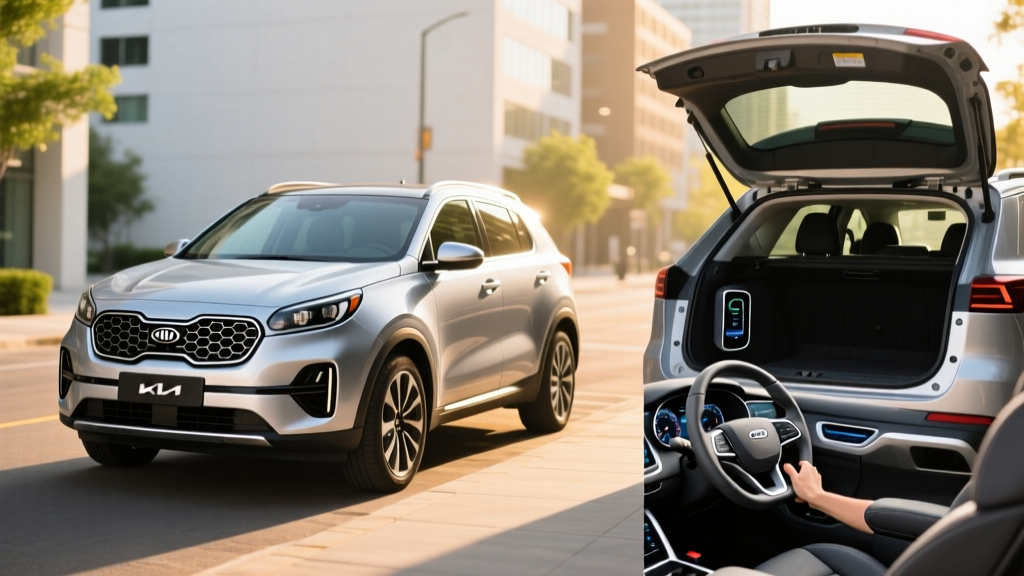
Quick Verdict: The 2023 Kia Sportage Hybrid SX-Prestige at a Glance
The 2023 Kia Sportage Hybrid SX-Prestige occupies a specific niche: buyers who want SUV practicality and premium features without ever plugging in. As a conventional hybrid electric vehicle (HEV), it pairs a 1.6-liter turbocharged engine with an electric motor for seamless efficiency gains — no charging cable required. With an EPA-estimated 43 MPG city and a loaded SX-Prestige sticker around $37,000, it remains one of the most feature-rich compact hybrid SUVs on the used market in 2026.
But does the real-world fuel economy match the EPA sticker? What does long-term battery reliability look like? And how does it compare to the Sportage Plug-In Hybrid or a full battery-electric alternative? This guide breaks down every number that matters.
| Specification | Value |
|---|---|
| Powertrain | 1.6L Turbo I4 + 44 kW electric motor (HEV) |
| Combined Horsepower | 227 hp |
| Combined Torque | 258 lb-ft |
| Transmission | 6-speed automatic |
| Drivetrain (SX-Prestige) | AWD (standard on this trim) |
| EPA Fuel Economy (City/Hwy/Combined) | 38 / 38 / 38 MPG (AWD SX-Prestige) |
| Fuel Tank Capacity | 13.7 gallons |
| EPA Total Range | ~520 miles |
| 0–60 mph | ~7.4 seconds |
| Cargo Volume (behind rear seats) | 39.5 cu ft |
| Original MSRP (SX-Prestige AWD) | ~$36,990 |
| Hybrid Battery Warranty | 10 years / 100,000 miles |
Note: The FWD Sportage Hybrid (lower trims) achieves an EPA 43/44/43 MPG. The SX-Prestige comes exclusively with AWD, which reduces the rating to 38 MPG combined. Source: fueleconomy.gov
HEV vs PHEV: Which Sportage Hybrid Is Right for You?
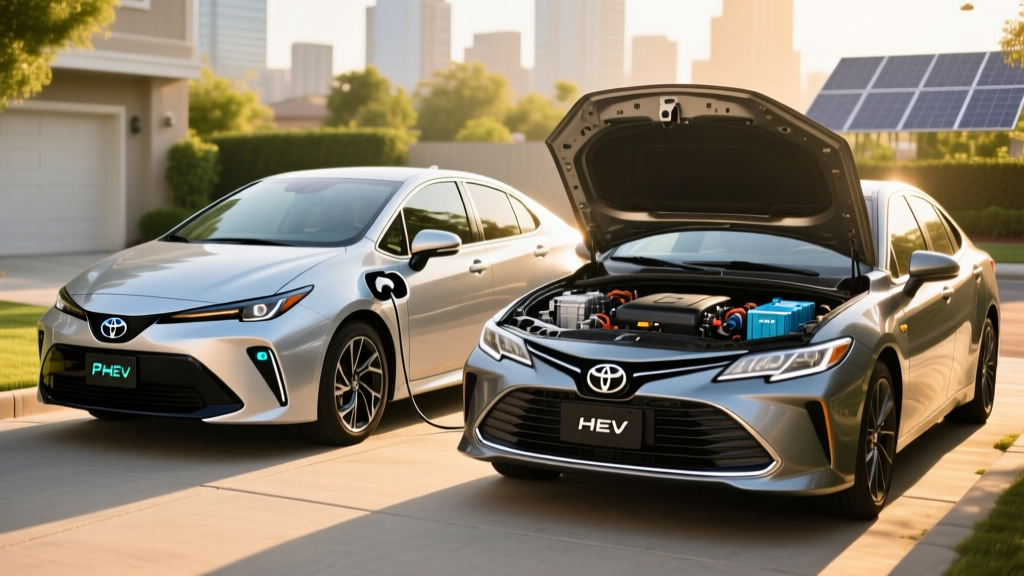
Kia sells two distinct hybrid flavors of the Sportage, and confusing them is the most common buyer mistake. Here is the critical difference:
| Feature | Sportage Hybrid (HEV) | Sportage Plug-In Hybrid (PHEV) |
|---|---|---|
| Needs to plug in? | No — self-charging via regen & engine | Yes — plug in for electric-only driving |
| Electric-only range | Not applicable (EV assist only at low speeds) | 34 miles (EPA) |
| Battery capacity | ~1.5 kWh (small, buffer-style) | 13.8 kWh (usable ~11 kWh) |
| Combined horsepower | 227 hp | 261 hp |
| EPA combined fuel economy | 38 MPG (AWD) / 43 MPG (FWD) | 84 MPGe (combined) / 35 MPG gas-only |
| DC fast charging | N/A | No — Level 2 AC only (~3.5 hours) |
| Federal tax credit (§30D) | Not eligible | Not eligible for new credit post-2022 sourcing rules |
| Starting MSRP (2023) | ~$28,590 | ~$39,090 |
The Sportage HEV is a traditional hybrid. Its small battery captures energy from braking and the engine, then uses that energy to assist acceleration and enable brief low-speed electric driving. You never plug it in. It's ideal for drivers without home charging access who still want a meaningful efficiency boost over a gas-only SUV.
The Sportage PHEV adds a larger 13.8 kWh battery and a more powerful electric motor, giving you 34 miles of pure electric range before the gasoline engine engages. If you can charge at home and your daily commute is under 30 miles, you might go weeks without visiting a gas station. But it costs more upfront, and the 2023 PHEV does not qualify for the federal §30D tax credit due to battery-sourcing requirements that took effect under the Inflation Reduction Act.
Fuel Economy: EPA Sticker vs Real-World MPG
The 2023 Sportage Hybrid SX-Prestige (AWD) carries an EPA rating of 38 MPG city, 38 MPG highway, and 38 MPG combined. The FWD hybrid trims rate higher at 43 MPG combined, but the SX-Prestige's standard all-wheel drive imposes a modest efficiency penalty.
| Driving Scenario | Expected MPG | Notes |
|---|---|---|
| EPA Combined (sticker) | 38 MPG | Official rating per fueleconomy.gov |
| City / stop-and-go | 38–42 MPG | Hybrids shine here — regenerative braking recaptures energy |
| Highway (70+ mph) | 33–36 MPG | Aerodynamic drag reduces hybrid advantage at speed |
| Cold weather (below 32°F) | 32–35 MPG | Engine runs more often for cabin heat; battery less efficient |
| Mixed real-world average | 35–39 MPG | Based on owner-reported data on Fuelly and similar trackers |
Key insight: Hybrids like the Sportage HEV often match or exceed their EPA city rating in real-world stop-and-go driving because regenerative braking converts deceleration into battery charge. Highway driving is where you'll see the biggest drop from the sticker — sustained high speeds don't allow much regen recovery, and the engine bears the full load. If your commute is primarily urban, expect to hit or beat 38 MPG regularly. Road-trip-heavy drivers should budget closer to 34–35 MPG.
Powertrain Deep Dive: 227 HP and a Turbocharged Hybrid System
The 2023 Sportage Hybrid pairs a 1.6-liter turbocharged four-cylinder engine (producing 178 hp and 195 lb-ft on its own) with a 44 kW (59 hp) electric motor integrated into the transmission housing. Combined output reaches 227 horsepower and 258 lb-ft of torque — genuinely brisk for a compact hybrid SUV.
Unlike Toyota's planetary-gear hybrid system (which uses a continuously variable transmission), Kia employs a conventional 6-speed automatic. This gives the Sportage Hybrid a more traditional driving feel with perceptible gear shifts, which many drivers prefer over the rubber-band sensation of a CVT. The trade-off is marginally less seamless electric-to-gas transitions, though in practice the handoff is nearly imperceptible.
The SX-Prestige trim comes exclusively with AWD. An electronically controlled coupling distributes torque to the rear axle when slip is detected, adding confidence in rain and light snow. This is not a dedicated off-road system, but it handles typical winter conditions competently.
Battery Warranty, Reliability, and Replacement Cost
Battery longevity is the top concern for any hybrid buyer, and Kia addresses this with one of the strongest warranties in the segment.
2023 Kia Sportage Hybrid Battery Coverage
- Hybrid battery warranty: 10 years / 100,000 miles (whichever comes first)
- Hybrid system components: 10 years / 100,000 miles (includes electric motor, inverter, converter)
- Basic vehicle warranty: 5 years / 60,000 miles
- Powertrain warranty: 10 years / 100,000 miles
- Capacity retention guarantee: Kia warrants the hybrid battery against defects; if capacity drops below a functional threshold during the warranty period, Kia replaces it at no cost
Real-world reliability data: The 1.5 kWh lithium-ion polymer battery in the Sportage HEV is small and lightly stressed compared to a full EV pack. It operates within a narrow state-of-charge window (typically 40–60%), which dramatically reduces degradation. Hyundai-Kia's hybrid battery systems have shown strong longevity — most owners report no battery issues well past 100,000 miles. The IIHS rated the 2023 Sportage a Top Safety Pick when equipped with specific headlights, adding to the ownership-confidence picture.
Out-of-warranty replacement cost: If the hybrid battery does fail outside the warranty window, replacement typically runs between $2,000 and $4,000 including labor at a Kia dealer. Independent hybrid specialists may offer refurbished units for $1,500–$2,500. This is far less than a full EV battery replacement because the pack is small and the labor is less involved.
Pricing, Tax Credits, and the Used-Market Value in 2026
The 2023 Kia Sportage Hybrid SX-Prestige originally stickered at approximately $36,990 (including destination). As a conventional hybrid, it does not qualify for the federal §30D new clean vehicle tax credit — that credit applies only to plug-in electric vehicles (BEVs and PHEVs) meeting specific battery-sourcing and MSRP caps.
However, if you're purchasing a used 2023 Sportage Hybrid from a dealer in 2026, you may be eligible for the Used Clean Vehicle Credit under IRS §25E — but only if the vehicle is a plug-in (BEV or PHEV). Since the Sportage HEV is a conventional hybrid with no plug, it does not qualify for this used credit either.
Federal Tax Credit Eligibility: 2023 Sportage Hybrid (HEV)
- §30D New Clean Vehicle Credit: Not eligible — HEVs do not qualify (no plug-in capability)
- §25E Used Clean Vehicle Credit: Not eligible — requires PHEV or BEV with ≥4 kWh battery and plug-in capability
- State/local incentives: Varies by jurisdiction — some states offer rebates for any hybrid. Check your state energy office or AFDC incentive database
2026 used-market pricing: A well-maintained 2023 Sportage Hybrid SX-Prestige with 25,000–40,000 miles typically lists between $26,000 and $31,000 depending on condition and region. The SX-Prestige's premium equipment — panoramic sunroof, heated and ventilated front seats, leather upholstery, Harman Kardon audio, highway driving assist, and a 12.3-inch dual-screen setup — keeps residual values strong relative to lower trims.
Sportage Hybrid vs PHEV vs Full EV: Which Should You Choose?
The decision between a conventional hybrid, a plug-in hybrid, and a full battery-electric vehicle depends on your driving patterns, charging access, and budget.
Choose the Sportage Hybrid (HEV) if:
- You cannot charge at home (apartment, street parking, no garage outlet)
- You want zero behavior change — just drive and refuel at gas stations
- Your budget is under $32,000 on the used market
- You frequently take long road trips through areas with sparse charging infrastructure
- You want AWD capability without the PHEV's price premium
Choose the Sportage Plug-In Hybrid (PHEV) if:
- You have Level 2 home charging and a commute under 34 miles
- You want electric-only daily driving but gas flexibility for weekend trips
- You value the 261 hp combined output and smoother electric acceleration
- You can absorb the ~$5,000–$8,000 higher purchase price (new or used)
Choose a full EV (e.g., Hyundai Ioniq 5, Kia EV6) if:
- You have reliable home Level 2 charging
- Your daily driving is under 250 miles and you can plan DC fast-charging stops for road trips
- You want to eliminate gasoline entirely and reduce per-mile fuel cost to $0.04–$0.08/mile
- You qualify for the §30D credit (up to $7,500) on a new EV purchase, which can close the price gap
For the buyer who specifically searched for the 2023 Kia Sportage Hybrid SX-Prestige, the most common profile is clear: you want a loaded compact SUV with excellent fuel economy, no charging hassle, and Kia's generous warranty backing. The HEV delivers exactly that.
Pros and Cons: The Honest Assessment
Pros
- 38 MPG AWD — strong efficiency for a turbocharged AWD SUV; FWD trims reach 43 MPG
- 227 hp with turbo torque — genuinely quick off the line; highway merging is effortless
- SX-Prestige is loaded — panoramic roof, ventilated seats, premium audio, full ADAS suite
- 10-year / 100,000-mile hybrid battery warranty — among the best in the industry
- No plug-in required — zero infrastructure dependency; works anywhere with a gas station
- 39.5 cu ft cargo — competitive with non-hybrid compact SUVs; battery packaging doesn't eat trunk space
Cons
- AWD drops MPG from 43 to 38 — SX-Prestige buyers pay an efficiency tax for all-wheel drive
- No federal tax credit — conventional hybrids are excluded from §30D and §25E incentives
- Highway MPG underwhelms — expect 33–36 MPG at 75 mph; the hybrid advantage shrinks at speed
- 6-speed auto, not a CVT — some drivers notice slight hesitation during electric-to-gas handoff
- Used pricing remains firm — SX-Prestige residuals hold well; bargains are rare
Frequently Asked Questions
How many MPG does the 2023 Kia Sportage Hybrid SX-Prestige get?
The EPA rates the AWD SX-Prestige at 38 MPG city, 38 MPG highway, and 38 MPG combined. In real-world city driving with frequent stops, owners often see 38–42 MPG thanks to regenerative braking. Highway driving at 70+ mph typically yields 33–36 MPG. Cold weather can drop combined figures to 32–35 MPG.
Does the Sportage Hybrid need to be plugged in?
No. The 2023 Sportage Hybrid is a conventional HEV. Its small battery charges through regenerative braking and the gasoline engine. You never plug it in. Only the separate Sportage Plug-In Hybrid (PHEV) model requires a charging cable.
Is the 2023 Sportage Hybrid reliable, and what does battery replacement cost?
Hyundai-Kia's hybrid powertrains have demonstrated strong reliability. The hybrid battery is covered for 10 years or 100,000 miles. Out-of-warranty replacement runs approximately $2,000–$4,000 at a dealer, or $1,500–$2,500 for a refurbished unit from an independent specialist. The small 1.5 kWh pack is far less expensive to replace than a full EV battery.
Does the 2023 Sportage Hybrid qualify for any tax credit?
The conventional Sportage Hybrid (HEV) does not qualify for the federal §30D new vehicle credit or the §25E used vehicle credit — both require plug-in capability. Some states offer hybrid-specific rebates or HOV lane access; check the Alternative Fuels Data Center for your state's rules.
How does the Sportage Hybrid compare to the Toyota RAV4 Hybrid?
The RAV4 Hybrid (AWD) rates at 41 MPG combined and offers a slightly larger cargo area, but produces 219 hp versus the Sportage's 227 hp. The Sportage SX-Prestige offers more premium features (ventilated seats, panoramic roof, larger screens) at a similar price point. The RAV4 wins on pure fuel economy; the Sportage wins on tech and interior refinement in the top trim.
Can I tow with the 2023 Sportage Hybrid?
Yes. The Sportage Hybrid is rated to tow up to 2,000 pounds when properly equipped — sufficient for a small utility trailer, a pair of jet skis, or a lightweight camper. Towing will reduce fuel economy significantly, often into the mid-20s MPG range.
What is the difference between the Sportage Hybrid and the Sportage Plug-In Hybrid?
The Hybrid (HEV) is self-charging with no plug, rated at 38 MPG combined (AWD), and produces 227 hp. The Plug-In Hybrid (PHEV) has a 13.8 kWh battery, 34 miles of electric-only range, 261 hp, and must be plugged in to realize its efficiency advantage. The PHEV costs significantly more and is not available in the SX-Prestige trim for the 2023 model year.