Quick Verdict: The 2023 Kia Sportage Hybrid LX at a Glance
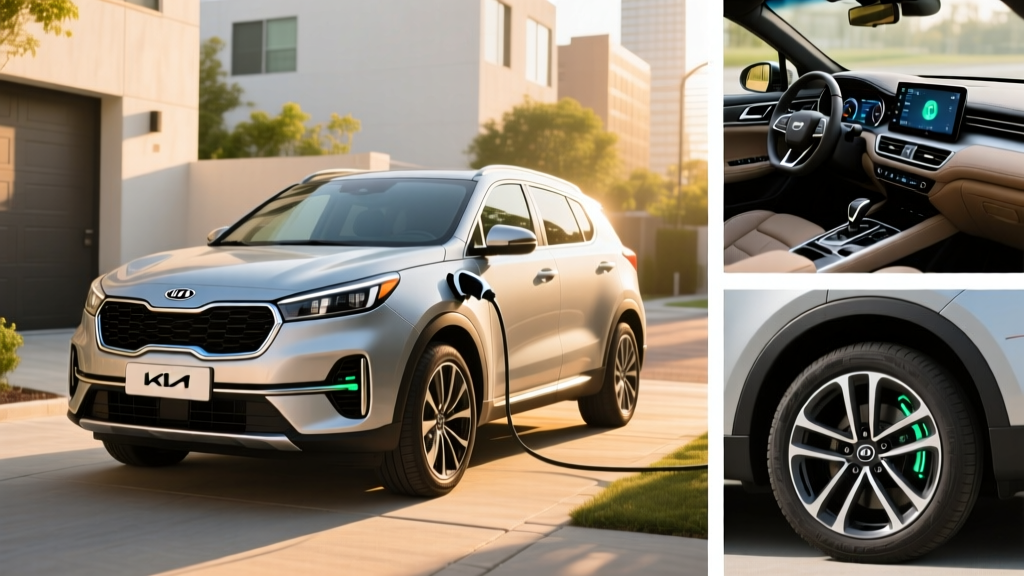
The 2023 Kia Sportage Hybrid LX is the base trim of Kia's fifth-generation compact hybrid SUV, and it punches well above its sticker price. With an EPA-rated 43 MPG city / 41 MPG highway / 42 MPG combined, 227 combined horsepower, and a starting MSRP around $28,590, it undercuts rivals like the Toyota RAV4 Hybrid on price while delivering competitive efficiency. As a conventional hybrid (HEV), it requires no plug, no behavior change, and no charging infrastructure — it simply sips less fuel than a gas-only compact SUV.
For 2026 buyers shopping the used or certified-pre-owned market, the 2023 Sportage Hybrid LX remains a strong value play. The hybrid battery carries Kia's 10-year/100,000-mile warranty (transferable to second owners on CPO models), and the powertrain is proven across Kia-Hyundai's hybrid lineup. Below, we break down every spec that matters: real-world MPG, powertrain details, battery longevity, tax credit eligibility, and who should pick this HEV over a PHEV or full EV.
Fuel Economy: EPA Ratings vs. Real-World MPG
| Metric | EPA Rating | Real-World Expectation |
|---|---|---|
| City MPG | 43 MPG | 40–45 MPG (hybrids excel in stop-and-go) |
| Highway MPG | 41 MPG | 36–40 MPG (aero drag hurts at 70+ mph) |
| Combined MPG | 42 MPG | 38–42 MPG (mixed driving) |
| Fuel Tank | 13.7 gallons | ~520–575 miles per tank |
| Annual Fuel Cost (est.) | ~$1,350 | Based on 15,000 mi/yr, $3.40/gal |
Source: EPA fueleconomy.gov
The 2023 Sportage Hybrid LX uses a traditional torque-converter automatic transmission (6-speed) rather than a CVT, which gives it a more natural driving feel but slightly sacrifices the peak efficiency that Toyota's e-CVT achieves. In real-world driving, conventional hybrids like this one frequently exceed their EPA city rating because regenerative braking recovers more energy in heavy traffic. Highway driving is where you'll see the biggest shortfall — sustained 75–80 mph cruising pushes aerodynamic drag up, and expect 36–38 MPG on flat interstate runs.
HEV vs. PHEV: What the Sportage Hybrid Actually Is
A critical distinction for buyers: the 2023 Kia Sportage Hybrid LX is a conventional hybrid electric vehicle (HEV). It does not plug in. It has no electric-only driving range to speak of (the small 1.49 kWh battery assists the gas engine but cannot propel the vehicle alone for meaningful distances). You fuel it at a gas station like any other car.
Kia also sells the Sportage PHEV (plug-in hybrid), which is a fundamentally different vehicle with a 13.7 kWh battery, ~34 miles of electric-only range, and a J1772 charge port. The PHEV starts at a significantly higher MSRP (~$39,090 for 2023) and qualifies for partial federal tax credits. The HEV does not.
| Feature | Sportage Hybrid (HEV) | Sportage PHEV |
|---|---|---|
| Plugs In? | No | Yes (Level 1/Level 2) |
| Battery Size | 1.49 kWh | 13.7 kWh |
| Electric-Only Range | N/A (motor assist only) | ~34 miles (EPA) |
| Combined MPG / MPGe | 42 MPG | 84 MPGe (elec+gas) / 38 MPG (gas only) |
| Combined Horsepower | 227 hp | 261 hp |
| DC Fast Charge? | No | No (7.2 kW AC max) |
| Base MSRP (2023) | ~$28,590 | ~$39,090 |
| Federal Tax Credit | Not eligible | Up to $7,500 (§30D, sourcing dependent) |
If you lack access to home or workplace charging, the HEV is the right call — you get meaningful fuel savings without any infrastructure requirement. If you can charge daily and your commute is under 34 miles, the PHEV lets you drive mostly on electricity with the gas engine as backup.
Powertrain Specs: 227 HP With Hybrid Efficiency
| Specification | 2023 Sportage Hybrid LX |
|---|---|
| Engine | 1.6L turbocharged 4-cylinder |
| Engine Output | 178 hp / 195 lb-ft torque |
| Electric Motor | 44 kW (59 hp) permanent-magnet synchronous |
| Combined System Output | 227 hp / 258 lb-ft torque |
| Transmission | 6-speed automatic |
| Drivetrain | FWD (AWD available on higher trims, not LX) |
| 0–60 mph (est.) | ~7.5 seconds |
| Hybrid Battery | 1.49 kWh lithium-ion |
| Towing Capacity | 2,000 lbs |
| Curb Weight | ~3,782 lbs |
The turbocharged 1.6L paired with a 44 kW electric motor gives the Sportage Hybrid a genuine performance edge over most compact hybrid SUVs. The 227 combined horsepower figure is substantially higher than the Toyota RAV4 Hybrid's 219 hp and the Honda CR-V Hybrid's 204 hp. The 6-speed automatic avoids the rubber-band feel of a CVT under hard acceleration, though it introduces slightly more shift shock in low-speed hybrid-mode transitions.
Note that the LX trim is front-wheel drive only. If you need AWD, you'll need to step up to the EX or SX-Prestige Hybrid trims (or the PHEV, which includes AWD standard).
Battery Warranty, Reliability, and Replacement Cost
The hybrid battery in the 2023 Sportage Hybrid LX is a 1.49 kWh lithium-ion pack — far smaller than an EV battery, and far less expensive to replace. Based on industry data from similar Kia-Hyundai hybrid systems (Tucson Hybrid, Sorento Hybrid), the battery is designed to last the life of the vehicle with minimal degradation. Unlike EV batteries that cycle deeply every day, hybrid batteries operate in a narrow state-of-charge window (roughly 40–60% SoC), which dramatically extends cycle life.
Replacement cost estimate: If out of warranty, a hybrid battery replacement for this platform runs approximately $2,000–$3,500 for the battery module, plus $500–$800 in labor. This is a fraction of EV battery replacement costs ($8,000–$20,000+). Given the 10-year warranty and the narrow SoC operating window, most owners will never need this service.
Reliability data for the 2023 Sportage Hybrid is still accumulating (only 2–3 model years of real-world data as of 2026), but the underlying 1.6L turbo and hybrid system have been in Kia-Hyundai vehicles since the 2022 Tucson Hybrid and Sorento Hybrid with no widespread failure patterns reported by NHTSA or major reliability trackers.
Pricing, Tax Credits, and Ownership Economics
The 2023 Kia Sportage Hybrid LX launched with a base MSRP of approximately $28,590 (including destination charge). On the used/CPO market in 2026, expect pricing in the $22,000–$26,000 range depending on mileage and condition.
Federal tax credit: The conventional Sportage Hybrid (HEV) does not qualify for the IRS §30D Clean Vehicle Credit. That credit applies only to plug-in vehicles (PHEVs and BEVs) meeting battery sourcing, MSRP caps, and buyer income limits. If tax-credit eligibility is a priority, consider the Sportage PHEV instead — but verify current-year IRS §30D rules for critical-mineral and battery-component sourcing requirements, which have tightened significantly since 2023.
| Cost Category | Sportage Hybrid LX (HEV) | Sportage Gas (2.5L FWD) |
|---|---|---|
| Purchase Price (est. used 2026) | $24,000 | $21,000 |
| Fuel (5 yr, 15k mi/yr, $3.40/gal) | $6,070 | $8,950 |
| Insurance (5 yr avg.) | $7,500 | $7,000 |
| Maintenance (5 yr) | $2,500 | $3,000 |
| Estimated 5-Yr Total | ~$40,070 | ~$39,950 |
The hybrid's fuel savings (~$2,880 over 5 years) nearly offsets its higher purchase price. For high-mileage drivers (20,000+ mi/yr), the hybrid breaks even faster and pulls ahead decisively. Insurance premiums for the hybrid tend to run 5–8% higher than the gas model due to the specialized hybrid components, but the gap has narrowed as hybrid adoption has grown.
Who Should Choose the Sportage Hybrid LX?
- You want 40+ MPG without plugging in or changing habits
- Your budget is under $30,000 (new) or ~$25,000 (used/CPO)
- You drive 12,000–20,000 miles/year and fuel cost matters
- You don't have reliable access to home or workplace charging
- You want a compact SUV with more power than most hybrid competitors
- You can charge at home and your commute is under 34 miles round-trip
- You want to minimize gas use and qualify for federal tax credits
- You're willing to pay a $10,000+ premium upfront for electric-only driving
- You want zero tailpipe emissions and minimal maintenance
- You have Level 2 home charging and your daily driving is under 250 miles
- You want the full $7,500 federal tax credit (subject to §30D eligibility)
Pros and Cons
- 42 MPG combined EPA — competitive in the compact hybrid SUV segment
- 227 hp — more power than RAV4 Hybrid, CR-V Hybrid
- 10-year/100,000-mile hybrid battery warranty
- 6-speed automatic (no CVT drone)
- Spacious interior with 39.6 cu ft cargo behind rear seats
- Affordable base price; strong used-market value
- LX trim is FWD only — no AWD option on base trim
- No federal tax credit (HEV, not PHEV)
- Highway MPG drops noticeably above 70 mph
- Base LX trim lacks premium features (heated seats, larger infotainment)
- Hybrid system adds ~200 lbs vs. gas model (minor handling impact)
Frequently Asked Questions
How many MPG does the 2023 Kia Sportage Hybrid LX get?
The EPA rates it at 43 MPG city / 41 MPG highway / 42 MPG combined. In real-world mixed driving, expect 38–42 MPG. City driving with frequent stops can push above the EPA rating thanks to regenerative braking, while sustained highway driving at 75+ mph may drop to 36–38 MPG.
Does the Sportage Hybrid LX plug in?
No. The Sportage Hybrid LX is a conventional hybrid (HEV). It charges its small 1.49 kWh battery through regenerative braking and the gas engine. You never plug it in — you refuel at a gas station. If you want plug-in capability, look at the Sportage PHEV (separate model, ~$39,090 MSRP, 34 miles electric-only range).
Is the 2023 Sportage Hybrid reliable?
The 1.6L turbo-hybrid powertrain has been in production across Kia-Hyundai vehicles since 2022 with no major systemic failure patterns. Kia backs the hybrid battery and components with a 10-year/100,000-mile warranty. Long-term data (5+ years) is still building as of 2026, but early indicators from the Tucson Hybrid and Sorento Hybrid platforms are positive.
What does it cost to replace the hybrid battery?
Out of warranty, expect $2,000–$3,500 for the battery module plus $500–$800 in labor ($2,500–$4,300 total). However, the hybrid battery operates in a narrow charge window that greatly extends its lifespan, and most owners will never need a replacement within the 10-year warranty period.
Does the 2023 Sportage Hybrid qualify for a tax credit?
No. The IRS §30D Clean Vehicle Credit applies only to plug-in electric vehicles (PHEVs and BEVs). The conventional Sportage Hybrid (HEV) does not qualify for any federal purchase incentive. Some states or utilities may offer small rebates for hybrid purchases — check your local programs. The Sportage PHEV may qualify for up to $7,500 depending on battery sourcing, buyer income, and MSRP caps under current IRS rules.
Hybrid vs. PHEV vs. EV — which is right for me?
Choose the HEV (this car) if you can't charge at home and want better MPG without behavior changes. Choose the PHEV if you can charge daily and want 30+ miles of electric commuting with gas backup for road trips. Choose a full EV if you have home charging, want zero tailpipe emissions, minimal maintenance, and your daily driving stays within ~250 miles.
Is AWD available on the 2023 Sportage Hybrid LX?
No. The LX trim is front-wheel drive only. AWD is available on the EX and SX-Prestige Hybrid trims, and standard on all Sportage PHEV trims. If you need AWD in a hybrid Sportage, plan to step up at least one trim level.