Quick Verdict: The Sorento Hybrid EX at a Glance
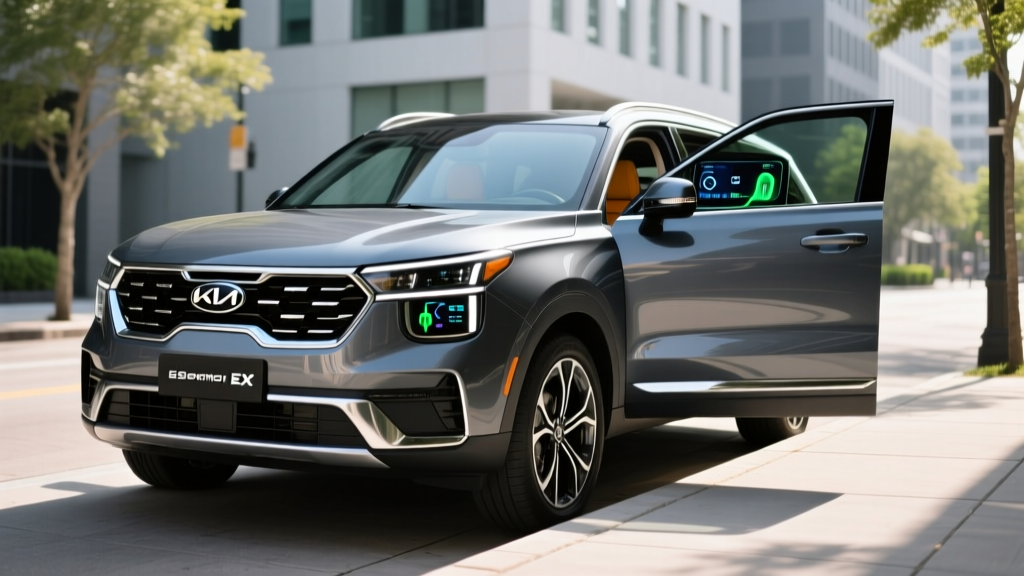
The 2023 Kia Sorento Hybrid EX occupies a narrow but compelling slot in the midsize SUV market. It delivers three rows of seating, standard all-wheel drive, and an EPA-rated 37 MPG combined — all without requiring a plug, a charging routine, or any change to how you refuel. For families who want meaningful fuel savings over a conventional gas SUV but aren't ready (or able) to install a home charger, the Sorento HEV is a pragmatic middle ground.
But the Sorento lineup also includes a plug-in hybrid (PHEV) variant and, of course, fully electric competitors are proliferating. This guide breaks down exactly what the 2023 Sorento Hybrid EX offers, where its real-world efficiency lands, and whether the HEV, PHEV, or a battery-electric SUV is the right call for your driveway.
Fuel Economy: EPA Ratings vs. Real-World MPG
The 2023 Kia Sorento Hybrid EX carries EPA ratings of 39 MPG city / 35 MPG highway / 37 MPG combined. These numbers apply to the all-wheel-drive EX trim, which is the only hybrid configuration Kia offers for this model year.
| Metric | City | Highway | Combined |
|---|---|---|---|
| EPA Rating | 39 MPG | 35 MPG | 37 MPG |
| Real-World Expectation | 38–42 MPG | 31–34 MPG | 34–38 MPG |
Source: fueleconomy.gov
Why Real-World MPG Diverges
Hybrids consistently outperform their EPA city ratings in stop-and-go traffic because regenerative braking recovers energy that a gas car wastes as heat. Owners who drive predominantly urban routes regularly report 38–42 MPG. Highway driving is a different story: at sustained 70–80 MPH speeds, the electric motor assists less, aerodynamic drag rises, and the 1.6-liter turbocharged engine does most of the work. Expect 31–34 MPG on long interstate trips.
Cold weather introduces another variable. Below freezing, the engine runs more often to heat the cabin (the HEV lacks the heat pump found in some PHEVs and BEVs), and the battery's charge/discharge efficiency drops. Winter combined MPG of 32–34 is typical in northern climates.
Powertrain and Performance Specs
The Sorento Hybrid EX pairs a 1.6-liter turbocharged inline-4 gasoline engine with a 44 kW (59 HP) electric motor embedded in the transmission housing. Total system output is 261 horsepower and 269 lb-ft of torque, routed through a 6-speed automatic transmission to all four wheels via Kia's AWD system.
| Specification | Value |
|---|---|
| Gas Engine | 1.6L turbocharged I-4, 178 HP / 195 lb-ft |
| Electric Motor | 44 kW (59 HP), integrated in transmission |
| Combined System Output | 261 HP / 269 lb-ft |
| Transmission | 6-speed automatic |
| Drivetrain | AWD (standard) |
| Hybrid Battery | 1.49 kWh lithium-ion (sealed, not plug-in) |
| 0–60 MPH | ~7.5 seconds (est.) |
| Towing Capacity | 2,000 lbs |
| Fuel Tank | 14.8 gallons |
| Total Driving Range | ~548 miles (EPA combined) |
The 1.49 kWh battery is small by electrified-vehicle standards — it exists to buffer regenerative energy and assist the engine during acceleration, not to drive the vehicle on electricity alone for meaningful distances. This is the defining characteristic of a conventional hybrid: the electric motor supplements the gas engine, but you cannot plug in or drive in pure EV mode beyond low-speed creep situations.
Sorento Hybrid (HEV) vs. Sorento Plug-in Hybrid (PHEV)
Kia also sells the Sorento as a plug-in hybrid. The two powertrains share the same 1.6L turbo engine but differ substantially in battery size, electric capability, and price. Here's how they compare:
Sorento Hybrid (HEV)
- No plug-in required
- 1.49 kWh battery
- No electric-only driving range
- 37 MPG combined (EPA)
- ~$36,990 MSRP (EX AWD)
- No federal tax credit
Sorento Plug-in Hybrid (PHEV)
- Plugs in via Level 1 or Level 2
- 13.8 kWh battery
- 32 miles electric-only (EPA)
- 79 MPGe combined (charge-depleting)
- 35 MPG combined (gas-only after battery depletes)
- ~$51,490 MSRP (SX Prestige AWD)
- May qualify for partial §30D credit (sourcing-dependent)
The PHEV's 13.8 kWh battery enables 32 miles of EPA-rated electric-only range, enough for many commuters to handle daily school runs and grocery trips without burning fuel. On Level 2 (240V) charging, the PHEV battery replenishes in roughly 3 hours and 25 minutes via its 3.3 kW onboard charger. It does not support DC fast charging — a common limitation among PHEVs that prioritize cost and weight over rapid top-ups.
However, the PHEV carries a price premium of roughly $14,500 over the HEV EX. Even with potential tax incentives, the payback period on that premium is long unless your daily driving is short and you charge diligently. For higher-mileage drivers or those without home charging access, the HEV is the more rational financial choice.
Pricing, Tax Credits, and Ownership Costs
The 2023 Kia Sorento Hybrid EX carried an MSRP of approximately $36,990 (including destination). The only other hybrid trim, the SX Prestige, started around $43,090. For the 2023 model year, these figures placed the Sorento HEV competitively against the Toyota Highlander Hybrid and Honda CR-V Hybrid, though the Sorento is slightly smaller and offers a third row that the CR-V does not.
Federal Tax Credit Eligibility
The conventional Sorento Hybrid (HEV) does not qualify for the federal §30D clean vehicle tax credit. That credit applies only to plug-in electric vehicles (BEVs and PHEVs) that meet battery sourcing, critical mineral, MSRP cap, and buyer income requirements as defined by the IRS.
The Sorento PHEV, by contrast, may qualify for a partial credit (up to $7,500), but eligibility depends on the buyer's modified adjusted gross income, the vehicle's MSRP falling under the $80,000 SUV cap, and the battery meeting critical-mineral and component sourcing thresholds — rules that have tightened significantly since the Inflation Reduction Act took effect. Always verify current-year eligibility with a tax professional before relying on a credit amount.
- Buyer income under $150K single / $300K joint (MAGI)
- Vehicle MSRP under $80,000 (SUVs/vans/pickups) or $55,000 (sedans)
- Battery critical minerals sourced from US or FTA partners
- Battery components manufactured/assembled in North America (phased thresholds)
- Vehicle assembled in North America
- Credit may be transferred to dealer at point of sale for immediate price reduction
Five-Year Cost Snapshot
At 37 MPG combined and a national average gas price of ~$3.30/gallon (as of early 2026), the Sorento Hybrid EX costs roughly $1,340 per year in fuel for a 15,000-mile driver. A comparable non-hybrid midsize SUV averaging 24 MPG would cost about $2,060 per year — a savings of roughly $720 annually or $3,600 over five years with the hybrid. Factor in the hybrid's slightly higher purchase price and potentially higher insurance premiums, and the break-even point typically falls within 3–4 years of average driving.
Reliability and Battery Warranty
Kia backs the 2023 Sorento Hybrid's high-voltage battery with a 10-year / 100,000-mile warranty, consistent across Hyundai-Kia's hybrid and PHEV lineup. This warranty covers defects and capacity loss that causes the battery to fall below a functional threshold (typically defined as the inability to hold sufficient charge for hybrid system operation).
- Hybrid Battery: 10 years / 100,000 miles
- Hybrid System Components (motor, inverter, etc.): 10 years / 100,000 miles
- Powertrain (engine, transmission): 10 years / 100,000 miles
- Bumper-to-Bumper: 5 years / 60,000 miles
The 1.49 kWh HEV battery is a relatively low-stress component compared to the large packs in BEVs. It cycles shallowly — never fully depleting or fully charging — which greatly extends cell life. Real-world hybrid battery failures before 150,000 miles are uncommon based on long-term data from Toyota's hybrid fleet (the Prius benchmark), and Kia's lithium-ion cells follow similar degradation patterns.
If the battery does need replacement out of warranty, expect a dealer quote in the $2,000–$4,000 range for the HEV pack, significantly less than the $8,000–$20,000 associated with large BEV batteries. Independent hybrid shops often offer refurbished packs for less.
The 2023 Sorento earned a Top Safety Pick designation from the IIHS when equipped with specific headlights, and NHTSA awarded it 5 stars overall. Kia's Drive Wise ADAS suite (forward collision avoidance, lane keeping, blind spot monitoring) is standard on the EX trim.
Who Should Choose the Sorento Hybrid EX?
Choose the Sorento HEV EX If:
- You lack access to home or workplace charging
- You want three rows without a minivan
- Your commute involves mixed city/highway driving
- You want AWD standard with strong fuel economy
- You prefer not to change refueling habits at all
- Your budget is under $40,000
Look at a BEV or PHEV Instead If:
- You have reliable home Level 2 charging and a short commute (PHEV or BEV)
- You want to eliminate gasoline entirely (BEV)
- Local utility rates make electricity far cheaper per mile than gas
- You want access to HOV lane incentives (PHEV/BEV in many states)
- You want the §30D federal tax credit (PHEV/BEV only)
- You drive primarily in the city and want one-pedal regen feel (BEV)
Frequently Asked Questions
How many MPG does the 2023 Kia Sorento Hybrid EX get?
The EPA rates the Sorento Hybrid EX at 39 city / 35 highway / 37 combined MPG. Real-world city driving often yields 38–42 MPG thanks to regenerative braking, while sustained highway driving at 70+ MPH typically drops to 31–34 MPG. Cold weather further reduces efficiency by 5–10%.
Does the Sorento Hybrid need to be plugged in?
No. The Sorento Hybrid (HEV) is a conventional hybrid — its small 1.49 kWh battery charges through regenerative braking and the gasoline engine. You refuel it exactly like any gas car. Only the Sorento Plug-in Hybrid (PHEV) variant requires plugging in to access electric-only range.
How far can the Sorento PHEV go on electric only?
The Sorento Plug-in Hybrid delivers 32 miles of EPA-rated electric-only range from its 13.8 kWh battery. Once that range depletes, it operates as a conventional hybrid at an EPA-rated 35 MPG combined. Total range (electric + gas) exceeds 430 miles.
Is the 2023 Sorento Hybrid reliable?
Kia's 1.6L turbo hybrid powertrain has proven dependable in the Niro and Sorento lineups. The hybrid battery is covered by a 10-year / 100,000-mile warranty. Long-term hybrid data across the industry shows battery replacements before 150K miles are rare, and the HEV battery replacement cost ($2,000–$4,000) is modest compared to BEV packs.
Does the 2023 Sorento Hybrid EX qualify for a tax credit?
The conventional Sorento Hybrid (HEV) does not qualify for the federal §30D clean vehicle credit — that credit is limited to plug-in vehicles (PHEVs and BEVs). The Sorento PHEV may qualify for up to $7,500 depending on battery sourcing, buyer income, and MSRP requirements. State-level incentives vary; check your local AFDC state incentive database for details.
How does the Sorento Hybrid compare to the Toyota Highlander Hybrid?
The Highlander Hybrid is larger, offers more third-row space, and achieves an EPA-estimated 35–36 MPG combined. The Sorento Hybrid EX is priced several thousand dollars lower, is more maneuverable in urban settings, and offers comparable tech. If third-row usability is a priority, the Highlander wins on room; if value and slightly better MPG matter more, the Sorento edges ahead.