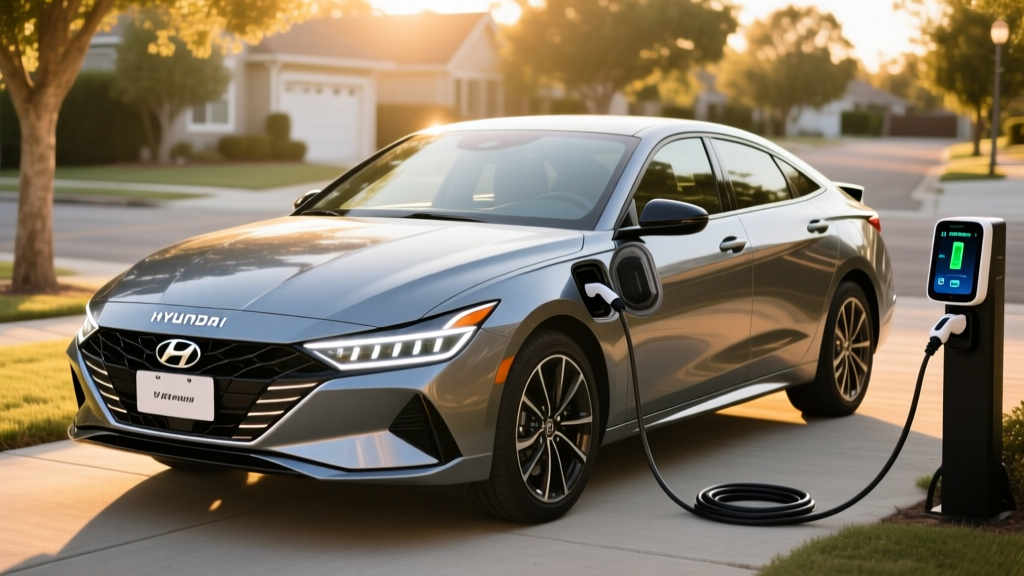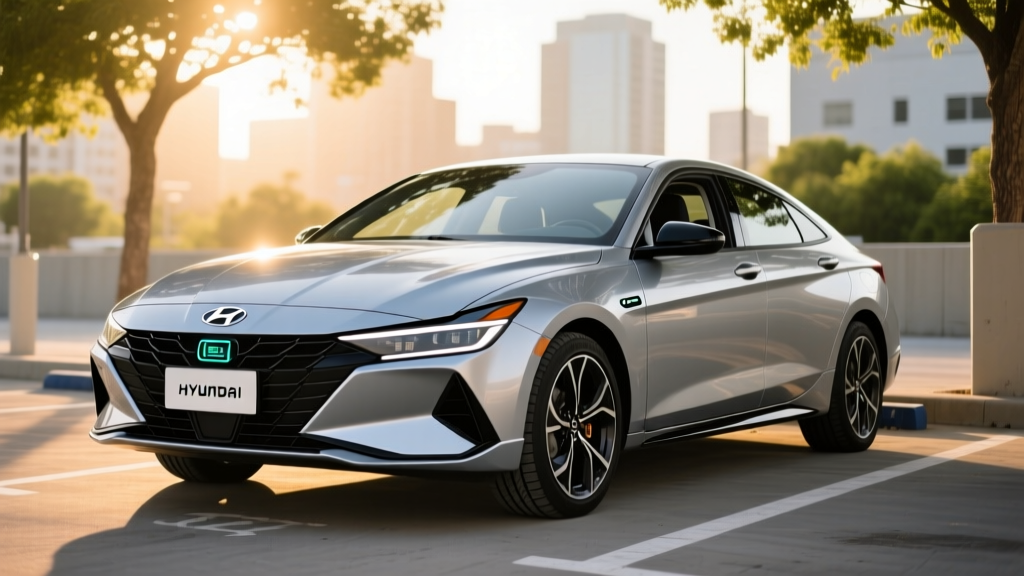
The 2023 Hyundai Elantra Hybrid occupies a specific niche in the electrified-vehicle market: a conventional hybrid electric vehicle (HEV) that squeezes maximum fuel economy out of every gallon without requiring a plug, a charging routine, or any change in driving habits. For buyers weighing the 2023 Hyundai Elantra Hybrid against a plug-in hybrid or a full battery-electric vehicle, the calculus comes down to charging access, daily mileage, and how much upfront cost you're willing to absorb for lower running expenses.
This guide breaks down the 2023 Elantra Hybrid's EPA fuel economy, real-world MPG data, powertrain specifications, battery longevity, warranty coverage, and pricing — then frames where it fits among HEV, PHEV, and BEV options.
EPA Fuel Economy: City, Highway, and Combined MPG
The 2023 Hyundai Elantra Hybrid is rated by the EPA at 53 MPG city, 56 MPG highway, and 54 MPG combined when equipped with the Blue trim. The SEL and Limited trims carry slightly different gearing and weight, bringing their ratings to 49 city / 52 highway / 50 combined. These figures place the Elantra Hybrid among the most fuel-efficient non-plug-in sedans available in its model year, trailing only the Toyota Prius in the compact-hybrid segment.
| Trim | City MPG | Highway MPG | Combined MPG | Annual Fuel Cost* |
|---|---|---|---|---|
| Blue | 53 | 56 | 54 | ~$950 |
| SEL | 49 | 52 | 50 | ~$1,025 |
| Limited | 49 | 52 | 50 | ~$1,025 |
*Based on 15,000 miles/year, 55% city driving, and $3.50/gallon regular unleaded. Source: fueleconomy.gov
Real-World MPG: What Owners Actually Report
EPA stickers are tested under controlled conditions, and real-world results vary with driving style, terrain, climate, and trip length. The Elantra Hybrid's parallel-hybrid system — which can run on electric motor alone at low speeds — tends to outperform its EPA city rating in stop-and-go traffic, where regenerative braking recovers energy constantly. Owners on Fuelly report lifetime averages between 50 and 58 MPG combined for the Blue trim, with some city-heavy commuters seeing low-60s in warm weather.
Highway driving at sustained speeds above 70 MPH reduces the hybrid advantage. Expect 47–52 MPG on the highway in the Blue trim under real conditions, and closer to 44–48 in the SEL/Limited. Cold weather (below 35°F) typically shaves 3–6 MPG off combined figures because the gasoline engine runs longer to heat the cabin and because battery internal resistance increases.
Powertrain Specs: Engine, Motor, and Combined Output
The 2023 Elantra Hybrid pairs a 1.6-liter GDI 4-cylinder gasoline engine (104 hp, 109 lb-ft torque) with a 32 kW (43 hp) permanent-magnet synchronous electric motor integrated into the transmission housing. Combined system output is 139 horsepower and 195 lb-ft of torque, routed through a 6-speed dual-clutch automatic transmission (DCT) to the front wheels.
This DCT is a deliberate engineering choice: unlike the continuously variable transmissions (CVTs) in the Toyota Prius and Honda Insight, Hyundai's dual-clutch design delivers more direct, stepped-ratio acceleration feel. The trade-off is slightly less seamless low-speed electric-only transitions, though most drivers won't notice in normal commuting.
| Component | Specification |
|---|---|
| Gasoline Engine | 1.6L GDI 4-cylinder, 104 hp / 109 lb-ft |
| Electric Motor | 32 kW (43 hp) / 125 lb-ft |
| Combined System Output | 139 hp / 195 lb-ft |
| Transmission | 6-speed dual-clutch automatic (DCT) |
| Drivetrain | Front-wheel drive |
| Hybrid Battery | 1.32 kWh lithium-ion polymer |
| 0–60 MPH | ~8.6 seconds |
| Fuel Tank | 11.4 gallons (regular unleaded) |
The 1.32 kWh battery pack is small by PHEV or BEV standards, but it serves the HEV purpose: buffering regenerative energy, enabling brief electric-only motoring at low speeds, and smoothing engine start-stop transitions. You never plug in a conventional hybrid — the battery charges solely through regenerative braking and engine-driven generation.
HEV vs PHEV vs EV: Which Powertrain Fits You?
Hyundai offered the Elantra in three powertrain variants for the 2023 model year: the conventional Elantra Hybrid (HEV), the Elantra Plug-in Hybrid (PHEV, discontinued after 2023 in the U.S.), and the gasoline-only Elantra. Here is how the HEV and PHEV compare on the metrics that matter:
| Attribute | Elantra Hybrid (HEV) | Elantra Plug-in Hybrid (PHEV) |
|---|---|---|
| Plug-in Charging Required? | No | Yes (Level 1 or Level 2) |
| Electric-Only Range | N/A (brief EV mode at low speed) | 29 miles (EPA) |
| Combined MPG / MPGe | 50–54 MPG | 119 MPGe (EV mode) / 50 MPG (gas) |
| Total Range | ~615 miles | ~440 miles combined |
| Hybrid Battery Capacity | 1.32 kWh | 10.5 kWh |
| Combined Horsepower | 139 hp | 139 hp |
| Base MSRP (2023) | $24,550 | $33,045 |
| Federal Tax Credit (§30D) | Not eligible | Up to $7,500 (subject to eligibility) |
Important PHEV note: Hyundai discontinued the Elantra Plug-in Hybrid for the U.S. market after the 2023 model year. Remaining new-inventory or certified pre-owned units may still be available, but the HEV is the current-production hybrid Elantra.
Choose the Elantra Hybrid (HEV) if: You lack reliable home or workplace charging, drive more than 40 miles daily, want maximum simplicity, and prioritize low purchase price.
Choose a PHEV if: You can charge at home nightly, most daily trips are under 30 miles, and you want electric commuting with gas-engine backup for road trips.
Choose a full BEV (e.g., Hyundai Ioniq 6) if: You have home Level 2 charging, drive under 250 miles daily, want zero tailpipe emissions, and can absorb a higher purchase price offset by lower per-mile energy cost and reduced maintenance.
Pricing, Trims, and Tax Credit Eligibility
The 2023 Hyundai Elantra Hybrid launched with three trims. MSRP figures below include destination charge:
| Trim | MSRP (incl. destination) | Key Features |
|---|---|---|
| Blue | $24,550 | 54 MPG combined, 16" aero wheels, wireless CarPlay/Android Auto, SmartSense ADAS |
| SEL | $28,100 | Proximity key, blind-spot monitor, dual-zone climate, 17" wheels |
| Limited | $29,650 | Leather seats, Bose audio, sunroof, Highway Driving Assist, 10.25" cluster + nav |
Federal tax credit status: The conventional Elantra Hybrid (HEV) does not qualify for the IRS §30D Clean Vehicle Credit. That credit applies only to plug-in vehicles (PHEVs and BEVs) with sufficient battery capacity. The discontinued Elantra PHEV could qualify for up to $7,500, but eligibility depends on the buyer's adjusted gross income (≤$150K single / $300K joint), the vehicle's MSRP (≤$55K for sedans), and battery-component/critical-mineral sourcing requirements per current IRS rules. Always verify eligibility with a tax professional before purchase.
Some states offer separate hybrid or clean-vehicle rebates. Check your state's energy office or DMV for current programs — these vary widely and change frequently.
Battery Longevity, Warranty, and Replacement Cost
Hybrid battery durability is the top concern for used-hybrid buyers and long-term owners. Hyundai addresses this with one of the strongest hybrid-battery warranties in the industry:
Duration: 10 years / 100,000 miles (whichever comes first) for the original owner in most states.
California-emissions states (CA, CT, ME, MA, NJ, NY, OR, RI, VT, WA): 10 years / 150,000 miles.
Coverage: Defects and capacity loss below a defined threshold (typically ~70% of original capacity).
Transferability: The hybrid battery warranty transfers to second owners for 10 years/100,000 miles from the original in-service date.
General Powertrain Warranty: 10 years / 100,000 miles (original owner); 5 years / 60,000 miles (second owner).
The 1.32 kWh lithium-ion polymer pack in the Elantra Hybrid is far smaller and less stressed than a BEV battery. It operates in a narrow state-of-charge window (roughly 40–80%), which dramatically reduces degradation. Based on failure-rate data from Hyundai's earlier hybrid models (Ioniq Hybrid, Sonata Hybrid), premature hybrid-battery failure is rare, and most packs outlast the vehicle itself.
If replacement is needed out of warranty, a new OEM hybrid battery for the Elantra Hybrid costs approximately $2,000–$3,500 including labor at a Hyundai dealer. Independent hybrid specialists may offer refurbished packs for $1,200–$2,000. This is significantly less than a BEV traction-battery replacement, which can exceed $10,000.
Reliability and Ownership Costs
The 2023 Elantra Hybrid carries an IIHS Top Safety Pick designation when equipped with specific headlight trims, and NHTSA awarded it a 5-star overall safety rating. Hyundai's SmartSense suite — standard on all trims — includes forward collision-avoidance assist, lane-keeping assist, driver attention warning, and rear occupant alert.
On the maintenance side, the hybrid system introduces no additional routine service items beyond what a gasoline Elantra requires. The regenerative braking system actually extends brake-pad life, often pushing pad replacement past 80,000 miles. Oil changes remain at the standard 7,500-mile interval. The electric motor has no wearable components requiring scheduled service.
Insurance premiums for the Elantra Hybrid are typically 5–10% higher than the gasoline Elantra due to the hybrid system's replacement-cost profile, but still lower than most PHEVs and BEVs. Get a quote from your insurer before purchase to confirm.
Who Should Buy the 2023 Hyundai Elantra Hybrid?
The 2023 Elantra Hybrid is purpose-built for a specific buyer profile:
- Apartment dwellers and street parkers who cannot install a home charger and don't want to rely on public charging infrastructure.
- High-mileage commuters (15,000+ miles/year) where the MPG advantage over a gasoline car yields $600–$900 in annual fuel savings.
- Cost-conscious buyers who want hybrid efficiency without the $8,000–$12,000 price premium of a PHEV or BEV.
- Long-term keepers who plan to own the vehicle past 100,000 miles and want warranty protection through the critical hybrid-battery years.
It is not the right choice if you want electric-only daily commuting (look at a PHEV or BEV), need all-wheel drive (the Elantra Hybrid is FWD only), or prioritize acceleration over efficiency (139 hp and an 8.6-second 0–60 time are adequate, not quick).
Frequently Asked Questions
How many MPG does the 2023 Hyundai Elantra Hybrid get?
The Blue trim is EPA-rated at 53 city / 56 highway / 54 combined MPG. The SEL and Limited trims are rated at 49/52/50. Real-world owner data from Fuelly clusters between 50 and 58 MPG combined, with city-heavy driving often exceeding the EPA sticker and sustained highway driving falling slightly below.
Does the Elantra Hybrid need to be plugged in?
No. The Elantra Hybrid is a conventional hybrid (HEV). Its 1.32 kWh battery charges entirely through regenerative braking and engine-driven generation. You refuel it at a gas station like any other car. Only the discontinued Elantra Plug-in Hybrid (PHEV) requires a charging connection.
Is the 2023 Elantra Hybrid reliable?
Hyundai's hybrid powertrain has a strong reliability track record across the Ioniq, Sonata, and Elantra Hybrid lineages. The 10-year/100,000-mile hybrid-battery warranty is among the industry's best. The main long-term wear items are the same as any gasoline car: brakes (extended life due to regen), suspension components, and the 12V auxiliary battery (replace every 3–5 years).
What does a hybrid battery replacement cost?
An OEM replacement hybrid battery for the Elantra Hybrid runs approximately $2,000–$3,500 at a Hyundai dealer, including labor. Refurbished packs from independent hybrid shops cost $1,200–$2,000. Given the 10-year/100,000-mile warranty and the low stress placed on the small HEV battery, most owners never face this expense.
Does the 2023 Elantra Hybrid qualify for a federal tax credit?
No. The IRS §30D Clean Vehicle Credit applies only to plug-in electric vehicles (PHEVs and BEVs). The conventional Elantra Hybrid does not have a large enough battery or plug-in capability to qualify. The discontinued Elantra PHEV could qualify for up to $7,500, subject to income, MSRP, and battery-sourcing requirements. Consult IRS Publication 8936 or a tax professional for current eligibility details.
How does the Elantra Hybrid compare to the Toyota Prius?
The 2023 Toyota Prius (redesigned) is EPA-rated at 57 city / 56 highway / 57 combined MPG in its LE trim — slightly ahead of the Elantra Hybrid Blue. The Prius also offers available AWD. However, the Elantra Hybrid starts roughly $2,000 lower, has a more conventional sedan trunk (vs. the Prius hatchback), and carries Hyundai's 10-year powertrain warranty vs. Toyota's 8-year/100,000-mile hybrid-battery warranty. The choice comes down to whether you prioritize maximum MPG (Prius) or lower price and longer warranty (Elantra Hybrid).