Quick Verdict: The CR-V Hybrid Is Honda's Efficiency Sweet Spot
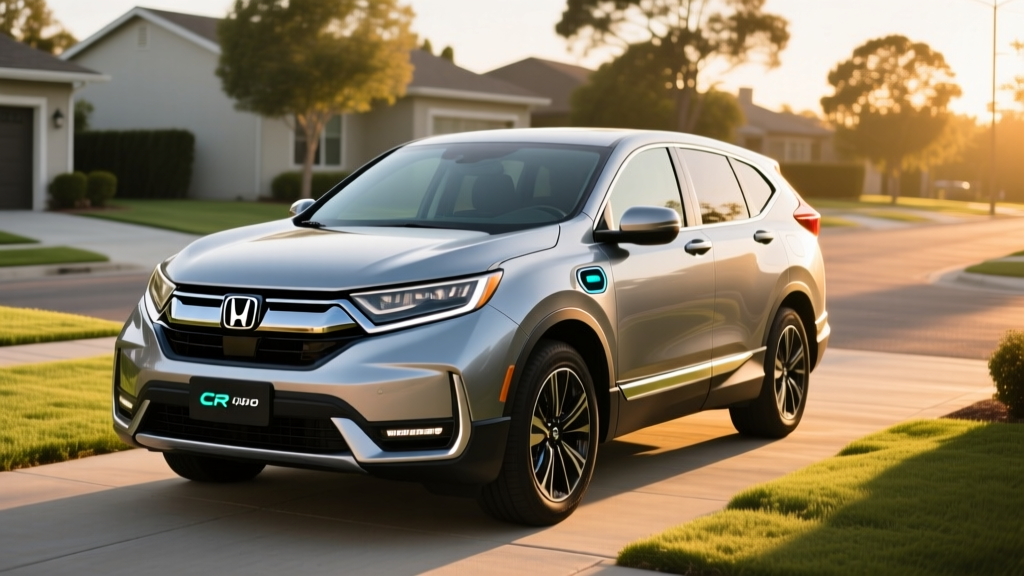
The 2023 Honda CR-V Hybrid pairs a 2.0-liter Atkinson-cycle four-cylinder with a two-motor system to deliver 204 combined horsepower and up to 40 MPG in city driving. It is a conventional hybrid (HEV) — meaning it requires no plug, no charging routine, and no range anxiety. For buyers who want SUV practicality with dramatically lower fuel consumption than a gas-only CR-V, the hybrid is the strongest pick in the lineup.
Honda restructured the CR-V generation for 2023, making the hybrid powertrain available on the Sport and Sport Touring trims. The result is a compact crossover that competes directly with the Toyota RAV4 Hybrid and Ford Escape Hybrid on efficiency, while offering one of the most refined hybrid drivetrains in the segment.
HEV vs PHEV: What the CR-V Hybrid Actually Is
A critical distinction for shoppers: the 2023 CR-V Hybrid is a conventional hybrid electric vehicle (HEV), not a plug-in hybrid (PHEV). Honda does not offer a plug-in version of the CR-V in the U.S. market.
Conventional Hybrid (HEV) — CR-V Hybrid
- No plug required — the battery charges via regenerative braking and the engine
- Smaller battery (~1.06 kWh usable) — assists the engine but cannot drive on electric power alone for meaningful distances
- Optimized for city/stop-and-go efficiency gains
- No electric-only range to manage
- No home charging infrastructure needed
Plug-In Hybrid (PHEV) — Not Available for CR-V
- Requires plug-in charging (Level 1 or Level 2)
- Larger battery (typically 12–18 kWh) for 25–40 miles of electric-only driving
- May qualify for federal §30D tax credit (up to $7,500 depending on sourcing and income)
- Higher purchase price; best for drivers with home charging and short commutes
If you need electric-only commuting capability, look at the Toyota RAV4 Prime (PHEV, 42 miles EV range) or consider a full BEV like the Hyundai Ioniq 5. The CR-V Hybrid is engineered for buyers who want fuel savings without altering their refueling habits.
Fuel Economy: EPA Ratings and Real-World MPG
The 2023 CR-V Hybrid's EPA ratings place it among the most efficient compact SUVs available. Here is the breakdown by drivetrain configuration, sourced from fueleconomy.gov:
| Trim / Drivetrain | City MPG | Highway MPG | Combined MPG |
|---|---|---|---|
| Sport Hybrid (FWD) | 43 | 36 | 40 |
| Sport Hybrid (AWD) | 40 | 34 | 37 |
| Sport Touring Hybrid (AWD) | 40 | 34 | 37 |
Real-World MPG vs. EPA Sticker
Conventional hybrids like the CR-V tend to exceed their EPA city rating in real-world stop-and-go driving because regenerative braking recovers energy that a gas car wastes as heat. Owners frequently report 42–45 MPG in urban conditions with the FWD model.
Highway driving is where hybrids lose their advantage — at sustained 70–80 mph speeds, the engine does most of the work, and real-world highway figures often land in the 33–35 MPG range for AWD trims. Cold weather (below freezing) typically reduces hybrid efficiency by 5–10% due to increased engine warm-up time and cabin heating demands.
On a mixed 300-mile road trip at highway speeds, expect roughly 34–36 MPG combined from the AWD trims — still a substantial improvement over the gas-only CR-V AWD's 28 MPG combined.
Powertrain Specs: Engine, Motors, and Performance
The 2023 CR-V Hybrid uses Honda's fourth-generation two-motor hybrid system, a series-parallel setup that can operate in EV drive, hybrid drive, or engine-direct drive modes depending on speed and load.
| Specification | Detail |
|---|---|
| Engine | 2.0L Atkinson-cycle 4-cylinder |
| Engine Output | 145 hp @ 6,100 rpm / 134 lb-ft torque |
| Electric Motors | Two-motor system (one propulsion, one generator) |
| Combined System Output | 204 hp / 247 lb-ft torque |
| Transmission | Direct-drive (no traditional CVT or geared transmission) |
| 0–60 mph (est.) | ~7.6 seconds (AWD) |
| Drivetrain | FWD (Sport) or Real Time AWD (Sport AWD, Sport Touring) |
| Hybrid Battery | ~1.06 kWh lithium-ion |
| Towing Capacity | 1,000 lbs |
The two-motor system is notably smooth. At low speeds, the CR-V Hybrid operates primarily on electric power with the engine acting as a generator. Above roughly 40–50 mph under steady load, a lock-up clutch connects the engine directly to the drive wheels for highway efficiency. This eliminates the rubber-band feel that older CVT-based hybrids suffered from.
The 247 lb-ft of torque is available low in the rev range thanks to the electric motor, giving the CR-V Hybrid stronger off-the-line acceleration than the gas-only model's 190 hp turbocharged 1.5L engine in most city scenarios.
Pricing, Trims, and Tax Credit Eligibility
For the 2023 model year, Honda made the hybrid powertrain exclusive to the Sport and Sport Touring trims, positioning it as the sporty, efficiency-oriented option.
| Trim | MSRP (2023) | Drivetrain |
|---|---|---|
| Sport Hybrid | $32,950 | FWD |
| Sport Hybrid AWD | $34,450 | AWD |
| Sport Touring Hybrid | $38,600 | AWD |
Federal Tax Credit: Not Eligible
The 2023 Honda CR-V Hybrid does not qualify for the federal §30D clean vehicle tax credit. That credit applies only to plug-in electric vehicles (BEVs and PHEVs) with a battery capacity of at least 7 kWh, per IRS guidelines. The CR-V Hybrid's ~1.06 kWh battery places it well below the threshold.
Some states offer their own incentives for hybrid purchases — check your state's energy office or department of environmental quality for current programs. These vary significantly by jurisdiction and change frequently.
Battery Longevity, Warranty, and Replacement Cost
Hybrid battery longevity is consistently the top concern for first-time hybrid buyers. Honda's track record here is strong — the company has been refining its hybrid systems since the 1999 Insight, and the lithium-ion pack in the 2023 CR-V Hybrid is far more durable than early nickel-metal hydride packs.
| Warranty Component | Coverage |
|---|---|
| Hybrid Battery (high-voltage) | 8 years / 100,000 miles (10 years / 150,000 miles in CARB states) |
| Hybrid System Components | 8 years / 100,000 miles |
| Powertrain (engine, transmission) | 5 years / 60,000 miles |
| Bumper-to-Bumper | 3 years / 36,000 miles |
Real-world battery degradation: Because the CR-V Hybrid uses a small ~1.06 kWh battery that is never fully depleted or fully charged (the system maintains a state-of-charge buffer between roughly 20% and 80%), stress on the cells is minimal. Hybrid batteries from Honda and Toyota routinely exceed 150,000–200,000 miles before any meaningful capacity loss.
Replacement cost if out of warranty: A hybrid battery replacement for a CR-V-class vehicle typically ranges from $2,000 to $4,000 including labor at a dealership. Independent hybrid specialists may offer refurbished packs for $1,200–$2,500. However, given Honda's buffer management and the battery's modest size, most CR-V Hybrids will outlive their ownership cycle without a battery replacement.
Who Should Choose the CR-V Hybrid vs. a Full EV or Gas Car
Choose the CR-V Hybrid If:
- You drive 12,000–18,000 miles per year, mostly city and suburban
- You cannot install a home Level 2 charger (apartment, condo, street parking)
- You want 37–40 MPG without changing your refueling routine
- You need AWD for snow/rain climates without a fuel-economy penalty
- You plan to keep the vehicle 8–12 years and want proven reliability
Choose a Full EV (BEV) Instead If:
- You have reliable home charging (Level 2, 240V)
- Your daily commute is under 60 miles round-trip
- You want to eliminate gasoline entirely and reduce operating cost to ~$0.04–$0.06/mile
- You qualify for the $7,500 federal §30D credit (which can offset the EV price premium)
Choose the Gas-Only CR-V If:
- You drive primarily highway miles at 75+ mph (where the hybrid advantage narrows)
- Upfront price is the primary constraint and you drive under 10,000 miles/year
- You tow regularly (though the hybrid is rated at 1,000 lbs, same as the gas 1.5T AWD)
Ownership Economics: 5-Year Cost Snapshot
Comparing the 2023 CR-V Hybrid AWD (Sport Touring, $38,600) against the gas-only CR-V EX-L AWD ($36,300 MSRP) over 5 years at 15,000 miles/year, with fuel at $3.50/gallon:
| Cost Factor | CR-V Hybrid AWD (37 MPG) | CR-V Gas AWD (28 MPG) |
|---|---|---|
| Fuel Cost (5 yr / 75,000 mi) | $7,095 | $9,375 |
| Fuel Savings (Hybrid) | $2,280 saved over 5 years | |
| Price Premium (Hybrid) | ~$2,300 more (Sport Touring vs EX-L) | |
| Estimated Maintenance (5 yr) | ~$2,200 | ~$2,600 |
| Insurance (avg. 5 yr) | ~$7,500 | ~$7,200 |
The hybrid's fuel savings nearly offset its price premium within five years. The breakeven point accelerates if gas prices rise above $4.00/gallon or if you drive more than 15,000 miles annually. The hybrid also benefits from reduced brake wear (regenerative braking extends pad life) and no turbocharger maintenance, which applies to the gas 1.5L turbo engine.
Pros and Cons at a Glance
Pros
- 40 MPG city (FWD) / 37 MPG combined (AWD) — among the best in the segment
- 204 hp with smooth, responsive two-motor torque delivery
- No plug-in required — zero lifestyle change from a gas car
- 8-year/100,000-mile hybrid battery warranty (10 yr in CARB states)
- Spacious interior with 36.3 cu ft cargo volume (rear seats up)
- Standard Honda Sensing ADAS suite across all trims
Cons
- No PHEV option — no electric-only range for short commutes
- No federal tax credit eligibility
- Highway MPG drops to 34 (AWD) — advantage narrows vs. gas at sustained high speed
- Towing limited to 1,000 lbs
- Hybrid trims start at ~$33K — higher entry price than base gas LX ($31,690)
- Cold-weather efficiency loss of 5–10% (common to all hybrids)
Frequently Asked Questions
How many MPG does the 2023 Honda CR-V Hybrid actually get?
The EPA rates the FWD Sport Hybrid at 43 city / 36 highway / 40 combined. AWD trims are rated 40/34/37. In real-world city driving, many owners report exceeding the EPA city number, reaching 42–45 MPG. Highway driving at 75 mph typically yields 33–35 MPG for AWD models.
Does the CR-V Hybrid need to be plugged in?
No. The 2023 CR-V Hybrid is a conventional hybrid (HEV). Its small lithium-ion battery charges automatically through regenerative braking and the gasoline engine. You refuel it exactly like a gas car — at a gas station.
How far can the CR-V Hybrid drive on electric power alone?
Only about 1–2 miles at very low speeds (under 25 mph) in ideal conditions. The system is not designed for meaningful electric-only range. If you need 25–40 miles of EV-only commuting, you need a PHEV like the Toyota RAV4 Prime or a full BEV.
Is the 2023 CR-V Hybrid reliable?
Honda's hybrid system has a strong reliability record. The two-motor design has fewer moving parts than a conventional automatic transmission (no torque converter, no multi-speed gearbox). The hybrid battery is warranted for 8 years/100,000 miles. NHTSA gave the 2023 CR-V a 5-star overall safety rating, and the IIHS named it a Top Safety Pick.
What does a CR-V Hybrid battery replacement cost?
If the high-voltage hybrid battery fails out of warranty, expect $2,000–$4,000 at a dealership, or $1,200–$2,500 from an independent hybrid specialist using a refurbished pack. In practice, Honda's charge-buffering strategy means most hybrid batteries last well beyond 150,000 miles without issue.
Does the CR-V Hybrid qualify for any tax credits?
It does not qualify for the federal §30D new clean vehicle credit, which requires a plug-in vehicle with at least 7 kWh of battery capacity. Some states and local utilities offer rebates or incentives for hybrid purchases — check with your state energy office for current programs.
CR-V Hybrid vs. Toyota RAV4 Hybrid — which is better?
The RAV4 Hybrid offers slightly more combined horsepower (219 hp) and standard AWD across all trims, with EPA ratings of 41/38/40 MPG. The CR-V Hybrid counters with a more refined interior, slightly quicker acceleration feel in city driving, and Honda's Sensing suite. Both are segment leaders — the choice often comes down to brand preference, dealer proximity, and available trim inventory.