The 2023 Honda Civic Hybrid: Honda's Efficiency Benchmark Returns
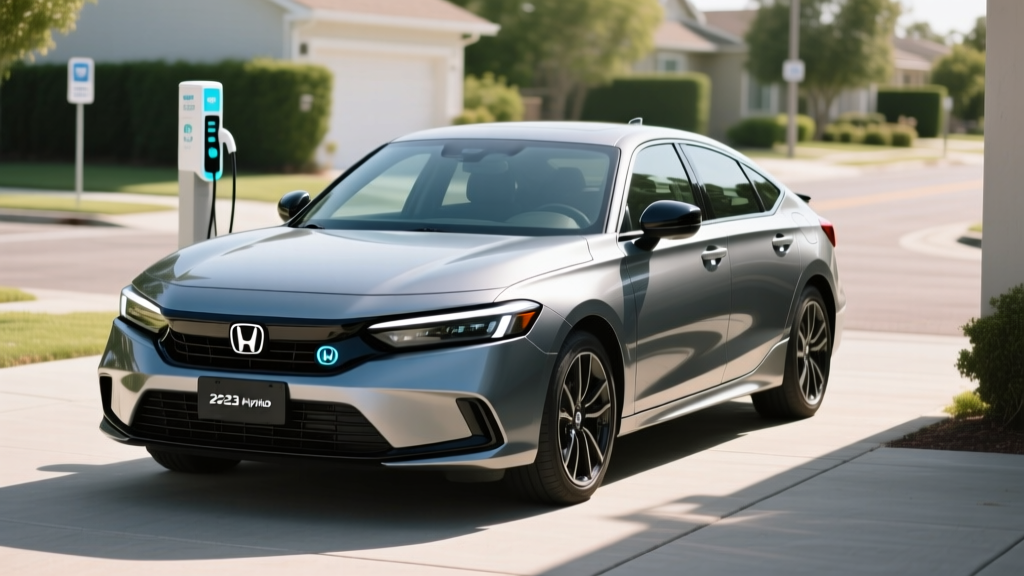
Honda discontinued the Civic Hybrid in the US market after 2015, leaving a gap that frustrated fuel-conscious compact-car buyers for nearly a decade. The 2023 Honda Civic Hybrid ended that drought, pairing Honda's fourth-generation two-motor hybrid system with the refined 11th-generation Civic platform. For buyers weighing a conventional hybrid against a plug-in hybrid or full battery-electric vehicle, the Civic Hybrid occupies a compelling middle ground: no plug required, no range anxiety, and fuel economy that rivals vehicles costing thousands more.
This guide covers everything a prospective buyer or current owner needs to know — EPA fuel economy versus real-world results, the powertrain's engineering, battery longevity, tax credit status, and how this HEV stacks up against PHEVs and BEVs in 2026's evolving market.
| Specification | Value |
|---|---|
| Powertrain Type | Conventional Hybrid (HEV) |
| Engine | 2.0L Atkinson-cycle 4-cylinder |
| Combined System Output | 200 hp / 232 lb-ft torque |
| Electric Motors | Dual-motor (propulsion + generator) |
| Transmission | e-CVT (direct-drive, no traditional gears) |
| EPA Fuel Economy (Sport) | 50 city / 47 highway / 49 combined MPG |
| EPA Fuel Economy (Sport Touring) | 50 city / 47 highway / 49 combined MPG |
| Fuel Tank | 12.4 gallons |
| Total Range (EPA est.) | ~608 miles |
| 0–60 mph (est.) | ~7.1 seconds |
| Drivetrain | Front-wheel drive |
| Cargo Volume (Sedan) | 14.8 cu ft |
| Base MSRP (Sport) | $28,950 (2023 launch price) |
| Base MSRP (Sport Touring) | $31,450 (2023 launch price) |
| Hybrid Battery Warranty | 8 years / 100,000 miles (10 yr/150,000 mi in CARB states) |
HEV vs. PHEV: Understanding What the Civic Hybrid Is — and Isn't
Before diving into fuel economy, it's essential to clarify the Civic Hybrid's classification. The 2023 Civic Hybrid is a conventional hybrid electric vehicle (HEV). It does not have a charging port, cannot be plugged in, and has no meaningful electric-only driving range. The battery recharges exclusively through regenerative braking and the gasoline engine.
| Feature | HEV (Civic Hybrid) | PHEV (e.g., Toyota Prius Prime) | BEV (e.g., Tesla Model 3) |
|---|---|---|---|
| Plug-in Charging | No | Yes | Yes |
| Electric-Only Range | ~1 mile (low speed) | 25–44 miles typical | 250–360+ miles |
| Total Range | ~608 miles | 400–600+ miles (EV + gas) | 250–360+ miles |
| Fuel Economy | 49 MPG combined | 48–52 MPG combined (gas mode) | N/A (kWh/mi) |
| Federal Tax Credit (§30D) | Not eligible | Up to $7,500 (if eligible) | Up to $7,500 (if eligible) |
| Home Charging Needed | No | Recommended (Level 2) | Essential |
| Upfront Cost Premium | Low (~$1,500 over gas Civic) | Moderate ($4,000–$8,000) | High ($5,000–$15,000+) |
Honda does not currently offer a Civic Plug-In Hybrid in the US market. If you need electric-only commuting capability, you'll need to look at competitors like the Toyota Prius Prime (44 miles EV range) or the Hyundai Ioniq PHEV (discontinued after 2022). The Civic Hybrid's value proposition is simplicity: you drive it exactly like a gasoline car, and it delivers exceptional efficiency without any behavioral change.
Fuel Economy: EPA Ratings vs. Real-World MPG
The EPA rates the 2023 Honda Civic Hybrid at 50 MPG city, 47 MPG highway, and 49 MPG combined for both the Sport and Sport Touring trims, per fueleconomy.gov. These figures apply to the sedan body style, which is the only configuration available for the Civic Hybrid in 2023.
| Trim | City MPG | Highway MPG | Combined MPG |
|---|---|---|---|
| Sport | 50 | 47 | 49 |
| Sport Touring | 50 | 47 | 49 |
Real-World MPG: What Owners Actually Report
Honda's two-motor hybrid system excels in stop-and-go traffic, where the electric propulsion motor handles low-speed driving and the gasoline engine acts primarily as a generator. This architecture means real-world city MPG frequently exceeds the EPA estimate. Owners on Fuelly and Honda forums routinely report 52–56 MPG in urban and suburban driving during mild weather.
Highway driving tells a different story. At sustained speeds above 65 mph, aerodynamic drag dominates, and the engine must directly drive the wheels via a lock-up clutch. Real-world highway fuel economy typically falls to 42–46 MPG, depending on speed, terrain, and temperature. Cold-weather operation (below 40°F) can reduce combined MPG by 5–10% due to increased engine warm-up cycles and reduced battery efficiency.
On a mixed 350-mile road trip blending interstate and two-lane highways at 70–75 mph, expect roughly 43–46 MPG combined — still outstanding for a 200-hp compact sedan, but noticeably below the 49 MPG EPA sticker. Drivers who prioritize highway-heavy commutes should calibrate expectations accordingly.
Powertrain Deep Dive: How Honda's Two-Motor System Works
The 2023 Civic Hybrid uses Honda's fourth-generation Intelligent Multi-Mode Drive (i-MMD) system. Unlike Toyota's planetary-gear Hybrid Synergy Drive, Honda's approach uses two electric motors and a clutch to manage three distinct operating modes:
- EV Drive: The propulsion motor powers the wheels using battery energy alone. This mode operates at low speeds and light loads — typically up to ~1 mile at parking-lot speeds. The gasoline engine remains off.
- Hybrid Drive: The gasoline engine spins the generator motor, which produces electricity to feed the propulsion motor. The engine does not mechanically connect to the wheels. This is the dominant mode for city and suburban driving.
- Engine Drive: At steady highway cruising speeds, a lock-up clutch engages, connecting the 2.0L engine directly to the wheels for maximum mechanical efficiency. The electric motor provides supplemental torque as needed.
The combined system output is 200 horsepower and 232 lb-ft of torque. The 2.0L Atkinson-cycle four-cylinder engine alone produces 143 hp, while the propulsion motor contributes 181 hp. These figures don't simply add — the system's peak output is limited by battery discharge rate and power electronics.
The result is a 0–60 mph time of approximately 7.1 seconds, making the Civic Hybrid meaningfully quicker than the non-hybrid 2.0L Civic (which runs ~8.5 seconds to 60). The electric motor's instant torque delivery gives the hybrid strong low-end responsiveness that the naturally aspirated gas engine can't match. It also makes the Civic Hybrid competitive with turbocharged compact sedans while delivering double the fuel economy.
Battery Longevity, Warranty, and Replacement Cost
Hybrid Battery Warranty: Honda covers the Civic Hybrid's lithium-ion battery pack for 8 years or 100,000 miles, whichever comes first, under the federal emissions warranty. In California Air Resources Board (CARB) states — which include California, New York, Massachusetts, and approximately 15 other states — coverage extends to 10 years or 150,000 miles.
The warranty guarantees the battery against defects and excessive capacity loss. Honda has not published a specific State of Health (SoH) degradation threshold for warranty replacement, but industry practice among Japanese automakers typically triggers coverage when capacity falls below 60–70% of original.
How Long Will the Battery Last?
Honda's hybrid battery packs are engineered for the life of the vehicle. Real-world data from earlier Honda hybrids (Insight, Accord Hybrid) shows lithium-ion packs routinely lasting 150,000–200,000+ miles with minimal degradation. The Civic Hybrid's battery is relatively small — approximately 1.0 kWh of total capacity (with a usable window far smaller, as the system keeps the battery between roughly 30–70% State of Charge to minimize stress).
This shallow-cycling strategy is the key to longevity. Unlike a full EV that cycles through 80–90% of its battery daily, the Civic Hybrid's battery experiences minimal depth-of-discharge per cycle. Thermal management is passive (air-cooled), which is adequate given the small pack size and limited charge/discharge rates.
Battery Replacement Cost
If the hybrid battery does fail outside of warranty, replacement costs for Honda hybrid battery packs currently range from $2,000 to $4,000 including parts and labor at a dealership. Third-party reconditioned or refurbished packs are available for $1,500–$2,500. Given the battery's track record and the warranty coverage, most owners will never face this expense. It remains a consideration for second- or third-owners purchasing high-mileage examples, however.
Tax Credits, Incentives, and Pricing in 2026
The 2023 Honda Civic Hybrid is a conventional HEV. It does not qualify for the federal §30D Clean Vehicle Credit, which is reserved for plug-in electric vehicles (BEVs and PHEVs with sufficient battery capacity and electric-only range). The IRS explicitly excludes conventional hybrids from this credit, as confirmed on irs.gov.
Federal §30D Tax Credit — Does the Civic Hybrid Qualify?
- ❌ Plug-in capable: No — the Civic Hybrid cannot be plugged in
- ❌ Minimum battery capacity (7 kWh for PHEVs, N/A for BEVs): Does not apply — battery is ~1.0 kWh
- ❌ Electric-only range requirement (PHEVs must achieve 20+ miles): Does not apply
- Result: Not eligible for any federal EV tax credit
Some states offer their own incentives for hybrid vehicles, though these have become increasingly rare as state programs shift focus to plug-in vehicles. Check your state's energy office or department of environmental quality for current programs. A few states previously offered $500–$1,000 rebates for HEVs, but most have sunset these as of 2025–2026.
2026 Used-Car Pricing
As a 2023 model-year vehicle, the Civic Hybrid is now available on the used market. Expect to find Sport trims in the $23,000–$26,000 range and Sport Touring trims between $26,000–$29,000, depending on mileage, condition, and region. Honda Civics hold resale value well, and the hybrid variant's scarcity relative to demand keeps prices firm.
The used clean vehicle credit (§25E) offers up to $4,000 (or 30% of the sale price, whichever is less) for qualifying used plug-in EVs and fuel cell vehicles. However, conventional hybrids like the Civic Hybrid are excluded from §25E as well. This credit applies only to used BEVs and PHEVs.
Who Should Choose the Civic Hybrid — and Who Shouldn't
Pros
- 49 MPG combined EPA; real-world city driving often exceeds 50 MPG
- 200 hp / 232 lb-ft — genuinely quick for the class
- No plug, no charging infrastructure dependency
- 608+ mile total range — fewer fuel stops on road trips
- Honda Sensing safety suite standard (AEB, lane-keeping, adaptive cruise)
- Strong resale value and proven hybrid reliability
- Available in Sport and Sport Touring trims with premium features
Cons
- No federal or state tax credits available
- Highway MPG drops to 42–46 in real-world driving
- FWD only — no AWD option (unlike Toyota Prius)
- Only available in two upper trims — no base LX Hybrid
- No plug-in variant available for electric-only commuting
- Road noise still present at highway speeds
- ~1.0 kWh battery means no meaningful EV-only range
Choose the 2023 Honda Civic Hybrid if:
- You want maximum fuel economy without changing your driving habits or installing a home charger
- Your driving is predominantly city/suburban (where the hybrid system shines)
- You want a compact sedan with strong acceleration and Honda reliability
- You're not ready for a plug-in vehicle due to apartment living, street parking, or lack of charging access
- You drive 12,000–15,000+ miles per year and want to minimize fuel costs
Consider a PHEV or BEV instead if:
- You have home charging access and a short commute (a PHEV could eliminate gasoline use entirely on weekdays)
- You want to claim the $7,500 federal tax credit (requires a qualifying new BEV or PHEV)
- You want zero tailpipe emissions for daily driving
- You want AWD — the Toyota Prius AWD or a BEV crossover like the Hyundai Ioniq 5 offer all-weather traction
Frequently Asked Questions
How many MPG does the 2023 Honda Civic Hybrid get?
The EPA rates the 2023 Civic Hybrid at 50 MPG city, 47 MPG highway, and 49 MPG combined for both Sport and Sport Touring trims. Real-world city driving often yields 52–56 MPG, while sustained highway driving at 70+ mph typically returns 42–46 MPG. Cold weather can reduce combined economy by 5–10%.
Does the 2023 Honda Civic Hybrid need to be plugged in?
No. The Civic Hybrid is a conventional hybrid (HEV). It has no charging port. The battery recharges through regenerative braking and the gasoline engine. You fuel it exactly like a standard gasoline car — at a gas station.
How far can the Civic Hybrid drive on electric power alone?
Less than one mile, and only at very low speeds (parking lot speeds, typically under 25 mph). The battery is approximately 1.0 kWh total capacity, and the system is designed for hybrid assist, not electric-only driving. If electric-only range is a priority, you need a PHEV or BEV.
Is the 2023 Honda Civic Hybrid reliable?
Honda's hybrid powertrains have an excellent reliability record. The i-MMD system has fewer moving parts than a conventional automatic transmission (no torque converter, no traditional gear sets). The hybrid battery is warranted for 8 years/100,000 miles (10 years/150,000 miles in CARB states), and real-world data from previous Honda hybrids shows battery packs lasting 150,000–200,000+ miles. Honda also earned strong reliability ratings from Consumer Reports for the 11th-generation Civic platform.
What does it cost to replace the Civic Hybrid battery?
Out-of-warranty replacement of the hybrid battery pack costs approximately $2,000–$4,000 at a Honda dealership, including parts and labor. Refurbished packs from third-party suppliers range from $1,500–$2,500. Given the battery's longevity track record, most original owners will never need a replacement.
Does the 2023 Honda Civic Hybrid qualify for a tax credit?
No. The Civic Hybrid is a conventional HEV and does not qualify for the federal §30D Clean Vehicle Credit or the §25E used clean vehicle credit. These credits are reserved for plug-in electric vehicles (BEVs and qualifying PHEVs). Some states may have offered small hybrid incentives historically, but most have expired. Always verify current state programs with your state energy office.
How does the Civic Hybrid compare to the Toyota Prius?
The 2023 Toyota Prius (redesigned for 2023) is rated at 57 MPG combined (LE trim) — 8 MPG higher than the Civic Hybrid. The Prius also offers available AWD and a PHEV variant (Prius Prime, 44 miles EV range). However, the Civic Hybrid delivers 200 hp versus the Prius's 194 hp, has a more conventional sedan design that many buyers prefer, and offers a more engaging driving experience. The tradeoff is between maximum efficiency (Prius) and a more premium, sporty package (Civic Hybrid).
Can the Civic Hybrid run on regular gasoline?
Yes. Honda specifies regular unleaded gasoline (87 octane) for the Civic Hybrid. Premium fuel provides no benefit and is not recommended.