Quick Verdict: The Accord Hybrid's Sweet Spot
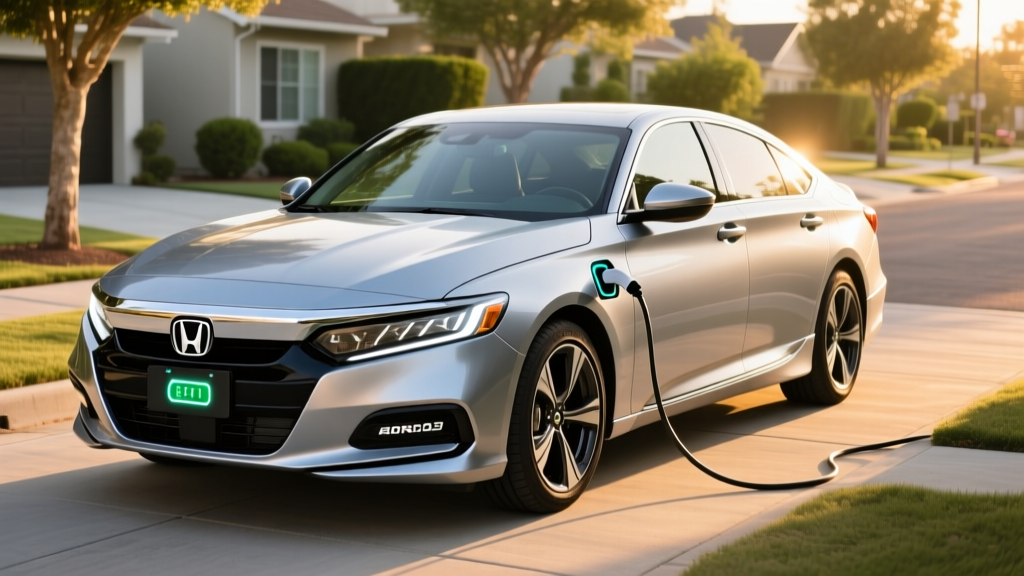
The 2023 Honda Accord Hybrid pairs a 2.0-liter Atkinson-cycle engine with a two-motor system to deliver an EPA-rated 48 MPG combined in Sport and EX-L trims. For buyers who want sedan comfort and commuter efficiency without plugging in, it remains one of the most refined conventional hybrids on the market. The 11th-generation redesign brought a more integrated powertrain, updated infotainment, and Honda's latest safety suite — all while maintaining the no-plug simplicity that defines a true HEV.
| Spec | Sport / EX-L | EX-L Touring |
|---|---|---|
| EPA Combined MPG | 48 | 44 |
| EPA City / Highway | 51 / 44 | 46 / 41 |
| Powertrain | 2.0L + 2-motor hybrid | 2.0L + 2-motor hybrid |
| Combined HP / Torque | 204 hp / 247 lb-ft | 204 hp / 247 lb-ft |
| Battery Type | Lithium-ion (1.06 kWh) | Lithium-ion (1.06 kWh) |
| Plug-in Required? | No (HEV) | No (HEV) |
| Base MSRP (2023) | $32,990 | $38,990 |
| Battery Warranty | 8 yr / 100,000 mi (10 yr / 150,000 mi CARB states) | 8 yr / 100,000 mi (10 yr / 150,000 mi CARB states) |
HEV vs PHEV: Where the Accord Fits
The 2023 Accord Hybrid is a conventional hybrid electric vehicle (HEV). It cannot be plugged in. The lithium-ion battery recharges through regenerative braking and the gasoline engine. There is no electric-only driving range to manage, no home charger to install, and no need to find public charging stations.
This differs fundamentally from a plug-in hybrid (PHEV) like the Toyota RAV4 Prime or Chrysler Pacifica Hybrid, which carry larger batteries (typically 12–20 kWh), offer 25–45 miles of electric-only range, and require plug-in charging to unlock their efficiency advantage. Honda does not currently offer a plug-in Accord in the US market.
Choose the Accord HEV if: You lack home charging access, drive a mix of city and highway miles, and want maximum fuel savings with zero behavior change from a gas car.
Consider a PHEV if: You have Level 2 home charging, most daily trips fall under 30–40 miles, and you want near-EV commuting with gas-engine backup for road trips.
Fuel Economy: EPA Ratings and Real-World MPG
| Trim | City | Highway | Combined |
|---|---|---|---|
| Sport / Sport-L | 51 MPG | 44 MPG | 48 MPG |
| EX-L | 51 MPG | 44 MPG | 48 MPG |
| Sport Touring | 46 MPG | 41 MPG | 44 MPG |
The Sport and EX-L trims share the lighter wheel-and-tire package (18-inch), yielding the higher 48 combined rating. The Sport Touring adds 19-inch wheels, heavier equipment, and a slightly different final-drive ratio, dropping combined MPG to 44. According to fueleconomy.gov, this puts the Accord Hybrid among the most efficient midsize sedans available.
Real-world expectations: Honda's two-motor system excels in stop-and-go traffic, where the electric motor handles most low-speed propulsion. Owners frequently report exceeding the EPA city rating — 52–55 MPG is common in urban driving with moderate acceleration. Highway driving at 70–80 mph relies more on the gasoline engine, and real-world highway figures often settle around 40–43 MPG. In cold weather (below 30°F), expect a 5–10% reduction as the engine runs longer to warm the cabin and catalytic converter.
Powertrain: How Honda's Two-Motor System Works
The 2023 Accord Hybrid uses Honda's fourth-generation two-motor hybrid system. A 2.0-liter Atkinson-cycle inline-four produces 146 hp and 134 lb-ft of torque. Two electric motors — one functioning primarily as a generator, the other as the drive motor — contribute up to 181 hp and 247 lb-ft. Combined system output is 204 hp and 247 lb-ft of torque.
In most driving conditions, the gasoline engine acts as a generator, sending electricity to the drive motor. At highway cruising speeds, a lock-up clutch connects the engine directly to the wheels for maximum efficiency. This series-parallel architecture eliminates a traditional transmission, resulting in smooth, linear acceleration with no shift shock.
The 1.06 kWh lithium-ion battery pack is small by PHEV or BEV standards — it serves as a buffer, storing energy from regenerative braking and releasing it during acceleration. It does not provide meaningful electric-only range (perhaps 1–2 miles at very low speeds). This is by design: the HEV system prioritizes continuous efficiency optimization over plug-in electric range.
Pricing, Trims, and Tax Credit Eligibility
The 2023 Accord Hybrid launched with the following MSRP structure:
- Sport: $32,990
- Sport-L: $34,990
- EX-L: $35,990
- Sport Touring: $38,990
Federal Tax Credit Note: The 2023 Accord Hybrid does not qualify for the IRS §30D New Clean Vehicle Credit. Under current IRS rules, the §30D credit applies only to plug-in electric vehicles (BEVs and PHEVs) with battery capacities of at least 7 kWh. Conventional hybrids like the Accord HEV have a 1.06 kWh battery and no plug-in capability, making them ineligible. Some states offer separate incentives for hybrids — check your state energy office or DMV for local programs.
For buyers comparing total cost, the Accord Hybrid's fuel savings are substantial. At 48 MPG combined and $3.50/gallon gas, annual fuel cost for 12,000 miles runs approximately $875. A comparable non-hybrid midsize sedan at 30 MPG would cost roughly $1,400 — a $525 annual savings that compounds over ownership.
Reliability, Battery Lifespan, and Replacement Costs
Honda's hybrid system has matured over two decades, and the 2023 Accord benefits from the fourth-generation architecture with proven components. The lithium-ion hybrid battery is warrantied for 8 years or 100,000 miles nationwide. In states that follow California Air Resources Board (CARB) emissions standards — including California, New York, Massachusetts, and others — that warranty extends to 10 years or 150,000 miles.
Battery degradation reality: Unlike BEV batteries that lose range as they age, the Accord's 1.06 kWh pack serves as a charge buffer. Some capacity loss over 10+ years is normal, but the system is designed to tolerate it gracefully. If degradation becomes significant enough to affect fuel economy, the hybrid system will flag a warning. Full hybrid battery replacement at a Honda dealer typically costs between $2,000 and $4,000 depending on labor rates, though many owners never need this service within the vehicle's normal lifespan.
Third-party and refurbished hybrid batteries are available for $1,000–$2,000, and individual cell replacement is sometimes possible for $500–$1,200 at specialist shops. The 12-volt auxiliary battery (separate from the hybrid pack) follows standard replacement intervals of 3–5 years at $150–$250.
For long-term reliability data, the Accord consistently earns strong marks from IIHS (Top Safety Pick+ for 2023) and competitive ratings from Consumer Reports and J.D. Power.
Accord Hybrid vs EV vs PHEV: Decision Framework
Choose the Accord Hybrid (HEV) If
- You cannot install a home charger (apartment, street parking)
- You want 40+ MPG with zero behavior change
- Your commute includes long highway stretches where EVs lose efficiency advantage
- You want a proven, low-maintenance sedan under $40K
- You take frequent road trips and don't want to plan around charging
Consider a Full EV (BEV) Instead If
- You have reliable Level 2 home charging
- You want to eliminate gas entirely and reduce maintenance
- Your daily driving is under 250 miles and you rarely tow
- You qualify for the §30D federal tax credit (up to $7,500 on eligible BEVs)
- Local electricity rates make per-mile cost significantly cheaper than gas
The PHEV middle ground: If you have home charging but still want gas-engine flexibility for road trips, a PHEV like the Hyundai Tucson PHEV or Toyota Prius Prime offers 30–45 miles of electric-only commuting with a gas engine for longer trips. The trade-off is a higher purchase price and the need to plug in regularly to realize the efficiency benefit. Honda does not offer a plug-in Accord, so buyers wanting that combination must look to other models or brands.
Ownership Costs Over 5 Years
Beyond fuel, consider these ownership factors for the 2023 Accord Hybrid:
- Insurance: Typically 5–10% higher than the gas Accord due to hybrid-specific components, though still moderate for the segment.
- Maintenance: Hybrid systems reduce brake wear (regenerative braking handles most deceleration), and there's no traditional transmission fluid to change. Expect standard oil changes and tire rotations. Honda's maintenance minder system tracks intervals.
- Depreciation: Accord hybrids hold value well, often depreciating 35–40% over five years — comparable to the gas model and better than many BEVs in the current market.
- Tires: The Sport Touring's 19-inch wheels carry higher tire replacement costs ($800–$1,200 for a set) versus the 18-inch on lower trims ($600–$900).
Frequently Asked Questions
How many MPG does the 2023 Honda Accord Hybrid actually get?
The EPA rates the Sport and EX-L trims at 51 city / 44 highway / 48 combined MPG. The Sport Touring is rated at 46/41/44 MPG. Real-world city driving often exceeds the EPA estimate — many owners report 52–55 MPG in stop-and-go traffic. Highway driving at sustained high speeds typically yields 40–43 MPG. Cold weather reduces efficiency by roughly 5–10%.
Does the Accord Hybrid need to be plugged in?
No. The 2023 Accord Hybrid is a conventional HEV, not a plug-in hybrid. The battery recharges automatically through regenerative braking and the gasoline engine. You fuel it exactly like a standard gas car — just fill up at any gas station.
How long will the hybrid battery last, and what does replacement cost?
Honda warranties the hybrid battery for 8 years/100,000 miles (10 years/150,000 miles in CARB states). Many hybrid batteries last well beyond the warranty period — 150,000–200,000+ miles is common. If replacement is needed, expect $2,000–$4,000 at a dealer, or $1,000–$2,000 for a refurbished unit from a third-party specialist.
Does the 2023 Accord Hybrid qualify for any federal tax credit?
No. The IRS §30D New Clean Vehicle Credit requires plug-in capability and a minimum 7 kWh battery. The Accord Hybrid's 1.06 kWh battery and lack of plug-in charging make it ineligible. Check your state's energy office for any local hybrid incentives, which occasionally include HOV lane access or registration discounts.
Is the Accord Hybrid slower than the gas version?
The hybrid produces 204 hp and 247 lb-ft of torque, with the electric motor providing instant low-end response. The 0–60 mph time is approximately 7.0 seconds — competitive with the turbocharged gas Accord and noticeably quicker off the line in city driving due to electric torque. The difference is negligible in everyday use.
What's the difference between the Accord Hybrid trims?
The Sport ($32,990) and Sport-L ($34,990) add sport-tuned suspension and styling. The EX-L ($35,990) prioritizes comfort with leather seats and a power moonroof. The Sport Touring ($38,990) adds 19-inch wheels, Bose audio, wireless charging, and navigation but sacrifices 4 MPG combined due to the larger wheels and added weight. All trims share the same 204 hp hybrid powertrain.